


3 months 2 weeks ago
I don't know why we are here, but I'm pretty sure that it is not in order to enjoy ourselves.
▼
Source
source
As quoted in The Beginning of the End (2004) by Peter Hershey, p. 109 Also, as quoted in "The Relentless Rise of Science as Fun", by Jeremy Burgess, in New Scientist, Volume 143, Issues 1932-1945, originally published 1994.

3 months 3 weeks ago
The national debt has given rise to joint stock companies, to dealings in negotiable effects of all kinds, and to agiotage, in a word to stock-exchange gambling and the modern bankocracy.
▼
Source
source
Vol. I, Ch. 31, pg. 827.

3 weeks 6 days ago
Humans kill one another - and in some cases themselves - for many reasons, but none is more human than the attempt to make sense of their lives. More than the loss of life, they fear loss of meaning.
▼
Source
source
In the Puppet Theatre: Roof Gardens, Feathers and Human Sacrifice (p. 87)
2 months 3 weeks ago
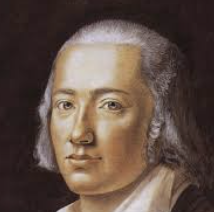
It was not delight, not wonder that arose among us, it was the peace of heaven. A thousand times have I said it to her and to myself: the most beautiful is also the most sacred. And such was everything in her. Like her singing, even so was her life.
3 months 2 weeks ago
Freud's fanciful pseudo-explanations (precisely because they are brilliant) perform a disservice. (Now any ass has these pictures available to use in "explaining" symptoms of an illness).
▼
Source
source
p. 55e

3 months 3 weeks ago
This bird sees the white man come and the Indian withdraw, but it withdraws not. Its untamed voice is still heard above the tinkling of the forge... It remains to remind us of aboriginal nature.
▼
Source
source
March 23, 1856; of the crow

2 months 3 weeks ago
Time is the father of truth, its mother is our mind.
▼
Source
source
Quote as translated in The Encyclopedia of Religion Vol. 11 (1987), by Mircea Eliade, p. 459

2 months 2 weeks ago
Freedom and whores are the most cosmopolitan items under the sun. .
▼
Source
source
Act IV
3 months 2 weeks ago
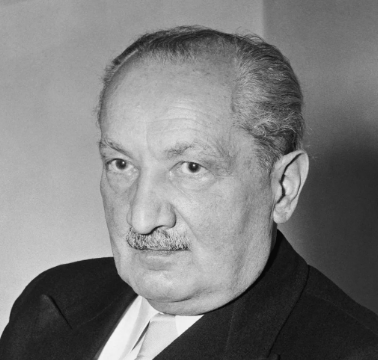
In contrast to "Blessed are they who do not see and still believe," he speaks of "seeing and still not believing."
▼
Source
source
p. 30

3 months 3 weeks ago
It is unjust that the whole of society should contribute towards an expence of which the benefit is confined to a part of the society.
▼
Source
source
Chapter I, Part IV, Conclusion, p. 881.

3 months 3 weeks ago
The secret of being a bore is to tell everything.
▼
Source
source
"Sixième discours: sur la nature de l'homme," Sept Discours en Vers sur l'Homme, 1738

2 months 5 days ago
Intelligence is quickness to apprehend as distinct from ability, which is capacity to act wisely on the thing apprehended.
▼
Source
source
p. 135; Ch. 17, December 15, 1939.

2 months 3 weeks ago
I should not be surprized at seeing a French Army conveyed by a British Navy to an attack upon this Kingdom.
▼
Source
source
Letter to French Laurence (12 May 1797) after hearing of the mutinies in the Royal Navy, quoted in R. B. McDowell (ed.)
3 months 3 weeks ago
Private property has made us so stupid and one-sided that an object is only ours when we have it - when it exists for us as capital, or when it is directly possessed, eaten, drunk, worn, inhabited, etc., - in short, when it is used by us. Although private property itself again conceives all these direct realizations of possession as means of life, and the life which they serve as means is the life of private property - labour and conversion into capital. In place of all these physical and mental senses there has therefore come the sheer estrangement of all these senses - the sense of having. The human being had to be reduced to this absolute poverty in order that he might yield his inner wealth to the outer world.
▼
Source
source
p. 87, The Marx-Engels Reader

2 months 1 week ago
Hegel's philosophy was an integral part of the culture which authoritarianism had to overcome. It is therefore no accident that the National Socialist assault on Hegel begins with the repudiation of his political theory.
▼
Source
source
P. 411

3 months 2 weeks ago
The film concludes with ... the most nauseatingly luscious, the most penetratingly vulgar mammy song that it has ever been my lot to hear. My flesh crept as the loud speaker poured out those sodden words, the greasy, sagging melody. I felt ashamed of myself for listening to such things, for even being a member of the species to which such things are addressed.
▼
Source
source
"Silence is Golden," p. 62

3 months 3 weeks ago
Man has his own inclinations and a natural will which, in his actions, by means of his free choice, he follows and directs. There can be nothing more dreadful than that the actions of one man should be subject to the will of another; hence no abhorrence can be more natural than that which a man has for slavery. And it is for this reason that a child cries and becomes embittered when he must do what others wish, when no one has taken the trouble to make it agreeable to him. He wants to be a man soon, so that he can do as he himself likes.
▼
Source
source
Part III : Selection on Education from Kant's other Writings, Ch. I Pedagogical Fragments, # 62
3 months 3 weeks ago
A very few, as heroes, patriots, martyrs, reformers in the great sense, and men, serve the State with their consciences also, and so necessarily resist it for the most part; and they are commonly treated by it as enemies.
3 months 2 weeks ago
What we are destroying is nothing but houses of cards and we are clearing up the ground of language on which they stood.
▼
Source
source
§ 118

2 months 3 days ago
Today, to live means merely to produce.
3 months 3 weeks ago
The possession of self-conscious reason, which belongs to us of the present world, did not arise suddenly, nor did it grow only from the soil of the present. This possession must be regarded as previously present, as an inheritance, and as the result of labour - the labour of all past generations of men.
▼
Source
source
Introduction p. 2 Ibid

2 months 2 weeks ago
Psychoanalysis will be entirely discredited one of these days, no doubt about it. Which will not keep it from destroying our last vestiges of naivete. After psychoanalysis, we can never again be innocent.

3 months 3 weeks ago
The greatest challenge to any thinker is stating the problem in a way that will allow a solution.
▼
Source
source
Attributed to Russell in Crainer's The Ultimate Book of Business Quotations (1997), p. 258
3 months 3 weeks ago
A living dog is better than a dead lion. Shall a man go and hang himself because he belongs to the race of pygmies, and not be the biggest pygmy that he can? Let every one mind his own business, and endeavor to be what he was made. Why should we be in such desperate haste to succeed, and in such desperate enterprises? If a man does not keep pace with his companions, perhaps it is because he hears a different drummer. Let him step to the music which he hears, however measured or far away.
▼
Source
source
pp. 366-67
2 months 1 week ago
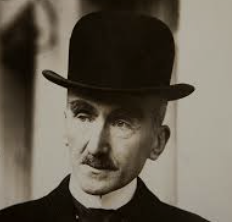
People talk, indeed, of a "primitive mentality", as, for example, to-day that of the inferior races, and in days gone by that of humanity in general, at whose door the responsibility for superstition should be laid.
▼
Source
source
Chapter II : Static Religion

1 month 2 weeks ago
The invention of printing did away with anonymity, fostering ideas of literary fame and the habit of considering intellectual effort as private property.
▼
Source
source
(p. 122)
2 weeks ago
Two difficulties: (1) Can we transform psychologic time, which is qualitative, into a quantitative time? (2) Can we reduce to one and the same measure facts which transpire in different worlds [of conscious beings]!

3 months 2 weeks ago
Hast thou named all the birds without a gun; Loved the wood-rose, and left it on its stalk.
▼
Source
source
Forbearance

2 months 1 week ago
Ye know not what manner of spirit ye are of. For the Son of man is not come to destroy men's lives, but to save them. (KJV) 9:55-56 Rebuking James and John for asking if he would command fire to come down from heaven, to consume a village of Samaritans for not receiving them, because they seemed to be headed for Jerusalem.
▼
Source
source
Jesus on usury from the Sermon on the Mount, Luke 6:34-35
2 months 2 weeks ago
"I am like a broken puppet whose eyes have fallen inside." This remark of a mental patient weighs more heavily than a whole stack of works on introspection.

2 months ago
It is a question whether, when we break a murderer on the wheel, we do not fall into the error a child makes when it hits the chair it has bumped into.
▼
Source
source
J 146

1 month 2 weeks ago
But one no longer wonders when one realizes that in the higher classes there is an unerring instinct of what tends to maintain and of what tends to destroy the organization by virtue of which they enjoy their privileges. The fashionable lady had certainly not reasoned out that if there were no capitalists and no army to defend them, her husband would have no fortune, and she could not have her entertainments and her ball-dresses. And the artist certainly does not argue that he needs the capitalists and the troops to defend them, so that they may buy his pictures. But instinct, replacing reason in this instance, guides them unerringly. And it is precisely this instinct which leads all men, with few exceptions, to support all the religious, political, and economic institutions which are to their advantage.
▼
Source
source
Chapter XII, Conclusion-Repent Ye, for the Kingdom of Heaven is at Hand
1 month 2 weeks ago
We are swiftly moving at present from an era where business was our culture into an era when culture will be our business. Between these poles stand the huge and ambiguous entertainment industries.
▼
Source
source
(p. 384)
3 months 2 weeks ago
What the rest of us see only under the influence of mescalin, the artist is congenitally equipped to see all the time. His perception is not limited to what is biologically or socially useful.
▼
Source
source
Page 168
3 months 2 weeks ago
Man's urge for change and his need for stability have always balanced and checked each other, and our current vocabulary, which distinguishes between two factions, the progressives and the conservatives, indicates a state of affairs in which this balance has been thrown out of order. No civilization - the man-made artifact to house successive generations - would ever have been possible without a framework of stability, to provide the wherein for the flux of change. Foremost among the stabilizing factors, more enduring than customs, manners and traditions, are the legal systems that regulate our life in the world and our daily affairs with each other.
▼
Source
source
"Civil Disobedience"
2 months 1 week ago
To look at a work of art in order to see how well certain rules are observed and canons conformed to impoverished perception. But to strive to note the ways in which certain conditions are fulfilled, such as the organic means by which the media is made to express and carry definite parts, or how the problem of adequate individualization is solved, sharpens esthetic perception and enriches its content.
▼
Source
source
p. 213

3 months 4 weeks ago
It cannot be that axioms established by argumentation should avail for the discovery of new works, since the subtlety of nature is greater many times over than the subtlety of argument. But axioms duly and orderly formed from particulars easily discover the way to new particulars, and thus render sciences active.
▼
Source
source
Aphorism 24

1 month 4 days ago
Owning our seeds through seed freedom, our own food through food freedom, our own minds and intelligence through intellectual freedom, our own economies through freedom to produce and consume ecologically and locally, is the 'barbarianism' that the 1% would like to extinguish.

1 week 4 days ago
Constitution,-the apex of all its intelligences and mighty instincts and dumb longings: it is I? William Conqueror's big gifts, and Edward's and Elizabeth's; Oliver's lightning soul, noble as Sinai and the thunders of the Lord: these are mine, I begin to perceive,-to a certain extent. These heroisms have I,-though rather shy of exhibiting them. These; and something withal of the huge beaver-faculty of our Arkwrights, Brindleys; touches too of the phoenix-melodies and sunny heroisms of our Shakspeares, of our Singers, Sages and inspired Thinkers all this is in me, I will hope,-though rather shy of exhibiting it on common occasions.
2 months 2 weeks ago
To have grazed every form of failure, including success.

3 months 4 weeks ago
Nature forms us for ourselves, not for others; to be, not to seem.
▼
Source
source
Book II, Ch. 37. Of the Resemblance of Children to their Brothers

3 months 1 week ago
Suffer no anxiety, for he who is a sufferer of anxiety becomes regardless of enjoyment of the world and the spirit, and contraction happens to his body and soul.
3 months 2 weeks ago
The criticism of the reformers was directed not so much at the weakness or cruelty of those in authority, as at a bad economy of power.
▼
Source
source
Chapter Two, pp.. 79
2 months 1 week ago
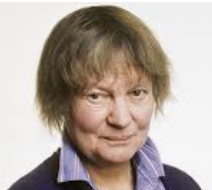
Almost anything that consoles us is a fake.
▼
Source
source
The Sovereignty of Good (1970) p. 59.
1 month 2 weeks ago
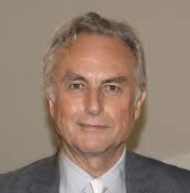
What worries me about religion is that it teaches people to be satisfied with not understanding the world they live in.
▼
Source
source
Heart Of The Matter: God Under The Microscope | BBC

3 months 3 weeks ago
I do not say this, that I think there should be no difference of opinions in conversation, nor opposition in men's discourses... 'Tis not the owning one's dissent from another, that I speak against, but the manner of doing it.
▼
Source
source
Sec. 145
4 months 3 days ago
As to the objection that these rules are common in the world, that it is necessary to define every thing and to prove every thing, and that logicians themselves have placed them among their art, I would that the thing were true and that it were so well known... But so little is this the case, that, geometricians alone excepted, who are so few in number that they are a single in a whole nation and long periods of time, we see no others that know it.
2 months 1 week ago
All metaphysical theories are inconclusively vulnerable to positivist attack.
▼
Source
source
Ch. 9, p. 127
3 months 1 week ago
Thus to the Lord doth Asha, the Truth, reply:"No guide is known who can shelter the world from woe, None who knows what moves and works Thy lofty plans."
▼
Source
source
Ahunuvaiti Gatha; Yasna 29, 3.
3 months 2 weeks ago
Eternity, not as a static "now," nor as a sequence of "nows" rolling off into the infinite, but as the "now" that bends back into itself. ... Thinking the most difficult thought of philosophy means thinking being as time.
▼
Source
source
p. 20
CivilSimian.com created by AxiomaticPanic, CivilSimian, Kalokagathia