

Just now
Religion is always falling apart. Buddhism, the Religion of No-Religion.
3 months 2 weeks ago
There are infinitely many variations of the initial situation and therefore no doubt indefinitely many theorems of moral geometry.
▼
Source
source
Chapter III, Section 21, pg. 126

1 month 2 weeks ago
For us, with the rule of right and wrong given us by Christ, there is nothing for which we have no standard. And there is no greatness where there is not simplicity, goodness, and truth.
▼
Source
source
Bk. XIV, ch. 18
1 month 3 weeks ago
This realistic image, however, does not catch at all what really is, but what should not be - death and misery - what should not exist, from our moral and humanistic point of view. And at the same time making an aesthetic and commercial, perfectly immoral use and abuse of this misery. Images that actually testify, behind their pretended "objectivity", of a deep denial of the real, and of an equal denial of the image - assigned to present what does not even want to be represented, assigned to the rape of the real by burglary.
4 weeks ago
There is no end. There is no beginning. There is only the infinite passion of life.
▼
Source
source
Fellini on Fellini (1976) edited by Anna Keel and Christian Strich; translated by Isabel Quigly.
2 months 2 weeks ago
Since space is continuous, it follows that there must be an immediate community of feeling between parts of mind infinitesimally close together. Without this, I believe it would have been impossible for any co-ordination to be established in the action of the nerve-matter of one brain.

3 months 2 weeks ago
People seem good while they are oppressed, but they only wish to become oppressors in their turn: life is nothing but a competition to be the criminal rather than the victim.
▼
Source
source
Letter to Ottoline Morrell, 17 December, 1920

1 month 4 weeks ago
First, most producers are employees of firms, not owners. Viewed from the vantage point of classical economic theory, they have no reason to maximize the profits of firms, except to the extent that they can be controlled by owners. Moreover, profit-making firms, nonprofit organizations, and bureaucratic organizations all have exactly the same problem of inducing their employees to work toward organizational goals. There is no reason, a priori, why it should be easier (or harder) to produce this motivation in organizations aimed at maximizing profits than in organizations with different goals. If it is true in an organizational economy that organizations motivated by profits will be more efficient than other organizations, additional postulates will have to be introduced to account for it.
▼
Source
source
Simon (1991) "Organizations and Markets:" in: Journal of Economic Perspectives. 5 (2 Spring 1991): p. 28.

4 months 2 weeks ago
Religion is more conservative than any other aspect of human life.
7 months 3 weeks ago
I believe in clear-cut positions. I think that the most arrogant position is this apparent, multidisciplinary modesty of "what I am saying now is not unconditional, it is just a hypothesis," and so on. It really is a most arrogant position. I think that the only way to be honest and expose yourself to criticism is to state clearly and dogmatically where you are. You must take the risk and have a position.

3 months 3 weeks ago
For what is modesty but hypocritical humility, by means of which, in a world swelling with vile envy, a man seeks to beg pardon for his excellences and merits from those who have none? For whoever attributes no merit to himself because he really has none is not modest, but merely honest.
▼
Source
source
Vol. I, Ch. III, The World As Representation: Second Aspect

2 months 2 weeks ago
I do not forgive myself for being born. It is as if, creeping into this world, I had profaned a mystery, betrayed some momentous pledge, committed a fault of nameless gravity. Yet in a less assured mood, birth seems a calamity I would be miserable not having known.

2 months 2 days ago
Considered as a whole, Hesse's achievement can hardly be matched in modern literature; it is the continually rising trajectory of an idea, the fundamentally religious idea of how to 'live more abundantly'. Hesse has little imagination in the sense that Shakespeare or Tolstoy can be said to have imagination, but his ideas have a vitality that more than makes up for it. Before all, he is a novelist who used the novel to explore the problem: What should we do with our lives? The man who is interested to know how he should live instead of merely taking life as it comes, is automatically an Outsider.
▼
Source
source
p. 77

3 months 3 weeks ago
For where God built a church, there the Devil would also build a chapel...Thus is the Devil ever God's ape.
▼
Source
source
67. Compare "Where God hath a temple, the Devil will have a chapel", Robert Burton, Anatomy of Melancholy, part III, section 4, member 1, subsection 1
2 months 2 weeks ago
Haven't people learned yet that the time of superficial intellectual games is over, that agony is infinitely more important than syllogism, that a cry of despair is more revealing than the most subtle thought, and that tears always have deeper roots than smiles?
Just now
Sex is no longer a serious taboo. Teenagers sometimes know more about it than adults.
▼
Source
source
Inside Information p. 4

3 months 2 weeks ago
[E]xperience has taught me that those who give their time to the absorbing claims of what is called society, not having leisure to keep up a large acquaintance with the organs of opinion, remain much more ignorant of the general state either of the public mind, or of the active and instructed part of it, than a recluse who reads the newspapers need be.
▼
Source
source
(p. 262)

2 months 2 weeks ago
Nature is an Æolian Harp, a musical instrument; whose tones again are keys to higher strings in us.
2 months 5 days ago
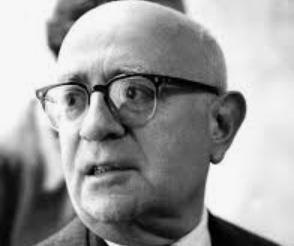
In both positivism and Heidegger-at least in his later work-speculation is the target of attack. In both cases the thought that autonomously raises itself above the facts through interpreting them and that cannot be reclaimed by them without leaving a surplus is condemned for being empty and vain concept-mongering.
▼
Source
source
p. 9
1 month 2 days ago
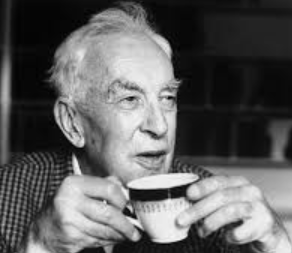
These immense cities lie basking on the beaches of the continent like whales that have taken to the land again. What do these great, sleek, well-fed creatures live on so sumptuously?
▼
Source
source
12. The Elusive Continent (on the six state capitals of Australia)
4 months 2 weeks ago
Neither family, nor privilege, nor wealth, nor anything but Love can light that beacon which a man must steer by when he sets out to live the better life.
2 months 2 days ago
The Outsider may be an artist, but the artist is not necessarily an Outsider.
▼
Source
source
Chapter one, The Country of the Blind
1 week 6 days ago
I think I have already said somewhere that mathematics is the art of giving the same name to different things.
▼
Source
source
Part I. Ch. 2 : The Future of Mathematics, p. 31
2 months 3 weeks ago
There are three principal means of acquiring knowledge available to us: observation of nature, reflection, and experimentation. Observation collects facts; reflection combines them; experimentation verifies the result of that combination. Our observation of nature must be diligent, our reflection profound, and our experiments exact. We rarely see these three means combined; and for this reason, creative geniuses are not common.
▼
Source
source
No. 15

3 months 1 week ago
Indulge in no wrathfulness, for a man when he indulges in wrath becomes then forgetful of his duty and good works . . . and sin and crime of every kind occur unto his mind, and until the subsiding of the wrath he is said to be just like Ahareman.

2 weeks ago
In Kant's words, human beings are uncaused causes, and therefore have infinite value, and a liberal regime protects that autonomy by giving people rights... The right to speak, to organize, to associate, and ultimately to have a share of power by being able to vote. ...This is ...the moral status, the dignity that life in a liberal regime that does respect individual rights, gives us, and it is one of the reasons that to this day, people do not want to live in authoritarian countries that do not recognize the fundamental dignity of their... citizens.
▼
Source
source
11:47

3 months 3 weeks ago
Death, they say, acquits us of all obligations.
▼
Source
source
Book I, Ch. 7
2 months 2 days ago
Art is thought, and thought only gives the world an appearance of order to anyone weak enough to be convinced by its show.
▼
Source
source
Chapter one, The Country of the Blind

2 months 4 days ago
It is in literature that the concrete outlook of humanity receives its expression.
▼
Source
source
Ch. 5: "The Romantic Reaction", p. 106

2 months 6 days ago
And what is its moral proof? We may formulate it thus: Act so that in your own judgment and in the judgment of others you may merit eternity, act so that you may become irreplaceable, act so that you may not merit death. Or perhaps thus: Act as if you were to die tomorrow, but to die in order to survive and be eternalized. The end of morality is to give personal, human finality to the Universe; to discover the finality that belongs to it - if indeed it has any finality - and to discover it by acting.
3 months 3 weeks ago
Man is forming thousands of ridiculous relations between himself and God.
▼
Source
source
Ch. 12
1 month 1 week ago
To train and educate the rising generation will at all times be the first object of society, to which every other will be subordinate.
2 months 6 days ago
A man, in so far as he is an individual, may be very sharply detached from others, a sort of spiritual crustacean, and yet be very poor in differentiating content. And further, it is true on the other hand that the more personality a man has and the greater his interior riches and the more he is a society within himself, the less brusquely he is divided from his fellows.
2 months 1 week ago
"There is no God," cry the masses more and more vociferously; and with the loss of God man loses his sense of values - is, as it were, massacred because he feels himself of no account.

1 week 3 days ago
I came hither [Craigenputtoch] solely with the design to simplify my way of life and to secure the independence through which I could be enabled to remain true to myself.
▼
Source
source
Letter to Goethe, (1828).

3 months 2 weeks ago
Let me suggest a theme for you: to state to yourself precisely and completely what that walk over the mountains amounted to for you, - returning to this essay again and again, until you are satisfied that all that was important in your experience is in it. Give this good reason to yourself for having gone over the mountains, for mankind is ever going over a mountain. Don't suppose that you can tell it precisely the first dozen times you try, but at 'em again, especially when, after a sufficient pause, you suspect that you are touching the heart or summit of the matter, reiterate your blows there, and account for the mountain to yourself. Not that the story need be long, but it will take a long while to make it short.
▼
Source
source
Letter to Harrison Blake, November 16, 1857
2 months 2 days ago
Sexual activity is driven by the same aims and motives as reading poetry or listening to music: to escape the limitations imposed by the need for particularity in the consciousness.
▼
Source
source
p. 75
2 months 2 days ago
The Orient that appears in Orientalism, then, is a system of representations framed by a whole set of forces that brought the Orient into Western learning, Western consciousness, and later, Western empire. ... The Orient is the stage on which the whole East is confined. On this stage will appear the figures whose role it is to represent the larger whole from which they emanate. The Orient then seems to be, not an unlimited extension beyond the familiar European world, but rather a closed field, a theatrical stage affixed to Europe.
Just now
Beat a dog once and you only have to show him the whip.

3 months 2 weeks ago
Self-reliance, the height and perfection of man, is reliance on God.
▼
Source
source
The Fugitive Slave Law, a lecture in NYC, March 7, 1854
2 months 6 days ago
To all this, someone is sure to object that life ought to subject itself to reason, to which we will reply that nobody ought to do what he is unable to do, and life cannot subject itself to reason. "Ought, therefore can," some Kantian will retort. To which we shall demur: "Cannot, therefore ought not." And life cannot submit itself to reason, because the end of life is living and not understanding.
4 months 2 weeks ago
The best way to describe anyone is to give an example of the kind of thing he would do.
3 weeks 2 days ago
When I was 15 years old, or 16, I carried around on the streets of Brooklyn a paperback copy of Plato's Republic, front cover facing outward. I had read only some of it and understood less, but I was excited by it and knew it was something wonderful.
▼
Source
source
The Examined Life

3 months 3 weeks ago
The origin of our passions, the root and spring of all the rest, the only one which is born with man, which never leaves him as long as he lives, is self-love; this passion is primitive, instinctive, it precedes all the rest, which are in a sense only modifications of it. In this sense, if you like, they are all natural. But most of these modifications are the result of external influences, without which they would never occur, and such modifications, far from being advantageous to us, are harmful. They change the original purpose and work against its end; then it is that man finds himself outside nature and at strife with himself.
2 months 4 days ago
What the learned world tends to offer is one second-hand scrap of information illustrating ideas derived from another second-hand scrap of information. The second-handedness of the learned world is the secret of its mediocrity.
2 months 2 weeks ago
I would like to go mad on one condition, namely, that I would become a happy madman, lively and always in a good mood, without any troubles and obsessions, laughing senselessly from morning to night.
3 months 2 weeks ago
A just system must generate its own support.
▼
Source
source
Chapter V, Section 41, p. 261
CivilSimian.com created by AxiomaticPanic, CivilSimian, Kalokagathia