


3 weeks 5 days ago
Against the many Russian thinkers influenced by Hegel who believed that history was governed by universal laws to which one could only submit, Turgenev upheld the freedom of different societies to pursue different paths of development and of individuals to pursue, even in opposition to powerful historical forces, their own goals and values. Here Turgenev endorsed the celebrated dictum of Alexander Herzen, with whom he disagreed on other matters: that history has no libretto. Human history is a realm of contingency and unpredictability, in which each generation faces conflicts that have no ideal solution.
▼
Source
source
'Isaiah Berlin: The Value of Decency' (p.105)


1 month 3 weeks ago
The best and safest method of philosophizing seems to be, first to enquire diligently into the properties of things, and to establish these properties by experiment, and then to proceed more slowly to hypothesis for the explanation of them. For hypotheses should be employed only in explaining the properties of things, but not assumed in determining them, unless so far as they may furnish experiments.
▼
Source
source
Letter to Ignatius Pardies (1672) Philosophical Transactions of the Royal Society (Feb. 1671/2) as quoted by William L. Harper
4 months 1 week ago
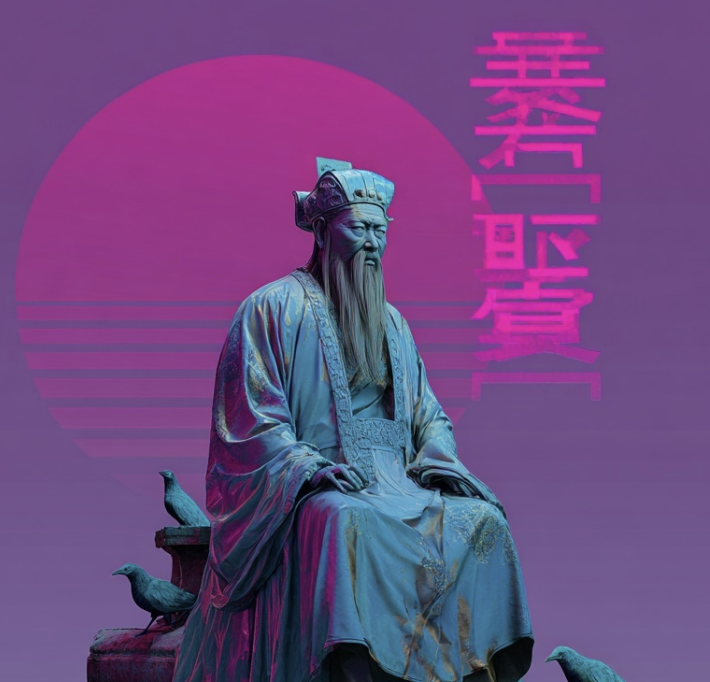
What the great learning teaches, is to illustrate illustrious virtue; to renovate the people; and to rest in the highest excellence. The point where to rest being known, the object of pursuit is then determined; and, that being determined, a calm unperturbedness may be attained to. To that calmness there will succeed a tranquil repose. In that repose there may be careful deliberation, and that deliberation will be followed by the attainment of the desired end.

3 months 2 weeks ago
Competition for power is of two sorts: between organizations, and between individuals for leadership within an organization.
▼
Source
source
p. 165
1 month 3 weeks ago
To successfully adjudicate ethical problems, as opposed to 'solving' them, it is necessary that the members of the society have a sense of community. A compromise that cannot pretend to be the last word on an ethical question, that cannot pretend to derive from binding principles in an unmistakeably constraining way, can only derive its force from a shared sense of what is and is not reasonable, from loyalties to one another, and a commitment to 'muddling through' together.
▼
Source
source
"How Not to Solve Ethical Problems"

4 months 2 weeks ago
The fact is that I've never called myself a genius, and I think the term has been cheapened by overuse into meaninglessness. If other people want to call me that, that's their problem.
3 months 3 weeks ago
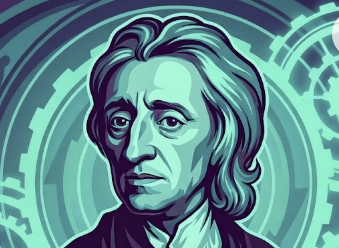
False and doubtful positions, relied upon as unquestionable maxims, keep those who build on them in the dark from truth. Such are usually the prejudices imbibed from education, party, reverence, fashion, interest, et cetera.
▼
Source
source
Book IV, Ch. 7

1 month 2 weeks ago
The discarnate TV user lives in a world between fantasy and dream, and is in a typically hypnotic state, which is the ultimate form and level of participation.
▼
Source
source
"A Last Look at the Tube." New York Magazine, 17 March 1978, p. 45-48

2 months 2 weeks ago
The future use and the whole effect, if not the very existence, of the process of an impeachment of high crimes and misdemeanors before the peers of this kingdom upon the charge of the Commons will very much be decided by your judgment in this cause... For we must not deceive ourselves: whatever does not stand with credit cannot stand long. And if the Constitution should be deprived, I do not mean in form, but virtually, of this resource, it is virtually deprived of everything else that is valuable in it. For this process is the cement which binds the whole together; this is the individuating principle that makes England what England is.
▼
Source
source
Speech in opening the impeachment of Warren Hastings (15 February 1788), quoted in The Works of the Right Honourable Edmund Burke, Volume the Ninth (1899), p. 332

2 weeks 1 day ago
Fleeing from a life of constant insecurity and forced mobility is good preparation for dealing with and resisting the typical forms of exploitation of immaterial labor.
▼
Source
source
133

2 months 2 weeks ago
We know as little of a supreme being as of Matter. But there is as little doubt of the existence of a supreme being as of Matter. The world beyond is reality, and experiential fact. We only don't understand it.
▼
Source
source
Letter to Morton Kelsey (1958) as quoted by Morton Kelsey, Myth, History & Faith: The Mysteries of Christian Myth & Imagination (1974) Ch.VIII


3 months 3 weeks ago
To pray to God is to flatter oneself that with words one can alter nature.
▼
Source
source
Notebooks, c.1735-c.1750

3 months 3 weeks ago
The man who barely abstains from violating either the person, or the estate, or the reputation of his neighbours, has surely very little positive merit. He fulfils, however, all the rules of what is peculiarly called justice, and does every thing which his equals can with propriety force him to do, or which they can punish him for not doing. We may often fulfil all the rules of justice by sitting still and doing nothing.
▼
Source
source
Section II, Chap. I.
3 months 2 weeks ago
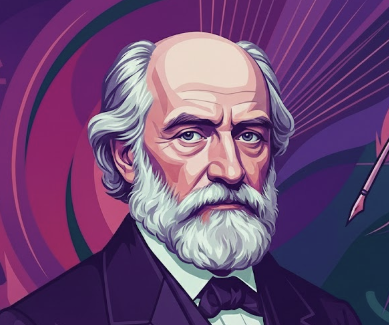
For a work to become immortal it must possess so many excellences that it will not be easy to find a man who understands and values them all; so that there will be in all ages men who recognise and appreciate some of these excellences; by this means the credit of the work will be retained throughout the long course of centuries and ever-changing interests, for, as it is appreciated first in this sense, then in that, the interest is never exhausted.

3 months 2 weeks ago
Man differs from other animals in one very important respect, and that is that he has some desires which are, so to speak, infinite, which can never be fully gratified, and which would keep him restless even in Paradise. The boa constrictor, when he has had an adequate meal, goes to sleep, and does not wake until he needs another meal. Human beings, for the most part, are not like this.

2 months 2 weeks ago
Once we begin to want, we fall under the jurisdiction of the Devil.
2 months 2 weeks ago
So it is that you come to know what a real God is. ... The God wants my life. He wants to go with me, sit at the table with me, work with me. Above all he wants to be ever-present.
▼
Source
source
P. 291

2 months 1 week ago
You shall know the truth, and the truth shall set you free.
▼
Source
source
8:32
3 months 2 weeks ago
I do like clarity and exact thinking and I believe that very important to mankind because when you allow yourself to think inexactly your prejudices, your bias, your self interest comes in in ways you don't notice and you do bad things without knowing that you are doing them: self deception is very easy. So that I do think clear thinking immensely important.
▼
Source
source
Television interview ("On clarity and exact thinking" - available on youtube)
2 months 2 weeks ago
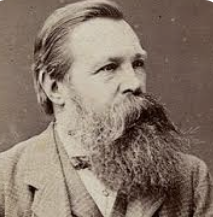
What will be the influence of communist society on the family? It will transform the relations between the sexes into a purely private matter which concerns only the persons involved and into which society has no occasion to intervene. It can do this since it does away with private property and educates children on a communal basis, and in this way removes the two bases of traditional marriage - the dependence rooted in private property, of the women on the man, and of the children on the parents.

1 month 2 weeks ago
The compassionate are not rich; therefore, the rich are not compassionate.
▼
Source
source
p. 89

2 months 1 week ago
Being good is just a matter of temperament in the end.
▼
Source
source
The Nice and the Good (1968), ch. 14, p. 127. Murdoch attributed this opinion to her character Kate Gray. It was not her own.
2 months 1 week ago
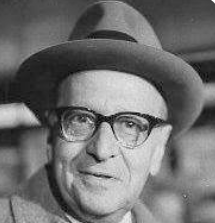
The inversion of external compulsion into the compulsion of conscience ... produces the machine-like assiduity and pliable allegiance required by the new rationality.
▼
Source
source
p. 34.

1 month 3 weeks ago
Pure justice emerges from symmetry applied human life, and human beings as ends in themselves.

4 months 1 week ago
Dogs, also, bark at what they do not know.
2 months 2 weeks ago
You can never plan the future by the past.
▼
Source
source
Letter to a Member of the National Assembly (1791), Volume IV, p. 55.
2 months 2 weeks ago
The desire to die was my one and only concern; to it I have sacrificed everything, even death.

2 months 2 weeks ago
It's the great mystery of human life that old grief passes gradually into quiet tender joy.
2 months 2 days ago
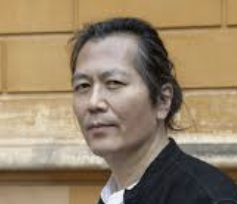
Rituals are processes of embodiment and bodily performances. In them, the valid order and values of a community are physically experienced and solidified.
2 months 2 weeks ago
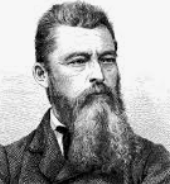
...for stones, plants, and animals there is no God, but only for man.
2 months 1 week ago
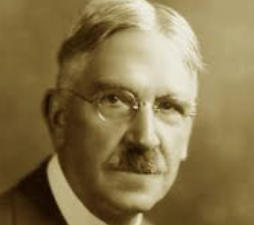
Equally there is no rhythm when variations are not placed. There is a wealth of suggestions in the phrase "takes place". The change not only comes but it belongs; it had its definite place in a larger whole.
▼
Source
source
p. 160

3 months 2 weeks ago
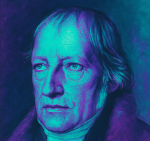
The Philosophy of Nature takes up the material, prepared for it by physics out of experience, at the point to which physics has brought it, and again transforms it, without basing it ultimately on the authority of experience. Physics therefore must work into the hands of philosophy, so that the latter may translate into a true comprehension (Begriff) the abstract universal transmitted to it, showing how it issues from that comprehension as an intrinsically necessary whole.
1 month 1 week ago
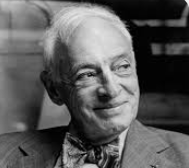
As for types like my own, obscurely motivated by the conviction that our existence was worthless if we didn't make a turning point of it, we were assigned to the humanities, to poetry, philosophy, painting - the nursery games of humankind, which had to be left behind when the age of science began. The humanities would be called upon to choose a wallpaper for the crypt, as the end drew near.
▼
Source
source
Ch. 6

3 months 4 weeks ago
Credulity in arts and opinions is likewise of two kinds viz., when men give too much belief to arts themselves, or to certain authors in any art. The sciences that sway the imagination more than the reason are principally three viz., astrology, natural magic, and alchemy. Alchemy may be compared to the man who told his sons that he had left them gold, buried somewhere in his vineyard; while they by digging found no gold, but by turning up the mould about the roots of the vines procured a plentiful vintage. So the search and endeavours to make gold have brought many useful inventions to light.
▼
Source
source
De Augmentis Scientiarum (1623) as quoted by Edward Thorpe, History of Chemistry, Vol. 1, p. 43.
3 months 2 weeks ago
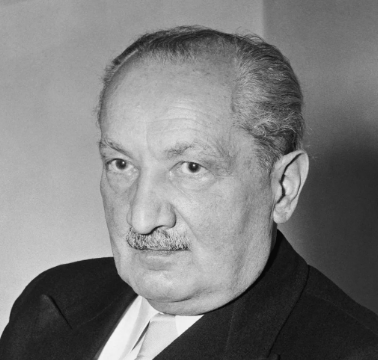
Everywhere we remain unfree and chained to technology, whether we passionately affirm or deny it. But we are delivered over to it in the worst possible way when we regard it as something neutral; for this conception of it, to which today we particularly like to do homage, makes us utterly blind to the essence of technology.
▼
Source
source
The Question Concerning Technology
4 days ago
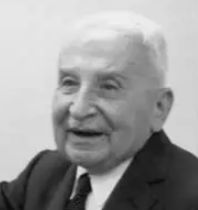
Bourgeois civilization has built railroads and electric power plants, has invented explosives and airplanes, in order to create wealth. Imperialism has placed the tools of peace in the service of destruction. With modern means it would be easy to wipe out humanity at one blow.
▼
Source
source
p. 252
4 months 2 weeks ago
I make no secret about being Jewish ... I just think it's more important to be human and to have a human heritage; and I think it is wrong for anyone to feel that there is anything special about any one heritage of whatever kind. It is delightful to have the human heritage exist in a thousand varieties, for it makes for greater interest, but as soon as one variety is thought to be more important than another, the groundwork is laid for destroying them all.

4 months 1 week ago
O saving Victim, opening wideThe gate of heaven to man below,Our foes press on from every side,Thine aid supply, Thy strength bestow.
▼
Source
source
Verbum Supernum Prodiens (hymn for Lauds on Corpus Christi), stanza 5 (O Salutaris Hostia)
3 months 2 weeks ago
As geological time goes, it is but a moment since the human race began and only the twinkling of an eye since the arts of civilization were first invented. In spite of some alarmists, it is hardly likely that our species will completely exterminate itself. And so long as man continues to exist, we may be pretty sure that, whatever he may suffer for a time, and whatever brightness may be eclipsed, he will emerge sooner or later, perhaps strengthened and reinvigorated by a period of mental sleep. The universe is vast and men are but tiny specks on an insignificant planet. But the more we realize our minuteness and our impotence in the face of cosmic forces, the more astonishing becomes what human beings have achieved.
▼
Source
source
"If We are to Survive this Dark Time", The New York Times Magazine, 9/3/1950
3 months 2 weeks ago
Our moral virtues benefit mainly other people; intellectual virtues, on the other hand, benefit primarily ourselves; therefore the former make us universally popular, the latter unpopular.
Just now
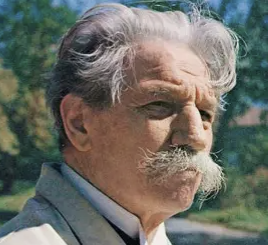
To the man who is truly ethical all life is sacred, including that which from the human point of view seems lower in the scale. He makes distinctions only as each case comes before him, and under the pressure of necessity, as, for example, when it falls to him to decide which of two lives he must sacrifice in order to preserve the other. But all through this series of decisions he is conscious of acting on subjective grounds and arbitrarily, and knows that he bears the responsibility for the life which is sacrificed.
▼
Source
source
p. 269
2 months 2 weeks ago
If I understand at all the true Spirit of the present contest, We are engaged in a Civil War ... I consider the Royalists of France, or, as they are (perhaps more properly) called, the Aristocrates, as of the party which we have taken in this civil war.
▼
Source
source
Letter to Sir Gilbert Elliot (22 September 1793), quoted in P. J. Marshall and John A. Woods (eds.)
2 months 2 weeks ago
Once we reject lyricism, to blacken a page becomes an ordeal: what's the use of writing in order to say exactly what we had to say?

3 months 2 weeks ago
You ask particularly after my health. I suppose that I have not many months to live; but, of course, I know nothing about it. I may add that I am enjoying existence as much as ever, and regret nothing.
▼
Source
source
Last letter, to Myron Benton, March 31, 1862
4 days ago
The unhampered market economy is not a system which would seem commendable from the standpoint of the selfish group interests of the entrepreneurs and capitalists. It is not the particular interests of a group or of individual persons that require the market economy, but regard for the common welfare. It is not true that the advocates of the free-market economy are defenders of the selfish interests of the rich. The particular interests of the entrepreneurs and capitalists also demand interventionism to protect them against the competition of more efficient and active men. The free development of the market economy is to be recommended, not in the interest of the rich, but in the interest of the masses of the people.
▼
Source
source
Ch. VII : The Economic, Social, and Political Consequences of Interventionism § 1. The Economic Consequences
3 months 2 weeks ago
The bluebird carries the sky on his back.
▼
Source
source
April 3, 1852
CivilSimian.com created by AxiomaticPanic, CivilSimian, Kalokagathia