


2 months 1 week ago
All which a man loves, for which he leaves everything else but that, is his god, thus the glutton and drunkard has for his idol his own flesh, the fornicator has for his idol the harlot and the greedy has for his idol silver and gold, and so the same for every other sinner.
▼
Source
source
Ch. 33

4 months 2 weeks ago
Death induces the sensual person to say: Let us eat and drink, because tomorrow we shall die – but this is sensuality's cowardly lust for life, that contemptible order of things where one lives in order to eat and drink instead of eating and drinking in order to live.

1 month 4 weeks ago
I have been taught that the land should belong to those who till the soil. With all of his deep-seated sympathies with the Arabs, our comrade cannot possibly deny that the Jews in Palestine have tilled the soil. Tens of thousands of them, young and deeply devout idealists, have flocked to Palestine, there to till the soil under the most trying pioneer conditions. They have reclaimed wastelands and have turned them into fertile fields and blooming gardens. Now I do not say that therefore Jews are entitled to more rights than the Arabs, but for an ardent socialist to say that the Jews have no business in Palestine seems to me rather a strange kind of socialism.

3 months 5 days ago
Now as of old the gods give men all good things, excepting only those that are baneful and injurious and useless. These, now as of old, are not gifts of the gods: men stumble into them themselves because of their own blindness and folly.

3 months 3 weeks ago
Let no man be ashamed to speak what he is not ashamed to think.
▼
Source
source
Book III, Ch. 4

2 months 2 days ago
Isolation is the worst possible counselor.
▼
Source
source
Civilization is Civilism

3 months 2 weeks ago
It is the same thing: killing, dying, it is the same thing: one is just as alone in each. He is lucky, he will only die once. As for me, for ten days I have been killing him at every minute. Hugo to Jessica, on his plans to kill.
▼
Source
source
Hoederer, Act 5, sc. 2

2 months ago
Philosophy finds religion, and modifies it; and conversely religion is among the data of experience which philosophy must weave into its own scheme. Religion is an ultimate craving to infuse into the insistent particularity of emotion that non-temporal generality which primarily belongs to conceptual thought alone. In the higher organisms the differences of tempo between the mere emotions and the conceptual experiences produce a life-tedium, unless this supreme fusion has been effected. The two sides of the organism require a reconciliation in which emotional experiences illustrate a conceptual justification, and conceptual experiences find an emotional illustration.
▼
Source
source
Pt. I, ch. 1, sec. 6.

3 months 3 days ago
When Demaratus was asked whether he held his tongue because he was a fool or for want of words, he replied, "A fool cannot hold his tongue."
▼
Source
source
Of Demaratus
7 months 3 weeks ago
What is at stake here is precisely the problem of the fulfillment of desire: when we encounter in reality an object which has all the properties of the fantasized object of desire, we are nevertheless necessarily somewhat disappointed; we experience a certain this is not it; it becomes evident that the finally found real object is not the reference of desire even though it possesses all the required properties.

3 months 1 week ago
We must plow through the whole of language.
▼
Source
source
Ch. 7 : Remarks on Frazer's Golden Bough, p. 131
2 months 6 days ago
I approach the presentation of Kierkegaard with some trepidation. Next to Nietzsche, or rather, prior to Nietzsche, I consider him to be the most important thinker of our post-Kantian age. With Goethe and Hegel, an epoch had reached its conclusion, and our prevalent way of thinking - that is, the positivistic, natural-scientific one - cannot really be considered as philosophy.
▼
Source
source
The Great Philosophers
1 month 1 day ago
That mysterious independent variable of political calculation, Public Opinion.
▼
Source
source
Universities, Actual and Ideal

4 months ago
You are a little soul carrying a corpse around, as Epictetus used to say.
▼
Source
source
Fragment 26 (Oldfather translation). This fragment originates from Marcus Aurelius, Meditations, IV. 41.

3 months 2 weeks ago
Children are nowhere taught, in any systematic way, to distinguish true from false, or meaningful from meaningless, statements. Why is this so? Because their elders, even in the democratic countries, do not want them to be given this kind of education.
▼
Source
source
Chapter 11 (p. 106)

4 months 5 days ago
It is not truth that makes man great, but man that makes truth great.

2 months 2 weeks ago
The power of discretionary disqualification by one law of Parliament, and the necessity of paying every debt of the Civil List by another law of Parliament, if suffered to pass unnoticed, must establish such a fund of rewards and terrors as will make Parliament the best appendage and support of arbitrary power that ever was invented by the wit of man. This is felt. The quarrel is begun between the Representatives and the People. The Court Faction have at length committed them. In such a strait the wisest may well be perplexed, and the boldest staggered. The circumstances are in a great measure new. We have hardly any land-marks from the wisdom of our ancestors, to guide us. At best we can only follow the spirit of their proceeding in other cases.
▼
Source
source
Volume i, p. 516
2 months 2 weeks ago
The science of government being, therefore, so practical in itself, and intended for such practical purposes, a matter which requires experience, and even more experience than any person can gain in his whole life, however sagacious and observing he may be, it is with infinite caution that any man ought to venture upon pulling down an edifice which has answered in any tolerable degree for ages the common purposes of society, or on building it up again without having models and patterns of approved utility before his eyes.
3 months 2 weeks ago
With despair, true optimism begins: the optimism of the man who expects nothing, who knows he has no rights and nothing coming to him, who rejoices in counting on himself alone and in acting alone for the good of all.
2 months 1 week ago
Go into the city to such a man, and say unto him, The Master saith, My time is at hand; I will keep the passover at thy house with my disciples.
▼
Source
source
26:18 (KJV)

4 months 2 weeks ago
What! the inventors of ancient civilisations, the first makers of tools and tape lines, the first builders of vehicles, ships, and houses, the first observers of the laws of the heavens and the multiplication tables is it contended that they were entirely different from the inventors and observers of our own time, and superior to them? And that the first slow steps forward were of a value which has not been equalled by the discoveries we have made with all our travels and circumnavigations of the earth?
2 months 2 weeks ago
Free trade is not based on utility but on justice.
5 days ago
Civilization exists by geological consent, subject to change without notice.
▼
Source
source
What is Civilization? Ladies' Home Journal, LXIII
1 month 1 week ago
Is there anything in life so disenchanting as attainment?
▼
Source
source
The Suicide Club, The Adventure of the Hansom Cabs.
2 months 2 days ago
It appears to me to be indisputable that he who I am to-day derives, by a continuous series of states of consciousness, from him who was in my body twenty years ago. Memory is the basis of individual personality, just as tradition is the basis of the collective personality of a people. We live in memory, and our spiritual life is at bottom simply the effort of our memory to persist, to transform itself into hope, the effort of our past to transform itself into our future.
3 weeks 4 days ago
It is better to live under a tree in a jungle inhabited by tigers and elephants, to maintain oneself in such a place with ripe fruits and spring water, to lie down on grass and to wear the ragged barks of trees than to live amongst one's relations when reduced to poverty.

1 month 1 week ago
When two do the same thing, it is not the same thing after all.
▼
Source
source
Maxim 338

3 months 2 weeks ago
Opinions have caused more ills than the plague or earthquakes on this little globe of ours.
▼
Source
source
Letter to Élie Bertrand, 5 January 1759

3 months 2 weeks ago
But what all the violence of the feudal institutions could never have effected, the silent and insensible operation of foreign commerce and manufactures gradually brought about.
▼
Source
source
Chapter IV, p. 448.
3 months 2 weeks ago
Civil government, so far as it is instituted for the security of property, is in reality instituted for the defence of the rich against the poor, or of those who have some property against those who have none at all.
▼
Source
source
Chapter I, Part II, 775.

1 month 1 week ago
Media, by altering the environment, evoke in us unique ratios of sense perception...When these ratios change, men change.
3 months 2 weeks ago
Justice, however, never was in reality administered gratis in any country. Lawyers and attornies, at least, must always be paid by the parties; and, if they were not, they would perform their duty still worse than they actually perform it.
▼
Source
source
Chapter I, Part II, p. 778.

3 months 3 weeks ago
In living bodies, how all the various limbs harmonize, and mutually combine, for common defence against injury! What can be more heterogeneous, and unlike, than the body and the soul? and yet with what strong bonds nature has united them, is evident from the pang of separation. As life itself is nothing else but the concordant union of body and soul, so is health the harmonious cooperation of all the parts and functions of the body.

1 month 3 weeks ago
The pleasures of the imagination are as it were only drawings and models which are played with by poor people who cannot afford the real thing.
▼
Source
source
C 38

2 months 6 days ago
Similarly a work of art vanishes from sight for a beholder who seeks in it nothing but the moving fate of John and Mary or Tristan and Isolde and adjusts his vision to this. Tristan's sorrows are sorrows and can evoke compassion only in so far as they are taken as real. But an object of art is artistic only in so far as it is not real. In order to enjoy Titian's portrait of Charles the Fifth on horseback we must forget that this is Charles the Fifth in person and see instead a portrait - that is, an image, a fiction. The portrayed person and his portrait are two entirely different things; we are interested in either one or the other. In the first case we "live" with Charles the Fifth, in the second we look at an object of art.
▼
Source
source
"The Dehumanization of Art"

3 months 2 weeks ago
To Americans. That some desperate wretches should be willing to steal and enslave men by violence and murder for gain, is rather lamentable than strange. But that many civilized, nay, christianized people should approve, and be concerned in the savage practice, is surprising; and still persist, though it has been so often proved contrary to the light of nature, to every principle of Justice and Humanity, and even good policy, by a succession of eminent men, and several late publications.

2 months 1 week ago
Nostalgia, more than anything, gives us the shudder of our own imperfection.

3 months 2 weeks ago
What seem our worst prayers may really be, in God's eyes, our best. Those, I mean, which are least supported by devotional feeling. For these may come from a deeper level than feeling. God sometimes seems to speak to us most intimately when he catches us, as it were, off our guard.
2 months 1 week ago
Verily, verily, I say unto you, Except ye eat the flesh of the Son of man, and drink his blood, ye have no life in you. Whoso eateth my flesh, and drinketh my blood, hath eternal life; and I will raise him up at the last day. For my flesh is meat indeed, and my blood is drink indeed. He that eateth my flesh, and drinketh my blood, dwelleth in me, and I in him.
▼
Source
source
6:53-56
2 months 1 week ago
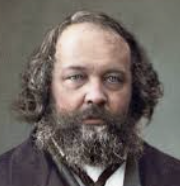
The liberty of man consists solely in this: that he obeys natural laws because he has himself recognized them as such, and not because they have been externally imposed upon him by any extrinsic will whatever, divine or human, collective or individual.
4 months 5 days ago
To entire sincerity there belongs ceaselessness. Not ceasing, it continues long. Continuing long, it evidences itself. Evidencing itself, it reaches far. Reaching far, it becomes large and substantial. Large and substantial, it becomes high and brilliant. Large and substantial; this is how it contains all things. High and brilliant; this is how it overspreads all things. Reaching far and continuing long; this is how it perfects all things. So large and substantial, the individual possessing it is the co-equal of Earth. So high and brilliant, it makes him the co-equal of Heaven. So far-reaching and long-continuing, it makes him infinite. Such being its nature, without any display, it becomes manifested; without any movement, it produces changes; and without any effort, it accomplishes its ends.

2 months 2 weeks ago
The President ... may err ... Congress may decide amiss ... But if the Supreme Court is ever composed of imprudent or bad men, the Union may be plunged into anarchy or civil war.
▼
Source
source
Chapter XVIII.

2 months 2 weeks ago
If you were to destroy in mankind the belief in immortality, not only love but every living force maintaining the life of the world would at once be dried up. Moreover, nothing then would be immoral, everything would be lawful, even cannibalism.
▼
Source
source
Book II, ch. 6 (trans. Constance Garnett) Pyotr Miusov, summarizing an argument made by Ivan at a social gathering
3 months 1 week ago
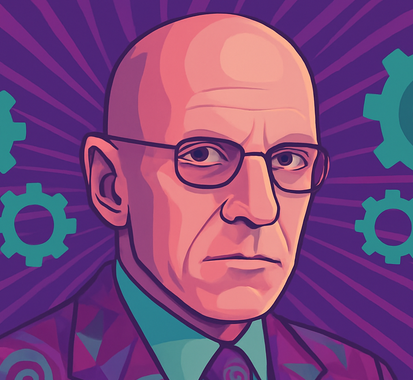
The perfect disciplinary apparatus would make it possible for a single haze to see everything constantly. A central point would be both the source of light illuminating everything, and a locus of convergence for everything that must be known: a perfect eye that nothing would escape and a centre towards which all gazes would be turned.
▼
Source
source
Part Three, The Means of Correct Training

3 months 2 weeks ago
Nothing contributes more to nourish elevation of sentiments in a people, than the large and free character of their habitations.
▼
Source
source
(p. 55)
2 months 2 weeks ago
He was one of those who wished for the abolition of the Slave Trade. He thought it ought to be abolished on principles of humanity and justice.
▼
Source
source
Speech in the House of Commons (9 May 1788), quoted in The Parliamentary History of England, From the Earliest Period to the Year 1803, Vol. XXVII (1816), column 502

3 months 6 days ago
From an ill-natured man take no loan.

Just now
It is the quality of a great soul to scorn great things and to prefer that which is ordinary rather than that which is too great.
1 month 3 weeks ago
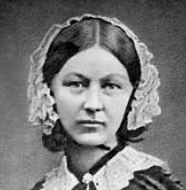
Why have women passion, intellect, moral activity - these three - and a place in society where no one of the three can be exercised? Men say that God punishes for complaining. No, but men are angry with misery. They are irritated with women for not being happy. They take it as a personal offence. To God alone may women complain without insulting Him!
CivilSimian.com created by AxiomaticPanic, CivilSimian, Kalokagathia