


2 months 2 weeks ago
Nothing made a happy slave, but a degraded man. In proportion as the mind grew callous to its degradation, and all sense of manly pride was lost, the slave felt comfort. In fact, he was no longer a man. If he were to define a man, he would say with Shakspeare,"Man is a being, holding large discourse,Looking before and after."A slave was incapable of either looking before or after.
▼
Source
source
Speech in the House of Commons (12 May 1789), quoted in The Parliamentary History of England, From the Earliest Period to the Year 1803, Vol. XXVIII (1816), column 71

2 months 1 week ago
Yet lackest thou one thing: sell all that thou hast, and distribute unto the poor, and thou shalt have treasure in heaven: and come, follow me.
▼
Source
source
18:22 (KJV)

6 days ago
And wonderful it is to see how the Ideal or Soul, place it in what ugliest Body you may, will irradiate said Body with its own nobleness; will gradually, incessantly, mould, modify, new-form or reform said ugliest Body, and make it at last beautiful, and to a certain degree divine!

Just now
I commend you and rejoice in the fact that you are persistent in your studies, and that, putting all else aside, you make it each day your endeavour to become a better man.

1 month 1 week ago
A man's reach must exceed his grasp or what's a metaphor?
▼
Source
source
(p.7) A play on the lines in Robert Browning's poem "Andrea del Sarto":Ah, but a man's reach should exceed his grasp, Or what's a heaven for?

1 week 4 days ago
The capitalist call workers to the factory, for example, directing them to collaborate and communicate in production and giving them the means to do so. In the paradigm of immaterial production, in contrast, labor itself tends to produce the means of interaction, communication, and cooperation for production directly. Affective labor always directly constructs a relationship.
▼
Source
source
147
3 months 2 weeks ago
The good is the idea, or unity of the conception of the will with the particular will. Abstract right, well-being, the subjectivity of consciousness, and the contingency of external reality, are in their independent and separate existences superseded in this unity, although in their real essence they are contained in it and preserved. This unity is realized freedom, the absolute final cause of the world. Addition.-Every stage is properly the idea, but the earlier steps contain the idea only in more abstract form. The I, as person, is already the idea, although in its most abstract guise. The good is the idea more completely determined; it is the unity of the conception of will with the particular will. It is not something abstractly right, but has a real content, whose substance constitutes both right and well-being.
▼
Source
source
Georg Wilhelm Friedrich Hegel, Philosophy of Right translated by SW Dyde Queen's University Canada 1896 p. 123

3 months 2 weeks ago
In such a chain, too, or succession of objects, each part is caused by that which preceded it, and causes that which succeeds it. Where then is the difficulty? But the WHOLE, you say, wants a cause. I answer, that the uniting of these parts into a whole, like the uniting of several distinct countries into one kingdom, or several distinct members into one body, is performed merely by an arbitrary act of the mind, and has no influence on the nature of things. Did I show you the particular causes of each individual in a collection of twenty particles of matter, I should think it very unreasonable, should you afterwards ask me, what was the cause of the whole twenty. This is sufficiently explained in explaining the cause of the parts.
▼
Source
source
Cleanthes to Demea, Part IX

1 month 2 weeks ago
Understand that all the evils from which you suffer, you yourselves cause by yielding to the suggestions by which emperors, kings, members of parliament, governors, officers, capitalists, priests, authors, artists, and all who need this fraud of patriotism in order to live upon your labour, deceive you!
▼
Source
source
Patriotism and Government
6 days ago
No solitary miscreant, scarcely any solitary maniac, would venture on such actions and imaginations, as large communities of sane men have, in such circumstances, entertained as sound wisdom.

3 months 2 weeks ago
Competition for power is of two sorts: between organizations, and between individuals for leadership within an organization.
▼
Source
source
p. 165

3 months 3 weeks ago
Justice is a temporary thing that must at last come to an end; but the conscience is eternal and will never die.
▼
Source
source
On Marriage
1 month 1 week ago
The newspaper is a corporate symbolist poem, environmental and invisible, as poem.

3 months 2 weeks ago
How significant is the enormous heightening, under mescalin, of the perception of color! ... Man's highly developed color sense is a biological luxury-inestimably precious to him as an intellectual and spiritual being, but unnecessary to his survival as an animal. ... Mescalin raises all colors to a higher power and makes the percipient aware of innumerable fine shades of difference, to which, at ordinary times, he is completely blind. It would seem that, for Mind at Large, the so-called secondary characters of things are primary.
▼
Source
source
describing his experiment with mescaline, pp. 26-27
1 month 3 weeks ago
Definition of design = Everyone designs who devise courses of action aimed at changing existing situations into preferred ones. The intellectual activity that produces material artifacts is no different fundamentally from the one that prescribes remedies for a sick patient or the one that devises a new sales plan for a company or a social welfare policy for a state.
▼
Source
source
p. 130.
4 weeks ago
Societies, not states, are 'the social atoms' with which students of history have to deal.
▼
Source
source
Vol. 1

3 months 2 weeks ago
To be taken without consent from my home and friends; to lose my liberty; to undergo all those assaults on my personality which modern psychotherapy knows how to deliver; to be re-made after some pattern of "normality" hatched in a Viennese laboratory to which I never professed allegiance; to know that this process will never end until either my captors have succeeded or I have grown wise enough to cheat them with apparent success-who cares whether this is called Punishment or not? "The Humanitarian Theory of Punishment"
▼
Source
source
1949

3 months 3 weeks ago
The world is but a perpetual see-saw.

3 months 2 weeks ago
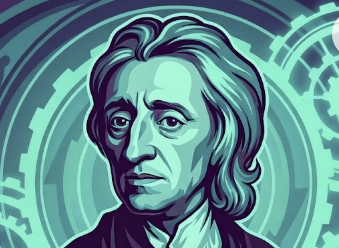
Those truly natural wants, which reason alone, without some other help, is not able to fence against, nor keep from disturbing us. The pains of sickness and hurts, hunger, thirst, and cold, want of sleep and rest or relaxation of the part weary'd with labour, are what all men feel and the best dispos'd minds cannot but be sensible of their uneasiness; and therefore ought, by fit applications, to seek their removal, though not with impatience, or over great haste, upon the first approaches of them, where delay does not threaten some irreparable harm. The pains that come from the necessities of nature, are monitors to us to beware of greater mischiefs, which they are the forerunner of; and therefore they must not be wholly neglected, and strain'd too far. But yet the more children can be inur'd to hardships of this kind, by a wise care to make them stronger in body and mind, the better it will be for them.
▼
Source
source
Sec. 107

2 months 3 weeks ago
I can cure the gout or stone in some, sooner than Divinity, Pride, or Avarice in others.
▼
Source
source
Section 9
1 month 1 week ago
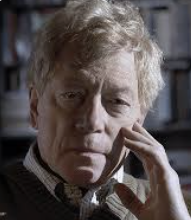
Faith exalts the human heart, by removing it from the market-place, making it sacred and unexchangeable. Under the jurisdiction of religion our deeper feelings are sacralized, so as to become raw material for the ethical life: the life lived in judgement.
▼
Source
source
"Avant-garde and Kitsch" (p. 91)
1 month 4 days ago
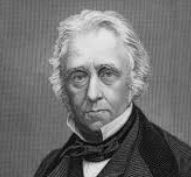
If...we look at the essential characteristics of the Whig and the Tory, we may consider each of them as the representative of a great principle, essential to the welfare of nations. One is, in an especial manner, the guardian of liberty, and the other, of order. One is the moving power, and the other the steadying power of the state. One is the sail, without which society would make no progress, the other the ballast, without which there would be small safety in a tempest.
▼
Source
source
The Earl of Chatham', The Edinburgh Review (October 1844), quoted in T. B. Macaulay, Critical and Historical Essays Contributed to The Edinburgh Review: A New Edition (1852), p. 725

3 months 2 weeks ago
The adjective is the enemy of the substantive.
▼
Source
source
Variants: The adjective is the enemy of the noun. Quote attributed in Arthur Schopenhauer (translated by Mrs Rudolf Dircks), Essays of Schopenhauer (2004), Kessinger Publishing, p. 31

7 months 3 weeks ago
In the Critique of Cynical Reasoning, a great bestseller in Germany (Sloterdijk, 1983), Peter Sloterdijk puts forward the thesis that ideology's dominant mode of functioning is cynical which renders impossible - or, more precisely, vain - the classical critical-ideological procedure. The cynical subject is quite aware of the distance between the ideological mask and the social reality, but he none the less still insists upon the mask.

3 months 2 weeks ago
Deep in the man sits fast his fate To mould his fortunes, mean or great.
▼
Source
source
Fate

3 months 2 weeks ago
The ordinary surroundings of life which are esteemed by men (as their actions testify) to be the highest good, may be classed under the three heads - Riches, Fame, and the Pleasures of Sense: with these three the mind is so absorbed that it has little power to reflect on any different good. I, 3 Variant translation: The things which ... are esteemed as the greatest good of all ... can be reduced to these three headings, to wit : Riches, Fame, and Pleasure. With these three the mind is so engrossed that it cannot scarcely think of any other good.

2 months 1 day ago
During the last quarter of a century all the authority associated with the function of spiritual guidance ... has seeped down into the lowest publications. ... Between a poem by Valéry and an advertisement for a beauty cream promising a rich marriage to anyone who used it there was at no point a breach of continuity. So as a result of literature's spiritual usurpation a beauty cream advertisement possessed, in the eyes of little village girls, the authority that was formerly attached to the words of priests.
▼
Source
source
"Morality and literature," p. 164
Just now
It makes a big difference whether you give something back or pay it off... The framers of the laws instituted festivals, in order that men should be publicly compelled to gaiety, as a necessary temperance for labors; We remember the great orator Pollio Asinius, who was not detained by anything beyond the tenth hour: he did not even need letters for an hour after that, so that no new concern arose, but he put the fatigue of the whole day in those two hours. Some joined in the middle of the day and put off some lighter work in the afternoon hours. Our elders also forbade a new report to be made in the senate after ten o'clock. The army divided the vigils, and the night was safe from the return of the expedition.
1 month 3 weeks ago
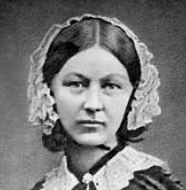
By mortifying vanity we do ourselves no good. It is the want of interest in our life which produces it; by filling up that want of interest in our life we can alone remedy it. And, did we even see this, how can we make the difference? How obtain the interest which society declares she does not want, and we cannot want?
6 days ago
It is no longer the moral, religious, spiritual condition of the people that is our concern, but their physical, practical, economical condition, as regulated by public laws.
Just now
Live always in the best company when you read.
▼
Source
source
Vol. I, ch. 10, p. 370
4 months 1 week ago
The machine is only a tool after all, which can help humanity progress faster by taking some of the burdens of calculations and interpretations off its back. The task of the human brain remains what it has always been; that of discovering new data to be analyzed, and of devising new concepts to be tested.
3 months 5 days ago
Think to yourself that every day is your last; the hour to which you do not look forward will come as a welcome surprise.
▼
Source
source
Book I, epistle iv, line 13-14

3 weeks 1 day ago
An old fairy tale has it that science began with the rejection of superstition. In fact it was the rejection of rationalism that gave birth to scientific inquiry. Ancient and medieval thinkers believed the world could be understood by applying first principles. Modern science begins when observation and experiment come first, and the results are accepted even when what they show seems to be impossible.
▼
Source
source
Foreword: Two Attempts to Cheat Death (pp. 5-6)

3 months 2 weeks ago
Every faculty in one man is the measure by which he judges of the like faculty in another. I judge of your sight by my sight, of your ear by my ear, of your reason by my reason, of your resentment by my resentment, of your love by my love. I neither have, nor can have, any other way of judging about them.
▼
Source
source
Section I, Chap. III.
1 month 1 week ago
Mutation may be random, but selection definitely is not.
▼
Source
source
Chapter 3, "The Message from the Mountain" (p. 82)

4 months 3 days ago
To become like God is the ultimate end of all.
3 months 2 weeks ago
The very man who has argued you down will sometimes be found, years later, to have been influenced by what you said.
▼
Source
source
Reflections on the Psalms (1958), ch. VII: Connivance, p. 73
1 month 1 week ago
National loyalty is founded in the love of place, of the customs and traditions that have been inscribed in the landscape and of the desire to protect these good things through a common law and a common loyalty.
2 months 1 week ago
A person is strong only when he stands upon his own truth, when he speaks and acts from his deepest convictions. Then, whatever the situation he may be in, he always knows what he must say and do. He may fall, but he cannot bring shame upon himself or his cause. If we seek the liberation of the people by means of a lie, we will surely grow confused, go astray, and lose sight of our objective, and if we have any influence at all on the people we will lead them astray as well - in other words, we will be acting in the spirit of reaction and to its benefit.
▼
Source
source
"Appendix A"
2 months 1 week ago
The division of Philosopher and Poet is only apparent, and to the disadvantage of both. It is a sign of disease, and of a sickly constitution.
2 months 1 week ago
If this superstitious fear of Spirits were taken away, and with it, Prognostiques from Dreams, false Prophecies, and many other things depending thereon, by which, crafty ambitious persons abuse the simple people, men would be much more fitted then they are for civill Obedience.
▼
Source
source
The First Part, Chapter 2, p. 8
3 months 3 days ago
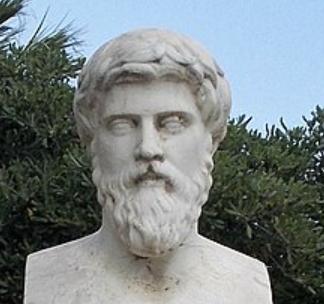
He made one of Antipater's recommendation a judge; and perceiving afterwards that his hair and beard were coloured, he removed him, saying, "I could not think one that was faithless in his hair could be trusty in his deeds."
▼
Source
source
40 Philip
1 month 1 week ago
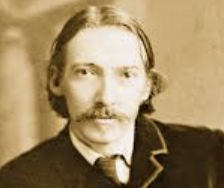
Give us grace and strength to forbear and to persevere. Give us courage and gaiety and the quiet mind, spare to us our friends, soften to us our enemies.
▼
Source
source
Prayer, inscribed on the bronze memorial to Stevenson in St. Giles Cathedral, Edinburgh, Scotland
1 week 4 days ago
It is no coincidence that the ABM Treaty was signed midway between the delinking of the U.S. dollar from the gold standard in 1971 and the first oil crisis in 1973. These were the years not only of monetary and economic crises but also of both the beginning of the destruction of the welfare state and the shift of the hegemony of economic production from the factory to more social and immaterial sectors. One might think of these various transformations as different faces of one common phenomenon, one grand social transformation.
▼
Source
source
39
2 months 2 weeks ago
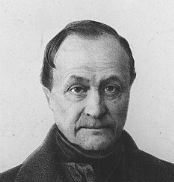
There are three successive states of morality answering to the three principal stages of human life; the personal, the domestic, and the social stage.
▼
Source
source
p. 104
4 months 3 days ago
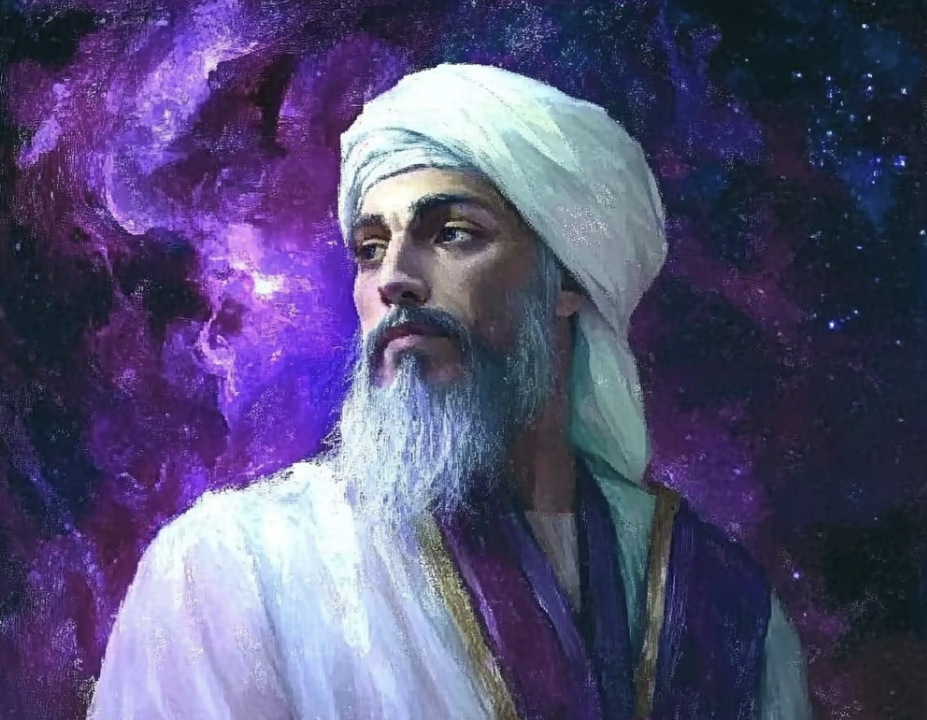
An ignorant doctor is the aide-de-camp of death.
1 week 4 days ago
The fact of being within capital and sustaining capital is what defines the proletariat as a class.
▼
Source
source
53
CivilSimian.com created by AxiomaticPanic, CivilSimian, Kalokagathia