


3 months 2 weeks ago
In reality, during the continuance of any one regulated proportion, between the respective values of the different values of the different metals in the coin, the value of the most precious metal regulates the value of the whole coin.
▼
Source
source
Chapter V, p. 50.

3 months 2 weeks ago
People will tell us that without the consolations of religion they would be intolerably unhappy. So far as this is true, it is a coward's argument. Nobody but a coward would consciously choose to live in a fool's paradise. When a man suspects his wife of infidelity, he is not thought the better of for shutting his eyes to the evidence. And I cannot see why ignoring evidence should be contemptible in one case and admirable in the other.
▼
Source
source
"Is There a God?", 1952
2 months 2 weeks ago
Before either of us knew it, we belonged to each other.

3 months 2 weeks ago
If production be capitalistic in form, so, too, will be reproduction.
▼
Source
source
Vol. I, Ch. 23, pg. 620.
3 months 2 weeks ago
I think all the great religions of the world - Buddhism, Hinduism, Christianity, Islam, and Communism - both untrue and harmful. It is evident as a matter of logic that, since they disagree, not more than one of them can be true. With very few exception, the religions which a man accepts is that of the community in which he lives, which makes it obvious that the influence of environment is what has led him to accept the religion in question.
▼
Source
source
Preface, 1957

4 months 1 week ago
Scientists have pushed back the horizon of time from the biblical 6,000 years to 4,600,000,000 years for the age of Earth a 760,000-fold increase.

3 months 1 week ago
What is troubling us is the tendency to believe that the mind is like a little man within.
▼
Source
source
Remarks to John Wisdom, quoted in Zen and the Work of WIttgenstein by Paul Weinpaul in The Chicago Review Vol. 12, (1958), p. 70

2 months 1 week ago
Hope is the normal form of delirium.

1 month 2 weeks ago
Pure and complete sorrow is as impossible as pure and complete joy.
▼
Source
source
Bk. XV, ch. 1
6 days ago
To my complete surprise, that exposure to out-of-date scientific theory and practice radically undermined some of my basic conceptions about the nature of science and the reasons for its special success.Those conceptions were ones I had previously drawn partly from scientific training itself and partly from a long-standing avocational interest in the philosophy of science. Somehow, whatever their pedagogic utility and their abstract plausibility, those notions did not at all fit the enterprise that historical study displayed. Yet they were and are fundamental to many discussions of science, and their failures of verisimilitude therefore seemed thoroughly worth pursuing. The result was a drastic shift in my career plans, a shift from physics to history of science and then, gradually, from relatively straightforward historical problems back to the more philosophical concerns that had initially led me to history.
1 month 1 week ago
I think that New York is not the cultural center of America, but the business and administrative center of American culture.
▼
Source
source
BBC radio interview, The Listener
4 months 1 week ago
A robot may not injure a human being, or, through inaction, allow a human being to come to harm.

2 months 2 weeks ago
Idea or Vision, in its sensuous meaning, would be something that could be perceived only by the bodily eye and not by any other sense such as taste, hearing, etc.; it would be such a thing as a rainbow, or the forms which pass before us in dreams. Idea or Vision, in its supersensuous meaning, would denote, first of all, in conformity with the sphere in which the word is to be valid, something that cannot be perceived by the body at all, but only by the mind; and then, something that cannot, as many other things can, be perceived by the dim feeling of the mind, but only by the eye of the mind, by clear perception.
▼
Source
source
The Chief Difference Between The Germans And The Other Peoples Of Teutonic Descent p. 59
2 months 1 week ago
To understand this for sense it is not required that a man should be a geometrician or a logician, but that he should be mad. On the proposition that the volume generated by revolving the region under 1/x from 1 to infinity has finite volume.
▼
Source
source
Quoted in Mathematical Maxims and Minims by N. Rose
2 months 1 day ago
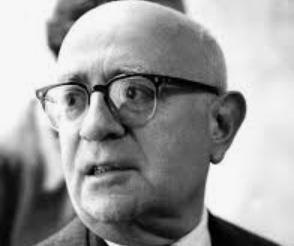
In organized groups such as the army or the Church there is either no mention of love whatsoever between the members, or it is expressed only in a sublimated and indirect way, through the mediation of some religious imagine in the love of whom the members unite and whose all-embracing love they are supposed to imitate in their attitude towards each other. ... It is one of the basic tenets of fascist leadership to keep primary libidinal energy on an unconscious level so as to divert its manifestations in a way suitable to political ends.
▼
Source
source
"Freudian Theory and the Pattern of Fascist Propaganda," The Essential Frankfurt School Reader (1982), p. 123
2 months 1 week ago
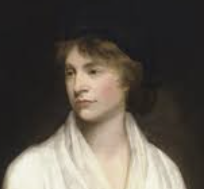
It is impossible for any man, when the most favourable circumstances concur, to acquire sufficient knowledge and strength of mind to discharge the duties of a king, entrusted with uncontrolled power; how then must they be violated when his very elevation is an insuperable bar to the attainment of either wisdom or virtue; when all the feelings of a man are stifled by flattery, and reflection shut out by pleasure! Surely it is madness to make the fate of thousands depend on the caprice of a weak fellow creature, whose very station sinks him NECESSARILY below the meanest of his subjects! But one power should not be thrown down to exalt another--for all power intoxicates weak man; and its abuse proves, that the more equality there is established among men, the more virtue and happiness will reign in society.
▼
Source
source
Ch. 1
3 weeks 1 day ago
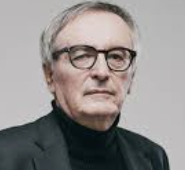
Many people today hold to a Gnostic view of things without realizing the fact. Believing that human beings can be fully understood in the terms of scientific materialism, they reject any idea of free will. But they cannot give up hope of being masters of their destiny. So they have come to believe that science will somehow enable the human mind to escape the limitations that shape its natural condition. Throughout much of the world, and particularly in western countries, the Gnostic faith that knowledge can give humans a freedom no other creature can possess has become the predominant religion.
▼
Source
source
The Faith of Puppets: The Freedom of the Marionette (p. 9)

2 months 2 weeks ago
...what I look to with seriousness is the Phalanx of Party which exists in the body of the dissenters, who are, at the very least, nine tenths of them entirely devoted, some with greater some with less zeal, to the principles of the French Revolution.
▼
Source
source
Letter to the Home Secretary, Henry Dundas (30 September 1791), quoted in Alfred Cobban and Robert A. Smith (eds.), The Correspondence of Edmund Burke, Volume VI: July 1789-December 1791 (1967), p. 419
1 month 1 week ago
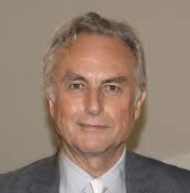
Such delusions of grandeur to think that a God with a hundred billion galaxies on his mind would give a tuppenny damn who you sleep with, or indeed whether you believe in him.
▼
Source
source
Richard Dawkins debates Rowan Williams
3 months 2 weeks ago
The moral things I wish to say to future generations is very simple. I should say love is wise hatred is foolish. In this world which is getting more and more closely interconnected, we have to learn to tolerate each other. We have to learn to put up with the fact that some people say things that we don't like. We can only live together in that way, and if we are to live together and not die together we must learn the kind of charity and kind of tolerance which is absolutely vital to the continuation of human life on this planet.
4 months 1 week ago
What, then, of human activities? Is humankind itself hastening its own end? Man has, for instance, been burning carbon-containing fuel — wood, coal, oil, gas — at a steadily accelerating rate. All these fuels form carbon dioxide. Some is absorbed by plants and the oceans but not as fast as it is produced. This means the carbon dioxide content of the air is going up — slightly but nevertheless up. Carbon dioxide retains heat, and even a small rise means a warming of the Earth's atmosphere. This may result in the melting of the polar ice caps with unusual speed, flooding the world before we have learned climate control. In reverse, our industrial civilization is making our atmosphere dustier so that it reflects more sunlight away and cools the Earth slightly — thus making possible a glacial advance in a few centuries, also before we have learned climate control.

3 months 2 weeks ago
To be ignorant of the past is to remain a child.
▼
Source
source
Cicero

1 month 1 week ago
Ads represent the main channel of intellectual and artistic effort in the modern world.
▼
Source
source
Commonweal, Vol. 58 (1953), p. 557
3 months 4 weeks ago
Whilst in speaking of human things, we say that it is necessary to know them before we can love them...the saints on the contrary say in speaking of divine things that it is necessary to love them in order to know them, and that we only enter truth through charity.
2 months 3 weeks ago
If all things are in common among friends, the most precious is Wisdom. What can Juno give which thou canst not receive from Wisdom? What mayest thou admire in Venus which thou mayest not also contemplate in Wisdom? Her beauty is not small, for the lord of all things taketh delight in her. Her I have loved and diligently sought from my youth up.
▼
Source
source
As quoted in Giordano Bruno : His Life and Thought (1950) by Dorothea Waley Singer


3 months 2 weeks ago
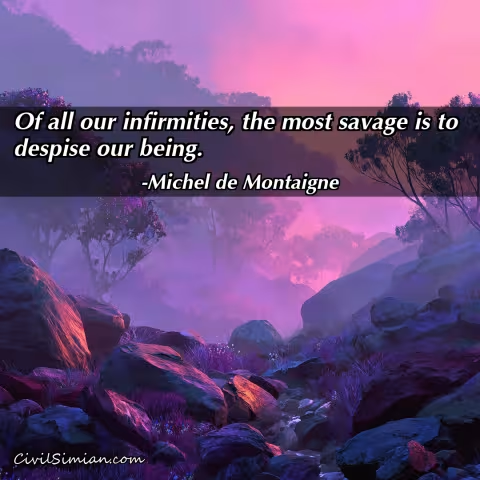
That virtue we appreciate is as much ours as another's. We see so much only as we possess.
▼
Source
source
June 22, 1839
2 months 2 weeks ago
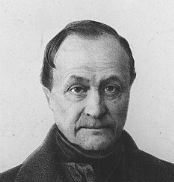
The mathematical thermology created by Fourier may tempt us to hope that, as he has estimated the temperature of the space in which we move, me may in time ascertain the mean temperature of the heavenly bodies: but I regard this order of facts as for ever excluded from our recognition. We can never learn their internal constitution, nor, in regard to some of them, how heat is absorbed by their atmosphere. We may therefore define Astronomy as the science by which we discover the laws of the geometrical and mechanical phenomena presented by the heavenly bodies.
▼
Source
source
Book II: Astronomy, Ch. I: General View
2 months ago
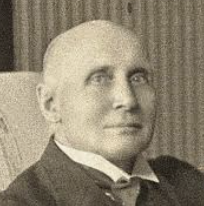
Philosophy finds religion, and modifies it; and conversely religion is among the data of experience which philosophy must weave into its own scheme. Religion is an ultimate craving to infuse into the insistent particularity of emotion that non-temporal generality which primarily belongs to conceptual thought alone. In the higher organisms the differences of tempo between the mere emotions and the conceptual experiences produce a life-tedium, unless this supreme fusion has been effected. The two sides of the organism require a reconciliation in which emotional experiences illustrate a conceptual justification, and conceptual experiences find an emotional illustration.
▼
Source
source
Pt. I, ch. 1, sec. 6.
1 month 1 day ago
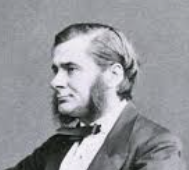
If the hypothesis of evolution is true, living matter must have arisen from non-living matter; for by the hypothesis the condition of the globe was at one time such, that living matter could not have existed in it, life being entirely incompatible with the gaseous state.
▼
Source
source
In the Encyclopaedia Britannica, Ninth edition, (1876) Vol. III, "Biology", p. 689. Also quoted in Joseph Cook (1878), Biology, with Preludes on Current Events, Houghton, Osgood, p. 39
4 months 4 days ago
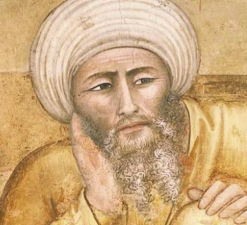
To master this instrument the religious thinker must make a preliminary study of logic, just as the lawyer must study legal reasoning. This is no more heretical in the one case than in the other. And logic must be learned from the ancient masters, regardless of the fact that they were not Muslims.
3 months 3 weeks ago
Truth will sooner come out from error than from confusion.
▼
Source
source
Aphorism 20
1 month 1 week ago
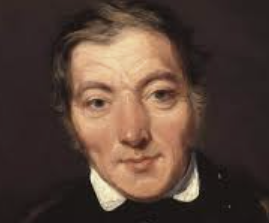
Is it not the interest of the human race, that every one should be so taught and placed, that he would find his highest enjoyment to arise from the continued practice of doing all in his power to promote the well-being, and happiness, of every man, woman, and child, without regard to their class, sect, party, country or colour?
▼
Source
source
Paper Dedicated to the Governments of Great Britain, Austria, Russia, France, Prussia and the United States of America (1841) 17th of "20 Questions to the Human Race"

2 months 1 week ago
Have ye not read, that he which made them at the beginning made them male and female, And said, For this cause shall a man leave father and mother, and shall cleave to his wife: and they twain shall be one flesh? Wherefore they are no more twain, but one flesh. What therefore God hath joined together, let not man put asunder.
▼
Source
source
19:4-6 (KJV)
1 month 1 week ago
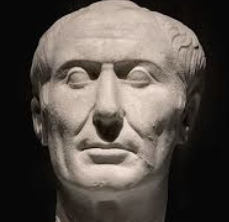
Either be silent or say something better than silence.
▼
Source
source
Maxim 960

4 months 2 weeks ago
Death cannot explain itself. The earnestness consists precisely in this, that the observer must explain it to himself.
3 months 2 weeks ago
The New Testament is an invaluable book, though I confess to having been slightly prejudiced against it in my very early days by the church and the Sabbath school, so that it seemed, before I read it, to be the yellowest book in the catalogue. Yet I early escaped from their meshes. It was hard to get the commentaries out of one's head and taste its true flavor. - I think that Pilgrim's Progress is the best sermon which has been preached from this text; almost all other sermons that I have heard, or heard of, have been but poor imitations of this. - It would be a poor story to be prejudiced against the Life of Christ because the book has been edited by Christians.

3 months 2 weeks ago
With despair, true optimism begins: the optimism of the man who expects nothing, who knows he has no rights and nothing coming to him, who rejoices in counting on himself alone and in acting alone for the good of all.
Just now
Correspondences are like small clothes before the invention of suspenders; it is impossible to keep them up.
▼
Source
source
Vol. II, letter to Catherine Crowe (31 January 1841), pp. 441-442
3 months 2 weeks ago
His business is here, it is here that he is despised and vilified, it is here that he must carry out his undertaking.
▼
Source
source
p. 67
2 months 2 weeks ago
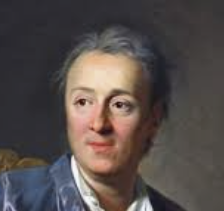
The following general definition of an animal: a system of different organic molecules that have combined with one another, under the impulsion of a sensation similar to an obtuse and muffled sense of touch given to them by the creator of matter as a whole, until each one of them has found the most suitable position for it shape and comfort.
▼
Source
source
No. 51
1 month 2 weeks ago
Men think it right to eat animals, because they are led to believe that God sanctions it. This is untrue. No matter in what books it may be written that it is not sinful to slay animals and to eat them, it is more clearly written in the heart of man than in any books that animals are to be pitied and should not be slain any more than human beings. We all know this if we do not choke the voice of our conscience.
▼
Source
source
The Pathway of Life: Teaching Love and Wisdom (posthumous), Part I, International Book Publishing Company, New York, 1919, p. 68
3 months 2 weeks ago
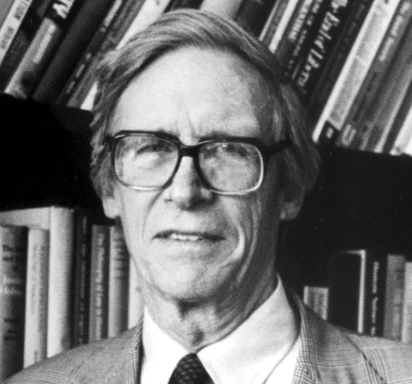
We may suppose that everyone has in himself the whole form of a moral conception.
▼
Source
source
Chapter I, Section 9, pg. 50

1 month 1 week ago
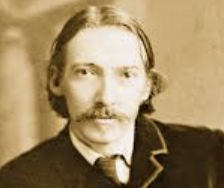
The true wisdom is to be always seasonable, and to change with a good grace in changing circumstances. To love playthings well as a child, to lead an adventurous and honourable youth, and to settle when the time arrives, into a green and smiling age, is to be a good artist in life and deserve well of yourself and your neighbour.
▼
Source
source
Crabbed Age and Youth.
1 month 3 weeks ago
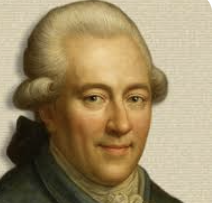
With prophecies the commentator is often a more important man than the prophet.
▼
Source
source
H 23

3 months 5 days ago
Seek after the good, and with much toil shall ye find it; the evil turns up of itself without your seeking it.
2 months 1 week ago
Beware of false prophets, which come to you in sheep's clothing, but inwardly they are ravening wolves.
▼
Source
source
Matthew 7:15 (KJV)

3 months 2 weeks ago
Every natural fact is a symbol of some spiritual fact.
▼
Source
source
Language
3 months 1 week ago
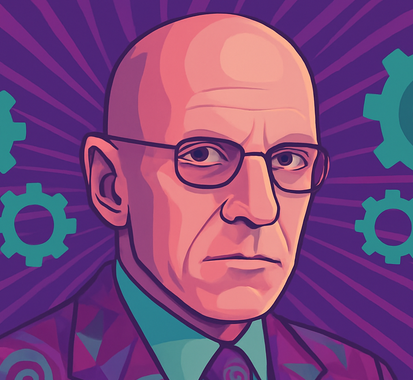
Sometimes, because my position has not been made clear enough, people think I'm a sort of radical anarchist who has an absolute hatred of power. No! What I am trying to do is to approach this extremely important and tangled phenomenon in our society, the exercise of power, with the most reflective, and I would say prudent attitude. Prudent in my analysis, in the moral and theoretical postulates I use: I try to figure out what's at stake. But to question the relations of power in the most scrupulous and attentive manner possible, looking into all the domains of its exercise, that's not the same thing as constructing a mythology of power as the beast of the apocalypse.
▼
Source
source
"Power, Moral Values, and the Intellectual", interview in History of the Present 4
CivilSimian.com created by AxiomaticPanic, CivilSimian, Kalokagathia