

2 months 1 week ago
To say, therefore, that thought cannot happen in an instant, but requires a time, is but another way of saying that every thought must be interpreted in another, or that all thought is in signs.
▼
Source
source
Vol. V, par. 254

2 months 2 weeks ago
But as to our country and our race, as long as the well compacted structure of our church and state, the sanctuary, the holy of holies of that ancient law, defended by reverence, defended by power, a fortress at once and a temple, shall stand inviolate on the brow of the British Sion-as long as the British Monarchy, not more limited than fenced by the orders of the State, shall, like the proud Keep of Windsor, rising in the majesty of proportion, and girt with the double belt of its kindred and coeval towers, as long as this awful structure shall oversee and guard the subjected land-so long as the mounds and dykes of the low, fat, Bedford level will have nothing to fear from all the pickaxes of all the levellers of France.
▼
Source
source
pp. 52-53
3 months 2 weeks ago
Properly understood, then, the desire to act justly derives in part from the desire to express most fully what we are or can be, namely free and equal rational beings with the liberty to choose.
▼
Source
source
Chapter IV, Section 40, p. 256

2 months 2 weeks ago
I discuss with myself questions of politics, love, taste, or philosophy. I let my mind rove wantonly, give it free rein to follow any idea, wise or mad that may present itself. ... My ideas are my harlots.
2 months 2 weeks ago
The most important subject, and the first problem of philosophy, is the restoration in man of the lost image of God; so far as this relates to science.Should this restoration in the internal consciousness be fully understood, and really brought about, the object of pure philosophy is attained.

1 week ago
If they be inhabited, what a scope for misery and folly; if they be un-inhabited, what a waste of space.
▼
Source
source
On other stars Attributed by John Burroughs on the first page of his 1920 book Accepting The Universe
2 months ago
It belongs to the self-respect of intellect to pursue every tangle of thought to its final unravelment.
▼
Source
source
Ch. 12: "Religion and Science", p. 258

1 month 1 week ago
As Narcissus fell in love with an outering (projection, extension) of himself, man seems invariably to fall in love with the newest gadget or gimmick that is merely an extension of his own body.

2 months 1 week ago
It is the most advanced industrial society which feels most directly threatened by the rebellion, because it is here that the social necessity of repression and alienation, of servitude and heteronomy is most transparently unnecessary, and unproductive in terms of human progress. Therefore the cruelty and violence mobilized in the struggle against the threat, therefore the monotonous regularity with which the people are made familiar with, and accustomed to inhuman attitudes and behavior-to wholesale killing as patriotic act.
3 months 2 weeks ago
All the cruelty and torment of which the world is full is in fact merely the necessary result of the totality of the forms under which the will to live is objectified.
▼
Source
source
Vol. 2, Ch. 14, § 164
1 month 1 week ago
Hayek's theory of evolutionary rationality shows how traditions and customs (those surrounding sexual relations, for example) might be reasonable solutions to complex social problems, even when, and especially when, no clear rational grounds can be provided to the individual for obeying them. These customs have been selected by the ''invisible hand'' of social reproduction, and societies that reject them will soon enter the condition of ''maladaptation,'' which is the normal prelude to extinction.
▼
Source
source
Hayek and conservatism, in Edward Feser (ed.), The Cambridge Companion to Hayek
1 month 1 week ago
A novel is balanced between a few true impressions and the multitude of false ones that make up most of what we call life. It tells us that for every human being there is a diversity of existences, that the single existence is itself an illusion in part, that these many existences signify something, tend to something, fulfill something; it promises us meaning, harmony, and even justice.
▼
Source
source
Nobel Prize lecture

3 months 2 weeks ago
All that the conscious ego can do is to formulate wishes, which are then carried out by forces which it controls very little and understands not at all.

3 months 3 weeks ago
For my own part, I may desire in general to be other than I am; I may condemn and dislike my whole form, and beg of Almighty God for an entire reformation, and that He will please to pardon my natural infirmity: but I ought not to call this repentance, methinks, no more than the being dissatisfied that I am not an angel or Cato. My actions are regular, and conformable to what I am and to my condition; I can do no better; and repentance does not properly touch things that are not in our power; sorrow does.. I imagine an infinite number of natures more elevated and regular than mine; and yet I do not for all that improve my faculties, no more than my arm or will grow more strong and vigorous for conceiving those of another to be so.
▼
Source
source
Ch. 2
2 months 6 days ago
In the ice of solitude man becomes most inexorably a question to himself, and just because the question pitilessly summons and draws into play his most secret life he becomes an experience to himself.
▼
Source
source
p. 150
2 months ago
We think in generalities, but we live in detail. To make the past live, we must perceive it in detail in addition to thinking of it in generalities.
▼
Source
source
"The Education of an Englishman" in The Atlantic Monthly, Vol. 138 (1926), p. 192.

3 months 2 weeks ago
The stars awaken a certain reverence, because though always present, they are inaccessible; but all natural objects make a kindred impression, when the mind is open to their influence. Nature never wears a mean appearance. Neither does the wisest man extort her secret, and lose his curiosity by finding out all her perfection. Nature never became a toy to a wise spirit. The flowers, the animals, the mountains, reflected the wisdom of his best hour, as much as they had delighted the simplicity of his childhood.
▼
Source
source
Nature
3 months 2 weeks ago
I was seeing what Adam had seen on the morning of his creation - the miracle, moment by moment, of naked existence.
▼
Source
source
Pages 160-61
2 weeks 1 day ago
Kaufmann's Nietzsche is important for other reasons as well. It is a book that everyone seems to be familiar with but few have actually read, as if, having succeeded in upending the traditional picture of Nietzsche, it can now be safely ignored. But reading it (or rereading it) repays the effort. Kaufmann's own views are considerably more nuanced than I have been able to suggest, and his accounts of Nietzsche's dependence of Goethe, of his naturalism-the view that human beings are continuous with the rest of the animal world, in the spirit of Darwin-the mechanisms of sublimation, and his affinities with American pragmatism are genuine and lasting contributions to our understanding of this still seductive and enigmatic philosopher who is now, thanks to this book, part and parcel of our intellectual heritage. Kaufmann's Nietzsche is still very much alive, and for that reason his Nietzsche deserves to come alive once again.
▼
Source
source
Alexander Nehamas, Foreword to Kaufmann's Nietzsche

4 months 1 week ago
Scientific theories can always be improved and are improved. That is one of the glories of science. It is the authoritarian view of the Universe that is frozen in stone and cannot be changed, so that once it is wrong, it is wrong forever.
3 months 2 weeks ago
So much of our time is spent in preparation, so much in routine and so much in retrospect, that the amount of each person's genius is confined to a very few hours.
▼
Source
source
Quoted in Simon Brown (ed.) The New England Farmer, vol. 9 (January 1857) p. 18

3 months 2 weeks ago
We Britons should rejoice that we have contrived to reach much legal democracy (we still need more of the economic) without losing our ceremonial Monarchy. For there, right in the midst of our lives, is that which satisfies the craving for inequality, and acts as a permanent reminder that medicine is not food. Hence a man's reaction to Monarchy is a kind of test. Monarchy can easily be "debunked", but watch the faces, mark well the accents of the debunkers. These are the men whose taproot in Eden has been cut - whom no rumor of the polyphony, the dance, can reach - men to whom pebbles laid in a row are more beautiful than an arch. Yet even if they desire mere equality they cannot reach it. Where men are forbidden to honor a king they honor millionaires, athletes, or film-stars instead - even famous prostitutes or gangsters. For spiritual nature, like bodily nature, will be served - deny it food and it will gobble poison.

4 months 5 days ago
Being in humaneness is good. If we select other goodness and thus are far apart from humaneness, how can we be the wise? The opening phrase of this chapter after which the chapter is named in Chinese.

3 months 2 weeks ago
I hardly know an intellectual man, even, who is so broad and truly liberal that you can think aloud in his society. Most with whom you endeavor to talk soon come to a stand against some institution in which they appear to hold stock, - that is, some particular, not universal, way of viewing things.
▼
Source
source
p. 490

3 months 2 weeks ago
The dreamer must contaminate the others by his dream, he must make them fall into it.
▼
Source
source
p. 399

1 month 2 weeks ago
And see, a kind, refined lady will devour the carcasses of these animals with full assurance that she is doing right, at the same time asserting two contradictory propositions: First, that she is, as her doctor assures her, so delicate that she cannot be sustained by vegetable food alone, and that for her feeble organism flesh is indispensable; and, secondly, that she is so sensitive that she is unable, not only herself to inflict suffering on animals, but even to bear the sight of suffering. Whereas the poor lady is weak precisely because she has been taught to live upon food unnatural to man; and she cannot avoid causing suffering to animals - for she eats them.
▼
Source
source
Ch. IX
3 months 3 days ago
It is indifferent to me where I am to begin, for there shall I return again.
▼
Source
source
Frag. B 5, quoted by Proclus, Commentary on the Parmenides, 708
4 months 1 week ago
Weisinger, a couple of years ago, made up the following story: "Isaac Asimov was asked how Superman could fly faster than the speed of light, which was supposed to be an absolute limit. To this Asimov replied, 'That the speed of light is a limit is a theory; that Superman can travel faster than light is a fact.'"
1 month 2 weeks ago
The inherent contradiction of human life has now reached an extreme degree of tension: on the one side there is the consciousness of the beneficence of the law of love, and on the other the existing order of life which has for centuries occasioned an empty, anxious, restless, and troubled mode of life, conflicting as it does with the law of love and built on the use of violence. This contradiction must be faced, and the solution will evidently not be favourable to the outlived law of violence, but to the truth which has dwelt in the hearts of men from remote antiquity: the truth that the law of love is in accord with the nature of man. But men can only recognize this truth to its full extent when they have completely freed themselves from all religious and scientific superstitions and from all the consequent misrepresentations and sophistical distortions by which its recognition has been hindered for centuries.
▼
Source
source
VI
2 months ago
When you are criticising the philosophy of an epoch, do not chiefly direct your attention to those intellectual positions which its exponents feel it necessary explicitly to defend. There will be some fundamental assumptions which adherents of all the variant systems within the epoch unconsciously presuppose. Such assumptions appear so obvious that people do not know what they are assuming because no other way of putting things has ever occurred to them. With these assumptions a certain limited number of types of philosophic systems are possible, and this group of systems constitutes the philosophy of the epoch.
▼
Source
source
Ch. 3: "The Century of Genius", p. 69

2 months 3 weeks ago
No evil is honorable; but death is honorable; therefore death is not evil.
▼
Source
source
As quoted in Epistles No. 82, by Seneca the Younger
2 months 1 week ago
By striving to do the impossible, man has always achieved what is possible. Those who have cautiously done no more than they believed possible have never taken a single step forward.
▼
Source
source
As quoted in The Explorers (1996) by Paolo Novaresio ISBN 1-55670-495-X
3 months 2 weeks ago
Not my idea of God, but God.
4 months 1 week ago
What I will be remembered for are the Foundation Trilogy and the Three Laws of Robotics. What I want to be remembered for is no one book, or no dozen books. Any single thing I have written can be paralleled or even surpassed by something someone else has done. However, my total corpus for quantity, quality and variety can be duplicated by no one else. That is what I want to be remembered for.
1 month 1 week ago
The university, in a society ruled by public opinion, was to have been an island of intellectual freedom where all views were investigated without restriction. ... But by consenting to play an active or "positive," a participatory role in society, the university has become inundated and saturated with the backflow of society's "problems." Preoccupied with questions of Health, Sex, Race, War, academics make their reputations and their fortunes. ... Any proposed reforms of liberal education which might bring the university into conflict with the whole of the U.S.A. are unthinkable. Increasingly, the people "inside" are identical in their appetites and motives with the people "outside" the university.
▼
Source
source
p. 18
2 months 1 day ago
By reducing any quality to quantity, myth economizes intelligence: it understands reality more cheaply.
▼
Source
source
p. 153
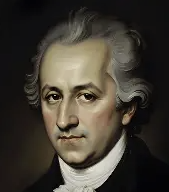
1 week 1 day ago
When young, one is confident to be able to build palaces for mankind, but when the time comes one has one's hands full just to be able to remove their trash.
▼
Source
source
Letter to Johann Kaspar Lavatar
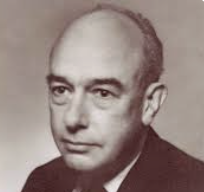
2 months 1 day ago
Creatures inveterately wrong in their inductions have a pathetic but praiseworthy tendency to die before reproducing their kind.
▼
Source
source
"Natural Kinds", in Ontological Relativity and Other Essays (1969), p. 126

2 months 1 day ago
I also am other than what I imagine myself to be. To know this is forgiveness.
▼
Source
source
p. 200
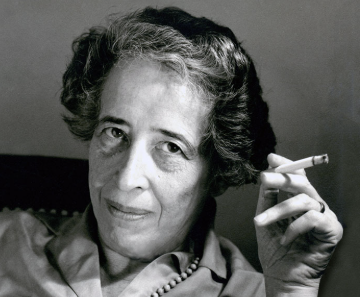
3 months 2 weeks ago
It is, I think, safe to say that nothing was more alien to the minds of the scientists, who brought about the most radical and most rapid revolutionary process the world has ever seen, than any will to power. Nothing was more remote than any wish to 'conquer space' and to go to the moon. It was indeed their search for 'true reality' that led them to lose confidence in appearances, in the phenomena as they reveal themselves of their own accord to human sense and reason. They were inspired by an extraordinary love of harmony and lawfulness which taught them that they would have to step outside any merely given sequence or series of occurrences if they wanted to discover the overall beauty and order of the whole, that is, the universe.
▼
Source
source
On scientific discovery, in Between Past and Future (1961) as quoted in Ideas in literature: Ten things Hannah Arendt said that are eerily relevant in today's political times
4 months 5 days ago
Among the appliances to transform the people, sound and appearances are but trivial influences.
1 week 1 day ago
The great man is the one who does not lose his child's heart.
▼
Source
source
Book 4, pt. 2, v. 12
2 months 6 days ago
You do not attain to knowledge by remaining on the shore and watching the foaming waves, you must make the venture and cast yourself in, you must swim, alert and with all your force, even if a moment comes when you think you are losing consciousness; in this way, and in no other, do you reach anthropological insight.
▼
Source
source
p. 148
1 week ago
A loving heart is the beginning of all knowledge.
▼
Source
source
Article on Biography.

3 months 2 weeks ago
It's not too much to say that every indication of Design in the Kosmos is evidence against the Omnipotence of the Designer. For what is meant by Design? Contrivance: the adaptation of means to an end. But the necessity for contrivance - the need of employing means - is a consequence of the limitation of power. Who would have recourse to means if to attain his end his mere word was sufficient? The very idea of means implies that the means have an efficacy which the direct action of the being who employs them has not. ...
1 month 3 weeks ago
Part of what makes moral philosophy an anachronistic field is that its practitioners continue to argue in this very traditional and aprioristic way even though they themselves do not claim that one can provide a systematic and indubitable 'foundation' for the subject. Most of them rely on what are supposed to be 'intuitions' without claiming that those intuitions deliver uncontroversial ethical premises, on the one hand, or that they have an ontological or epistemological explanation of the reliability of those intuitions, on the other.
▼
Source
source
How Not to Solve Ethical Problems
3 months 2 weeks ago
A just system must generate its own support.
▼
Source
source
Chapter V, Section 41, p. 261
1 month 2 weeks ago
Science may fall back on its stupid excuse that science works for science, and that when it has been developed by the scientists it will become accessible to the people also; but art, if it be art, should be accessible to all, and particularly to those for whom it is produced. And the position of our art strikingly arraigns the producers of art for not wishing, not knowing how, and being unable, to serve the people.
3 months 3 days ago
Alcibiades had a very handsome dog, that cost him seven thousand drachmas; and he cut off his tail, "that," said he, "the Athenians may have this story to tell of me, and may concern themselves no further with me."
▼
Source
source
50 Alcibiades
3 months 2 weeks ago
It is easier to discover a deficiency in individuals, in states, and in providence, than to see their real import or value.
CivilSimian.com created by AxiomaticPanic, CivilSimian, Kalokagathia