


3 months 6 days ago
By Thy perfect Intelligence, O MazdaThou didst first create us having bodies and spiritual consciences,And by Thy Thought gave our selves the power of thought, word, and deed.Thus leaving us free to choose our faith at our own will.
▼
Source
source
Ahunuvaiti Gatha; Yasna 31, 11.

4 months 5 days ago
Moderation, in the pursuit of honors or riches, is the only security against disappointment and vexation. A wise man, therefore, will prefer the simplicity of rustic life to the magnificence of courts.
2 months 2 weeks ago
We are all instruments endowed with feeling and memory. Our senses are so many strings that are struck by surrounding objects and that also frequently strike themselves.
▼
Source
source
"Conversation Between D'Alembert and Diderot"
2 months ago
Sensitiveness without impulse spells decadence, and impulse without sensitiveness spells brutality.
▼
Source
source
Ch. 13: "Requisites for Social Progress", p. 280

3 months 4 weeks ago
In his arms, my lady lay asleep, wrapped in a veil. He woke her then and trembling and obedient. She ate that burning heart out of his hand; Weeping I saw him then depart from me.
▼
Source
source
Chapter I, First Sonnet (tr. Mark Musa)

3 months 2 weeks ago
The religion and philosophy of the Hebrews are those of a wilder and ruder tribe, wanting the civility and intellectual refinements and subtlety of Vedic culture.
▼
Source
source
A Tribute to Hinduism, 2008

3 months 3 weeks ago
For the inquisition of Final Causes is barren, and like a virgin consecrated to God produces nothing.
▼
Source
source
Book III, viii

1 month 4 weeks ago
The quest for certainty blocks the search for meaning. Uncertainty is the very condition to impel man to unfold his powers.
▼
Source
source
Ch. 3

3 months 2 weeks ago
Wisdom: The first error is that of the southern people, and it consists in holding that these eastern and western places are real places. ... give no quarter to that thought, whether it threatens you with fear, or tempts you with hopes. For this is Superstition and all who believe it will come in the end to the swamps to the south and the jungles to the far south.
▼
Source
source
Part of the same error is to think that the Landlord is a real man: Pilgrim's Regress 117

4 months 1 week ago
Fate is not in man but around him.
3 months 2 weeks ago
How very paltry and limited the normal human intellect is, and how little lucidity there is in the human consciousness, may be judged from the fact that, despite the ephemeral brevity of human life, the uncertainty of our existence and the countless enigmas which press upon us from all sides, everyone does not continually and ceaselessly philosophize, but that only the rarest of exceptions do.
▼
Source
source
Vol. 2, Ch. 3, § 39

2 months 3 weeks ago
Most men and women, by birth or nature, lack the means to advance in wealth and power, but all have the ability to advance in knowledge.
▼
Source
source
As quoted in The Golden Ratio (2002) by Mario Livio

1 month 4 weeks ago
My theory was that we are all fundamentally 'multiple personalities', beginning with the baby and the child, and slowly developing into more complex selves. If, for some reason, we abruptly cease to develop -- through some trauma that undermines self-confidence -- all those potential personalities are stunted and repressed. And some accident or violent shock may give one of them the opportunity to 'take over'. This suggests, of course, that in some mysterious sense, our 'future' personalities are already there, in embryo, so to speak, and that they also develop as we mature. We move from personality to personality, as we might climb a ladder. The Beethovens and Leonardos got further up the ladder than most of us; yet even they failed to reach the top, as we can see if we study their lives.
▼
Source
source
pp. 228- 229
2 months 6 days ago
The possibility of peace, on whose behalf many are working, might perhaps become actual because the technical advances in offensive weapons make the prospect of a European war so disastrous, and because, if the nations were at grips again, even the victorious aggressor would be ruined. But there still remains open the possibility of a new war which, more dreadful than any that have preceded it would make an end of contemporary Europeans.

3 months 2 weeks ago
Prejudice is an opinion without judgement.
▼
Source
source
"Prejudices", 1764
3 months 2 weeks ago
A great affliction of all Philistines is that idealities afford them no entertainment, but to escape from boredom they are always in need of realities.
▼
Source
source
E. Payne, trans. (1974) Vol. 1, p. 345
1 month 2 weeks ago
For consequentialists, of course, the imperative to imagine the consequences of living in a world in which everyone would act as you choose to act leads to the conclusion that some practices are utterly untenable, not because they are irrational, but because they inflict consequential damage that is unwanted. In both cases, I would suggest, a potential action is figured as hypothetically reciprocal: one's own act comes back in the imagined form of another's act; another might act on me as I would act on the other, and the consequences are unacceptable because of those damaging consequences.
▼
Source
source
p. 78

3 months 1 week ago
Nevertheless, among all the temptations I will have to resist today. There would be the temptation of memory: to recount what was for me, and for those of my generation who shared it during a whole lifetime. The experience of Marxism. The quasi-paternal figure of Marx, the way it fought in us with other filiations, the reading of texts and the interpretation of a world in which the Marxist inheritance was-and still remains, and so it will remain-absolutely and thoroughly determinate. One need not be a Marxist or a communist in order to accept this obvious fact. We all live in a world, some would say a culture, that still bears, at an incalculable depth, the mark of this inheritance, whether in a directly visible fashion or not.
▼
Source
source
Injunctions of Marx

2 months 3 weeks ago
No one entrusts a secret to a drunken man; but one will entrust a secret to a good man; therefore, the good man will not get drunk.
▼
Source
source
As quoted in Epistulae morales ad Lucilium by Seneca, Epistle LXXXIII (trans. R. M. Gummere)

1 week 4 days ago
But there has also been the rise of populist movements within existing liberal democracies, and particularly within the United States and Britain, which were... the leaders of the neoliberal revolution... in the 1980s...
▼
Source
source
20:01
1 day ago
...racial hatred is not a natural phenomenon innate in man. It is the product of ideologies. But even if such a thing as a natural and inborn hatred between various races existed, it would not render social cooperation futile and would not invalidate Ricardo's theory of association. Social cooperation has nothing to do with personal love or with a general commandment to love one another. People do not cooperate under the division of labor because they love or should love one another. They cooperate because this best serves their own interests. Neither love nor charity nor any other sympathetic sentiments but rightly understood selfishness is what originally impelled man to adjust himself to the requirements of society, to respect the rights and freedoms of his fellow men and to substitute peaceful collaboration for enmity and conflict.
▼
Source
source
Part 2, VIII.84

3 months 2 weeks ago
Intellectuals cannot be good revolutionaries; they are just good enough to be assassins.
▼
Source
source
Act 5, sc. 3

1 month 6 days ago
Far less import than your belief of whether god exists is what you think your belief entails. Does it direct your behaviour by rules and commandments that are set out before you or does it require you to think them through yourself? Does it require you to try to make sense of the world, or does it give up on sense itself? And I think these are the crucial distinctions. Not whether you add belief in a god to them.

3 months 3 weeks ago
No matter that we may mount on stilts, we still must walk on our own legs. And on the highest throne in the world, we still sit only on our own bottom.
▼
Source
source
Ch. 13

3 months 3 weeks ago
The worst evil is hardness of heart. Those who do not repent, who deliberately remain in their habits of sin, have the most to fear.
▼
Source
source
p. 146
4 months 1 day ago
The Catholic faith, I now realized could be maintained without presumption. This was especially true after I had heard one or two parts of the Old Testament explained allegorically, whereas before this, when I had interpreted them literally, they had killed me spiritually.
▼
Source
source
A. Outler, trans. (Dover: 2002), Book 5, Chapter 14, p. 81.
4 months 1 week ago
Rhetoric, it seems, is a producer of persuasion for belief, not for instruction in the matter of right and wrong. And so the rhetorician's business is not to instruct a law court or a public meeting in matters of right and wrong, but only to make them believe.
1 month 4 days ago
Joe Hume talked to me very earnestly about the necessity of an union of Liberals. He said much about Ballot and the Franchise. I told him that I could easily come to some compromise with him and his friends on these matters, but that there were other questions about which I feared that there was an irreconcileable difference, particularly the vital question of national defence. He seemed quite confounded, and had absolutely nothing to say. I am fully determined to make them eat their words on that point, or to have no political connection with them.
▼
Source
source
Journal entry (November 1852), quoted in George Otto Trevelyan, The Life and Letters of Lord Macaulay, Volume II (1876), p. 368

1 month 1 week ago
For tribal man, space was the uncontrollable mystery. For technological man it is time that occupies the same role.
▼
Source
source
p. 85; "Magic that Changes Mood")
1 month 4 weeks ago
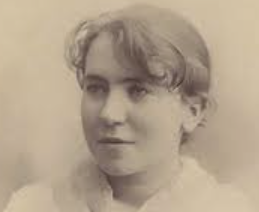
Human nature asserts itself regardless of all laws, nor is there any plausible reason why nature should adapt itself to a perverted conception of morality.
1 month 1 week ago
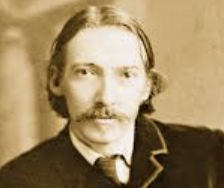
Just now, when every one is bound, under pain of a decree in absence convicting them of lèse-respectability, to enter on some lucrative profession, and labour therein with something not far short of enthusiasm, a cry from the opposite party, who are content when they have enough.
▼
Source
source
An Apology for Idlers.
3 months 2 weeks ago
I can be twenty women, one hundred, if that's what you want, all women. Ride with me behind you, I weigh nothing, your horse will not feel me. I want to be your whorehouse!
▼
Source
source
Act 3, sc. 4
1 month 2 weeks ago
Quite apart from assiduous efforts to restrict the use of violence as means rather than an end, the actualization of violence as a means can inadvertently become its own end, producing new violence, producing violence anew, reiterating the license, and licensing further violence. Violence does not exhaust itself in the realization of a just end; rather, it renews itself in directions that exceed both deliberate intention and instrumental schemes. In other words, by acting as if the use of violence can be a means to achieve a nonviolent end, one imagines that the practice of violence does not in the act posit violence as its own end. The technē is undermined by the praxis, and the use of violence only makes the world into a more violent place, by bringing more violence into the world.
▼
Source
source
p. 20

1 week ago
As the Swiss inscription says: Sprechen ist silbern, Schweigen ist golden- "Speech is silvern, Silence is golden"; or, as I might rather express it: speech is of time, silence is of eternity.
▼
Source
source
Bk. III, ch. 3.
4 months 2 weeks ago
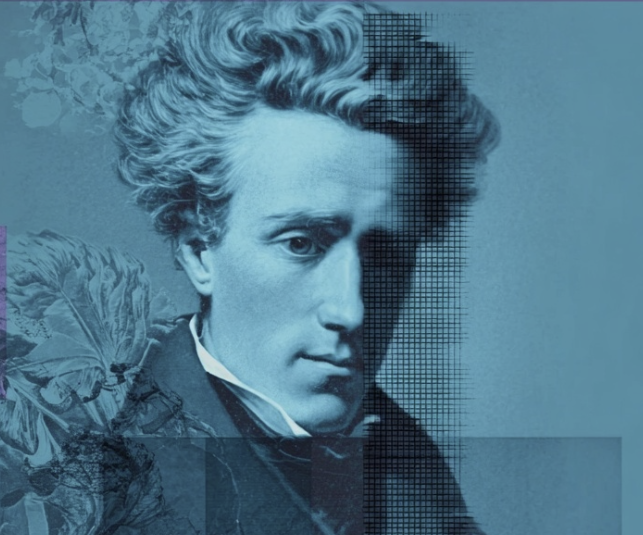
It is as useless for a person to want first of all to decide the externals and after that the fundamentals as it is for a cosmic body, thinking to form itself, first of all to decide the nature of its surface, to what bodies it should turn its light, which its dark side, without first letting the harmony of centrifugal and centripetal forces realize its existence and letting the rest come of itself. One must learn to know oneself before knowing anything else (gnothi seauton). Not until a person has inwardly understood himself and then sees the course he is to take does his life gain peace and meaning.

2 months 2 weeks ago
People will not look forward to posterity, who never look backward to their ancestors.
▼
Source
source
Volume iii, p. 274
1 month 4 weeks ago
The basic paradox about sex is that it always seems to be offering more than it can deliver. A glimpse of a girl undressing through a lighted bedroom window induces a vision of ecstatic delight, but in the actual process of persuading the girl into bed, the vision somehow evaporates.
▼
Source
source
p. 16

3 months 2 weeks ago
We do not count a man's years until he has nothing else to count.
▼
Source
source
Old Age
4 months 2 weeks ago
Magister Adler was deeply moved by something higher, but now when he wants to express his thoughts in words, wants to communicate, he confuses the subjective with the objective, his altered subjective state with an external event, the dawning of a light upon him with the coming into existence of something new outside him, the falling of the veil from his eyes with his having had a revelation. Subjectively his emotion is carried to the extreme; he wants to select the most powerful expression to describe it and by means of a mental deception grasps the objective qualification: having had a revelation.
1 week 3 days ago
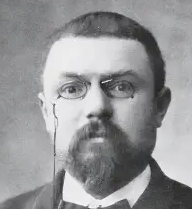
But, one will say, if raw experience can not legitimatize reasoning by recurrence, is it so of experiment aided by induction? We see successively that a theorem is true of the number 1, of the number 2, of the number 3 and so on; the law is evident, we say, and it has the same warranty as every physical law based on observations, whose number is very great but limited. But there is an essential difference. Induction applied to the physical sciences is always uncertain, because it rests on the belief in a general order of the universe, an order outside of us. Mathematical induction, that is, demonstration by recurrence, on the contrary, imposes itself necessarily, because it is only the affirmation of a property of the mind itself.
▼
Source
source
Ch. I. (1905) Tr. George Bruce Halstead

2 months 3 days ago
There is nothing truly real, save that which feels, suffers, pities, loves and desires, save consciousness. And we need God in order to save consciousness; not in order to think existence, but in order to live it; not in order to know the why and how of it, but in order to feel the wherefore of it.
3 months 2 weeks ago
In the long run the answer to all those who object to the doctrine of hell, is itself a question: What are you asking God to do? To wipe out their past sins and, at all costs, to give them a fresh start, smoothing every difficulty and offering every miraculous help? But He has done so, on Calvary. To forgive them? They will not be forgiven. To leave them alone? Alas, I am afraid that is what He does.
1 month 3 weeks ago
We say that someone occupies an official position, whereas it is the official position that occupies him.
▼
Source
source
F 47

3 weeks 2 days ago
Like other human freedoms, the freedoms embodied in market institutions are justified inasmuch as they meet human needs. Insofar as they fail to do this they can reasonably be altered. This is true not only of the rights that are involved in market institutions. It is true of all human rights.
▼
Source
source
'Modus Vivendi' (p.36)

2 months 1 day ago
Creatures inveterately wrong in their inductions have a pathetic but praiseworthy tendency to die before reproducing their kind.
▼
Source
source
"Natural Kinds", in Ontological Relativity and Other Essays (1969), p. 126
2 months 1 week ago
Intuition is a method of feeling one's way intellectually into the inner heart of a thing to locate what is unique and inexpressible in it.
▼
Source
source
Quoted in Georgia O'Keeffe, 1887-1986 : Flowers in the Desert (2000) by Britta Benke, p. 28
CivilSimian.com created by AxiomaticPanic, CivilSimian, Kalokagathia