

3 months 2 weeks ago
I believe that political power also exercises itself through the mediation of a certain number of institutions that seem to have nothing in common with political power, that have the appearance of being independent, but are not.
▼
Source
source
Debate with Noam Chomsky, École Supérieure de Technologie à Eindhoven, November 1971



4 months 3 weeks ago
The truth is always in the minority, and the minority is always stronger than the majority, because as a rule the minority is made up of those who actually have an opinion, while the strength of the majority is illusory, formed of that crowd which has no opinion - and which therefore the next moment (when it becomes clear that the minority is the stronger) adopts the latter's opinion, which now is in the majority, i.e. becomes rubbish by having the whole retinue and numerousness on its side, while the truth is again in a new minority.

1 month 2 weeks ago
We are survival machines-robot vehicles blindly programmed to preserve the selfish molecules known as genes. This is a truth which still fills me with astonishment.
▼
Source
source
Preface to the first edition

2 months 3 weeks ago
I have seen the truth; I have seen and I know that people can be beautiful and happy without losing the power of living on earth. I will not and cannot believe that evil is the normal condition of mankind. And it is just this faith of mine that they laugh at. But how can I help believing it? I have seen the truth - it is not as though I had invented it with my mind, I have seen it, seen it, and the living image of it has filled my soul for ever. I have seen it in such full perfection that I cannot believe that it is impossible for people to have it.

2 months 2 weeks ago
Sleep on now, and take your rest: behold, the hour is at hand, and the Son of man is betrayed into the hands of sinners. Rise, let us be going: behold, he is at hand that doth betray me.
▼
Source
source
26:45-46 (KJV)

3 months 3 weeks ago
Everyone feels benevolent if nothing happens to be annoying him at the moment.
4 months 3 weeks ago
Parmenides: I was pleased with you, Socrates, because you would not discuss the doubtful question in terms of visible objects or in relation to them, but only with reference to what we conceive most entirely by the intellect and may call ideas… But if you wish to get better training, you must do something more than that; you must consider not only what happens if a particular hypothesis is true, but also what happens if it is not true.

3 months ago
I believe the world grows near its end, yet is neither old nor decayed, nor will ever perish upon the ruins of its own principles.
▼
Source
source
Section 45
4 months 2 days ago
But the Jews are so hardened that they listen to nothing; though overcome by testimonies they yield not an inch. It is a pernicious race, oppressing all men by their usury and rapine. If they give a prince or magistrate a thousand florins, they extort twenty thousand from the subjects in payment. We must ever keep on guard against them.
▼
Source
source
863
4 days ago
After Riemann had made known his discoveries, mathematicians busied themselves with working out his system of geometrical ideas formally; chief among these were Christoffel, Ricci, and Levi-Civita. Riemann... clearly left the real development of his ideas in the hands of some subsequent scientist whose genius as a physicist could rise to equal flights with his own as a mathematician. After a lapse of seventy years this mission has been fulfilled by Einstein.
▼
Source
source
Ch. 2 "The Metrical Continuum"
2 months 1 week ago
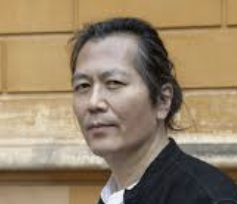
The emptiness of Zen Buddhism... creates a neighborly nearness between things.
2 months 2 weeks ago
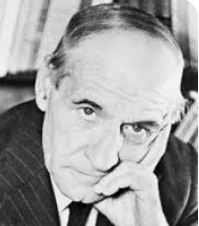
He [the "specialist"] is one who, out of all that has to be known in order to be a man of judgment, is only acquainted with one science, and even of that one only knows the small corner in which he is an active investigator. He even proclaims it as a virtue that he takes no cognisance of what lies outside the narrow territory specially cultivated by himself, and gives the name of "dilettantism" to any curiosity for the general scheme of knowledge.
▼
Source
source
Chapter XII: The Barbarism Of "Specialisation"
3 months 3 weeks ago
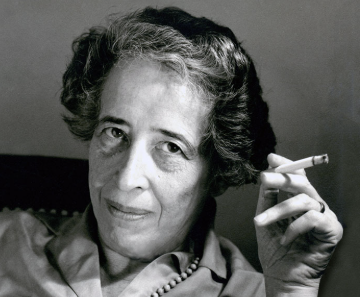
If the inner psychic ground of our individual appearance were not always the same, there could be no science of psychology, which qua science relies on a psychic "inside we are all alike," just as the science of physiology and medicine relies on the sameness of our inner organs. The monstrous sameness and pervasive ugliness so highly characteristic of the findings of modern psychology, and contrasting so obviously with the enormous variety and richness of overt human conduct, witness to the radical difference between the inside and the outside of the human body.
▼
Source
source
pp. 34-35
1 month 1 day ago
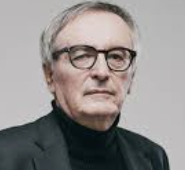
In ancient Europe, Stoics asserted that a slave could be freer than a master who suffers from self-division. In China, Daoists imagined a type of sage who responded to the flow of events without weighing alternatives. Disciples of monotheistic faiths have believed something similar: freedom, they say, is obeying God's will. What those who follow these traditions want most is not any kind of freedom of choice. Instead, what they long for is freedom from choice.
▼
Source
source
The Faith of Puppets: The Freedom of the Marionette (p. 6-7)

1 week 2 days ago
No man can suffer both severely and for a long time; Nature, who loves us most tenderly, has so constituted us as to make pain either endurable or short.

2 weeks 5 days ago
We aspire not to equality but to domination. Countries inhabited by foreign races must become again countries of serfs, farm laborers, and factory workers. The goal is not to suppress inequities, but, rather, to amplify them and to make of them a matter of course.
▼
Source
source
as translated by Asselin Charles, in "Colonial Discourse Since Christopher Columbus," Journal of Black Studies, Vol. 26, No. 2 (November 1995), p. 147
1 month 3 weeks ago
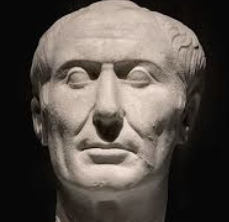
It is a very hard undertaking to seek to please everybody.
▼
Source
source
Maxim 675

3 months 3 weeks ago
Announced by all the trumpets of the sky Arrives the snow, and, driving o'er the fields, Seems nowhere to alight: the whited air Hides hills and woods, the river and the heaven, And veils the farm-house at the garden's end.
▼
Source
source
The Snow-Storm

4 months 3 weeks ago
It is only afterward that a new idea seems reasonable. To begin with, it usually seems unreasonable.

3 months 3 weeks ago
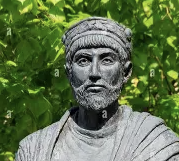
All sources of energy upon which industry depends are wasted when they are employed; and industry is expending them at a continually increasing rate. Already coal has been largely replaced by oil, and oil is being used up so fast that East and West alike conceive it necessary to their own prosperity to destroy the industry of the other. And what is true of oil is equally true of other natural resources. Every day, many square miles of forest are turned into newspaper, but there is no known process by which newspaper can be turned into forest. You will say that this need not worry us, since newspapers will be replaced by radio, but radio requires electricity, electricity requires power, and power depends upon raw materials.
▼
Source
source
Part I: Man and Nature, Ch. 4: The Limits of Human Power, p. 30
3 days ago
To what purpose, pray, exist all these things that be born? Whence come male and female? Whence the difference in kind of all things that be, amongst visible species, unless there be certain pre-existing and previously established Reasons and Causes subsisting beforehand, in the nature of a pattern? With regard to which, though we are dull of sight, yet let us strive to clear away the mist from the eyes of the soul.
3 months 2 weeks ago
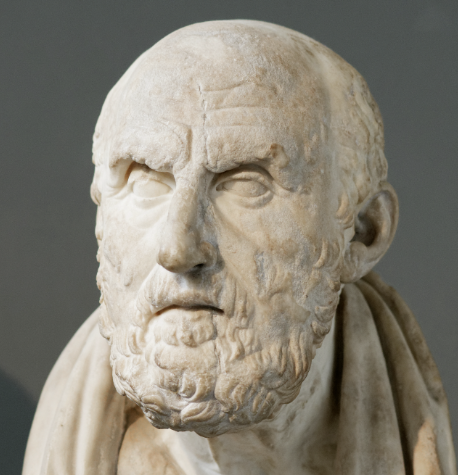
If I knew that it was fated for me to be sick, I would even wish for it; for the foot also, if it had intelligence, would volunteer to get muddy.
▼
Source
source
As quoted by Epictetus, Discourses, ii. 6. 10.

4 months 1 week ago
Love with delight discourses in my mind Upon my lady's admirable gifts...Beyond the range of human intellect.
▼
Source
source
Trattato Terzo, line 1.
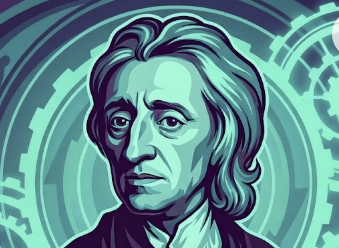
3 months 3 weeks ago
One thing I have frequently observed in children, that when they have got possession of any poor creature, they are apt to use it ill: they often torment, and treat it very roughly, young birds, butterflies, and such other poor animals which fall into their hands, and that with a seeming kind of pleasure. This I think should be watched in them, and if they incline to any such cruelty, they should be taught the contrary usage. For the custom of tormenting and killing of beasts, will, by degrees, harden their minds even towards men; and they will delight in the suffering and destruction of inferior creatures, will not be apt to be very compassionate or benign to those of their own kind. Our practice takes notice of this in the exclusion of butchers from juries of life and death.
▼
Source
source
Sec. 116
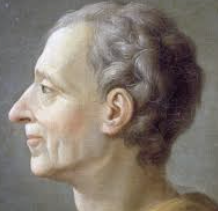
2 months 1 week ago
If I knew of something that could serve my nation but would ruin another, I would not propose it to my prince, for I am first a man and only then a Frenchman, because I am necessarily a man, and only accidentally am I French.
▼
Source
source
I.

4 months 3 days ago
The human understanding is moved by those things most which strike and enter the mind simultaneously and suddenly, and so fill the imagination; and then it feigns and supposes all other things to be somehow, though it cannot see how, similar to those few things by which it is surrounded.
▼
Source
source
Aphorism 47
3 months 3 weeks ago
There are some simple maxims [...] which I think might be commanded to writers of expository prose. First: never use a long word if a short word will do. Second: if you want to make a statement with a great many qualifications, put some of the qualifications in separate sentences. Third: do not let the beginning of your sentence lead the reader to an expectation which is contradicted by the end.
▼
Source
source
"How I Write", The Writer, September 1954
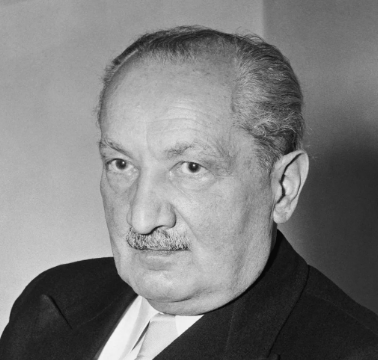
3 months 2 weeks ago
Nietzsche understands the aesthetic state of the observer and recipient on the basis of the state of the creator. Thus the effect of the artwork is nothing else than a reawakening of the creator's state in the one who enjoys the artwork. Observation of art follows in the wake of creation. Nietzsche says (SM, 821), "-the effect of artworks is arousal of the art-creating state, rapture."
▼
Source
source
p. 117

2 weeks 5 days ago
The limits of this strategy were evident as the century drew to a close.
▼
Source
source
The Marxist left had to confront the fact that actual Communist societies in the Soviet Union and China had turned into grotesque and oppressive dictatorships. p. 112
2 months 1 week ago
It is not honourable to attack an enemy without putting yourself at risk.

3 months 3 weeks ago
While loving glory so much how can you persist in a plan which will cause you to lose it?
▼
Source
source
Letters of Voltaire and Frederick the Great (New York: Brentano's, 1927), transl. Richard Aldington, letter 130 from Voltaire to Frederick II of Prussia, October 1757.
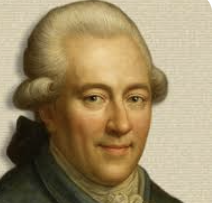
2 months 4 days ago
Those who have racked their brains to discover new proofs have perhaps been induced to do so by a compulsion they could not quite explain to themselves. Instead of giving us their new proofs they should have explained to us the motivation that constrained them to search for them.
▼
Source
source
L24
3 months 3 weeks ago
The fact that all Mathematics is Symbolic Logic is one of the greatest discoveries of our age; and when this fact has been established, the remainder of the principles of mathematics consists in the analysis of Symbolic Logic itself.
▼
Source
source
Principles of Mathematics (1903), Ch. I: Definition of Pure Mathematics, p. 5

2 months 2 weeks ago
The flesh spreads, further and further, like a gangrene upon the surface of the globe. It cannot impose limits upon itself, it continues to be rife despite its rebuffs, it takes its defeats for conquests, it has never learned anything. It belongs above all to the realm of the Creator, and it is indeed in the flesh that He has projected His maleficent instincts.
1 month 2 weeks ago
For the first time in history, the human species as a whole has gone into politics. Everyone is in the act, and there is no telling what may come of it.
▼
Source
source
To Jerusalem and Back: A Personal Account (1976), p. 38
2 months 2 weeks ago
I have always thought that clarity is a form of courtesy that the philosopher owes; moreover, this discipline of ours considers it more truly a matter of honor today than ever before to be open to all minds ... This is different from the individual sciences which increasingly [interpose] between the treasure of their discoveries and the curiosity of the profane the tremendous dragon of their closed terminology.
▼
Source
source
p. 19
2 months 4 days ago
Affectation is a very good word when someone does not wish to confess to what he would none the less like to believe of himself.
▼
Source
source
F 149
2 months 3 weeks ago
"I exist" does not follow from "there is a thought now." The fact that a thought occurs at a given moment does not entail that any other thought has occurred at any other moment, still less that there has occurred a series of thoughts sufficient to constitute a single self. As Hume conclusively showed, no one event intrinsically points to any other. We infer the existence of events which we are not actually observing, with the help of general principle. But these principles must be obtained inductively. By mere deduction from what is immediately given we cannot advance a single step beyond. And, consequently, any attempt to base a deductive system on propositions which describe what is immediately given is bound to be a failure.
▼
Source
source
p. 47.
1 month 3 weeks ago
We often attribute "understanding" and other cognitive predicates by metaphor and analogy to cars, adding machines, and other artifacts, but nothing is proved by such attributions.
3 months 3 weeks ago
Life is bristling with thorns, and I know no other remedy than to cultivate one's garden.
▼
Source
source
Letter to Pierre-Joseph Luneau de Boisjermain (21 October 1769), from Oeuvres Complètes de Voltaire: Correspondance [Garnier frères, Paris, 1882], vol. XIV, letter # 7692 (p. 478)
1 week 3 days ago
Because our time is struggling toward the word with which it may express its spirit, many names come to the fore and all make claim to being the right one. Without our assistance, time will not bring the right word to light; we must all work together on it. If, however, so much depends on us, we may reasonably ask what they have made of us and what they propose to make of us; we ask about the education through which they seek to make us creators of that word. Do they conscientiously cultivate our predisposition to become creators or do they treat us only as creatures whose nature simply permits training? Therefore we are concerned above all with what they make of us in the time of our plasticity; the school question is a life question.
▼
Source
source
p. 11

2 weeks 4 days ago
All truths are easy to understand once they are discovered; the point is to discover them.
▼
Source
source
As quoted in Angels in the workplace: stories and inspirations for creating a new world of work (1999) by Melissa Giovagnoli
1 week 2 days ago
This is the worst trait of minds rendered arrogant by prosperity, they hate those whom they have injured.
▼
Source
source
De Ira (On Anger): Book 2, cap. 33, line 6
2 months 1 week ago
Objectification is above all exteriorization, the alienation of spirit from itself.
▼
Source
source
p. 63

3 months 2 weeks ago
Satisfaction linked with dishonor or with harm to others is a prison for the seeker.
▼
Source
source
Vahishto-Ishti Gatha; Yasna 53, 6.
1 month 2 weeks ago
Orb webs in real life do their business largely in two dimensions. If the mesh is too coarse, flies pass straight through. If the mesh is too fine, rival spiders will achieve nearly the same result at less cost in silk, and will therefore leave behind more progeny to carry on their economically more prudent genes. Natural selection finds the efficient compromise.
▼
Source
source
Chapter 2, "Silken Fetters" (p. 58)
CivilSimian.com created by AxiomaticPanic, CivilSimian, Kalokagathia