

3 months 3 weeks ago
It is true that may hold in these things, which is the general root of superstition; namely, that men observe when things hit, and not when they miss; and commit to memory the one, and forget and pass over the other.
▼
Source
source
Sylva Sylvarum Century X, 1627

2 months 1 week ago
To reckon on anything at all, here or elsewhere, is to afford proofs that we are still burdened with chains. The reprobate aspires to paradise; this aspiration disparages, compromises him. To be free is to rid yourself forever of the notion of reward, it is to expect nothing of men or gods, it is to renounce not only this world and all worlds but salvation itself-it is to destroy even the notion of it, that chain among chains.

3 months 1 week ago
Nature paints the best part of a picture, carves the best parts of the statue, builds the best part of the house, and speaks the best part of the oration.
▼
Source
source
Art

2 months 1 week ago
People will not look forward to posterity, who never look backward to their ancestors.
▼
Source
source
Volume iii, p. 274

3 months 1 week ago
The only possible solution which will preserve Germany's honor and Germany's interest is, we repeat, a war with Russia.
▼
Source
source
Marx-Engels Gesamt-Ausgabe, Erste Abteilung, Volume 7, March to December 1848, p. 304.

4 months 2 weeks ago
Our destiny exercises its influence over us even when, as yet, we have not learned its nature: it is our future that lays down the law of our today.
3 months 1 week ago
Every genuine work of art has as much reason for being as the earth and the sun.
▼
Source
source
Art


3 months 1 week ago
Those who believe that they are exclusively in the right are generally those who achieve something.
▼
Source
source
"Note on Dogma"
2 months 1 week ago
We are at war with a system, which, by it's essence, is inimical to all other Governments, and which makes peace or war, as peace and war may best contribute to their subversion. It is with an armed doctrine that we are at war. It has, by it's essence, a faction of opinion, and of interest, and of enthusiasm, in every country. To us it is a Colossus which bestrides our channel. It has one foot on a foreign shore, the other upon the British soil. Thus advantaged, if it can at all exist, it must finally prevail.
▼
Source
source
p. 19
3 months 1 week ago
This practically amounts to saying that much that it is legitimate to admire in this field need nevertheless not be imitated, and that religious phenomena, like all other human phenomena, are subject to the law of the golden mean. Political reformers accomplish their successive tasks in the history of nations by being blind for the time to other causes. Great schools of art work out the effects which it is their mission to reveal, at the cost of a one-sidedness for which other schools must make amends. We accept a John Howard, a Mazzini, a Botticelli, a Michael Angelo, with a kind of indulgence. We are glad they existed to show us that way, but we are glad there are also other ways of seeing and taking life. So of many of the saints we have looked at. We are proud of a human nature that could be so passionately extreme, but we shrink from advising others to follow the example.
▼
Source
source
Lectures XIV and XV, "The Value of Saintliness"
1 month 3 weeks ago
The fact of the religious vision, and its history of persistent expansion, is our one ground for optimism. Apart from it, human life is a flash of occasional enjoyments lighting up a mass of pain and misery, a bagatelle of transient experience.
▼
Source
source
Ch. 12: "Religion and Science", p. 268
1 month 3 weeks ago
The mentality of mankind and the language of mankind created each other. If we like to assume the rise of language as a given fact, then it is not going too far to say that the souls of men are the gift from language to mankind. The account of the sixth day should be written: He gave them speech, and they became souls.
▼
Source
source
Modes of Thought (1938).
1 month 1 week ago
When two do the same thing, it is not the same thing after all.
▼
Source
source
Maxim 338
2 months 4 weeks ago
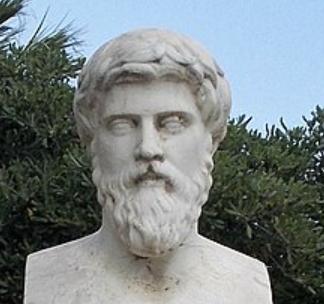
After he routed Pharnaces Ponticus at the first assault, he wrote thus to his friends: "I came, I saw, I conquered."
▼
Source
source
Cæsar

3 months 2 weeks ago
The perfection of a thing does not annul its existence, but, on the contrary, asserts it. Imperfection, on the other hand, does annul it ; therefore we cannot be more certain of the existence of anything, than of the existence of a being absolutely infinite or perfect-that is, of God. For inasmuch as his essence excludes all imperfection, and involves absolute perfection, all cause for doubt concerning his existence is done away, and the utmost certainty on the question is given. This, I think, will be evident to every moderately attentive reader.
▼
Source
source
Part I, Prop. XI
3 months 2 weeks ago
False and doubtful positions, relied upon as unquestionable maxims, keep those who build on them in the dark from truth. Such are usually the prejudices imbibed from education, party, reverence, fashion, interest, et cetera.
▼
Source
source
Book IV, Ch. 7
2 months 1 week ago
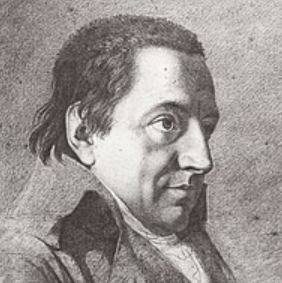
The correct relationship between the higher and lower classes, the appropriate mutual interaction between the two is, as such, the true underlying support on which the improvement of the human species rests. The higher classes constitute the mind of the single large whole of humanity; the lower classes constitute its limbs; the former are the thinking and designing part, the latter the executive part.
▼
Source
source
The System of Ethics According to the Principles of the Wissenschaftslehre (1798; Cambridge, 2005), p. 320.

3 months 1 week ago
How vain it is to sit down to write when you have not stood up to live.
▼
Source
source
August 19, 1851
3 months 1 week ago
Our moral virtues benefit mainly other people; intellectual virtues, on the other hand, benefit primarily ourselves; therefore the former make us universally popular, the latter unpopular.

3 months 2 weeks ago
Nature has pointed out a mixed kind of life as most suitable to the human race, and secretly admonished them to allow none of these biases to draw too much, so as to incapacitate them for other occupations and entertainments. Indulge your passion for science, says she, but let your science be human, and such as may have a direct reference to action and society. Abstruse thought and profound researches I prohibit, and will severely punish, by the pensive melancholy which they introduce, by the endless uncertainty in which they involve you, and by the cold reception which your pretended discoveries shall meet with, when communicated. Be a philosopher; but, amidst all your philosophy, be still a man.
▼
Source
source
Section 1 : Of The Different Species of Philosophy
2 months 1 week ago
Only the most perfect human being can design the most perfect philosophy.
▼
Source
source
Fichte Studies § 651

2 months 1 week ago
Is it really not possible to touch the gaming table without being instantly infected by superstition?
2 months 1 week ago
Nothing can be of more importance than to separate prejudice and mistake on the one hand from reason and demonstration on the other.
▼
Source
source
Book III, Ch.1

1 week 1 day ago
Every identity, such (third) critics say, even the multitude, must be defined by its remained, those outside of it, call them excluded, the abject, or the subaltern. ... There can certainly be points or nodes outside a network but none are necessarily outside. Its boundaries are indefinite and open. ... None is necessarily excluded but this inclusion is not guaranteed: the expansion of the common is a practical, political manner.
▼
Source
source
226
2 months 1 week ago
Your suffering like your fate is without motive. To suffer, truly to suffer, is to accept the invasion of ills without the excuse of causality, as a favor of demented nature, as a negative miracle...
3 months 3 weeks ago
Show that you know this only, how you may never either fail to get what you desire or fall into what you avoid.
▼
Source
source
Book II, ch. 1, 37

1 month 4 weeks ago
We should desire neither the immortality nor the death of any human being, whoever he may be, with whom we have to do.
▼
Source
source
p. 260
2 months 3 days ago
All journeys have secret destinations of which the traveler is unaware.
▼
Source
source
The Legend of the Baal-Shem (1955),1995 edition, p. 36
3 weeks ago
Genes and culture have co-evolved. But crudely, natural selection "designed" male human primates to hunt nonhumans and build coalitions of other male human primates in order to wage territorial wars of aggression. Nature didn't design us to become a scientific community and collaborate to overcome aging. It's difficult to imagine that any human enemy could inflict such gruesome damage on the victims as growing old. The ravages of aging strike down combatants and civilians alike. So the trillions of dollars that humans currently spend on ways to harm and kill each other ("defence") would be more fruitfully spent on defeating our common enemy. We should work together to build a "Triple S" civilisation of superlongevity, superhappiness and superintelligence.
▼
Source
source
Transhumanism 2017: Towards a 'Triple S' civilisation of Superlongevity, Superintelligence and Superhappiness, Timeship Buddha
3 months 1 week ago
What interest, zest, or excitement can there be in achieving the right way, unless we are enabled to feel that the wrong way is also a possible and a natural way, - nay, more, a menacing and an imminent way? And what sense can there be in condemning ourselves for taking the wrong way, unless we need have done nothing of the sort, unless the right way was open to us as well? I cannot understand the willingness to act, no matter how we feel, without the belief that acts are really good and bad.
▼
Source
source
The Dilemma of Determinism, 1884
3 months 3 weeks ago
These philosophers of the world place contrarieties in the same subject; for the one attributed greatness to nature and the other weakness to this same nature, which could not subsist; whilst faith teaches us to place them in different subjects: all that is infirm belonging to nature, all that is powerful belonging to grace. Such is the marvelous and novel union which God alone could teach, and which he alone could make, and which is only a type and an effect of the ineffable union of two natures in the single person of a Man-God.
3 months 3 weeks ago
As the soul is the life of the body, so God is the life of the soul. As therefore the body perishes when the soul leaves it, so the soul dies when God departs from it.
▼
Source
source
p. 277
6 days ago
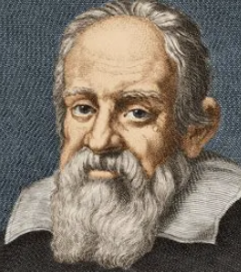
If what we are discussing were a point of law or of the humanities, in which neither true nor false exists, one might trust in subtlety of mind and readiness of tongue and in the greater experience of the writers, and expect him who excelled in those things to make his reasoning most plausible, and one might judge it to be the best. But in the natural sciences, whose conclusions are true and necessary and have nothing to do with human will, one must take care not to place oneself in the defense of error; for here a thousand Demostheneses and a thousand Aristotles would be left in the lurch by every mediocre wit who happened to hit upon the truth for himself. Therefore, Simplicio, give up this idea and this hope of yours that there may be men so much more learned, erudite, and well-read than the rest of us as to be able to make that which is false become true in defiance of nature.
▼
Source
source
Salviati, p. 61
2 months 1 week ago
How I wish I didn't know anything about myself and this world!

2 months 4 days ago
Ye have heard that it hath been said, Thou shalt love thy neighbour, and hate thine enemy. But I say unto you, Love your enemies, bless them that curse you, do good to them that hate you, and pray for them which despitefully use you, and persecute you; That ye may be the children of your Father which is in heaven: for he maketh his sun to rise on the evil and on the good, and sendeth rain on the just and on the unjust.
▼
Source
source
Matthew 5:43-45 (KJV)
2 months 4 days ago
He that is not with me is against me: and he that gathereth not with me scattereth.
▼
Source
source
Luke 11:23 (KJV)

3 months 1 week ago
It is arrogance in us to call frankness, fairness and chivalry "masculine" when we see them in a woman; it is arrogance in them, to describe a man's sensitiveness or tact or tenderness as "feminine".

1 month 1 day ago
There will be a time when those trying to turn the world into a Colosseum for their own amusement will be raw meat thrown to the wolves themselves, and the rest of us will watch, as justice is served, with a clean conscience.
4 months 1 week ago
"My field," said Goethe, "is time." That is indeed the absurd speech. What, in fact, is the Absurd Man? He who, without negating it, does nothing for the eternal. Not that nostalgia is foreign to him. But he prefers his courage and his reasoning. The first teaches him to live without appeal and to get along with what he has; the second informs him of his limits. Assured of his temporally limited freedom, of his revolt devoid of future, and of his mortal consciousness, he lives out his adventure within the span of his lifetime.
3 months 2 days ago
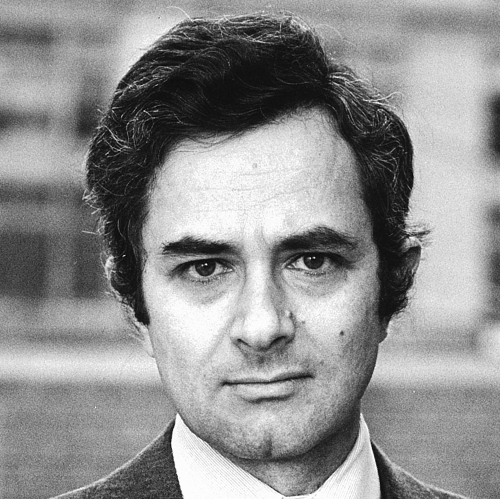
The problem is one of opposition between subjective and objective points of view. There is a tendency to seek an objective account of everything before admitting its reality. But often what appears to a more subjective point of view cannot be accounted for in this way. So either the objective conception of the world is incomplete, or the subjective involves illusions that should be rejected.
▼
Source
source
"Subjective and Objective" (1979), p. 196.
1 month 3 weeks ago
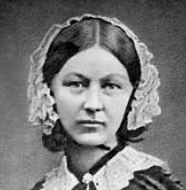
I never lose an opportunity of urging a practical beginning, however small, for it is wonderful how often in such matters the mustard-seed germinates and roots itself.
▼
Source
source
Letter to a friend, quoted in The Life of Florence Nightingale Vol. II (1914) by Edward Tyas Cook, p. 406

4 months ago
Charity, by which God and neighbor are loved, is the most perfect friendship.
▼
Source
source
Disputed Questions: On Charity, c. 1270

3 months 1 week ago
Never stay up on the barren heights of cleverness, but come down into the green valleys of silliness.
▼
Source
source
p. 76e

1 month 4 weeks ago
Philosophy and religion are enemies, and because they are enemies they have need of one another. There is no religion without some philosophical basis, no philosophy without roots in religion. ... the attacks which are directed against religion from a presumed scientific or philosophical point of view are merely attacks from another but opposing religious point of view.

4 months 1 week ago
In my fiction I am careful to make everything probable and to tie up all loose ends. Real life is not hampered by such considerations.
2 months 4 days ago
That life is worth living is the most necessary of assumptions and, were it not assumed, the most impossible of conclusions.
4 months 1 week ago
How close men, despite all their knowledge, usually live to madness? What is truth but to live for an idea? When all is said and done, everything is based on a postulate; but not until it no longer stands on the outside, not until one lives in it, does it cease to be a postulate.
3 months 3 weeks ago
If we do not secure the foundation, we cannot secure the edifice.
CivilSimian.com created by AxiomaticPanic, CivilSimian, Kalokagathia