


2 months 3 weeks ago
The ultimate result of shielding men from the effects of folly, is to fill the world with fools.
▼
Source
source
Vol. 3, Ch. IX, State-Tamperings with Money and Banks

3 months 3 weeks ago
If in this book harsh words are spoken about some of the greatest among the intellectual leaders of mankind, my motive is not, I hope, the wish to belittle them. It springs rather from my conviction that, if our civilization is to survive, we must break with the habit of deference to great men. Great men may make great mistakes; and as the book tries to show, some of the greatest leaders of the past supported the perennial attack on freedom and reason. Their influence, too rarely challenged, continues to mislead those on whose defence civilization depends, and to divide them. The responsibility of this tragic and possibly fatal division becomes ours if we hesitate to be outspoken in our criticism of what admittedly is a part of our intellectual heritage. By reluctance to criticize some of it, we may help to destroy it all.
▼
Source
source
Preface to the First Edition
3 months 3 weeks ago
The mind intent upon resolving as well as compounding the concept of a composite demands and presumes boundaries in which it may acquiesce in the former as well as in the latter direction.
1 month 2 weeks ago
As there are a very great variety of religious sects in the world (and which are probably adapted to different constitutions under different circumstances, seeing there are many good and conscientious characters in each), it is particularly recommended, as a means of uniting the inhabitants of the village into one family, that while each faithfully adheres to the principles which he most approves, at the same time all shall think charitably of their neighbours respecting their religious opinions, and not presumptuously suppose that theirs alone are right.
▼
Source
source
"Rules and Regulations for the Inhabitants of New Lanark"
1 month 1 week ago
The gallery in which the reporters sit has become a fourth estate of the realm.
▼
Source
source
Hallam', The Edinburgh Review (September 1828), quoted in T. B. Macaulay, Critical and Historical Essays Contributed to The Edinburgh Review, Vol. I (1843), p. 210
3 days ago
The distinction between the world of commerce and that of "culture" quickly became the distinction between infrastructure and superstructure, with the former clearly determining the latter.
▼
Source
source
Commerce and Culture, p. 281.

3 months 3 weeks ago
China has been long one of the richest, that is, one of the most fertile, best cultivated, most industrious, and most populous countries in the world. It seems, however, to have been long stationary. Marco Polo, who visited it more than five hundred years ago, describes its cultivation, industry, and populousness, almost in the same terms in which they are described by travellers in the present times.
▼
Source
source
Chapter VIII, p. 86.

1 month 2 weeks ago
It would be deeply depressing if the only way children could get moral values was from religion. Either from scripture, and God knows we don't want them to get it from scripture, I mean, just look at scripture. Or, from being afraid of God, being intimidated by God. Anybody who is good for only those two reasons is not really being good at all. Why not teach children things like the Golden Rule, do as you would be done by, how would you like it if other children did that to you, so why do you do it to them... I think it's depressing that anybody should suggest that you actually need God in order to be moral. I would hope that our morals come from a better source than that, and therefore they are genuinely moral rather than based on outmoded scripture, or based on fear.
▼
Source
source
BBC,

3 months 3 weeks ago
Anyone wanting a new house picks one from among those built on speculation or still in process of construction. The builder no longer works for his customers but for the market.
▼
Source
source
Vol. II, Ch. XII, p. 237.
1 month 3 weeks ago
During the Vietnam War, which lasted longer than any war we've ever been in -- and which we lost -- every respectable artist in this country was against the war. It was like a laser beam. We were all aimed in the same direction. The power of this weapon turns out to be that of a custard pie dropped from a stepladder six feet high.
▼
Source
source
Vonnegut at 80 Interview with David Hoppe Alternet

2 months 2 weeks ago
Anyone can escape into sleep, we are all geniuses when we dream, the butcher's the poet's equal there.
2 months 3 weeks ago
I have often seen an actor laugh off the stage, but I don't remember ever having seen one weep.
▼
Source
source
"Paradox on Acting" (1830), as quoted in Selected Writings (1966) edited by Lester G. Crocker

3 months 4 weeks ago
You're either excluding the right people or including the wrong people.
▼
Source
source
ComfortDragon
2 months 5 days ago
There is no such thing as data-driven thinking.
1 month 3 weeks ago
When the real is no longer what it was, nostalgia assumes its full meaning. "The Precession of Simulacra,"
▼
Source
source
p. 6
3 months 1 week ago
The universe itself is God and the universal outpouring of its soul.
▼
Source
source
As quoted in De Natura Deorum by Cicero, i. 15.

4 months ago
I know that a Christian should be humble, but against the Pope I am going to be proud and say to him: "You, Pope, I will not have you for my boss, for I am sure that my doctrine is divine."
▼
Source
source
Chapter 2, Verse 6

3 months 3 weeks ago
It is freedom, it is particularity, it is solitude that we are aiming at, and not Evil for its own sake.
▼
Source
source
p. 179
1 month 2 weeks ago
Life is short, but its ills make it seem long.
▼
Source
source
Maxim 124
2 weeks 2 days ago
We should like to represent... the... universe, and... feel... we understood it. We... never can attain this representation: our weakness is too great. But... we desire... to conceive an infinite intelligence... which should see all, and... classify all in its time, as we classify, in our time, the little we see. ...This supreme intelligence would be only a demigod; infinite in one sense... limited in another, since it would have... imperfect recollection of the past... otherwise all recollections would be equally present... and for it there would be no time.

4 months 1 week ago
When we see men of worth, we should think of equaling them; when we see men of a contrary character, we should turn inwards and examine ourselves.
2 months 1 week ago
We cannot stem linguistic change, but we can drag our feet. If each of us were to defy Alexander Pope and be the last to lay the old aside, it might not be a better world, but it would be a lovelier language.
▼
Source
source
Quiddities: An Intermittently Philosophical Dictionary (1987), p. 231
2 months 2 weeks ago
On the frontiers of the self: "What I have suffered, what I am suffering, no one will ever know, not even I."
1 week 5 days ago
India was the motherland of our race, and Sanskrit the mother of Europe's languages: she was the mother of our philosophy; mother, through the Arabs, of much of our mathematics; mother, through the Buddha, of the ideals embodied in Christianity; mother, through the village community, of self-government and democracy. Mother India is in many ways the mother of us all.
2 months 2 weeks ago
They ask you for facts, proofs, works, and all you can show them are transformed tears.

4 months 1 day ago
Reading maketh a full man; conference a ready man; and writing an exact man.
▼
Source
source
Of Studies

3 months 3 weeks ago
There are, in every country, some magnificent charities established by individuals. It is, however, but little that any individual can do, when the whole extent of the misery to be relieved is considered. He may satisfy his conscience, but not his heart. He may give all that he has, and that all will relieve but little. It is only by organizing civilization upon such principles as to act like a system of pulleys, that the whole weight of misery can be removed.
▼
Source
source
Means by Which the Fund Is to Be Created

3 months 1 week ago
A reflective, contented mind is the best possession.
▼
Source
source
Ushtavaiti Gatha; Yasna 43, 15.
2 months 2 weeks ago
For thought and speech are of a thinking and speaking subject, and if the life of the latter depends on the performance of a superimposed function, it depends on fulfilling the requirements of this function - thus it depends on those who control these requirements.
▼
Source
source
p. 128

4 months 1 week ago
The reason, however, why the philosopher may be likened to the poet is this: both are concerned with the marvellous.
▼
Source
source
Commentary on the Metaphysics (c. 1270-1272), 1, 3; quoted in Josef Pieper, Leisure, the Basis of Culture (New York, 1952), p. 88
3 months 1 week ago
Rather, we heirs of Enlightenment think of enemies of liberal democracy like Nietzsche or Loyola as, to use Rawls's word, "mad." We do so because there is no way to see them as fellow citizens of our constitutional democracy, people whose life plans might, given ingenuity and good will, be fitted in with those of other citizens. They are crazy because the limits of sanity are set by what we can take seriously. This, in turn, is determined by our upbringing, our historical situation.

1 month 2 weeks ago
The unformulated message of an assembly of news items from every quarter of the globe is that the world today is one city. All war is civil war. All suffering is our own.
▼
Source
source
p. 291
1 month 2 weeks ago
For me any of the little gestures I make are all tentative probes. That's why I feel free to make them sound as outrageous or extreme as possible. Until you make it extreme, the probe is not very efficient.
▼
Source
source
Marshall McLuhan: the man and his message, edited by George Sanderson and Frank MacDonald, Fulcrum, 1989, p. 32
2 months 1 week ago
To be sure, exchange-value exerts its power in a special way in the realm of cultural goods. For in the world of commodities this realm appears to be exempted from the power of exchange, to be in an immediate relationship with the goods, and it is this appearance in turn which alone gives cultural goods their exchange-value. But they nevertheless simultaneously fall completely into the world of commodities, are produced for the market, and are aimed at the market.
▼
Source
source
p. 279
4 months 3 weeks ago
A genius and an Apostle are qualitatively different, they are definitions which each belong in their own spheres: the sphere of immanence, and the sphere of transcendence.
1 month 2 weeks ago
Liberty is not the same thing as equality, and that those who call themselves liberals are far more interested in equalizing than in liberating their fellows.
▼
Source
source
The Limits of Liberty, The American Spectator
4 months 2 weeks ago
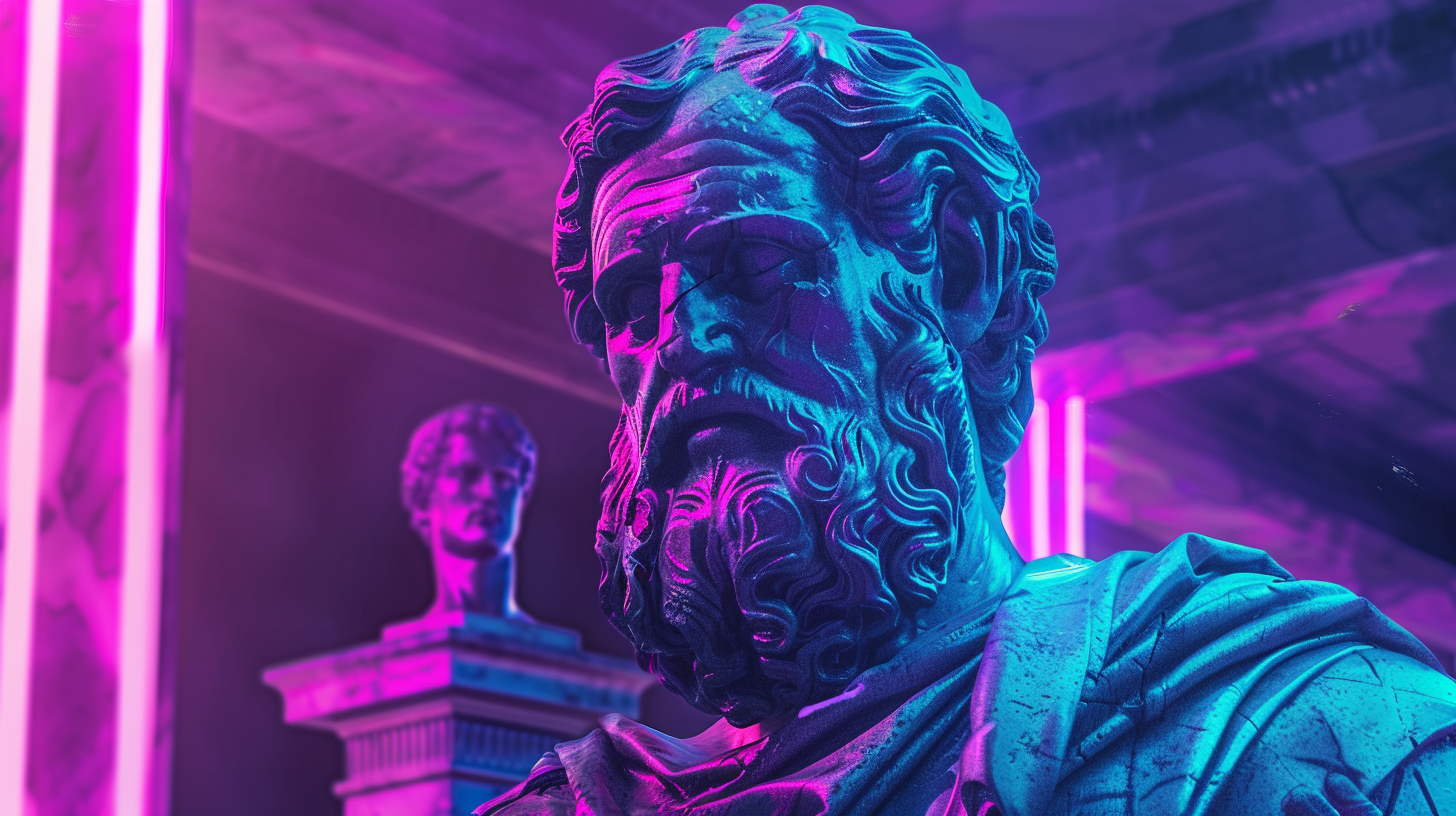
The greatest and noblest conceptions have no image wrought plainly for human vision, which he who wishes to satisfy the mind of the inquirer can apply to some one of his senses and by mere exhibition satisfy the mind. We must therefore endeavor by practice to acquire the power of giving and understanding a rational definition of each one of them; for immaterial things, which are the noblest and greatest, can be exhibited by reason only, and it is for their sake that all we are saying is said. But it is always easier to practice in small matters than in greater ones.
2 months 2 weeks ago
Sudden Glory, is the passion which maketh those Grimaces called LAUGHTER.
▼
Source
source
The First Part, Chapter 6, p. 27 (italics and spelling as per text)
4 months 3 weeks ago
That which distinguishes the Christian narrow way from the common human narrow way is the voluntary. Christ was not someone who coveted earthly things but had to be satisfied with poverty, no, he chose poverty.

3 months 3 weeks ago
The question was, whether, if the reformers of society and government could succeed in their objects, and every person in the community were free and in a state of physical comfort, the pleasures of life, being no longer kept up by struggle and privation, would cease to be pleasures.
▼
Source
source
(pp. 145-146)
4 months ago
Insurrection ... never brings about the desired improvement. For insurrection lacks discernment; it generally harms the innocent more than the guilty. Hence, no insurrection is ever right, no matter how right the cause it seeks to promote.
▼
Source
source
pp. 62-63
1 month 5 days ago
Rollers on the beach, wind in the pines, the slow flapping of herons across sand dunes, drown out the hectic rhythms of city and suburb, time tables and schedules. One falls under their spell, relaxes, stretches out prone. One becomes, in fact, like the element on which one lies, flattened by the sea; bare, open, empty as the beach, erased by today's tides of all yesterday's scribblings.
1 month 2 weeks ago
There are some remedies worse than the disease.
▼
Source
source
Maxim 301


3 months 3 weeks ago
Money is not required to buy one necessity of the soul.
▼
Source
source
p. 370

2 months 3 weeks ago
How shall the dead arise, is no question of my faith; to believe only possibilities, is not faith, but mere philosophy.
▼
Source
source
Section 48
CivilSimian.com created by AxiomaticPanic, CivilSimian, Kalokagathia