

3 weeks 1 day ago
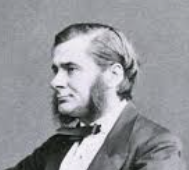
The only good that I can see in the demonstration of the truth of "Spiritualism" is to furnish an additional argument against suicide. Better live a crossing-sweeper than die and be made to talk twaddle by a "medium" hired at a guinea a séance.
▼
Source
source
Review in the Daily News (17 October 1871), quoted in Life and Letters of Thomas Henry Huxley F.R.S (1900) edited by Leonard Huxley, Vol. 1, p. 452
2 months 1 week ago
Few men think; yet all have opinions.
▼
Source
source
Philonous to Hylas. The Second Dialogue. This appears in a passage first added in the third edition
1 month 2 weeks ago
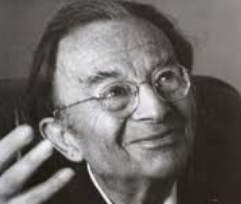
I believe that the man choosing progress can find a new unity through the full development of all his human forces, which are produced in three orientations. These can be presented separately or together: biophilia, love for humanity and nature, and independence and freedom.

3 months 1 week ago
Whatever you do, crush the infamous thing, and love those who love you.
▼
Source
source
Letter to Jean le Rond d'Alembert (28 November 1762);

1 week 6 days ago
As the Genesis story teaches, knowledge cannot save us from ourselves. If we know more than before, it means only that we have greater scope to enact our fantasies. But - as the Genesis myth also teaches - there is no way we can rid ourselves of what we know. If we try to regain a state of innocence, the result can only be a worse madness. The message of Genesis is that in the most vital areas of human life there can be no progress, only an unending struggle with our own nature.
▼
Source
source
An Old Chaos: Humanism and Flying Saucers (pp. 79-80)

3 months 2 weeks ago
Origen, of course, is also a great advocate of the allegorical approach. Yet I think you will have to admit that our modem theologians either despise this method of interpretation or are completely ignorant of it. As a matter of fact they surpass the pagans of antiquity in the subtlety of their distinctions.
▼
Source
source
p. 63
3 months 1 week ago
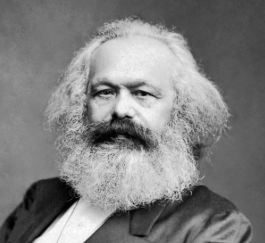
Luxury is the opposite of the naturally necessary.
▼
Source
source
Notebook V, The Chapter on Capital, p. 448.

3 months 1 week ago
Genius is always sufficiently the enemy of genius by over influence.
▼
Source
source
par. 19
1 week 6 days ago
In a traditional reading eating the apple was the original sin; but, as Gnostics understood the story, the two primordial humans were right to eat the apple. The God that commanded them not to do so was not the true God but only a demiurge, a tyrannical underling exulting in its power, while the serpent came to free them from slavery. True, when they ate the apple Adam and Eve fell from grace. This was indeed the Fall of Man - a fall into the dim world of everyday consciousness. But the Fall need not be final. Having eaten its fill from the Tree of Knowledge, humankind can then rise into a state of conscious innocence. When this happens, Herr C. declares, it will be 'the final chapter in the history of the world'.
▼
Source
source
The Faith of Puppets: The Freedom of the Marionette (p. 8)
2 months 6 days ago
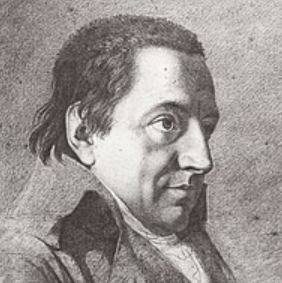
That I should by necessity be either wise and good, or foolish or vicious, without having in one case or the other merit or fault - this it was that filled me with aversion and horror.The determination of my actions by a cause out of myself, whose manifestations were again determined by other causes - this it was from which I so violently revolted.The freedom which was not mine, but that of a foreign power, and, in that, only a conditional, half freedom - this it was with which I could not rest satisfied. I myself - that which in this system only appears as the manifestation of a higher existence, I will be independent, - will be something, not by another or through another, but of myself.
▼
Source
source
Jane Sinnett, trans 1846 p. 21

2 months 3 days ago
Love of the absolute engenders a predilection for self-destruction. Hence the passion for monasteries and brothels. Cells and women, in both cases. Weariness with life fares well in the shadow of whores and saintly women.

3 months 2 weeks ago
T is one and the same Nature that rolls on her course, and whoever has sufficiently considered the present state of things might certainly conclude as to both the future and the past.
▼
Source
source
Book II, Ch. 12. Apology for Raimond Sebond

1 month 2 weeks ago
The Outsider has his proper place in the Order of Society, as the impractical dreamer.
▼
Source
source
Chapter Three, The Romantic Outsider
3 months 1 week ago
It is the duty of every patriot to protect his country from its government.
▼
Source
source
Edward Abbey, "A patriot must always be ready to defend his country against his government." as written in "A Voice Crying in the Wilderness" (Vox Clamantis en Deserto): Notes from a Secret Journal (1990), ISBN 0312064888

3 months 1 week ago
Why in any case, this glorification of man? How about lions and tigers? They destroy fewer animals or human lives than we do, and they are much more beautiful than we are. How about ants? They manage the Corporate State much better than any Fascist. Would not a world of nightingales and larks and deer be better than our human world of cruelty and injustice and war? The believers in Cosmic Purpose make much of our supposed intelligence, but their writings make one doubt it. If I were granted omnipotence, and millions of years to experiment in, I should not think Man much to boast of as the final result of all my efforts.
▼
Source
source
Religion and Science, 1935
2 weeks 1 day ago
So what is the alternative to traditional anthropocentric ethics? Antispeciesism is not the claim that "All Animals Are Equal", or that all species are of equal value, or that a human or a pig is equivalent to a mosquito. Rather the antispeciesist claims that, other things being equal, equally strong interests should count equally. Experiences that are subjectively negative or positive in hedonic tone to the same degree must count for the same.
▼
Source
source
"The Antispeciesist Revolution", Institute for Ethics and Emerging Technologies, 26 Jul. 2013
2 months 3 days ago
No psychic value can disappear without being replaced by another of equivalent intensity.
▼
Source
source
p. 209
3 months 1 week ago
As the chosen people bore in their features the sign manual of Jehovah, so the division of labour brands the manufacturing workman as the property of capital.
▼
Source
source
Vol. I, Ch. 14, Section 5, pg. 396.
1 month 3 weeks ago
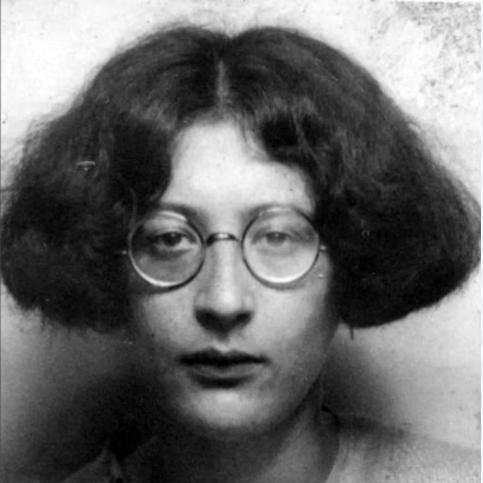
A Pharisee is someone who is virtuous out of obedience to the Great Beast.
▼
Source
source
p. 125

2 months 1 week ago
Difficulty is a severe instructor, set over us by the supreme ordinance of a parental Guardian and Legislator, who knows us better than we know ourselves, as he loves us better too. Pater ipse colendi haud facilem esse viam voluit. He that wrestles with us strengthens our nerves, and sharpens our skill. Our antagonist is our helper.
▼
Source
source
Volume iii, p. 453

3 months 1 week ago
The frontiers are not east or west, north or south, but wherever a man fronts a fact, though that fact be his neighbor, there is an unsettled wilderness between him and Canada, between him and the setting sun, or, farther still, between him and it.
3 months 1 week ago
Money is always to be found when men are to be sent to the frontiers to be destroyed: when the object is to preserve them, it is no longer so.
▼
Source
source
"Charity", 1770

1 month 2 weeks ago
There's no need to fear or hope, but only to look for new weapons.
▼
Source
source
from Postscript on the Societies of Control
3 months 1 week ago
I die adoring God, loving my friends, not hating my enemies, and detesting superstition.
▼
Source
source
Déclaration de Voltaire, note to his secretary, Jean-Louis Wagnière, 28 February 1778
3 months 1 week ago
When people begin to philosophize they seem to think it necessary to make themselves artificially stupid.
▼
Source
source
Theory of Knowledge, 1913

2 months 3 weeks ago
Hearken with your ears to these best counsels,Reflect upon them with illumined judgment.Let each one choose his creed with that freedom of choice each must have at great events.
▼
Source
source
Ahunuvaiti Gatha; Yasna 30, 2.

3 months 5 days ago
Darwinism is not a testable scientific theory, but a metaphysical research program. Unsourced variant: Evolution is not a fact. Evolution doesn't even qualify as a theory or as a hypothesis. It is a metaphysical research program, and it is not really testable science.

4 months 4 days ago
Nonsense. You are a military man and should know better. If there is one science into which man has probed continuously and successfully, it is that of military technology. No potential weapon would remain unrealized for ten thousand years.
2 months 3 days ago
I am using the word "perceive". I am using it here in such a way that to say of an object that it is perceived does not entail saying that it exists in any sense at all. And this is a perfectly correct and familiar usage of the word. If there is thought to be a difficulty here, it is perhaps because there is also a correct and familiar usage of the word "perceive", in which to say of an object that it is perceived does carry the implication that it exists.
▼
Source
source
The Foundations of Empirical Knowledge (1940).
3 months 2 weeks ago
A true prayer and religious reconciling of ourselves to Almighty God cannot enter into an impure soul, subject at the very time to the dominion of Satan. He who calls God to his assistance whilst in a course of vice, does as if a cut-purse should call a magistrate to help him, or like those who introduce the name of God to the attestation of a lie.
▼
Source
source
Ch. 56, tr. Cotton, rev. W. Carew Hazlitt, 1877
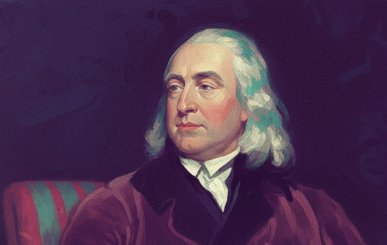
3 months 1 week ago
It is the principle of antipathy which leads us to speak of offences as deserving punishment. It is the corresponding principle of sympathy which leads us to speak of certain actions as meriting reward. This word merit can only lead to passion and error. It is effects good or bad which we ought alone to consider.
▼
Source
source
MSS 29, 32, University College Collection

3 months 1 day ago
In these downbeat times, we need as much hope and courage as we do vision and analysis; we must accent the best of each other even as we point out the vicious effects of our racial divide and pernicious consequences of our maldistribution of wealth and power. We simply cannot enter the twenty-first century at each other's throats, even as we acknowledge the weighty forces of racism, patriarchy, economic inequality, homophobia, and ecological abuse on our necks. We are at a crucial crossroad in the history of this nation--and we either hang together by combating these forces that divide and degrade us or we hang separately. Do we have the intelligence, humor, imagination, courage, tolerance, love, respect, and will to meet the challenge? Time will tell. None of us alone can save the nation or world. But each of us can make a positive difference if we commit ourselves to do so.
▼
Source
source
(p 109)
2 weeks 1 day ago
In the long run, there is nothing to stop intelligent agents from identifying the molecular signature of experience below hedonic zero and eliminating it altogether - even in insects. Nociception is vital; pain is optional. I tentatively predict that the world's last unpleasant experience in our forward light-cone will be a precisely datable event - perhaps some micro-pain in an obscure marine invertebrate a few centuries hence.
▼
Source
source
The Radical Plan to Phase out Earth's Predatory Species, io9, 30 Jul. 2014
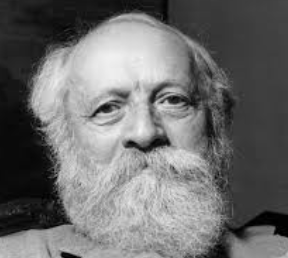
1 month 3 weeks ago
The philosophical anthropologist ... can know the wholeness of the person and through it the wholeness of man only when he does not leave his subjectivity out and does not remain an untouched observer.
▼
Source
source
p. 148
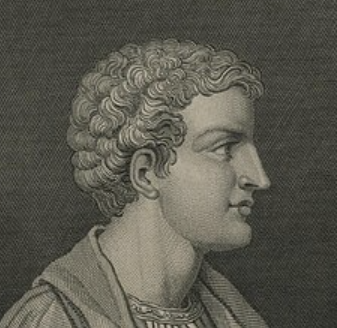
2 months 3 weeks ago
We are but dust and shadow.
▼
Source
source
Book IV, ode vii, line 16
1 month 3 weeks ago
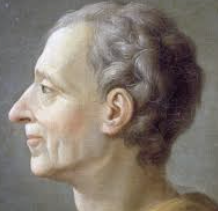
I can assure you that no kingdom has ever had as many civil wars as the kingdom of Christ.
▼
Source
source
No. 29. (Rica writing to Ibben)
2 months 3 weeks ago
Thus to the Lord doth Asha, the Truth, reply:"No guide is known who can shelter the world from woe, None who knows what moves and works Thy lofty plans."
▼
Source
source
Ahunuvaiti Gatha; Yasna 29, 3.
3 months 2 weeks ago
The worst of my actions or conditions seem not so ugly unto me as I find it both ugly and base not to dare to avouch for them.
2 months 3 weeks ago
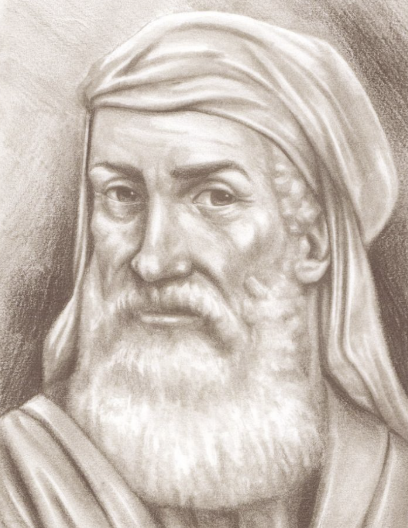
But what is lawful for all extends across wide-ruling aether and, without cease, through endless sunshine.
▼
Source
source
fr. 135, as quoted in Aristotle's Rhetoric, 1373 b16
1 month 4 weeks ago
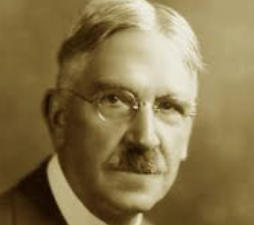
Every great advance in science has issued from a new audacity of imagination.
▼
Source
source
The Quest for Certainty (1929), Ch. XI
2 months 3 days ago
I don't need any support, advice, or compassion, because even if I am the most ruinous man, I still feel so powerful, so strong and fierce. For I am the only one that lives without hope.

1 month 2 weeks ago
The very proclaimers of "America first" have long before this betrayed the fundamental principles of real Americanism...the other truly great Americans who aimed to make of this country a haven of refuge, who hoped that all the disinherited and oppressed people in coming to these shores would give character, quality and meaning to the country.

3 months 1 week ago
His character does not appear more extraordinary and unusual by the mixture of so much absurdity with so much penetration, than by his tempering such violent ambition, and such enraged fanaticism with so much regard to justice and humanity.
▼
Source
source
Volume III, Chapter LXI; referring to Oliver Cromwell

3 months 1 week ago
When national debts have once been accumulated to a certain degree, there is scarce, I believe, a single instance of their having been fairly and completely paid. The liberation of the public revenue, if it has ever been brought about at all, has always been brought about by bankruptcy; sometimes by an avowed one, but always by a real one, though frequently by a pretend payment.
▼
Source
source
Chapter III, Part V, p. 1012.

3 months 1 week ago
I am convinced that the unwritten knowledge scattered among men of different callings surpasses in quantity and in importance anything we find in books, and that the greater part of our wealth has yet to be recorded.
▼
Source
source
1688-1690
2 months 3 days ago
Nothing surpasses the pleasures of idleness: even if the end of the world were to come, I would not leave my bed at an ungodly hour.

3 months 5 days ago
Dostoevsky once wrote: "If God did not exist, everything would be permitted"; and that, for existentialism, is the starting point. Everything is indeed permitted if God does not exist, and man is in consequence forlorn, for he cannot find anything to depend upon either within or outside himself. He discovers forthwith, that he is without excuse.
▼
Source
source
pp. 33-34
3 months 2 days ago
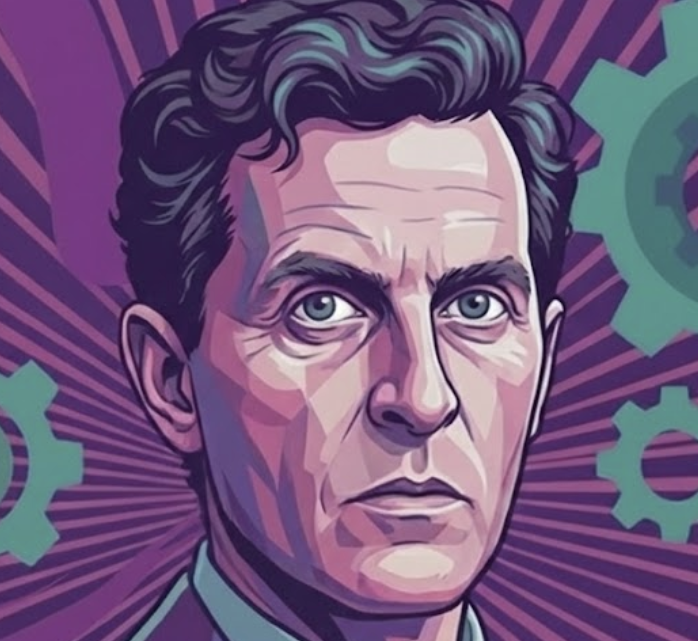
The World and Life are one. Physiological life is of course not "Life". And neither is psychological life. Life is the world. Ethics does not treat of the world. Ethics must be a condition of the world, like logic. Ethics and Aesthetics are one.
▼
Source
source
Journal entry (24 July 1916), p. 77e
CivilSimian.com created by AxiomaticPanic, CivilSimian, Kalokagathia