


1 month 2 weeks ago
The method of the twentieth century is to use not single but multiple models for experimental exploration - the technique of the suspended judgement.
▼
Source
source
(p. 81)
1 month 2 weeks ago
We've reached a truly remarkable situation: a grotesque mismatch between the American intelligentsia and the American electorate. A philosophical opinion about the nature of the universe which is held by the vast majority of top American scientists, and probably the majority of the intelligentsia generally, is so abhorrent to the American electorate that no candidate for popular election dare affirm it in public. If I'm right, this means that high office in the greatest country in the world is barred to the very people best qualified to hold it: the intelligentsia, unless they are prepared to lie about their beliefs. To put it bluntly American political opportunities are heavily loaded against those who are simultaneously intelligent and honest.
▼
Source
source
Richard Dawkins on militant atheism,
2 months 1 day ago
People nowadays have such high hopes of America and the political conditions obtaining there that one might say the desires, at least the secret desires, of all enlightened Europeans are deflected to the west, like our magnetic needles.
▼
Source
source
G 2

1 week 6 days ago
The more I reflect on it, the more I must admire how completely nature had taught him; how completely he was devoted to his work, to the task of his life, and content to let all pass by unheeded that had not relation to this. It is a singular fact, for example, that though a man of such openness and clearness, he had never, I believe, read three pages of Burns's poems. Not even when all about him became noisy and enthusiastic, I the loudest, on that matter, did he feel it worth while to renew his investigation of it, or once turn his face towards it. The poetry he liked (he did not call it poetry) was truth, and the wisdom of reality. Burns, indeed, could have done nothing for him. As high a greatness hung over his world as over that of Burns - the ever-present greatness of the Infinite itself. Neither was he, like Burns, called to rebel against the world, but to labor patiently at his task there, uniting the possible with the necessary to bring out the real, wherein also lay an ideal.
2 months 4 days ago
Temperament refers to the mode of reaction and is constitutional and not changeable; character is essentially formed by a person's experiences, especially of those in early life, and changeable, to some extent, by insights and new kinds of experiences. If a person has a choleric temperament, for instance, his mode of reaction is "quick and strong." But what he is quick or strong about depends on his kind of relatedness, his character. If he is a productive, just, loving person he will react quickly and strongly when he loves, when he is enraged by injustice, and when he is impressed by a new idea. If he is a destructive or sadistic character, he will be quick and strong in his destructiveness or in his cruelty. The confusion between temperament and character has had serious consequences for ethical theory. Preferences with regard to differences in temperament are mere matters of subjective taste. But differences in character are ethically of the most fundamental importance.
▼
Source
source
Ch. 3
2 months 2 weeks ago
The manufacturing worker almost always lives in the countryside and in a more or less patriarchal relation to his landlord or employer; the proletarian lives, for the most part, in the city and his relation to his employer is purely a cash relation. The manufacturing worker is torn out of his patriarchal relation by big industry, loses whatever property he still has, and in this way becomes a proletarian.

3 months 3 weeks ago
The question of the principle of the form of the intelligible world turns, therefore, upon making apparent in what manner it is possible for several substances to be in mutual commerce, and for this reason to pertain to the same whole, which is called world. We do not here consider the world, let it be understood, as to matter, that is, as to the nature of the substances of which it consists, whether they be material or immaterial, but as to form, that is to say, how among several things taken separately a connection, and among them all, totality can have place.

2 months 2 weeks ago
The Creation was the first act of sabotage.

1 month 3 weeks ago
In the spiritual realm nothing is indifferent: what is not useful is harmful.
▼
Source
source
VII
1 month 3 weeks ago
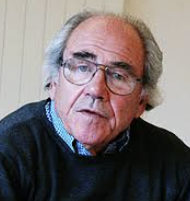
Photography and cinema contributed in large part to the secularization of history, to fixing it in its visible, "objective" form at the expense of the myths that once traversed it. Today cinema can place all its talent, all its technology in the service of reanimating what it itself contributed to liquidating. It only resurrects ghosts, and it itself is lost therein.
▼
Source
source
"History: A Retro Scenario," p. 48
3 days ago
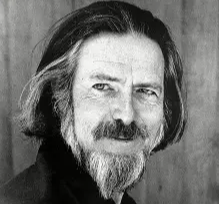
I seem to be a brief light that flashes but once in all the aeons of time - a rare, complicated, and all-too-delicate organism on the fringe of biological evolution, where the wave of life bursts into individual, sparkling, and multicolored drops that gleam for a moment... only to vanish forever.
▼
Source
source
Inside Information.

3 months 3 weeks ago
Christian philosophers have found no difficulty in justifying imperialism, war, the capitalist system, the use of torture, the censorship of the press and ecclesiastical tyrannies of every sort, from the tyranny of Rome to the tyrannies of Geneva and New England.
▼
Source
source
Ch. 14, p. 315 [2012 reprint]
1 week 5 days ago
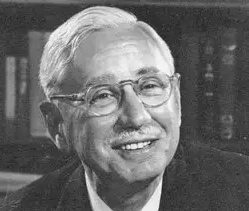
[on Epicurus] His starting point is a conviction that apathy is impossible, and that pleasure - though not necessarily sensual pleasure - is the only conceivable, and quite legitimate, end of life and action. "Nature leads every organism to prefer its own good to every other good" - even the stoic finds a subtle pleasure in renunciation. "We must not avoid pleasures, but we must select them". Epicurus, then, is no epicurean, he exalts the joys of intellect rather than those of sense; he warns against pleasures that excite and disturb the soul which they should rather quite and appease. In the end he proposes to seek not pleasure in its usual sense, but ataraxia - tranquility, equaninimity, repose of mind; all of which trembles on the verge of Zeno's "Apathy"
3 months 3 weeks ago
It is therefore correct to say that the senses do not err - not because they always judge rightly, but because they do not judge at all.
▼
Source
source
A 293, B 350
3 months 3 weeks ago
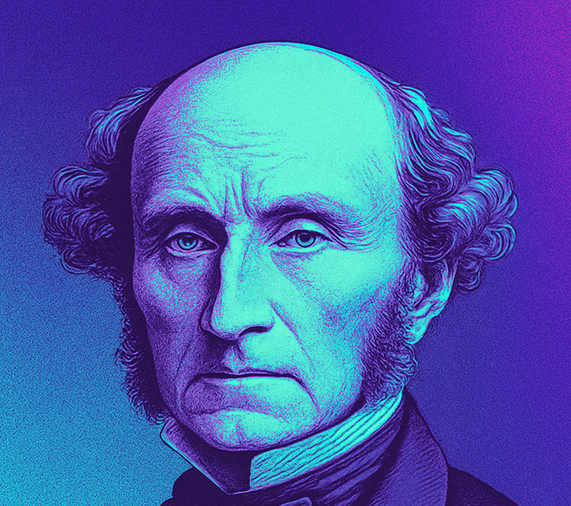
France has done more for even English history than England has.
▼
Source
source
John Stuart Mill. Michelet.On the writing of English history. Complete Works Vol 20. Page 221.

2 months 6 days ago
Creativity is the universal of universals characterizing ultimate matter of fact. It is that ultimate principle by which the many, which are the universe disjunctively, become the one actual occasion, which is the universe conjunctively. It lies in the nature of things that the many enter into complex unity.
▼
Source
source
Pt. I, ch. 2, sec. 2.

2 months 5 days ago
America had declared war with Spain.... It did not require much political wisdom to see that America's concern was a matter of sugar and had nothing to do with humanitarian feelings. Of course there were plenty of credulous people, not only in the country at large, but even in liberal ranks, who believed in America's claim. I could not join them. I was sure that no one, be it individual or government, engaged in enslaving and exploiting at home, could have the integrity or the desire to free people in other lands.
▼
Source
source
(p. 226)

3 months 3 weeks ago
Fools have a habit of believing that everything written by a famous author is admirable. For my part I read only to please myself and like only what suits my taste.

3 months 3 weeks ago
With respect to a true culture and manhood, we are essentially provincial still, not metropolitan, - mere Jonathans. We are provincial, because we do not find at home our standards, - because we do not worship truth, but the reflection of truth, - because we are warped and narrowed by an exclusive devotion to trade and commerce and manufactures and agriculture and the like, which are but means, and not the end.
▼
Source
source
p. 493
3 months 3 weeks ago
The trouble with Eichmann was precisely that so many were like him, and that the many were neither perverted nor sadistic, that they were, and still are, terribly and terrifyingly normal. From the viewpoint of our legal institutions and of our moral standards of judgment, this normality was much more terrifying than all the atrocities put together, for it implied - as had been said at Nuremberg over and over again by the defendants and their counsels - that this new type of criminal, who is in actual fact hostis generis humani, commits his crimes under circumstances that make it well-nigh impossible for him to know or to feel that he is doing wrong.
▼
Source
source
Epilogue

4 months 1 day ago
Reading maketh a full man; conference a ready man; and writing an exact man.
▼
Source
source
Of Studies
2 months 1 week ago
As long as politics is the shadow cast on society by big business, the attenuation of the shadow will not change the substance.
▼
Source
source
Quoted in John Dewey and American Democracy by Robert Westbrook (Ithaca: Cornell University Press, 1991), p. 440
3 months 3 weeks ago
A Turk thinks, or used to think (for even Turks are wiser now-a-days), that society would be on a sandbank if women were suffered to walk about the streets with their faces uncovered. Taught by these and many similar examples, I look upon this expression of loosening the foundations of society, unless a person tells in unambiguous terms what he means by it, as a mere bugbear to frighten imbeciles with.
▼
Source
source
Stability of Society (17 August 1850), quoted in Ann P. Robson and John M. Robson (eds.), The Collected Works of John Stuart Mill, XXV - Newspaper Writings December 1847 - July 1873 Part IV, 1986
2 weeks 4 days ago
We shouldn't teach great books; we should teach a love of reading. Knowing the contents of a few works of literature is a trivial achievement. Being inclined to go on reading is a great achievement.
▼
Source
source
As quoted in B. F. Skinner : The Man and His Ideas (1968) by Richard Isadore Evans, p. 73
1 week 6 days ago
It was a rude gross error, that of counting the Great Man a god. Yet let us say that it is at all times difficult to know what he is, or how to account of him and receive him!
2 weeks 2 days ago
Copernicus never discusses matters of religion or faith, nor does he use argument that depend in any way upon the authority of sacred writings which he might have interpreted erroneously. ... He did not ignore the Bible, but he knew very well that if his doctrine were proved, then it could not contradict the Scriptures when they were rightly understood.
1 month 2 weeks ago
When we put our central nervous system outside us we returned to the primal nomadic state.
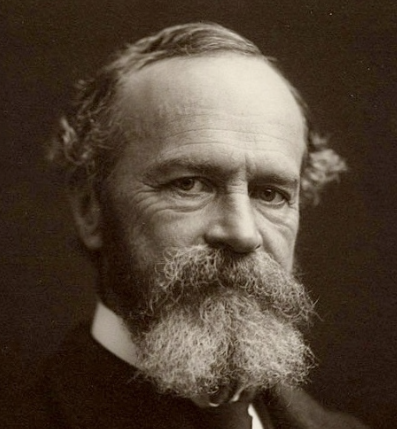
3 months 3 weeks ago
Who does not see that we are likely to ascertain the distinctive significance of religious melancholy and happiness, or of religious trances, far better by comparing them as conscientiously as we can with other varieties of melancholy, happiness, and trance, than by refusing to consider their place in any more general series, and treating them as if they were outside of nature's order altogether?
▼
Source
source
Lecture I, "Religion and Neurology"

2 months 3 weeks ago
Fathers and teachers, I ponder, "What is hell?" I maintain that it is the suffering of being unable to love.
▼
Source
source
Book VI, Chapter 3 (trans. Constance Garnett)

4 months ago
There is as much difference between us and ourselves as between us and others.
▼
Source
source
Ch. 1. Of the Inconstancy of Our Actions, tr. Cotton, rev. W. Carew Hazlitt, 1877
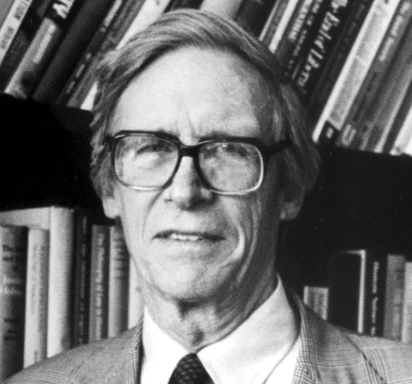
3 months 3 weeks ago
There is a divergence between private and social accounting that the market fails to register. One essential task of law and government is to institute the necessary conditions.
▼
Source
source
Chapter V, Section 42, p. 268
3 months 3 weeks ago
That persons have opposing interests and seek to advance their own conception of the good is not at all the same thing as their being moved by envy and jealousy.
▼
Source
source
Chapter IX, Section 81, p. 540
3 months 3 weeks ago
In a head-on clash between violence and power, the outcome is hardly in doubt. Nowhere is the self-defeating factor in the victory of violence over power more evident than in the use of terror to maintain domination, about whose weird successes and eventual failures we know perhaps more than any generation before us. Violence can destroy power; it is utterly incapable of creating it.
▼
Source
source
On Violence
2 weeks 2 days ago
To apply oneself to great inventions, starting from the smallest beginnings, is no task for ordinary minds; to divine that wonderful arts lie hid behind trivial and childish things is a conception for superhuman talents.
3 months 3 weeks ago
Most boys or youths who have had much knowledge drilled into them, have their mental capacities not strengthened, but over-laid by it. They are crammed with mere facts, and with the opinions or phrases of other people, and these are accepted as a substitute for the power to form opinions of their own: and thus the sons of eminent fathers, who have spared no pains in their education, so often grow up mere parroters of what they have learnt, incapable of using their minds except in the furrows traced for them. Mine, however, was not an education of cram. My father never permitted anything which I learnt to degenerate into a mere exercise of memory. He strove to make the understanding not only go along with every step of the teaching, but, if possible, precede it. Anything which could be found out by thinking I never was told, until I had exhausted my efforts to find it out for myself.
▼
Source
source
(p. 31)

4 months 2 weeks ago
Time will prolong time, and life will serve life. In this field that is both limited and bulging with possibilities, everything to himself, except his lucidity, seems unforeseeable to him. What rule, then, could emanate from that unreasonable order? The only truth that might seem instructive to him is not formal: it comes to life and unfolds in men. The absurd mind cannot so much expect ethical rules at the end of its reasoning as, rather, illustrations and the breath of human lives.

3 months 3 weeks ago
Diet, injections, and injunctions will combine, from a very early age, to produce the sort of character and the sort of beliefs that the authorities consider desirable, and any serious criticism of the powers that be will become psychologically impossible. Even if all are miserable, all will believe themselves happy, because the government will tell them that they are so.
2 months 2 weeks ago
Virtue can only flourish amongst equals.
▼
Source
source
A Vindication of the Rights of Men
3 months 3 weeks ago
Religions, which condemn the pleasures of sense, drive men to seek the pleasures of power. Throughout history power has been the vice of the ascetic.
▼
Source
source
The New York Herald-Tribune Magazine, 3/6/1938
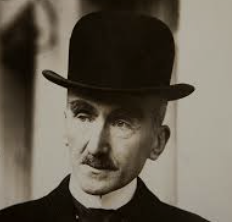
2 months 2 weeks ago
The remembrance of forbidden fruit is the earliest thing in the memory of each of us, as it is in that of mankind.
▼
Source
source
Chapter I: Moral Obligation

3 months 3 weeks ago
I grasp at each second, trying to suck it dry: nothing happens which I do not seize, which I do not fix forever in myself, nothing, neither the fugitive tenderness of those lovely eyes, nor the noises of the street, nor the false dawn of early morning: and even so the minute passes and I do not hold it back, I like to see it pass.

4 months 1 week ago
The happiness which belongs to man, is that state in which he enjoys as many of the good things, and suffers as few of the evils incident to human nature as possible; passing his days in a smooth course of permanent tranquility. A wise man, though deprived of sight or hearing, may experience happiness in the enjoyment of the good things which yet remain; and when suffering torture, or laboring under some painful disease, can mitigate the anguish by patience, and can enjoy, in his afflictions, the consciousness of his own constancy.
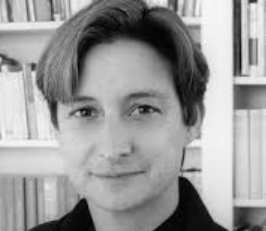
1 month 3 weeks ago
We must fight those who are committed to destruction, without replicating their destructiveness. Understanding how to fight in this way is the task and the bind of a nonviolent ethics and politics.
▼
Source
source
p. 64

3 months 3 weeks ago
And the final event to himself has been, that, as he rose like a rocket, he fell like the stick.
▼
Source
source
On Edmund Burke's reactions to the American and French revolutions.

4 months 3 weeks ago
Good prose is written only face to face with poetry.

4 months 1 day ago
I have no patience with those who say that sexual excitement is shameful and that venereal stimuli have their origin not in nature, but in sin. Nothing is so far from the truth. As if marriage, whose function cannot be fulfilled without these incitements, did not rise above blame. In other living creatures, where do these incitements come from? From nature or from sin? From nature, of course. It must borne in mind that in the apetites of the body there is very little difference between man and other living creatures. Finally, we defile by our imagination what of its own nature is fair and holy. If we were willing to evaluate things not according to the opinion of the crowd, but according to nature itself, how is it less repulsive to eat, chew, digest, evacuate, and sleep after the fashion of dumb animals, than to enjoy lawful and permitted carnal relations?
▼
Source
source
In Praise of Marriage (1519), in Erasmus on Women (1996) Erika Rummel

4 months ago
My whole heart and soul are stirred and incensed against the Turks and Mohammed, when I see this intolerable raging of the Devil. Therefore I shall pray and cry to God, nor rest until I know that my cry is heard in heaven.
▼
Source
source
Statement while being confined to residence at Coburg, as quoted in History of the Christian Church, (1910) by Philip Schaff, Vol. VII

2 months 3 weeks ago
Free trade is not based on utility but on justice.
2 months 2 weeks ago
The advantage of meditating upon life and death is being able to say anything at all about them.
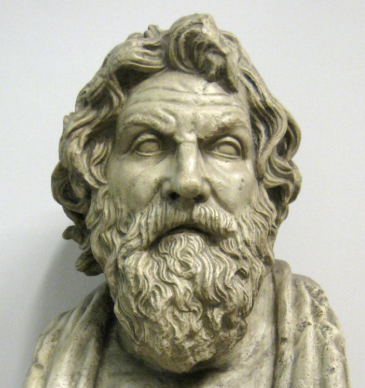
3 months 1 week ago
Count all wickedness foreign and alien.
▼
Source
source
§ 5
CivilSimian.com created by AxiomaticPanic, CivilSimian, Kalokagathia