

1 month 1 week ago
National loyalty is founded in the love of place, of the customs and traditions that have been inscribed in the landscape and of the desire to protect these good things through a common law and a common loyalty.

3 months 1 week ago
The hatefulness of a hated person is "real"-in hatred you see men as they are; you are disillusioned; but the loveliness of a loved person is merely a subjective haze concealing a "real" core of sexual appetite or economic association. Wars and poverty are "really" horrible; peace and plenty are mere physical facts about which men happen to have certain sentiments.
▼
Source
source
Letter XXX

3 months 1 week ago
If life becomes hard to bear we think of a change in our circumstances. But the most important and effective change, a change in our own attitude, hardly even occurs to us, and the resolution to take such a step is very difficult for us.
▼
Source
source
p. 53e

3 months 2 weeks ago
Every philosophical problem, when it is subjected to the necessary analysis and justification, is found either to be not really philosophical at all, or else to be, in the sense in which we are using the word, logical.
▼
Source
source
p. 33
3 months 1 week ago
But if you say: "How am I to know what he means, when I see nothing but the signs he gives?" then I say: "How is he to know what he means, when he has nothing but the signs either?"
▼
Source
source
§ 504
3 months 4 days ago
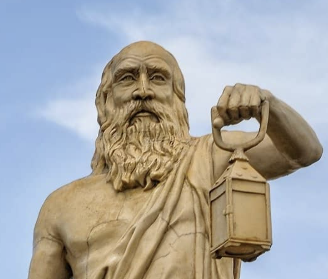
Other dogs bite only their enemies, whereas I bite also my friends in order to save them.
▼
Source
source
Stobaeus, iii. 13. 44

1 month 2 weeks ago
Saying that what we call our "selves" consist only of our bodies and that reason, soul, and love arise only from the body, is like saying that what we call our body is equivalent to the food that feeds the body. It is true that my body is only made up of digested food and that my body would not exist without food, but my body is not the same as food. Food is what the body needs for life, but it is not the body itself. The same thing is true of my soul. It is true that without my body there would not be that which I call my soul, but my soul is not my body. The soul may need the body, but the body is not the soul.
▼
Source
source
p. 12
2 months 1 week ago
The office of the sovereign, be it a monarch or an assembly, consisteth in the end for which he was trusted with the sovereign power, namely the procuration of the safety of the people, to which he is obliged by the law of nature, and to render an account thereof to God, the Author of that law, and to none but Him. But by safety here is not meant a bare preservation, but also all other contentments of life, which every man by lawful industry, without danger or hurt to the Commonwealth, shall acquire to himself. And this is intended should be done, not by care applied to individuals, further than their protection from injuries when they shall complain; but by a general providence, contained in public instruction, both of doctrine and example; and in the making and executing of good laws to which individual persons may apply their own cases.
▼
Source
source
The Second Part, Chapter 30: Of the Office of the Sovereign Representative
4 months ago
An unjust law is no law at all.
▼
Source
source
On Free Choice Of The Will, Book 1, and 5

3 months 2 weeks ago
We are obviously heading for revolution-something I have never once doubted since 1850. The first act will include a by no means gratifying rehash of the stupidities of '48-'49. However, that's how world history runs its course, and one has to take it as one finds it.
▼
Source
source
Letter to Ludwig Kugelmann (28 December 1862), quoted in The Collected Works of Karl Marx and Friedrich Engels: Volume 41. Letters 1860-64 (2010), p. 437
1 month 3 weeks ago
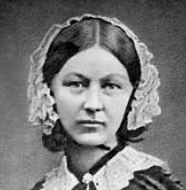
Mysticism: to dwell on the unseen, to withdraw ourselves from the things of sense into communion with God - to endeavour to partake of the Divine nature; that is, of Holiness. When we ask ourselves only what is right, or what is the will of God (the same question), then we may truly be said to live in His light.

5 days ago
In looking at this wreck of Governments in all European countries, there is one consideration that suggests itself, sadly elucidative of our modern epoch. These Governments, we may be well assured, have gone to anarchy for this one reason inclusive of every other whatsoever, That they were not wise enough; that the spiritual talent embarked in them, the virtue, heroism, intellect, or by whatever other synonyms we designate it, was not adequate,-probably had long been inadequate, and so in its dim helplessness had suffered, or perhaps invited falsity to introduce itself; had suffered injustices, and solecisms, and contradictions of the Divine Fact, to accumulate in more than tolerable measure; whereupon said Governments were overset, and declared before all creatures to be too false.

3 months 1 week ago
You take souls for vegetables.... The gardener can decide what will become of his carrots but no one can choose the good of others for them.
▼
Source
source
Heinrich, Act 5, sc. 3
3 months 4 days ago
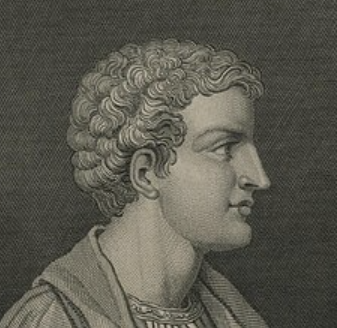
It is difficult to speak of the universal specifically.
▼
Source
source
Line 128


2 months 1 week ago
To found a family. I think it would have been easier for me to found an empire.
5 days ago
Has any man, or any society of men, a truth to speak, a piece of spiritual work to do; they can nowise proceed at once and with the mere natural organs, but must first call a public meeting, appoint committees, issue prospectuses, eat a public dinner; in a word, construct or borrow machinery, wherewith to speak it and do it. Without machinery, they were hopeless, helpless.
4 months ago
The inclination to seek the truth is safer than the presumption which regards unknown things as known.
▼
Source
source
(Cambridge: 2002), Book 9, Chapter 1, p. 24

2 months 3 weeks ago
Remind yourself that all men assert that wisdom is the greatest good, but that there are few who strenuously seek out that greatest good.
▼
Source
source
Pythagorean Ethical Sentences From Stobæus

3 months 2 weeks ago
Habit... makes the endurance of evil easy (which, under the name of patience, is falsely honored as a virtue), because sensations of the same type, when continued without alteration for a long time, draw our attention away from the senses so that we are scarcely conscious of them at all. On the other hand, habit also makes the consciousness and the remembrance of good that has been received more difficult, which then gradually leads to ingratitude (a real vice). [...] Acquired habit deprives good actions of their moral value because it undermines mental freedom and, moreover, it leads to thoughtless repetitions of the same acts (monotony), and thus becomes ridiculous.
▼
Source
source
Kant, Immanuel (1996), pages 34-35

2 months 1 week ago
When there were gathered together an innumerable multitude of people, insomuch that they trode one upon another, he began to say unto his disciples first of all, Beware ye of the leaven of the Pharisees, which is hypocrisy. For there is nothing covered, that shall not be revealed; neither hid, that shall not be known. Therefore whatsoever ye have spoken in darkness shall be heard in the light; and that which ye have spoken in the ear in closets shall be proclaimed upon the housetops. And I say unto you my friends, Be not afraid of them that kill the body, and after that have no more that they can do. But I will forewarn you whom ye shall fear: Fear him, which after he hath killed hath power to cast into hell; yea, I say unto you, Fear him.
▼
Source
source
12:1-5

2 months 2 weeks ago
A little water makes a sea, a small puff of wind a Tempest.
1 month 2 weeks ago
The vicomte was a nice-looking young man with soft features and polished manners, who evidently considered himself a celebrity but out of politeness modestly placed himself at the disposal of the circle in which he found himself. Anna Pávlovna was obviously serving him up as a treat to her guests. As a clever maître d'hôtel serves up as a specially choice delicacy a piece of meat that no one who had seen it in the kitchen would have cared to eat, so Anna Pávlovna served up to her guests, first the vicomte and then the abbé, as peculiarly choice morsels. The group about Mortemart immediately began discussing the murder of the Duc d'Enghien. The vicomte said that the Duc d'Enghien had perished by his own magnanimity, and that there were particular reasons for Buonaparte's hatred of him.
▼
Source
source
Bk. I, Ch. III
4 months ago
Singing is of a lover.
▼
Source
source
Variant translation: To sing is characteristic of the lover. 336
3 months 1 week ago
"It is necessary to be given the prop that all elementary props are given." This is not necessary because it is even impossible. There is no such prop! That all elementary props are given is SHOWN by there being none having an elementary sense which is not given.
▼
Source
source
Notes of 1919, as quoted in Ludwig Wittgenstein : The Duty of Genius (1990) by Ray Monk

1 week ago
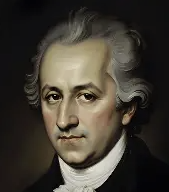
All poetry is supposed to be instructive but in an unnoticeable manner; it is supposed to make us aware of what it would be valuable to instruct ourselves in; we must deduce the lesson on our own, just as with life.
▼
Source
source
Letter to Carl Friedrich Zelter
2 months 1 week ago
The mind advances only when it has the patience to go in circles, in other words, to deepen.
3 months 2 weeks ago
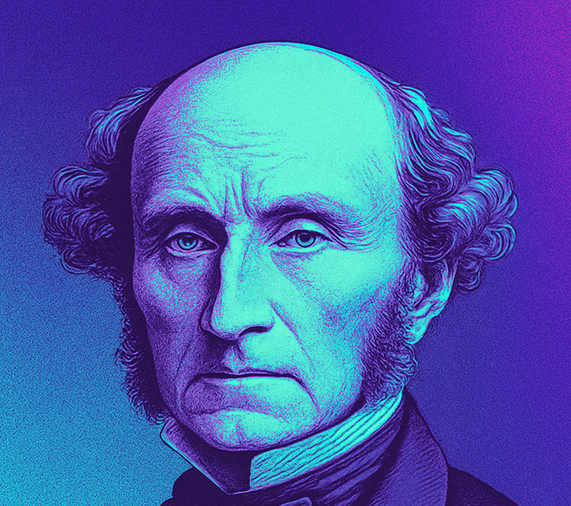
The object of this Essay is to explain as clearly as I am able grounds of an opinion which I have held from the very earliest period when I had formed any opinions at all on social political matters, and which, instead of being weakened or modified, has been constantly growing stronger by the progress reflection and the experience of life. That the principle which regulates the existing social relations between the two sexes - the legal subordination of one sex to the other - is wrong itself, and now one of the chief hindrances to human improvement; and that it ought to be replaced by a principle of perfect equality, admitting no power or privilege on the one side, nor disability on the other.
▼
Source
source
Ch. 1
2 months 1 week ago
We understand God by everything in ourselves that is fragmentary, incomplete, and inopportune.
3 months 1 week ago
For Genet, reflective states of mind are the rule. And although they are of an unstable nature in everyone, in him...reflection is always contrary to the reflected feeling.
▼
Source
source
p. 278
2 months 3 weeks ago
Choose rather to be strong in soul than in body.
▼
Source
source
"Pythagorean Ethical Sentences From Stobæus" (1904) Choose rather to be strong of soul than strong of body. As quoted in Florilegium, I.22, as translated in Dictionary of Quotations (1906) by Thomas Benfield Harbottle, p. 396

3 months 2 weeks ago
The militarily-patriotic and the romantic-minded everywhere, and especially the professional military class, refuse to admit for a moment that war may be a transitory phenomenon in social evolution. The notion of a sheep's paradise like that revolts, they say, our higher imagination. Where then would be the steeps of life? If war had ever stopped, we should have to re-invent it, on this view, to redeem life from flat degeneration. Reflective apologists for war at the present day all take it religiously. It is a sort of sacrament. It's profits are to the vanquished as well as to the victor; and quite apart from any question of profit, it is an absolute good, we are told, for it is human nature at its highest dynamic.
1 month 4 weeks ago
Einstein analyses the ideas of time-order and of simultaneity. Primarily (according to his analysis) time-order only refers to the succession of events at a given place. Accordingly each given place has its own time-order. But these time-orders are not independent in the system of nature, and their correlation is known to us by means of physical measurement. Now ultimately all physical measurement depends upon coincidence in time and place.
▼
Source
source
p. 51

3 months 2 weeks ago
The activity of to-day and the assurance of to-morrow.
▼
Source
source
p. 215
1 month ago
Even purely intellectual progress brings about its revenges. Problems settled in a rough and ready way by rude men, absorbed in action, demand renewed attention and show themselves to be still unread riddles when men have time to think. The beneficent demon, doubt, whose name is Legion and who dwells amongst the tombs of old faiths, enters into mankind and thenceforth refuses to be cast out. Sacred customs, venerable dooms of ancestral wisdom, hallowed by tradition and professing to hold good for all time, are put to the question. Cultured reflection asks for their credentials; judges them by its own standards; finally, gathers those of which it approves into ethical systems, in which the reasoning is rarely much more than a decent pretext for the adoption of foregone conclusions.
4 days ago
The principle of the family was mutual aid; but the principle of society is competition, the struggle for existence, the elimination of the weak and the survival of the strong.
▼
Source
source
Ch. 2 : On Youth
Just now
If the press was to be free, nothing would be so important as precisely its liberation from every coercion that could be put on it in the name of a law. And, that it might come to that, I my own self should have to have absolved myself from obedience to the law.
▼
Source
source
Cambridge 1995, p. 249
3 months 1 week ago
Whatever the poverty of our knowledge in this respect, it is certain that the question of the sign is itself more or less, or in any event something other, than a sign of the times. To dream of reducing it to a sign of the times is to dream of violence.
▼
Source
source
Force and Signification
3 months 2 days ago
"I will show," said Agesilaus, "that it is not the places that grace men, but men the places."
▼
Source
source
Of Agesilaus the Great
2 months 1 week ago
In solitude it is possible to love mankind; in the world, for one who knows the world, there can be nothing but secret or open war.
1 month 2 weeks ago
History is the life of nations and of humanity. To seize and put into words, to describe directly the life of humanity or even of a single nation, appears impossible.
▼
Source
source
Epilogue II, ch. 1

3 months 2 weeks ago
By nature a philosopher is not in genius and disposition half so different from a street porter, as a mastiff is from a greyhound.
▼
Source
source
Chapter II, p. 17.

3 months 1 week ago
It is understandable then that tragic heroes, unlike the baroque characters who had preceded them, could never be mad, and that inversely madness could never take on the tragic value we have known since Nietzsche and Artaud. In the classical epoch, tragic characters and the mad face each other without any possible dialogue or common language, for the one can only pronounce the decisive language of being, where the truth of light and the depths of night meet in a flash, and the other repeats endlessly an indifferent murmur where the empty chatter of the day is cancelled out by the deceptive lies of the shadows.
▼
Source
source
Part Two: 2. The Transcendence of Delirium
2 months 4 weeks ago
Every body is in place; but nothing essentially incorporeal, or any thing of this kind, has any locality.
3 months 1 week ago
What I see is teeming cohesion, contained dispersal.... For him, to sculpt is to take the fat off space.
▼
Source
source
On Alberto Giacometti's work, Situations, in Braziller
4 months 1 week ago
There is merely bad luck in not being loved; there is misfortune in not loving. All of us, today, are dying of this misfortune. For violence and hatred dry up the heart itself; the long fight for justice exhausts the love that nevertheless gave birth to it.

3 months 2 weeks ago
I shall need only myself to be happy.
▼
Source
source
As quoted in The prophetic voice, 1758-1778 by Lester G. Crocke, p. 148.
4 months 4 days ago
He that in his studies wholly applies himself to labour and exercise, and neglects meditation, loses his time, and he that only applies himself to meditation, and neglects labour and exercise, only wanders and loses himself.
CivilSimian.com created by AxiomaticPanic, CivilSimian, Kalokagathia