


3 months 4 weeks ago
What once sprung from earth sinks back into the earth.
▼
Source
source
Book II, lines 999-1000 (tr. Bailey)
3 months 2 days ago
To Harmodius, descended from the ancient Harmodius, when he reviled Iphicrates [a shoemaker's son] for his mean birth, "My nobility," said he, "begins in me, but yours ends in you."
▼
Source
source
54 Iphicrates
1 month ago
The absolute justice of the system of things is as clear to me as any scientific fact. The gravitation of sin to sorrow is as certain as that of the earth to the sun, and more so-for experimental proof of the fact is within reach of us all-nay, is before us all in our own lives, if we had but the eyes to see it.
3 weeks 6 days ago
Now civilizations, I believe, come to birth and proceed to grow by successfully responding to successive challenges. They break down and go to pieces if and when a challenge confronts them which they fail to meet.
▼
Source
source
Ch. 8: Civilization on Trial
3 weeks 2 days ago
It's easier to be faithful to a restaurant than it is to a woman.
▼
Source
source
Fidelity
1 month 3 weeks ago
All men are in need of help and depend on one another. Human solidarity is the necessary condition for the unfolding of any one individual.
▼
Source
source
Ch. 2
3 months 2 weeks ago
Stop Traveller! Near this place lieth John Locke. If you ask what kind of a man he was, he answers that he lived content with his own small fortune. Bred a scholar he made his learning subservient only to the cause of truth. This thou will learn from his writings, which will show thee everything else concerning him, with greater truth, than the suspect praises of an epitaph. His virtues, indeed, if he had any, were too little for him to propose as matter of praise to himself, or as an example to thee. Let his vices be buried together. As to an example of manners, if you seek that, you have it in the Gospels; of vices, to wish you have one nowhere; if mortality, certainly, (and may it profit thee), thou hast one here and everywhere.
▼
Source
source
Epitaph, as translated from the Latin.

4 months 1 week ago
It's my belief that the Universe possesses, in its essence, fractal properties of a very complex sort and that the pursuit of science shares those properties. It follows that any part of the Universe that remains un-understood, and any part of scientific investigation that remains unresolved, however small that might be in comparison to what is understood and resolved, contains within it all the complexity of the original. Therefore, we'll never finish. No matter how far we go, the road ahead will be as long as it was at the start, and that's the secret of the Universe.



2 months 2 weeks ago
To the Deity must be left the task of infinite perfection, while to us poor, weak, incapable mortals, there was no rule of conduct so safe as experience.
▼
Source
source
Speech in the House of Commons (6 May 1791), quoted in The Parliamentary History of England, From the Earliest Period to the Year 1803, Vol. XXIX (1817), column 388

2 months 2 weeks ago
There is no road or ready way to virtue.
▼
Source
source
Section 55

3 months 1 week ago
In order to make myself recognized by the Other, I must risk my own life. To risk one's life, in fact, is to reveal oneself as not-bound to the objective form or to any determined existence - as not-bound to life.
▼
Source
source
p. 237, 1998 edition
2 months 2 weeks ago
Go further, and require each of them to make a contribution: you will see how many things are still missing, and you will be obliged to get the assistance of a large number of men who belong to different classes, priceless men, but to whom the gates of the academies are nonetheless closed because of their social station. All the members of these learned societies are more than is needed for a single object of human science; all the societies together are not sufficient for a science of man in general.
▼
Source
source
Article on Encyclopedia
2 months 6 days ago
This idea is that laws which purport to be statements of what actually occurs are statistical in character as distinct from so-called dynamic laws that are abstract and mathematical, and disguised definitions. Recognition of the statistical nature of physical laws was first effected in the case of gases when it became evident that generalizations regarding the behavior of swarms of molecules were not descriptions or predictions of the behavior of any individual particle. A single molecule is not and cannot be a gas. It is consequently absurd to suppose that a scientific law is about the elementary constituents of a gas. It is a statement of what happens when a large number of such constituents interact with one another under certain conditions.

4 months 1 week ago
But in the end one needs more courage to live than to kill himself.

3 months 4 days ago
You can tell the man who rings true from the man who rings false, not by his deeds alone, but also by his desires.
1 month 4 weeks ago
Modern science has imposed on humanity the necessity for wandering. Its progressive thought and its progressive technology make the transition through time, from generation to generation, a true migration into uncharted seas of adventure.
▼
Source
source
Ch. 13: "Requisites for Social Progress", p. 291

3 months 1 week ago
If the many, the specialists, gain the day, it will be the end of science as we know it - of great science. It will be a spiritual catastrophe comparable in its consequences to nuclear armament.
▼
Source
source
K. Popper, The Myth of the Framework, London: Routledge. As quoted in The Cambridge Companion to Karl Popper (2016) by J. Shearmur, G. Stokes

1 month 1 week ago
What began as a "Romantic reaction" towards organic wholeness may or may not have hastened the discovery of electro-magnetic waves. But certainly the electro-magnetic discoveries have recreated the simultaneous "field" in all human affairs so that the human family now exists under conditions of a "global village." We live in a single constricted space resonant with tribal drums. So that concern with the "primitive" today is as banal as nineteenth-century concern with "progress," and as irrelevant to our problems. The new electronic interdependence recreates the world in the image of a global village.
▼
Source
source
(p. 36)

5 days ago
To a shower of gold most things are penetrable.
▼
Source
source
Pt. I, Bk. III, ch. 7.
1 month 2 weeks ago
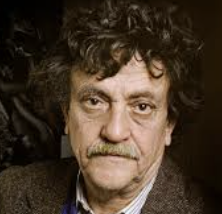
During the Vietnam War, which lasted longer than any war we've ever been in -- and which we lost -- every respectable artist in this country was against the war. It was like a laser beam. We were all aimed in the same direction. The power of this weapon turns out to be that of a custard pie dropped from a stepladder six feet high.
▼
Source
source
Vonnegut at 80 Interview with David Hoppe Alternet

2 months 3 weeks ago
Neither will the horse be adjudged to be generous, that is sumptuously adorned, but the horse whose nature is illustrious; nor is the man worthy who possesses great wealth, but he whose soul is generous.
▼
Source
source
Pythagorean Ethical Sentences From Stobæus
1 month ago
The sceptics end in the infidelity which asserts the problem to be insoluble, or in the atheism which denies the existence of any orderly progress and governance of things: the men of genius propound solutions which grow into systems of Theology or of Philosophy, or veiled in musical language which suggests more than it asserts, take the shape of the Poetry of an epoch.
▼
Source
source
Ch.2, p. 72
1 week ago
The artist may be well advised to keep his work to himself till it is completed, because no one can readily help him or advise him with it...but the scientist is wiser not to withhold a single finding or a single conjecture from publicity.
▼
Source
source
Essay on Experimentation

3 months 1 week ago
To be an intellectual really means to speak a truth that allows suffering to speak. That is, it creates a vision of the world that puts into the limelight the social misery that is usually hidden or concealed by the dominant viewpoints of a society. "Intellectual" in that sense simply means those who are willing to reflect critically upon themselves as well as upon the larger society and to ascertain whether there is some possibility of amelioration and betterment.
▼
Source
source
"Chekhov, Coltrane, and Democracy: Interview by David Lionel Smith." in The Cornel West Reader. Basic Books. 2000. p. 551. ISBN 978-0-465-09110-2.
3 months 2 weeks ago
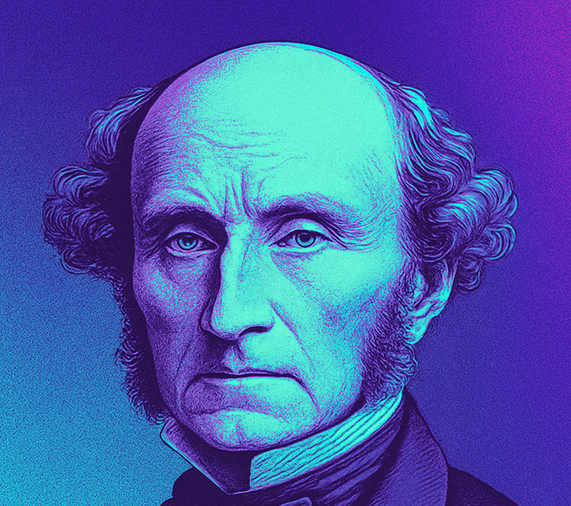
Society can and does execute its own mandates: and if it issues wrong mandates instead of right, or any mandates at all in things with which it ought not to meddle, it practises a social tyranny more formidable than many kinds of political oppression, since, though not usually upheld by such extreme penalties, it leaves fewer means of escape, penetrating much more deeply into the details of life, and enslaving the soul itself. Protection, therefore, against the tyranny of the magistrate is not enough: there needs protection also against the tyranny of the prevailing opinion and feeling; against the tendency of society to impose, by other means than civil penalties, its own ideas and practices as rules of conduct on those who dissent from them; to fetter the development, and, if possible, prevent the formation, of any individuality not in harmony with its ways, and compel all characters to fashion themselves upon the model of its own.
▼
Source
source
Ch. 1: Introductory
3 months 4 days ago
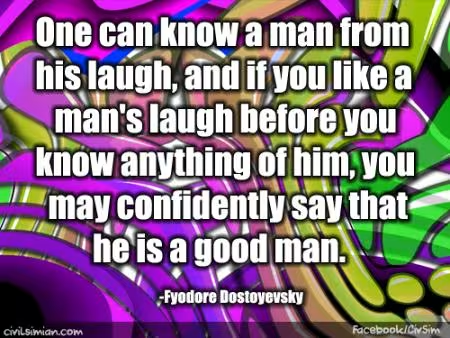
The pleasures that give most joy are the ones that most rarely come.

3 months 3 weeks ago
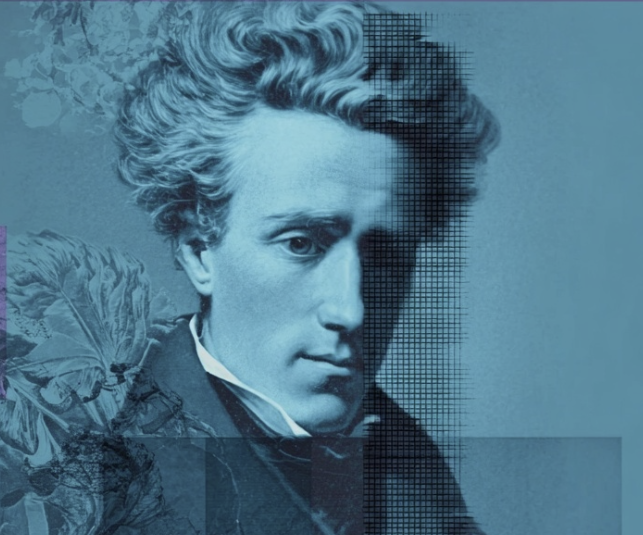
I have never seen a greater monster or miracle in the world than myself.
▼
Source
source
Book III, Ch. 11. Of Cripples
4 months 2 weeks ago
How absurd men are! They never use the liberties they have, they demand those they do not have. They have freedom of thought, they demand freedom of speech. Either/Or Part I, Swenson Translation p. 19 Variations include: People demand freedom of speech to make up for the freedom of thought, which they avoid. People demand freedom of speech as a compensation for the freedom of thought which they seldom use.
4 days ago
She is a woman now, and not an idle girl, not a domestic ornament or a sexual convenience anymore.
▼
Source
source
On the maturation of women, Ch. 4 : On Old Age
2 months 1 week ago
And the Science of them, is the true and onely Moral Philosophy. For Moral Philosophy is nothing else but the Science of what is Good, and Evill, in the conversation, and Society of mankind. Good, and Evill, are names that signify our Appetites, and Aversions; which in different tempers, customes, and doctrines of men, are different.
▼
Source
source
The First Part, Chapter 15, p. 79
2 months 1 week ago
As in the presence of the Master, the Servants are equall, and without any honour at all; So are the Subjects, in the presence of the Soveraign. And though they shine some more, some lesse, when they are out of his sight; yet in his presence, they shine no more than the Starres in presence of the Sun.
▼
Source
source
The Second Part, Chapter 18, p. 93
Just now
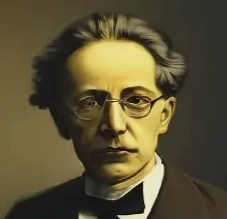
A word of honour, an oath, is one only for him whom I entitle to receive it; he who forces me to it obtains only a forced, a hostile word, the word of a foe, whom one has no right to trust; for the foe does not give us the right.
▼
Source
source
Cambridge 1995, p. 269

3 months 2 weeks ago
All the better; they do not force me to do anything that I would not have done of my own accord if I did not dread scandal. But since they want it that way, I enter gladly on the path that is opened to me, with the consolation that my departure will be more innocent than was the exodus of the early Hebrews from Egypt.
▼
Source
source
Statement after his excommunication from Jewish society, attributed by Lucas, in The Oldest Biography of Spinoza (1970) by A. Wolf; also in Spinoza: A Life (1999) by Steven Nadler
2 months 5 days ago
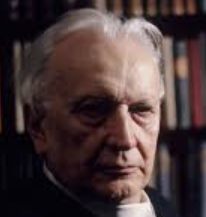
Our questions and answers are in part determined by the historical tradition in which we find ourselves. We apprehend truth from our own source within the historical tradition. The content of our truth depends upon our appropriating the historical foundation. Our own power of generation lies in the rebirth of what has been handed down to us. If we do not wish to slip back, nothing must be forgotten; but if philosophising is to be genuine our thoughts must arise from our own source. Hence all appropriation of tradition proceeds from the intentness of our own life. The more determinedly I exist, as myself, within the conditions of the time, the more clearly I shall hear the language of the past, the nearer I shall feel the glow of its life.
3 months 4 days ago
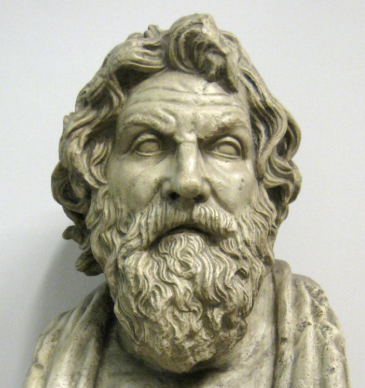
It is better to fall in with crows than with flatterers; for in the one case you are devoured when dead, in the other case while alive.
▼
Source
source
§ 4

2 months 2 weeks ago
Those who cavalierly reject the Theory of Evolution, as not adequately supported by facts, seem quite to forget that their own theory is supported by no facts at all. Like the majority of men who are born to a given belief, they demand the most rigorous proof of any adverse belief, but assume that their own needs none.
3 months 1 week ago
Existentialism is nothing else but an attempt to draw the full conclusions from a consistently atheistic position. Its intention is not in the least that of plunging men into despair. And if by despair one means as the Christians do - any attitude of unbelief, the despair of the existentialists is something different. Existentialism is not atheist in the sense that it would exhaust itself in demonstrations of the non-existence of God. It declares, rather, that even if God existed that would make no difference from its point of view. Not that we believe God does exist, but we think that the real problem is not that of His existence; what man needs is to find himself again and to understand that nothing can save him from himself, not even a valid proof of the existence of God. In this sense existentialism is optimistic. It is a doctrine of action, and it is only by self-deception, by confining their own despair with ours that Christians can describe us as without hope.
▼
Source
source
p. 56

3 months 1 week ago
My dear Wormwood, I note what you say about guiding your patient's reading and taking care that he sees a good deal of his materialist friend. But are you not being a trifle naive? It sounds as if you suppose that argument was the way to keep him out of the enemy's clutches. That might have been so if he had lived a few centuries earlier.
▼
Source
source
Letter I
3 months 3 weeks ago
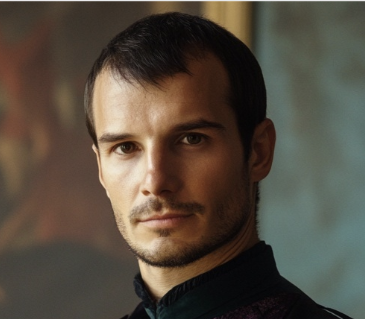
So in all human affairs one notices, if one examines them closely, that it is impossible to remove one inconvenience without another emerging.
▼
Source
source
Book 1, Ch. 6 (as translated by LJ Walker and B Crick)

2 months 1 day ago
Physiology does not teach us how to digest, nor logic how to discourse, nor esthetics how to feel beauty or express it, nor ethics how to be good. And indeed it is well if they do not teach us how to be hypocrites; for pedantry, whether it be pedantry of logic, or of esthetics, or of ethics, is at bottom nothing but hypocrisy.
3 months 4 weeks ago
Therefore death is nothing to us, it matters not one jot, since the nature of the mind is understood to be mortal.
▼
Source
source
Book III, lines 830-831 (tr. Rouse)
2 months 3 weeks ago
We ought so to behave to one another as to avoid making enemies of our friends, and at the same time to make friends of our enemies. As quoted in Diogenes Laërtius, Lives and Opinions of Eminent Philosophers, "Pythagoras", Sect. 23, as translated in Dictionary of Quotations (1906) by Thomas Benfield Harbottle, p. 320
4 days ago
It is a mistake to think that the past is dead. Nothing that has ever happened is quite without influence at this moment. The present is merely the past rolled up and concentrated in this second of time. You, too, are your past; often your face is your autobiography; you are what you are because of what you have been; because of your heredity stretching back into forgotten generations; because of every element of environment that has affected you, every man or woman that has met you, every book that you have read, every experience that you have had; all these are accumulated in your memory, your body, your character, your soul. So with a city, a country, and a race; it is its past, and cannot be understood without it.
▼
Source
source
As quoted in "The Gentle Philosopher" (2006) by John Little at the Will Durant Foundation

3 months 2 weeks ago
There can be no difference anywhere that doesn't make a difference elsewhere - no difference in abstract truth that doesn't express itself in a difference in concrete fact and in conduct consequent upon that fact, imposed on somebody, somehow, somewhere and somewhen.
▼
Source
source
Lecture II, What Pragmatism Means
2 months 1 week ago
The ground for taking ignorance to be restrictive of freedom is that it causes people to make choices which they would not have made if they had seen what the realization of their choices involved.
▼
Source
source
"The Concept of Freedom".
3 months 3 weeks ago
My trade and my art is living.
▼
Source
source
Ch. 6 (tr. Donald M. Frame)

3 months 2 weeks ago
I saw men go up and down, In the country and the town, With this tablet on their neck,- 'Judgement and a judge we seek.' Not to monarchs they repair, Nor to learned jurist's chair; But they hurry to their peers, To their kinsfolk and their dears; Louder than with speech they pray,- 'What am I? companion, say.'
▼
Source
source
Astræa
4 months 2 weeks ago
Man is a goal-seeking animal. His life only has meaning if he is reaching out and striving for goals.
CivilSimian.com created by AxiomaticPanic, CivilSimian, Kalokagathia