


1 month 4 weeks ago
In formal logic, a contradiction is the signal of a defeat; but in the evolution of real knowledge it marks the first step in progress towards a victory.
▼
Source
source
Ch. 12: "Religion and Science", p. 260

1 month 1 week ago
After childhood, the senses specialize via the channels of dominant technologies and social weaponries.
▼
Source
source
Letter to The Listener October 1971, Letters of Marshall McLuhan (1987), p. 443

4 months 2 weeks ago
If, then, in the sphere of action there is some one end which we desire for its own sake, and for the sake of which we desire every thing else; and if we do not choose every thing for the sake of something else, for this would go on without limit, and our desire would be idle and futile, it is clear that this must be the supreme good, and the best thing of all.

3 months 2 weeks ago
Tis certainly a kind of indignity to philosophy, whose sovereign authority ought every where to be acknowledg'd, to oblige her on every occasion to make apologies for her conclusions, and justify herself to every particular art and science, which may be offended at her.
▼
Source
source
Part 4, Section 5

3 months 2 weeks ago
Thought depends largely on the stomach. In spite of this, those with the best stomachs are not always the best thinkers.
▼
Source
source
Letter to Jean le Rond d'Alembert, 20 August 1770
1 week 1 day ago
The mathematician is born, not made.
3 weeks 6 days ago
A life which does not go into action is a failure.
▼
Source
source
Vol. 10
Just now
The state is God, deifies arms and prisons. The worship of the state is the worship of force. There is no more dangerous menace to civilization than a government of incompetent, corrupt, or vile men. The worst evils which mankind ever had to endure were inflicted by bad governments. The state can be and has often been in the course of history the main source of mischief and disaster.
▼
Source
source
Chapter III: Etatism
3 months 2 weeks ago
It is sad that often, to be a good patriot, one must be the enemy of the rest of mankind.
▼
Source
source
"Country"
2 months ago
The uniting of Orthodoxy with state absolutism came about on the soil of a non-belief in the Divineness of the earth, in the earthly future of mankind; Orthodoxy gave away the earth into the hands of the state because of its own non-belief in man and mankind, because of its nihilistic attitude towards the world. Orthodoxy does not believe in the religious ordering of human life upon the earth, and it compensates for its own hopeless pessimism by a call for the forceful ordering of it by state authority.
▼
Source
source
Nihilism On A Religious Soil

3 months 2 weeks ago
The evil effect of science upon men is principally this, that by far the greatest number of those who wish to display a knowledge of it accomplish no improvement at all of the understanding, but only a perversity of it, not to mention that it serves most of them as a tool of vanity.
▼
Source
source
Part III : Selection on Education from Kant's other Writings, Ch. I Pedagogical Fragments, # 52

3 months 4 weeks ago
Again and again our foe, religion, has given birth to deeds sinful and unholy.
▼
Source
source
Book I, lines 82-83 (tr. C. Bailey)
2 months 2 weeks ago
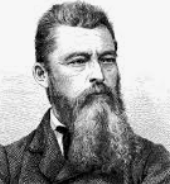
To prove cannot mean anything other than to bring the other person to my own conviction. The truth lies only in the unification of "I" and "You." The Other of pure thought, however, is the sensuous intellect in general. In the field of philosophy, proof therefore consists only in the fact that the contradiction between sensuous intellect and pure thought is disposed, so that thought is true not only for itself but also for its opposite.
▼
Source
source
Z. Hanfi, trans., in The Fiery Brook (1972), p. 75

2 months 1 week ago
To the degree to which they correspond to the given reality, thought and behavior express a false consciousness, responding to and contributing to the preservation of a false order of facts. And this false consciousness has become embodied in the prevailing technical apparatus which in turn reproduces it.
▼
Source
source
p. 145

3 months 2 weeks ago
We are thus led to a somewhat vague distinction between what we may call "hard" data and "soft" data. This distinction is a matter of degree, and must not be pressed; but if not taken too seriously it may help to make the situation clear. I mean by "hard" data those which resist the solvent influence of critical reflection, and by " soft " data those which, under the operation of this process, become to our minds more or less doubtful.
▼
Source
source
p. 70

2 months 2 weeks ago
No sound ought to be heard in the church but the healing voice of Christian charity.

3 months 2 weeks ago
Who could believe in prophecies of Daniel or of Miller that the world would end this summer, while one milkweed with faith matured its seeds?
4 months 2 days ago
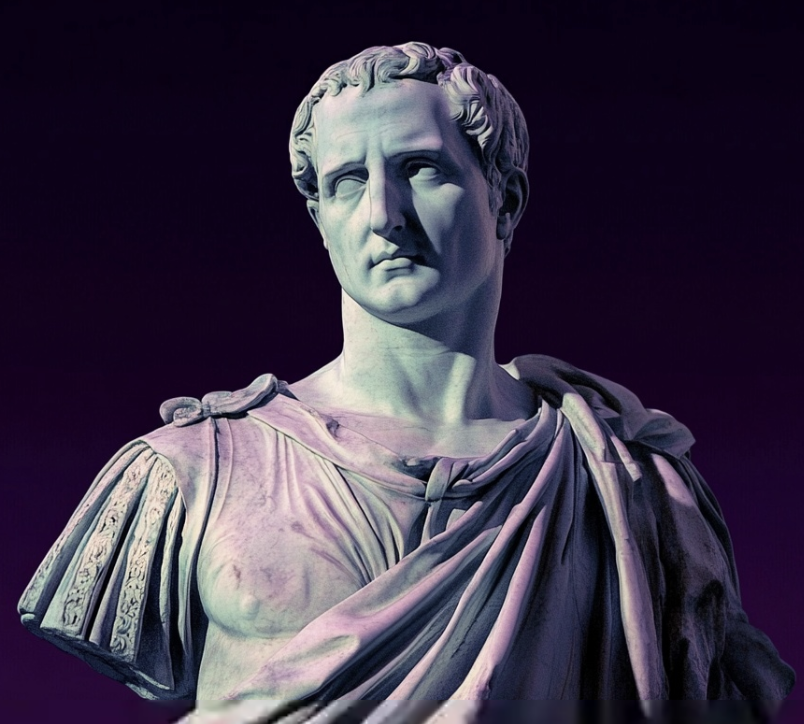
They are such fools that they seem to expect that, though the Republic is lost, their fish-ponds will be safe.
▼
Source
source
Letters to Atticus, Book I, 18.

2 months 2 weeks ago
A little water makes a sea, a small puff of wind a Tempest.
2 months 1 week ago
We return to our analysis of qualities. Something preserves itself throughout this flux, something that passes into other things, but also stands against them as a being for itself. This something can exist only as the product of a process through which it integrates its otherness with its own proper being. Hegel says that its existence comes about through 'the negation of the negation.' The first negation is the otherness in which it turns, and the second is the incorporation of this other into its own self. Such a process presupposes that things possess a certain power over their movement, that they exist in a certain self-relation that enables them to 'mediate' their existential conditions.
▼
Source
source
P. 132-133
2 months 2 weeks ago
A Dialogue between two Infants in the womb concerning the state of this world, might handsomely illustrate our ignorance of the next, whereof methinks we yet discourse in Plato's Den, and are but Embryon Philosophers.
▼
Source
source
Chapter IV

2 months 1 week ago
Only what we have not accomplished and what we could not accomplish matters to us, so that what remains of a whole life is only what it will not have been.

3 months 2 weeks ago
When the act of navigation was made, though England and Holland were not actually at war, the most violent animosity subsisted between the two nations. ... It is not impossible, therefore, that some of the regulations of this famous act may have proceeded from national animosity. They are as wise, however, as if they had all been dictated by the most deliberate wisdom. National animosity at that particular time aimed at the very same object which the most deliberate wisdom would have recommended, the diminution of the naval power of Holland, the only naval power which could endanger the security of England.
▼
Source
source
Chapter II
3 months 2 weeks ago
Morals excite passions, and produce or prevent actions. Reason of itself is utterly impotent in this particular. The rules of morality, therefore, are not conclusions of our reason.
▼
Source
source
Part 1, Section 1
2 months 1 week ago
Freed from the sublimated form which was the very token of its irreconcilable dreams-a form which is the style, the language in which the story is told-sexuality turns into a vehicle for the bestsellers of oppression. ... This society turns everything it touches into a potential source of progress and of exploitation, of drudgery and satisfaction, of freedom and of oppression. Sexuality is no exception.
▼
Source
source
pp. 77-78
1 month 1 week ago
Never find your delight in another's misfortune.
▼
Source
source
Maxim 467
4 months 2 weeks ago
But voice is a certain sound of that which is animated; for nothing inanimate emits a voice; but they are said to emit a voice from similitude, as a pipe, and a lyre, and such other inanimate things, have extension, modulation, and dialect; for thus it appears, because voice, also, has these.

4 months 1 week ago
To work and create "for nothing," to sculpture in clay, to know one's creation has no future, to see one's work destroyed in a day while being aware that fundamentally this has no more importance than building for centuries, this is the difficult wisdom that absurd thought sanctions. Performing these two tasks simultaneously, negating on the one hand and magnifying on the other, it the way open to the absurd creator. He must give the void its colors.

3 months 1 week ago
Karsky: I met your father last week. Are you still interested in hearing how he is doing?
Hugo: No.
Karsky: It is very probable that you will be responsible for his death.
Hugo: It is virtually certain that he is responsible for my life. We are even.
▼
Source
source
Act 4, sc. 4

5 days ago
History is the essence of innumerable biographies.
▼
Source
source
On History.

3 months 2 weeks ago
In place of the bourgeois society, with its classes and class antagonisms, shall we have an association, in which the free development of each is the condition for the free development of all.
▼
Source
source
Section 2, paragraph 72 (last paragraph).
3 months 1 week ago
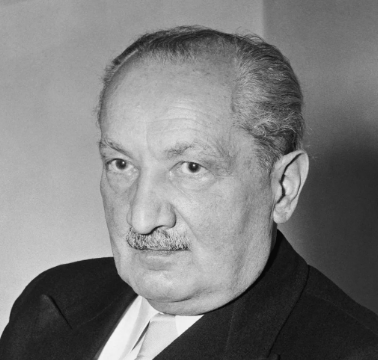
"For many, abstract thinking is toil; for me, on good days, it is feast and frenzy." (XIV, 24) Abstract thinking a feast? The highest form of human existence? ... "The feast implies: pride, exuberance, frivolity; mockery of all earnestness and respectability; a divine affirmation of oneself, out of animal plenitude and perfection-all obviously states to which the Christian may not honestly say Yes. The feast is paganism par excellence." (WM, 916). For that reason, we might add that thinking never takes place in Christianity. That is to say, there is no Christian philosophy. There is no true philosophy that could be determined anywhere else than from within itself.
▼
Source
source
p. 5
3 months 2 weeks ago
A man must be perfectly crazy who, where there is tolerable security, does not employ all the stock which he commands…
▼
Source
source
Chapter I, p. 313 (see opportunity cost).

3 months 1 week ago
Knowledge is in the end based on acknowledgement.



3 months 3 weeks ago
Fashion is the science of appearances, and it inspires one with the desire to seem rather than to be.

3 months 1 week ago
Well, as you know, I was blessed to do over a hundred events for my dear brother [Bernie Sanders]. And this is the first time I've had a chance to publicly endorse him again, but yes, indeed. I'll be in his corner that we're going to win this time. And it has to do with the Martin Luther King like criteria of assessing a candidate namely the issues of militarism, poverty, materialism, and racism, xenophobia in all of its forms that includes any kind of racism as you know against black people, brown people, yellow people, anybody, Arabs, Muslims, Jews, Palestinians, Kashmirians, Tibetans and so forth. So that there's no doubt that the my dear brother Bernie stands shoulders above any of the other candidates running in the Democratic primary when it comes to that Martin Luther King-like standards or criteria.
▼
Source
source
Quoted in: Cornel West on Bernie, Trump, and Racism, The Intercept, Mehdi Hasan,
2 months 1 week ago
Give an inch, he'll take an ell.
▼
Source
source
Liberty and Necessity (no. 111)
1 month 1 week ago
Confidence is the only bond of friendship.
▼
Source
source
Maxim 34
2 months 5 days ago
The metaphor is perhaps one of man's most fruitful potentialities. Its efficacy verges on magic, and it seems a tool for creation which God forgot inside one of His creatures when He made him. All our other faculties keep us within the realm of the real, of what is already there. The most we can do is to combine things or to break them up. The metaphor alone furnishes an escape; between the real things, it lets emerge imaginary reefs, a crop of floating islands. A strange thing, indeed, the existence in man of this mental activity which substitutes one thing for another - from an urge not so much to get at the first as to get rid of the second.
▼
Source
source
"Taboo and Metaphor"

2 months 1 week ago
Suffer little children, and forbid them not, to come unto me: for of such is the kingdom of heaven. Verily I say unto you, Whosoever shall not receive the kingdom of God as a little child shall in no wise enter therein.
▼
Source
source
18:16-17 (KJV) Variant translation: Let the little children come to me, and do not hinder them, for the kingdom of God belongs to such as these. I tell you the truth, anyone who will not receive the kingdom of God like a little child will never enter it.

2 months 2 weeks ago
They call, in fact, for the forfeiture, to a greater or less degree, of human liberty, to the point where, were I to attempt to sum up what socialism is, I would say that it was simply a new system of serfdom.
▼
Source
source
Notes for a Speech on Socialism (1848). http://oll.libertyfund.org/pages/tocqueville-s-critique-of-socialism-1848
2 months 2 weeks ago
You had that action and counteraction which, in the natural and in the political world, from the reciprocal struggle of discordant powers draws out the harmony of the universe.
▼
Source
source
Volume iii, p. 277
2 months 1 week ago
See ye not all these things? verily I say unto you, There shall not be left here one stone upon another, that shall not be thrown down.
▼
Source
source
24:2 (KJV)

1 month 3 weeks ago
The period of the actual revolution, the so-called transitory stage, must be the introduction, the prelude to the new social conditions. It is the threshold to the NEW LIFE, the new HOUSE OF MAN AND HUMANITY. As such it must be of the spirit of the new life, harmonious with the construction of the new edifice.
2 months 1 week ago
A regret understood by no one: the regret to be a pessimist. It's not easy to be on the wrong foot with life
Just now
If historical experience could teach us anything, it would be that private property is inextricably linked with civilization.
▼
Source
source
Chapter XV. The Market, § 4 The Scope and Method of Catallactics
1 month 1 week ago
All a writer has to do to get a woman is to say he's a writer. It's an aphrodisiac.
▼
Source
source
As quoted in "Dailer's Choice" by Harriet Van Horne, in New York Magazine Vol. 10, No. 13 (28 March 1977), p. 80

CivilSimian.com created by AxiomaticPanic, CivilSimian, Kalokagathia