


3 months 1 week ago
Political ideals must be based upon ideals for the individual life. The aim of politics should be to make the lives of individuals as good as possible.


3 months 2 weeks ago
Needs must it be hard, since it is so seldom found. How would it be possible, if salvation were ready to our hand, and could without great labour be found, that it should be by almost all men neglected? But all things excellent are as difficult as they are rare.
▼
Source
source
Part V, Prop. XLII, Scholium

3 months 1 week ago
The history of science, like the history of all human ideas, is a history of irresponsible dreams, of obstinacy, and of error. But science is one of the very few human activities - perhaps the only one - in which errors are systematically criticized and fairly often, in time, corrected. This is why we can say that, in science, we often learn from our mistakes, and why we can speak clearly and sensibly about making progress there.
▼
Source
source
Ch. 1 "Science : Conjectures and Refutations"
3 months 1 week ago
As geological time goes, it is but a moment since the human race began and only the twinkling of an eye since the arts of civilization were first invented. In spite of some alarmists, it is hardly likely that our species will completely exterminate itself. And so long as man continues to exist, we may be pretty sure that, whatever he may suffer for a time, and whatever brightness may be eclipsed, he will emerge sooner or later, perhaps strengthened and reinvigorated by a period of mental sleep. The universe is vast and men are but tiny specks on an insignificant planet. But the more we realize our minuteness and our impotence in the face of cosmic forces, the more astonishing becomes what human beings have achieved.
▼
Source
source
"If We are to Survive this Dark Time", The New York Times Magazine, 9/3/1950
4 months 1 week ago
According to one mode... nature is thus denominated, viz. the first subject matter to every thing which contains in itself the principle of motion and mutation. But after another mode it is denominated form, which subsists according to definition: for as art is called that which subsists according to art, and that which is artificial; so likewise nature is both called that which is according to nature, and that which is natural. ...that which is composed from these is not nature, but consists from nature; as, for instance, man. And this is nature in a greater degree than matter: for every thing is then said to be, when it is form in energy... entelecheia, rather than when it is incapacity.
4 months 1 week ago
He kept the middle way, that's all: he was the type of man for whom one has an affection of the mild but steady order - which is the kind that wears best.
2 months 2 weeks ago
The blood of Jesus Christ can cover a multitude of sins, it seems to me.
1 month 3 weeks ago
Pornography completes the deritualization of love.
2 months 1 week ago
In fact, this infinitesimally spread-out consciousness is a direct feeling of its contents as spread out. In an infinitesimal interval we directly perceive the temporal sequence of its beginning, middle, and end... Now upon this interval follows another, whose beginning is the middle of the former, and whose middle is the end of the former. Here we have an immediate perception of the temporal sequence of its beginning, middle and end, or say, of the second, third, and fourth instants.

2 months 1 week ago
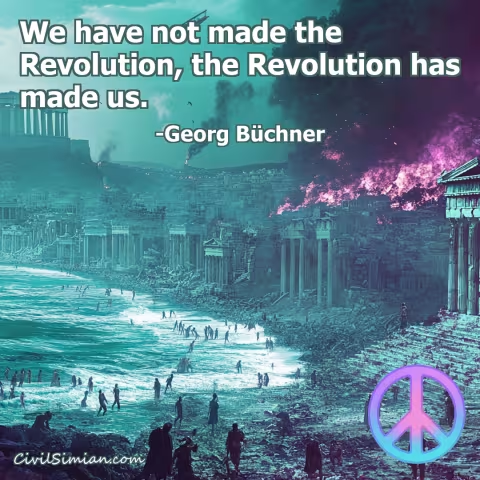
Is there in the whole world a being who would have the right to forgive and could forgive? I don't want harmony. From love for humanity I don't want it. I would rather be left with the unavenged suffering. I would rather remain with my unavenged suffering and unsatisfied indignation, even if I were wrong. Besides, too high a price is asked for harmony; it's beyond our means to pay so much to enter on it. And so I hasten to give back my entrance ticket, and if I am an honest man I am bound to give it back as soon as possible. And that I am doing. It's not God that I don't accept, Alyosha, only I most respectfully return him the ticket.
▼
Source
source
Book II, Chapter 4: Rebellion (trans. Constance Garnett)
3 months 1 week ago
To Americans. That some desperate wretches should be willing to steal and enslave men by violence and murder for gain, is rather lamentable than strange. But that many civilized, nay, christianized people should approve, and be concerned in the savage practice, is surprising; and still persist, though it has been so often proved contrary to the light of nature, to every principle of Justice and Humanity, and even good policy, by a succession of eminent men, and several late publications.
3 months 3 weeks ago
Every habit and faculty is confirmed and strengthened by the corresponding actions, that of walking by walking, that of running by running.
▼
Source
source
Book II, ch. 18, 1
3 months 2 weeks ago
It is easier for the prince to make friends of those men who were contented under the former government, and are therefore his enemies, than of those who, being discontented with it, were favourable to him and encouraged him to seize it.
▼
Source
source
Ch. 20
4 months 1 day ago
They hate not to make use of their abilities... they do not necessarily work for their own self-interest.

3 months 2 weeks ago
Saying is one thing, doing another.
▼
Source
source
Book II, Ch. 31. Of Anger

3 months 1 week ago
Solvency is maintained by means of the national debt, on the principle, "If you will not lend me the money, how can I pay you?"
▼
Source
source
Ability
3 months 1 week ago
There is darkness without and when I die there will be darkness within. There is no splendor, nor vastness anywhere; only triviality for a moment and then nothing.
▼
Source
source
Attributed to Russell in Ken Davis' Fire Up Your Life! (1995), p. 33
2 months 1 week ago
The plea of anger or of drunkenness - as having placed the criminal for the moment beyond the control of his reason - relieves him from the charge of premeditated and malicious intent; but a rational legislation will rather provide more severe than milder punishment for such cases, particularly if such a state of mind is habitual with the accused; for a single unlawful act may well constitute an exception from an otherwise blameless life. But a person who pleads, "I habitually get so angry or so drunk as not to be any longer master of my senses!" confesses thereby that he changes himself into a beast on a fixed principle, and that he is, therefore, not fit to live among rational beings.
▼
Source
source
P. 351
3 months 1 week ago
Reason is a harmonising, controlling force rather than a creative one.
▼
Source
source
Ch. 1: Mysticism and Logic
3 months 1 week ago
You must do nothing before him, which you would not have him imitate. If any thing escape you, which you would have pass as a fault in him, he will be sure to shelter himself under your example, and shelter himself so as that it will not be easy to come at him, to correct it in him the right way.
▼
Source
source
Sec. 71
3 days ago
America, you have it better than our continent, the old one.
▼
Source
source
Wendts Musen-Almanach
3 months 1 day ago
People do not feel in any way ashamed or guilty about spending money on new clothes or a new car instead of giving it to famine relief. (Indeed, the alternative does not occur to them.) This way of looking at the matter cannot be justified. When we buy new clothes not to keep ourselves warm but to look "well-dressed" we are not providing for any important need. We would not be sacrificing anything significant if we were to continue to wear our old clothes, and give the money to famine relief. By doing so, we would be preventing another person from starving. It follows from what I have said earlier that we ought to give money away, rather than spend it on clothes which we do not need to keep us warm. To do so is not charitable, or generous. Nor is it the kind of act which philosophers and theologians have called "supererogatory" - an act which it would be good to do, but not wrong not to do. On the contrary, we ought to give the money away, and it is wrong not to do so.

3 months 4 weeks ago
Religious law makes it illegal for the ignorant to drink wine, but intelligence makes it legal for the intellectual.
3 months 1 week ago
I think no virtue goes with size; The reason of all cowardice Is, that men are overgrown, And, to be valiant, must come down To the titmouse dimension.
▼
Source
source
The Titmouse, st. 5
1 month 1 week ago
It is sometimes expedient to forget who we are.
▼
Source
source
Maxim 233

2 months 1 week ago
To claim you are more detached, more alien to everything than anyone, and to be merely a fanatic of indifference!
2 weeks 4 days ago
Knowledge grows, but human beings remain much the same.Belief in progress is a relic of the Christian view of history as a universal narrative, and an intellectually rigorous atheism would start by questioning it.

4 months 1 week ago
This is the mistake which I seem to make eternally, that I imagine the sufferings of others as far greater than they really are. Ever since my childhood, the proposition, my greatest dangers lie in pity, has been confirmed again and again.

1 month 3 weeks ago
That knowledge which adds greatness to character is knowledge so handled as to transform every phase of immediate experience.

1 month 2 weeks ago
Of all the inventions of man I doubt whether any was more easily accomplished than that of a Heaven.
▼
Source
source
L 34
3 months 1 day ago
Our own experience provides the basic material for our imagination, whose range is therefore limited. It will not help to try to imagine that one has webbing on one's arms, which enables one to fly around at dusk and dawn catching insects in one's mouth; that one has very poor vision, and perceives the surrounding world by a system of reflected high-frequency sound signals; and that one spends the day hanging upside down by one's feet in an attic. Insofar as I can imagine this (which is not very far), it tells me only what it would be like for me to behave as a bat behaves. But that is not the question. I want to know what it is like for a bat to be a bat. Yet if I try to imagine this, I am restricted to the resources of my own mind, and those resources are inadequate to the task.
▼
Source
source
p. 169.
1 week ago
Wisdom, virtue, morality, all these have fallen out of fashion: everybody worships at the shrine of commerce.
▼
Source
source
The Theory of the Four Movements (1808), G. Jones, ed. (1966), p. 269
3 months 1 week ago
Earth proudly wears the Parthenon As the best gem upon her zone.
▼
Source
source
The Problem, st. 3
2 months 1 week ago
Scientists believe there is a hierarchy of facts and that among them may be made a judicious choice. They are right, since otherwise there would be no science... One need only open the eyes to see that the conquests of industry which have enriched so many practical men would never have seen the light, if these practical men alone had existed and if they had not been preceded by unselfish devotees who died poor, who never thought of utility, and yet had a guide far other than caprice.As Mach says, these devotees have spared their successors the trouble of thinking.
▼
Source
source
Henri Poincaré, The Value of Science (1907) Author's Essay Prefatory to the Translation: "The Choice of Facts," p.4, Tr. George Bruce Halsted

3 months 1 week ago
I hate victims who respect their executioners.
▼
Source
source
Loser Wins (Les Séquestrés d'Altona: A Play in Five Acts)

3 months 1 week ago
The possession and the exercise of political, and among others of electoral, rights, is one of the chief instruments both of moral and of intellectual training for the popular mind; and all governments must be regarded as extremely imperfect, until every one who is required to obey the laws, has a voice, or the prospect of a voice, in their enactment and administration.
▼
Source
source
Thoughts on Parliamentary Reform (1859), p. 22

3 months 2 weeks ago
Of how much more passion than reason has Jupiter composed us? putting in, as one would say, "scarce half an ounce to a pound."

1 month 4 weeks ago
To believe in God is to yearn for His existence and, furthermore, it is to act as if He did exist.

2 days ago
But leaving this, let us remark one thing which is very plain: That whatever be the uses and duties, real or supposed, of a Secretary in Parliament, his faculty to accomplish these is a point entirely unconnected with his ability to get elected into Parliament, and has no relation or proportion to it, and no concern with it whatever.
3 months 2 weeks ago
There is, nevertheless, a certain respect and a general duty of humanity that ties us, not only to beasts that have life and sense, but even to trees and plants.
▼
Source
source
Book II, Ch. 11. Of Cruelty
1 month 4 weeks ago
If a philosopher is not a man, he is anything but a philosopher; he is above all a pedant, and a pedant is a caricature of a man. The cultivation of any branch of science - of chemistry, of physics, of geometry, of philology - may be a work of differentiated specialization, and even so, only within very narrow limits and restrictions; but philosophy, like poetry, is a work of integration and synthesis, or else it is merely pseudo-philosophical erudition.

1 month 3 weeks ago
The Outsider cannot accept life as it is, who cannot consider his own existence or anyone else's necessary. He sees 'too deep and too much'. It is still a question of self-expression.
▼
Source
source
Chapter Four The Attempt to Gain Control
1 month 4 days ago
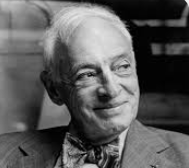
Tocqueville predicted that in democratic countries the public would demand larger and larger doses of excitement and increasingly stronger stimulants from its writers. He probably did not expect that public to dramatize itself so extensively, to make the world scene everybody's theatre, or, in the developed countries, to take to alcohol and drugs in order to get relief from the horrors of ceaseless intensity, the torment of thrills and distractions. A great many writers have done little more than meet the mounting demand for thrills. I think that this demand has, in the language of marketing, peaked.
▼
Source
source
The Distracted Public
2 months 4 weeks ago
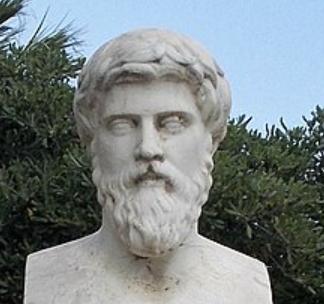
The mind is not a vessel that needs filling, but wood that needs igniting.
▼
Source
source
On Listening to Lectures (Tr. Waterfield)

1 month 1 week ago
No feats of heroism are needed to achieve the greatest and most important changes in the existence of humanity; neither the armament of millions of soldiers, nor the construction of new roads and machines, nor the arrangement of exhibitions, nor the organization of workmen's unions, nor revolutions, nor barricades, nor explosions, nor the perfection of aerial navigation; but a change in public opinion. And to accomplish this change no exertions of the mind are needed, nor the refutation of anything in existence, nor the invention of any extraordinary novelty; it is only needful that we should not succumb to the erroneous, already defunct, public opinion of the past, which governments have induced artificially; it is only needful that each individual should say what he really feels or thinks, or at least that he should not say what he does not think.
▼
Source
source
Ch. 17
2 months 1 week ago
To Live signifies to believe and hope - to lie and to lie to oneself.
3 months 1 week ago
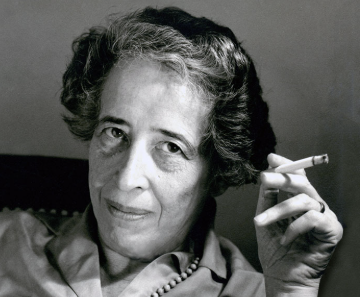
Kant was also quite aware that "the urgent need" of reason is both different from and "more than mere quest and desire for knowledge." Hence, the distinguishing of the two faculties, reason and intellect, coincides with a distinction between two altogether different mental activities, thinking and knowing.
▼
Source
source
p. 14
2 months 1 week ago
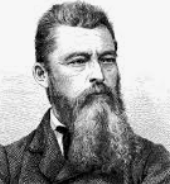
The power of thought is the light of knowledge, the power of will is the energy of character, the power of heart is love. Reason, love and power of will are perfections of man.
▼
Source
source
Introduction, Z. Hanfi, trans., in The Fiery Brook (1972), p. 99
CivilSimian.com created by AxiomaticPanic, CivilSimian, Kalokagathia