


1 month 1 week ago
Hypnotized by their rear-view mirrors, philosophers and scientists alike tried to focus the figure of man in the old ground of nineteenth-century industrial mechanism and congestion. They failed to bridge from the old figure to the new. It is man who has become both figure and ground via the electrotechnical extension of his awareness. With the extension of his nervous system as a total information environment, man bridges art and nature.
▼
Source
source
(p. 11)
1 month 1 week ago
For him who loves labor, there is always something to do.
▼
Source
source
Maxim 219

3 months 1 week ago
For the moment, the jazz is playing; there is no melody, just notes, a myriad of tiny tremors. The notes know no rest, an inflexible order gives birth to them then destroys them, without ever leaving them the chance to recuperate and exist for themselves.... I would like to hold them back, but I know that, if I succeeded in stopping one, there would only remain in my hand a corrupt and languishing sound. I must accept their death; I must even want that death: I know of few more bitter or intense impressions.

1 month 3 weeks ago
Liberty, taking the word in its concrete sense, consists in the ability to choose.
▼
Source
source
Ch. 3, Liberty
1 month 3 weeks ago
The miser deprives himself of his treasure because of his desire for it.
▼
Source
source
p. 260
3 months 1 day ago
I will now tell you who are assembled here the wise sayings of Mazda, the praises of Ahura and the hymns of the Good Spirit, the sublime truth which I see rising out of these flames. You shall therefore harken to the Soul of Nature. Contemplate the beams of fire with a most pious mind. Every one, both men and women, ought to-day to choose his creed. Ye offspring of renowned ancestors, awake to agree with us. So preached Zoroaster, the proph of the Parsis, in one of his earliest sermons nearly 3,500 years ago.
▼
Source
source
p. 15 (Introduction), S. A. Kapadia
1 month 3 weeks ago
Encratic language (the language produced and spread under the protection of power) is statutorily a language of repetition; all official institutions of language are repeating machines: schools, sports, advertising, popular songs, news, all continually repeat the same structure, the same meaning, often the same words.
▼
Source
source
The Pleasure of the Text

3 months 1 week ago
No particular results then, so far, but only an attitude of orientation, is what the pragmatic method means. The attitude of looking away from first things, principles, 'categories,' supposed necessities; and of looking towards last things, fruits, consequences, facts.
▼
Source
source
Lecture II, What Pragmatism Means

3 months ago
The friendship of one wise man is better than the friendship of a host of fools.
2 days ago
Those who are humane achieve glory. Those who are inhumane suffer disgrace.
▼
Source
source
2A:4

3 months 1 week ago
I am looking forward very much to getting back to Cambridge, and being able to say what I think and not to mean what I say: two things which at home are impossible. Cambridge is one of the few places where one can talk unlimited nonsense and generalities without anyone pulling one up or confronting one with them when one says just the opposite the next day.
▼
Source
source
Letter to Alys Pearsall Smith (1893); published in The Selected Letters of Bertrand Russell, Volume 1: The Private Years (1884-1914), edited by Nicholas Griffin
2 months 4 weeks ago
Cato instigated the magistrates to punish all offenders, saying that they that did not prevent crimes when they might, encouraged them. Of young men, he liked them that blushed better than those who looked pale.
▼
Source
source
Cato the Elder



2 months 2 weeks ago
But how shall we expect charity towards others, when we are uncharitable to ourselves? Charity begins at home, is the voice of the world, yet is every man his greatest enemy, and as it were, his own executioner.
▼
Source
source
Section 4
1 month 3 weeks ago
In the end, I am moved by causes and ideas that I can actually choose to support because they conform to values and principles that I believe in.
▼
Source
source
p. 88

2 months 1 week ago
It is not calling the landed estates, possessed by old prescriptive rights, the 'accumulations of ignorance and superstition', that can support me in shaking that grand title, which supersedes all other title, and which all my studies of general jurisprudence have taught me to consider as one principal cause of the formation of states; I mean the ascertaining and securing prescription. But these are donations made in 'ages of ignorance and superstition'. Be it so. It proves that these donations were made long ago; and this is prescription; and this gives right and title.
▼
Source
source
Letter to Captain Thomas Mercer (26 February 1790), quoted in Alfred Cobban and Robert A. Smith (eds.), The Correspondence of Edmund Burke, Volume VI: July 1789-December 1791 (1967), p. 95

1 month 1 week ago
People usually think that progress consists in the increase of knowledge, in the improvement of life, but that isn't so. Progress consists only in the greater clarification of answers to the basic questions of life. The truth is always accessible to a man. It can't be otherwise, because a man's soul is a divine spark, the truth itself. It's only a matter of removing from this divine spark (the truth) everything that obscures it. Progress consists, not in the increase of truth, but in freeing it from its wrappings. The truth is obtained like gold, not by letting it grow bigger, but by washing off from it everything that isn't gold.
▼
Source
source
Tolstoy's Diaries (1985) edited and translated by R. F. Christian. London: Athlone Press, Vol 2, p. 512
3 months 1 week ago
If the inner psychic ground of our individual appearance were not always the same, there could be no science of psychology, which qua science relies on a psychic "inside we are all alike," just as the science of physiology and medicine relies on the sameness of our inner organs. The monstrous sameness and pervasive ugliness so highly characteristic of the findings of modern psychology, and contrasting so obviously with the enormous variety and richness of overt human conduct, witness to the radical difference between the inside and the outside of the human body.
▼
Source
source
pp. 34-35
1 month 1 week ago
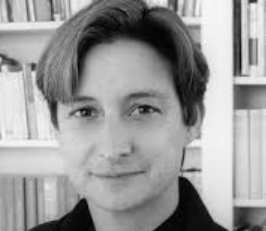
There is no practice of nonviolence that does not negotiate fundamental ethical and political ambiguities, which means that "nonviolence" is not an absolute principle, but the name of an ongoing struggle.
▼
Source
source
p. 23

2 months 3 days ago
I have cast fire upon the world, and see, I am guarding it until it blazes.
1 month 1 week ago
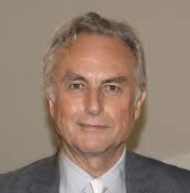
We humans are an extremely important manifestation of the replication bomb, because it is through us - through our brains, our symbolic culture and our technology - that the explosion may proceed to the next stage and reverberate through deep space.
▼
Source
source
Ch. 5: The Replication Bomb
2 months 3 days ago
Judge not, that you be not judged. For with what judgment you judge, you will be judged; and with the measure you use, it will be measured back to you. And why do you look at the speck in your brother's eye, but do not consider the plank in your own eye? Or how can you say to your brother, 'Let me remove the speck from your eye'; and look, a plank is in your own eye? Hypocrite! First remove the plank from your own eye, and then you will see clearly to remove the speck from your brother's eye.
▼
Source
source
Matthew 7:1-5 (NKJV) (Also Luke 6:37-42)
3 months 1 week ago
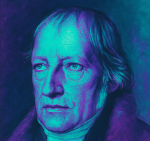
If there are different Notions of the science of Philosophy, it is the true Notion alone that puts us in a position to understand the writings of philosophers who have worked in the knowledge of it. For in thought, and particularly in speculative thought, comprehension means something quite different from understanding the grammatical sense of the words alone, and also from understanding them in the region of ordinary conception only. Hence we may possess a knowledge of the assertions, propositions, or of the opinions of philosophers; we may have occupied ourselves largely with the grounds of and deductions from these opinions, and the main point in all that we have done may be wanting - the comprehension of the propositions.
▼
Source
source
First divsion, Chapter I. - The Metaphysics of the Understanding…

4 months 1 week ago
Since we're all going to die, it's obvious that when and how don't matter.

3 months 1 week ago
"If God did not exist, he would have to be invented." But all nature cries aloud that he does exist: that there is a supreme intelligence, an immense power, an admirable order, and everything teaches us our own dependence on it.
▼
Source
source
Voltaire quoting himself in his Letter to Prince Frederick William of Prussia (28 November 1770), translated by S.G. Tallentyre, Voltaire in His Letters, 1919
2 months 6 days ago
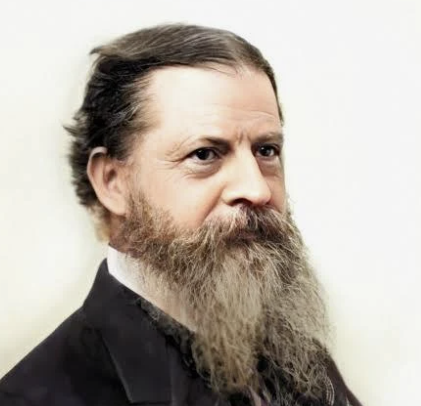
Mere imagination would indeed be mere trifling; only no imagination is mere.
▼
Source
source
Vol. VI, par. 286

3 months 1 week ago
The history of mankind could... be described as a history of outbreaks of fashionable philosophical and religious maladies. These... have... one serious function... evoking criticism.

3 months 6 days ago
Frazer is much more savage than most of his savages, for they are not as far removed from the understanding of spiritual matter as a twentieth-century Englishman. His explanations of primitive practices are much cruder than the meaning of these practices themselves.
▼
Source
source
Ch. 7 : Remarks on Frazer's Golden Bough, p. 131
1 month 3 weeks ago
Whenever one tries to suppress doubt, there is tyranny.
▼
Source
source
Lectures in philosophy [Leçons de philosophie] (1959) as translated by Hugh Price p. 103
3 months 1 week ago
Take the happiest man, the one most envied by the world, and in nine cases out of ten his inmost consciousness is one of failure. Either his ideals in the line of his achievements are pitched far higher than the achievements themselves, or else he has secret ideals of which the world knows nothing, and in regard to which he inwardly knows himself to be found wanting.
▼
Source
source
Lectures VI and VII, "The Sick Soul"

3 months 1 week ago
We cannot overstate our debt to the Past, but the moment has the supreme claim. The Past is for us; but the sole terms on which it can become ours are its subordination to the Present. Only an inventor knows how to borrow, and every man is or should be an inventor. We must not tamper with the organic motion of the soul.
▼
Source
source
Quotation and Originality
2 months 3 weeks ago
All things are full of gods.
▼
Source
source
As quoted in Aristotle, De Anima, 411a

1 day ago
For the Scepticism, as I said, is not intellectual only; it is moral also; a chronic atrophy and disease of the whole soul. A man lives by believing something; not by debating and arguing about many things.
3 weeks 5 days ago
The great tragedy of Science - the slaying of a beautiful hypothesis by an ugly fact.
▼
Source
source
Presidential Address at the British Association, "Biogenesis and abiogenesis" (1870); later published in Collected Essays, Vol. 8, p. 229
3 months 2 weeks ago
So in all human affairs one notices, if one examines them closely, that it is impossible to remove one inconvenience without another emerging.
▼
Source
source
Book 1, Ch. 6 (as translated by LJ Walker and B Crick)

4 months 1 week ago
Goodbye, friend Elijiah, and remember that, although people apply the phrase to Aurora, it is, from this point on, Earth itself that is the true World of the Dawn.
1 month 1 week ago
Dualism makes the problem insoluble; materialism denies the existence of any phenomenon to study, and hence of any problem.
▼
Source
source
Consciousness and Language (2002) p. 47.
Just now
Let us ask the Gods not for possessions, but for things to do; happiness is in making things rather than consuming them.
▼
Source
source
Ch. 2 : On Youth

3 months 2 weeks ago
This great increase of the quantity of work which, in consequence of the division of labour, the same number of people are capable of performing, is owing to three different circumstances; first, to the increase of dexterity in every particular workman; secondly, to the saving of the time which is commonly lost in passing from one species of work to another; and lastly, to the invention of a great number of machines which facilitate and abridge labour, and enable one man to do the work of many.
▼
Source
source
Chapter I
1 month 1 week ago
The hero of my tale, whom I love with all the power of my soul, whom I have tried to portray in all his beauty, who has been, is, and will be beautiful, is Truth.
▼
Source
source
Sevastopol in May (1855), Ch. 16
1 month 1 week ago
Don't turn back when you are just at the goal.
▼
Source
source
Maxim 580
3 months 1 week ago
Ancient histories, as one of our wits has said, are but fables that have been agreed upon.
▼
Source
source
Jeannot et Colin, 1764
1 month 1 week ago
Those who used to sacrifice animals did not take them for beasts. And even the Middle Ages, which condemned and punished them in due form, was in this way much closer to them than we are, we who are filled with horror at this practice. They held them to be guilty: which was a way of honoring them. We take them for nothing, and it is on this basis that we are "human" with them. We no longer sacrifice them, we no longer punish them, and we are proud of it, but it is simply that we have domesticated them, worse: that we have made of them a racially inferior world, no longer even worthy of our justice, but only of our affection and social charity, no longer worthy of punishment and of death, but only of experimentation and extermination like meat from the butchery.
▼
Source
source
"The Animals: Territory and Metamorphoses," pp. 134-135
1 month 3 weeks ago
I believe that none can "save" his fellow man by making a choice for him. To help him, he can indicate the possible alternatives, with sincerity and love, without being sentimental and without illusion. The knowledge and awareness of the freeing alternatives can reawaken in an individual all his hidden energies and put him on the path to choosing respect for "life" instead of for "death."

3 months 1 week ago
Every step of real movement is more important than a dozen programmes.
▼
Source
source
Letter to W. Bracke, 5 May 1875

3 months 1 week ago
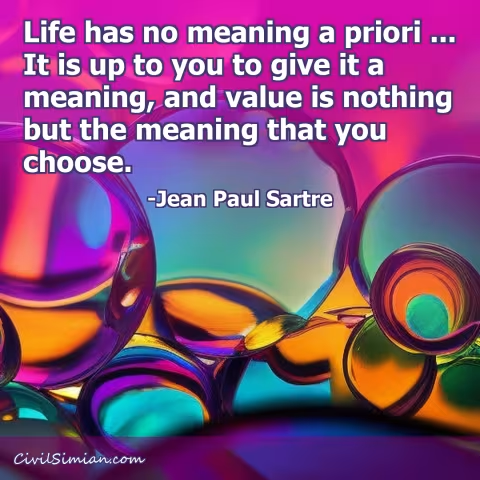
We have two bits of evidence about the Somebody. One is the universe He has made. If we used that as our only clue, I think we should have to conclude that He was a great artist (for the universe is a very beautiful place), but also that He is quite merciless and no friend to man (for the universe is a very dangerous and terrifying place.) ...The other bit of evidence is that Moral Law which He has put in our minds. And this is a better bit of evidence than the other, because it is inside information. You find out more about God from the Moral Law than from the universe in general just as you find out more about a man by listening to his conversation than by looking at a house he has built.
▼
Source
source
Book I, Chapter 5, "We Have Cause to Be Uneasy"
3 months 1 week ago
The tendency of our perceptions is to emphasise increasingly the objective elements in an impression, unless we have some special reason, as artists have, for doing the opposite.
▼
Source
source
An Outline of Philosophy Ch.15 The Nature of our Knowledge of Physics, 1927
3 months 5 days ago
The task of universal pragmatics is to identify and reconstruct universal conditions of possible mutual understanding.
▼
Source
source
p. 21
CivilSimian.com created by AxiomaticPanic, CivilSimian, Kalokagathia