


2 weeks 5 days ago
[H]ere we come to the nub of the issue: the alleged moral force of the term "natural". If any creature, by its very nature, causes terrible suffering, albeit unwittingly, is it morally wrong to change that nature? If a civilised human were to come to believe s/he had been committing acts that caused grievous pain for no good reason, then s/he would stop - and want other moral agents to prevent the recurrence of such behaviour. May we assume that the same would be true of a lion, if the lion were morally and cognitively "uplifted" so as to understand the ramifications of what (s)he was doing? Or a house cat tormenting a mouse? Or indeed a human sociopath?
▼
Source
source
"Reprogramming Predators", BLTC Research, 2009

3 months 1 week ago
If there were in the world today any large number of people who desired their own happiness more than they desired the unhappiness of others, we could have a paradise in a few years.
▼
Source
source
As quoted in Think, Vol. 27 (1961), p. 32

3 months 5 days ago
The question here is the same as the question I addressed with regard to madness, disease, delinquency and sexuality. In all of these cases, it was not a question of showing how these objects were for a long time hidden before being finally discovered, nor of showing how all these objects are only wicked illusions or ideological products to be dispelled in the light of reason finally having reached its zenith. It was a matter of showing by what conjunctions a whole set of practices-from the moment they become coordinated with a regime of truth-was able to make what does not exist (madness, disease, delinquency, sexuality, etcetera), nonetheless become something.
▼
Source
source
Lecture 1, January 10, 1979, p. 19

3 months 2 weeks ago
The thing I fear most is fear.
▼
Source
source
Ch. 18. That Men are not to judge of our Happiness till after Death (tr. Donald M. Frame)
2 months 6 days ago
The mores I return to myself, the more I divest myself, under the traumatic effect of persecution , of my freedom as a constituted, wilful, imperialistic subject, the more I discover myself to be responsible' the more just I am, the more guilty I am. I am 'in myself' through others.
▼
Source
source
The Levinas reader by Levinas, Emmanuel p. 102
3 months 5 days ago
The disappearance of public executions marks therefore the decline of the spectacle; but it also marks a slackening of the hold on the body.
▼
Source
source
Chapter One, The Spectacle of the Scaffold
3 months 1 week ago
It is error only, and not truth, that shrinks from inquiry.
3 months 1 week ago
The community is a fictitious body, composed of the individual persons who are considered as constituting as it were its members. The interest of the community then is what? The sum of the interests of the several members who compose it.
▼
Source
source
Ch. 1: Of the Principle of Utility
3 months 5 days ago
At the end of Being and Nothingness, ... Being in-itself and Being for-itself were of Being; and this totality of beings, in which they were effected, itself was linked up to itself, relating and appearing to itself, by means of the essential project of human-reality. What was named in this way, in an allegedly neutral and undetermined way, was nothing other than the metaphysical unity of man and God, the relation of man to God, the project of becoming God as the project constituting human-reality. Atheism changes nothing in this fundamental structure.
▼
Source
source
Chicago, 1982. (original French published in Paris, 1972, as Marges de la philosophie). p. 116
3 months 2 weeks ago
We are no nearer heaven on the top of Mount Cenis than at the bottom of the sea; take the distance with your astrolabe. They debase God even to the carnal knowledge of women, to so many times, and so many generations.
▼
Source
source
Ch. 12

3 months 2 weeks ago
In this life it is necessary that we be on our guard. To begin with we must be constantly aware of the fact that life here below is best described as being a type of continual warfare. This is a fact that Job, that undefeated soldier of vast experience, tells us so plainly. Yet in this matter the great majority of mankind is often deceived, for the world, like some deceitful magician, captivates their minds with seductive blandishments, and as a result most individuals behave as if there had been a cessation of hostilities.
▼
Source
source
p.61

1 month 3 weeks ago
If consciousness is, as some inhuman thinker has said, nothing more than a flash of light between two eternities of darkness, then there is nothing more execrable than existence.



2 months 2 weeks ago
But how shall we expect charity towards others, when we are uncharitable to ourselves? Charity begins at home, is the voice of the world, yet is every man his greatest enemy, and as it were, his own executioner.
▼
Source
source
Section 4

1 month 1 week ago
By electricity we have not been driven out of our senses so much as our senses have been driven out of us.
▼
Source
source
(p. 375)
3 months 1 week ago
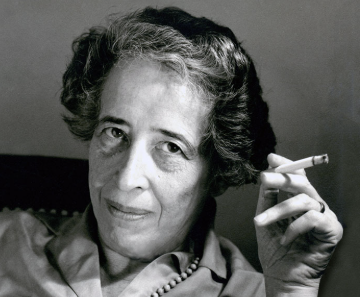
The case of the conscience of Eichmann, which is admittedly complicated but is by no means unique, is scarcely comparable to the case of the German generals, one of whom, when asked at Nuremberg, "How was it possible that all of you honorable generals could continue to serve a murderer with such unquestioning loyalty?," replied that it was "not the task of a soldier to act as judge over his supreme commander. Let history do that or God in Heaven."
▼
Source
source
Ch. VIII
2 months 1 week ago
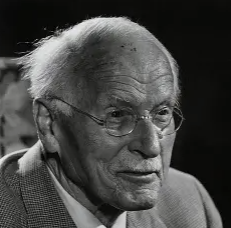
The erotic instinct is something questionable, and will always be so whatever a future set of laws may have to say on the matter. It belongs, on the one hand, to the original animal nature of man, which will exist as long as man has an animal body. On the other hand, it is connected with the highest forms of the spirit. But it blooms only when the spirit and instinct are in true harmony. If one or the other aspect is missing, then an injury occurs, or at least there is a one-sided lack of balance which easily slips into the pathological. Too much of the animal disfigures the civilized human being, too much culture makes a sick animal.


3 months 5 days ago
In situations of sparse resources along with degraded self-images and depoliticized sensibilities, one avenue for poor people is in existential rebellion and anarchic expression. The capacity to produce social chaos is the last resort of desperate people.
▼
Source
source
The Role of Law in Progressive Politics in Keeping Faith: Philosophy and Race in America
3 weeks 3 days ago
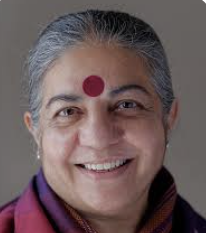
Those least responsible for climate change are worst affected by it.
▼
Source
source
Soil Not Oil: Environmental Justice in an Age of Climate Crisis
3 months 3 weeks ago
This right which you have, is not founded any more than his upon any quality or any merit in yourself which renders you worthy of it. Your soul and your body are, of themselves, indifferent to the state of boatman or that of duke; and there is no natural bond that attaches them to one condition rather than to another.
2 months 3 days ago
A new commandment I give unto you, That ye love one another; as I have loved you, that ye also love one another. By this shall all men know that ye are my disciples, if ye have love one to another.
▼
Source
source
13:34-35 KJV
3 months 2 weeks ago
There are some defeats more triumphant than victories.
▼
Source
source
Ch. 30. Of Cannibals, tr. Cotton, rev. W. Hazlitt, 1842

3 months 2 weeks ago
The most perfect philosophy of the natural kind only staves off our ignorance a little longer: as perhaps the most perfect philosophy of the moral or metaphysical kind serves only to discover larger portions of it. Thus the observation of human blindness and weakness is the result of all philosophy, and meets us at every turn, in spite of our endeavours to elude or avoid it.
▼
Source
source
Section 4 : Sceptical Doubts Concerning The Operations of The Understanding
2 months 3 days ago
And that servant, which knew his lord's will, and prepared not himself, neither did according to his will, shall be beaten with many stripes.
▼
Source
source
Luke 12:47 (KJV)
4 months 1 week ago
It is the nature of science that answers automatically pose new and more subtle questions.

1 month 3 weeks ago
For me [fiction] is a manner of philosophizing ... Philosophy may be only a shadow of the reality it tries to grasp, but the novel is altogether more satisfactory. I am almost tempted to say that no philosopher is qualified to do his job unless he is also a novelist ... I would certainly exchange any of the works of Whitehead or Wittgenstein for the novels they ought to have written.
▼
Source
source
p. 160-1

4 months ago
I do not open up the truth to one who is not eager to get knowledge, nor help out any one who is not anxious to explain himself. When I have presented one corner of a subject to any one, and he cannot from it learn the other three, I do not repeat my lesson.

3 months 1 week ago
I am not virtuous. Our sons will be if we shed enough blood to give them the right to be.
▼
Source
source
Act 3, sc. 5
3 months 1 day ago
Beginning to reason is like stepping onto an escalator that leads upward and out of sight. Once we take the first step, the distance to be traveled is independent of our will and we cannot know in advance where we shall end.
▼
Source
source
Chapter 4, Reason, p. 88
2 months 6 days ago
It makes unavoidably necessary an entirely new organization of society in which production is no longer directed by mutually competing individual industrialists but rather by the whole society operating according to a definite plan and taking account of the needs of all.
2 months 1 week ago
What man calls Absolute Being, his God, is his own being. The power of the object over him is therefore the power of his own being. Thus, the power of the object of feeling is the power of feeling itself; the power of the object of reason is the power of reason itself; and the power of the object of will is the power of will itself.
▼
Source
source
Introduction, Z. Hanfi, trans., in The Fiery Brook (1972), p. 102
4 months 1 week ago
There is merely bad luck in not being loved; there is misfortune in not loving. All of us, today, are dying of this misfortune. For violence and hatred dry up the heart itself; the long fight for justice exhausts the love that nevertheless gave birth to it.

2 months 2 weeks ago
After it hath been seen how the obstinate and the ignorant of evil disposition are accustomed to dispute, it will further be shewn how disputes are wont to conclude; although others are so wary that without losing their composure, but with a sneer, a smile, a certain discreet malice, that which they have not succeeded in proving by argument - nor indeed can it be understood by themselves - nevertheless by these tricks of courteous disdain they pretend to have proven, endeavouring not only to conceal their own patently obvious ignorance but to cast it on to the back of their adversary. For they dispute not in order to find or even to seek Truth, but for victory, and to appear the more learned and strenuous upholders of a contrary opinion. Such persons should be avoided by all who have not a good breastplate of patience.
▼
Source
source
"Introductory Epistle : Argument of the Third Dialogue"

1 month 3 weeks ago
It has been said of old, all roads lead to Rome. In paraphrased application to the tendencies of our day, it may truly be said that all roads lead to the great social reconstruction. The economic awakening of the workingman, and his realization of the necessity for concerted industrial action; the tendencies of modern education, especially in their application to the free development of the child; the spirit of growing unrest expressed through, and cultivated by, art and literature, all pave the way to the Open Road.
1 month 3 weeks ago
This mortal Don Quixote died and descended into hell, which he entered lance on rest, and freed all the condemned, as he freed the galley slaves, and he shut the gates of hell, and tore down the scroll that Dante saw there and replaced it by one on which was written "Long live hope!" and escorted by those whom he had freed, and they laughing at him, he went to heaven. And God laughed paternally at him, and this divine laughter filled his soul with eternal happiness.

2 months 1 week ago
How often misused words generate misleading thoughts!
▼
Source
source
Ch. 8, Humanity
1 month 3 weeks ago
The everyday world demands our attention, and prevents us from sinking into ourselves. As a romantic, I have always resented this: I like to sink into myself. The problems and anxieties of living make it difficult. Well, now I had an anxiety that referred to something inside of me, and it reminded me that my inner world was just as real and important as the world around me.
▼
Source
source
p. 39

2 months 1 week ago
The rich in all societies may be thrown into two classes. The first is of those who are powerful as well as rich, and conduct the operations of the vast political machine. The other is of those who employ their riches wholly in the acquisition of pleasure. As to the first sort, their continual care and anxiety, their toilsome days and sleepless nights, are next to proverbial. These circumstances are sufficient almost to level their condition to that of the unhappy majority; but there are other circumstances which place them in a far lower condition. Not only their understandings labour continually, which is the severest labour, but their hearts are torn by the worst, most troublesome, and insatiable of all passions, by avarice, by ambition, by fear and jealousy. No part of the mind has rest. Power gradually extirpates from the mind every humane and gentle virtue. Pity, benevolence, friendship, are things almost unknown in high stations.
2 months 3 days ago
The lord of that servant will come in a day when he looketh not for him, and at an hour when he is not aware, and will cut him in sunder, and will appoint him his portion with the unbelievers.
▼
Source
source
Luke 12:46 (KJV)

1 day ago
This Burns appeared under every disadvantage: uninstructed, poor, born only to hard manual toil; and writing, when it came to that, in a rustic special dialect, known only to a small province of the country he lived in. Had he written, even what he did write, in the general language of England, I doubt not he had already become universally recognized as being, or capable to be, one of our greatest men.
3 months 1 week ago
It was his peculiar doctrine that a man has a perfect right to interfere by force with the slaveholder, in order to rescue the slave. I agree with him. They who are continually shocked by slavery have some right to be shocked by the violent death of the slaveholder, but no others.
2 months 1 day ago
When the great religious and philosophical conceptions were alive, thinking people did not extol humility and brotherly love, justice and humanity because it was realistic to maintain such principles and odd and dangerous to deviate from them, or because these maxims were more in harmony with their supposedly free tastes than others. They held to such ideas because they saw in them elements of truth, because they connected them with the idea of logos, whether in the form of God or of a transcendental mind, or even of nature as an eternal principle.
▼
Source
source
p. 34.
6 days ago
When we see civilization elated with this declining and decrepit phase of its career, we are reminded of a faded belle who, boasting of her attractions in her fiftieth year, excites at once the remark that she was fairer at twenty-five. So it is with civilization, which, dreaming of perfection and progress, is constantly deteriorating, and which will find but too soon in its industrial achievements new sources of political oppression, crimes and commotions.

5 days ago
The regeneration of the inferior or bastard races by the superior ones is consistent with God's plans for humanity. The man of the people, in our countries, is always a fallen aristocrat; his hands are made to handle the sword rather than the laborer's tools. He prefers warring to working, that is, he returns to his original calling.
▼
Source
source
93, as translated by Asselin Charles, in "Colonial Discourse Since Christopher Columbus," Journal of Black Studies, Vol. 26, No. 2 (November 1995), 147

3 months 1 day ago
Be a craftsman in speech that thou mayest be strong, for the strength of one is the tongue, and speech is mightier than all fighting.
▼
Source
source
Translated by J. H. Breasted, The Dawn of Conscience (New York: Charles Scribner's Sons, 1933) p. 131
3 months 1 week ago
I am sorry to say that at the moment I am so busy as to be convinced that life has no meaning whatever... I do not see that we can judge what would be the result of the discovery of truth, since none has hitherto been discovered.
▼
Source
source
Letter to Will Durant, 20 June, 1931
3 months 1 week ago
One cannot too soon forget his errors and misdemeanors. To dwell long upon them is to add to the offense. Repentance and sorrow can only be displaced by something better, which is as free and original as if they had not been.
▼
Source
source
January 9, 1842
1 month 3 weeks ago
The word 'definition' has come to have a dangerously reassuring sound, owing no doubt to its frequent occurrence in logical and mathematical writings.
▼
Source
source
"Two dogmas of Empiricism", p. 26
CivilSimian.com created by AxiomaticPanic, CivilSimian, Kalokagathia