


2 months 3 days ago
Zen Buddhism is inspired by a basic trust in the Here, a basic trust in the world.
2 months 3 days ago
Eros, erotic desire, conquers depression. It delivers us from the inferno of the same to the utopia, indeed utopia, of the wholly other.
3 months 2 weeks ago
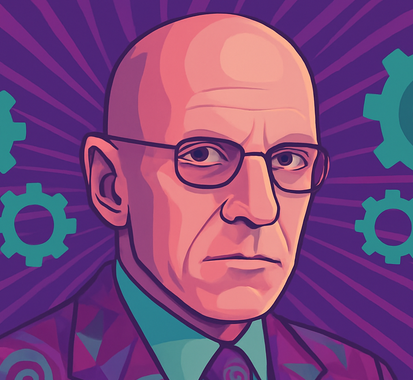
I don't feel that it is necessary to know exactly what I am. The main interest in life and work is to become someone else that you were not in the beginning. If you knew when you began a book what you would say at the end, do you think that you would have the courage to write it? What is true for writing and for a love relationship is true also for life. The game is worthwhile insofar as we don't know what will be the end. My field is the history of thought. Man is a thinking being.
▼
Source
source
Truth, Power, Self : An Interview with Michel Foucault
2 weeks 2 days ago
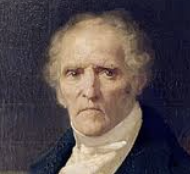
Religious minds, which are distrustful of philosophic dogmas, fall into the error - inculcated by philosophy - of supposing that Providence is limited in its action; that is does not extend to the social world or the social relations of mankind, and that God has not determined upon any plan of social organization for the regulation of those relations. If they had a PROFOUND FAITH IN THE UNIVERSALITY OF PROVIDENCE, they would be convinced that all human needs must have been foreseen and provided for, and especially that the most urgent of them all could not have been overlooked - namely, the need of a social order for the regulation of our industrial and social relations.
▼
Source
source
The Theory of Social Organization. Harmonian Man: Selected Writings of Charles Fourier, p. 5.

2 months 3 weeks ago
So long as man remains free he strives for nothing so incessantly and so painfully as to find someone to worship. But man seeks to worship what is established beyond dispute, so that all men would agree at once to worship it. For these pitiful creatures are concerned not only to find what one or the other can worship, but to find community of worship is the chief misery of every man individually and of all humanity from the beginning of time. For the sake of common worship they've slain each other with the sword. They have set up gods and challenged one another, 'Put away your gods and come and worship ours, or we will kill you and your gods!' And so it will be to the end of the world, even when gods disappear from the earth; they will fall down before idols just the same.

2 months 1 week ago
Go and shew John again those things which ye do hear and see: The blind receive their sight, and the lame walk, the lepers are cleansed, and the deaf hear, the dead are raised up, and the poor have the gospel preached to them. And blessed is he, whosoever shall not be offended in me.
▼
Source
source
11:4-6 (KJV)
2 months 1 week ago
The truth is cruel, but it can be loved, and it makes free those who have loved it.
▼
Source
source
p. 107
2 months 1 week ago
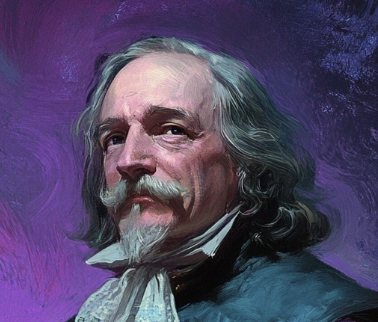
For it is not the bare Words, but the Scope of the writer that giveth true light, by which any writing is to bee interpreted; and they that insist upon single Texts, without considering the main Designe, can derive no thing from them clearly; but rather by casting atomes of Scripture, as dust before mens eyes, make everything more obscure than it is; an ordinary artifice of those who seek not the truth, but their own advantage.
▼
Source
source
The Third Part, Chapter 43, p. 331


2 months 2 weeks ago
Every act of courage is the work of an unbalanced man. Animals, normal by definition, are always cowardly except when they know themselves to be stronger, which is cowardice itself.

2 months 3 weeks ago
To ruminate upon evils, to make critical notes upon injuries, and be too acute in their apprehensions, is to add unto our own tortures, to feather the arrows of our enemies, to lash ourselves with the scorpions of our foes, and to resolve to sleep no more.
▼
Source
source
Part III, Section XII

3 months 4 weeks ago
I know God only as he became human, so shall I have him in no other way.
▼
Source
source
Das Marburger religionsgesprach 1529: Versuch einer Rekonstruction (Leipzig, 1929), p. 27; also LW 38, 3-90
3 months 3 weeks ago
Lying... is so ill a quality, and the mother of so many ill ones that spawn from it, and take shelter under it, that a child should be brought up in the greatest abhorrence of it imaginable. It should be always spoke of before him with the utmost detestation, as a quality so wholly inconsistent with the name and character of a gentleman, that no body of any credit can bear the imputation of a lie; a mark that is judg'd in utmost disgrace, which debases a man to the lowest degree of a shameful meanness, and ranks him with the most contemptible part of mankind and the abhorred rascality; and is not to be endured in any one who would converse with people of condition, or have any esteem or reputation in the world.
▼
Source
source
Sec. 131
1 month 4 weeks ago
Analytic philosophers - both in the 'constructivist' camp and in the camp that studies 'the ordinary use of words' - are disturbingly unanimous in regarding 2-valued logic as having a privileged position: privileged, not just in the sense of corresponding to the way we do speak, but in the sense of having no serious rival for logical reasons. If the foregoing analysis is correct, this is a prejudice of the same kind as the famous prejudice in favor of a privileged status for Euclidean geometry (a prejudice that survives in the tendency to cite 'space has three dimensions' as some kind of 'necessary' truth). One can go over from a 2-valued to a 3-valued logic without totally changing the meaning of 'true' and 'false'; and not just in silly ways, like the ones usually cited (e.g. equating truth with high probability, falsity with low probability, and middlehood with 'in between' probability).
▼
Source
source
"Three-valued logic"

3 months 1 week ago
Practice no sloth, so that the duty and good work, which it is necessary for thee to do, may not remain undone.
▼
Source
source
(p. 59)
2 months 2 weeks ago
The first authentic record on this subject (alchemy) is an edict of Diocletian, about 300 years after Christ, ordering a diligent search to be made in Egypt for all the ancient books which treated of the art of making gold and silver, that they might be consigned to the flames. This edict necessarily presumes a certain antiquity to the pursuit; and fabulous history has recorded Solomon, Pythagoras, and Hermes among its distinguished votaries.
▼
Source
source
Quoted by H.P. Blavatsky, in Isis Unveiled: A Master-Key to the Mysteries of Ancient and Modern Science and Theology, Vol. I, (1877) (p. 504)
2 months 3 weeks ago
To attempt the destruction of our passions is the height of folly. What a noble aim is that of the zealot who tortures himself like a madman in order to desire nothing, love nothing, feel nothing, and who, if he succeeded, would end up a complete monster!
▼
Source
source
Ch. 5, as quoted in Selected Writings (1966) edited by Lester G. Crocker
1 week 3 days ago
Science tells us how to heal and how to kill; it reduces the death rate in retail and then kills us wholesale in war; but only wisdom - desire coordinated in the light of all experience - can tell us when to heal and when to kill. To observe processes and to construct means is science; to criticize and coordinate ends is philosophy: and because in these days our means and instruments have multiplied beyond our interpretation and synthesis of ideals and ends, our life is full of sound and fury, signifying nothing. For a fact is nothing except in relation to desire; it is not complete except in relation to a purpose and a whole. Science without philosophy, facts without perspective and valuation, cannot save us from havoc and despair. Science gives us knowledge, but only philosophy can give us wisdom.
▼
Source
source
Introduction : On the Uses of Philosophy
3 months 2 weeks ago
All affected can accept the consequences and the side effects that [the norm's] general observance can be anticipated to have for the satisfaction of everyone's interests, and the consequences are preferred to those of known alternative possibilities for regulation.
▼
Source
source
p. 65
2 months 1 week ago
See thou tell no man; but go thy way, shew thyself to the priest, and offer the gift that Moses commanded, for a testimony unto them.
▼
Source
source
8:4 (KJV) Said to a man cured of leprosy.
2 months 2 weeks ago
Ambition is a drug that makes its addicts potential madmen.

4 months 2 weeks ago
To become god is merely to be free on this earth, not to serve an immortal being.
1 month 1 week ago
Many evils, no doubt, were produced by the civil war. They were the price of our liberty.
▼
Source
source
p. 39

3 months 3 weeks ago
I quite understand the principle of confining employment as far as possible to the British without regard for efficiency. I think, however, that the Ministry is not applying the principle sufficiently widely. I know many Englishmen who have married foreigners, and many English potential wives who are out of a job. Would not a year be long enough to train an English wife to replace the existing foreign one in such cases?
▼
Source
source
Enclosed reply to the Ministry of Labour, in defense of A. S. Neill (who declined to send it), 27 January, 1931

2 months 3 weeks ago
A state without the means of some change is without the means of its conservation.
2 months 3 weeks ago
The general interest of the masses might take the place of the insight of genius if it were allowed freedom of action.

3 months 3 weeks ago
In general, the art of government consists in taking as much money as possible from one party of the citizens to give to the other.
▼
Source
source
"Money", 1770
3 months 3 weeks ago
Better red than dead.
▼
Source
source
Bertrand Russell, attributes this phrase to 'West German friends of peace' but adopted this slogan for the Campaign for Nuclear Disarmament he helped found William Safire, Safire's Political Dictionary, (2008) p. 49-50
3 months 3 weeks ago
The labour-power is a commodity, not capital, in the hands of the labourer, and it constitutes for him a revenue so long as he can continuously repeat its sale; it functions as capital after its sale, in the hands of the capitalist, during the process of production itself.
▼
Source
source
Vol. II, Ch. XIX, p. 384.
1 month 4 weeks ago
In closing, I can only apologize for not having given any positive account of either mathematical truth or mathematical necessity. I can only say that I have not given such an account because I think that the search for such an account is a fundamental mistake. It is not that there is nothing special about mathematics; it is that, in my opinion, the investigation of mathematics must presuppose and not seek to account for the truth of mathematics. But this is the beginning of another paper and not the end of this one.
▼
Source
source
"Truth and necessity in mathematics"
3 months 3 weeks ago
An organised system of machines, to which motion is communicated by the transmitting mechanism from a central automation, is the most developed form of production by machinery.
▼
Source
source
Vol. I, Ch. 15, Section 1, pg. 416.

4 months 1 week ago
The greatness of the human being consists in this: that it is capable of the universe.
▼
Source
source
q. 1, art. 2, ad 4
1 month 2 weeks ago
The most important person is the one you are with in this moment.
▼
Source
source
p. 206

2 months 2 weeks ago
Here and there it happened in my practice that a patient grew beyond himself because of unknown potentialities, and this became an experience of prime importance to me. I had learned in the meanwhile that the greatest and most important problems of life are all in a certain sense insoluble. They must be so because they express the necessary polarity inherent in every self-regulating system. They can never be solved, but only outgrown.
▼
Source
source
The Secret of the Golden Flower, ibid.
2 months 5 days ago
The safest general characterization of the European philosophical tradition is that it consists of a series of footnotes to Plato.
▼
Source
source
Pt. II, ch. 1, sec. 1.
4 months 5 days ago
For human beings, the measure of every action is the impression of the senses.
▼
Source
source
Book I, ch. 28, 10
3 months 3 weeks ago
"If God did not exist, he would have to be invented." But all nature cries aloud that he does exist: that there is a supreme intelligence, an immense power, an admirable order, and everything teaches us our own dependence on it.
▼
Source
source
Voltaire quoting himself in his Letter to Prince Frederick William of Prussia (28 November 1770), translated by S.G. Tallentyre, Voltaire in His Letters, 1919

4 months 1 week ago
Men all say, "We are wise"; but being driven forward and taken in a net, a trap, or a pitfall, they know not how to escape. Men all say, "We are wise"; but happening to choose the course of the Mean, they are not able to keep it for a round month.
2 months 2 weeks ago
All religions so far have been the expression of historical stages of development of individual peoples or groups of peoples. But communism is the stage of historical development which makes all existing religions superfluous and brings about their disappearance.
4 months 6 days ago
A man might say, "The things that are in the world are what God has made. ... Why should I not love what God has made?" ...Suppose, my brethren, a man should make for his betrothed a ring, and she should prefer the ring given her to the betrothed who made it for her, would not her heart be convicted of infidelity? ... God has given you all these things: therefore, love him who made them.
▼
Source
source
Second Homily, as translated by John Burnaby (1955), pp. 275-276
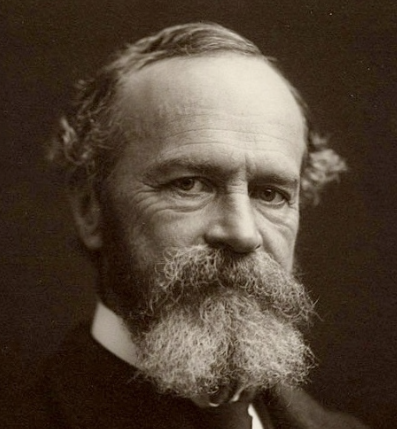
3 months 2 weeks ago
The world of our experience consists at all times of two parts, an objective and a subjective part, of which the former may be incalculably more extensive than the latter, and yet the latter can never be omitted or suppressed. The objective part is the sum total of whatsoever at any given time we may be thinking of, the subjective part is the inner "state" in which the thinking comes to pass.
▼
Source
source
Lecture XX, "Conclusions"

3 months 2 weeks ago
Every hero becomes a bore at last.
▼
Source
source
Uses of Great Men
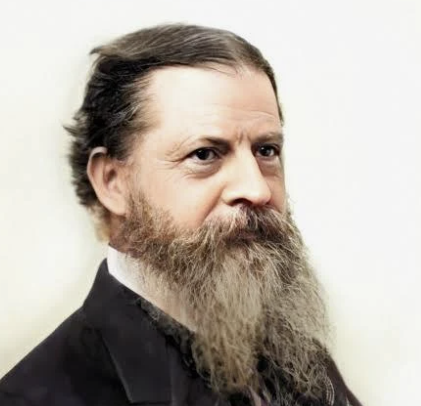
2 months 2 weeks ago
Second, by this and other means we are driven to perceive, what is quite evident in itself, that instantaneous feelings flow together in a continuum of feeling, which has in a modified degree the peculiar vivacity of feeling and has gained generality. And in reference to such general ideas, or continua of feeling, the difficulties about resemblance and suggestion and reference to the external, cease to have any force.
3 months 3 weeks ago
A great affliction of all Philistines is that idealities afford them no entertainment, but to escape from boredom they are always in need of realities.
▼
Source
source
E. Payne, trans. (1974) Vol. 1, p. 345

3 months 2 weeks ago
As to [General Douglas] Macarthur, I don't feel in a position to have clear opinions about anyone I know only from newspapers. You see, whenever they deal with anyone (or anything) I know myself, I find they're always a mass of lies & misunderstandings: so I conclude they're no better in the places where I don't know.
▼
Source
source
Letter to Mrs. Mary Van Deusen, April 30, 1951. Collected Letters of C. S. Lewis, vol. 3, "Narnia, Cambridge, and Joy", 1950-1963. p. 114.
2 months 2 weeks ago
If now I...say "Stealing money is wrong," I produce a sentence which has no factual meaning - that is, expresses no proposition which can be either true or false. It is as if I had written "Stealing money!!" - where the shape and thickness of the exclamation marks show, by a suitable convention, that a special sort of moral disapproval is the feeling which is being expressed.
▼
Source
source
p. 107.
2 months 3 days ago
The freedom of the 'everyday mind' consists rather in not kneeling down in awe. Its mental attitude is better expressed as sitting unmoveable like an object.

3 months 2 weeks ago
Half of the human race lives in manifest obedience to the lunar rhythm; and there is evidence to show that the psychological and therefore the spiritual life, not only of women, but of men too, mysteriously ebbs and flows with the changes of the moon. There are unreasoned joys, inexplicable miseries, laughters and remorses without a cause. Their sudden and fantastic alternations constitute the ordinary weather of our minds. These moods, of which the more gravely numinous may be hypostasized as gods, the lighter, if we will, as hobgoblins and fairies, are the children of the blood and humours. But the blood and humours obey, among many other masters, the changing moon. Touching the soul directly through the eyes and, indirectly, along the dark channels of the blood, the moon is doubly a divinity.
▼
Source
source
"Meditation on the Moon"
CivilSimian.com created by AxiomaticPanic, CivilSimian, Kalokagathia