


2 months 2 weeks ago
The First thing that strikes a traveler in the United States is the innumerable multitude of those who seek to emerge from their original condition; and the second is the rarity of lofty ambition to be observed in the midst of the universally ambitious stir of society. No Americans are devoid of a yearning desire to rise, but hardly any appear to entertain hopes of great magnitude or to pursue very lofty aims. All are constantly seeking to acquire property, power, and reputation.
▼
Source
source
Book Three, Chapter XIX.

3 months 1 week ago
The French bourgeois doesn't dislike shit, provided it is served up to him at the right time.
▼
Source
source
Book 2, "To Succeed in Being All, Strive to be Nothing in Anything"
3 months 1 week ago
There is no virtue they should be excited to, nor fault they should be kept from, which I do not think they may be convinced of; but it must be by such reasons as their age and understandings are capable of, and those propos'd always in very few and plain words.
▼
Source
source
Sec. 81

1 month 5 days ago
Evidence is the only good reason to believe anything.
▼
Source
source
Interview shown in AlJazeera ,

3 months 1 week ago
I think He made one law of that kind in order that there might be obedience. In all these other matters what you call obeying Him is but doing what seems good in your eyes also. Is love content with that? You do them, indeed, because they are His will, but not only because they are his will. Where can you taste the joy of obeying unless he bids you do something for which His bidding is the only reason?

2 months 1 week ago
The more cunning a man is, the less he suspects that he will be caught in a simple thing. The more cunning a man is, the simpler the trap he must be caught in.
1 month 5 days ago
A faculty for idleness implies a catholic appetite and a strong sense of personal identity.
▼
Source
source
An Apology for Idlers.
4 months 1 week ago
When people are friends, they have no need of justice, but when they are just, they need friendship in addition.

Just now
Every candid eye, I think, will read the Koran far otherwise than so. It is the confused ferment of a great rude human soul; rude, untutored, that cannot even read; but fervent, earnest, struggling vehemently to utter itself in words. With a kind of breathless intensity he strives to utter himself; the thoughts crowd on him pell-mell: for very multitude of things to say, he can get nothing said. The meaning that is in him shapes itself into no form of composition, is stated in no sequence, method, or coherence;-they are not shaped at all, these thoughts of his; flung out unshaped, as they struggle and tumble there, in their chaotic inarticulate state.

3 months 1 week ago
The reason that I call my doctrine logical atomism is because the atoms that I wish to arrive at as the sort of last residue in analysis are logical atoms and not physical atoms. Some of them will be what I call "particulars" - such things as little patches of color or sounds, momentary things - and some of them will be predicates or relations and so on.

2 weeks 2 days ago
No doubt markets transmit information in the way that Hayek claimed. But what reason is there to believe that - unlike any other social institution - they have a built-in capacity to correct their mistakes? History hardly supports the supposition. Moods of irrational exuberance and panic can, and often do, swamp the price-discovery functions of markets.

3 months 5 days ago
The purely corporeal can be uncanny. Compare the way angels and devils are portrayed. So-called "miracles" must be connected with this. A miracle must be, as it were, a sacred gesture.
▼
Source
source
p. 50e
3 months 1 week ago
People seem good while they are oppressed, but they only wish to become oppressors in their turn: life is nothing but a competition to be the criminal rather than the victim.
▼
Source
source
Letter to Ottoline Morrell, 17 December, 1920
3 months 1 week ago
Accumulate, accumulate! That is Moses and the prophets!
▼
Source
source
Vol. I, Ch. 24, Section 3, pg. 652.
2 months 2 days ago
No system would have ever been framed if people had been simply interested in knowing what is true, whatever it may be. What produces systems is the interest in maintaining against all comers that some favourite or inherited idea of ours is sufficient and right.

3 months 1 week ago
I never turned recreant to intellectual culture, or ceased to consider the power and practice of analysis as an essential condition both of individual and of social improvement. But I thought that it had consequences which required to be corrected, by joining other kinds of cultivation with it. The maintenance of a due balance among the faculties, now seemed to me of primary importance. The cultivation of the feelings became one of the cardinal points in my ethical and philosophical creed.
▼
Source
source
(pp. 143-144)

1 month 1 week ago
Three days later the little princess was buried, and Prince Andrei went up the steps to where the coffin stood, to give her the farewell kiss. And there in the coffin was the same face, though with closed eyes. "Ah, what have you done to me?" it still seemed to say, and Prince Andrei felt that something gave way in his soul and that he was guilty of a sin he could neither remedy nor forget.
▼
Source
source
Bk. IV, Ch. 9

1 month 3 weeks ago
Ritual society is a society of rules. It is based not on virtues but on a passion for rules.
1 month 3 weeks ago
If we love God while thinking that he does not exist, he will manifest his existence.
▼
Source
source
p. 260
Just now
Paris, which for sixty years past has been the City of Insurrections. The French People had plumed themselves on being, whatever else they were not, at least the chosen "soldiers of liberty," who took the lead of all creatures in that pursuit, at least; and had become, as their orators, editors and litterateurs diligently taught them, a People whose bayonets were sacred, a kind of Messiah People, saving a blind world in its own despite, and earning for themselves a terrestrial and even celestial glory very considerable indeed.

4 months 6 days ago
The rest of the story, to Grand's thinking, was very simple. The common lot of married couples. You get married, you go on loving a bit longer, you work. And you work so hard that it makes you forget to love.
3 weeks 4 days ago
My convictions, positive and negative, on all the matters of which you speak, are of long and slow growth and are firmly rooted. But the great blow which fell on me seemed to stir them to their foundation, and had I lived a couple of centuries earlier I could have fancied a devil scoffing at me and them - and asking me what profit it was to have stripped myself of the hopes and consolations of the mass of mankind? To which my only reply was and is - Oh devil! Truth is better than much profit. I have searched over the grounds of my belief, and if wife and child and name and fame were all to be lost to me one after the other as the penalty, still I will not lie.

3 months 1 week ago
In speaking of sociological laws or natural laws of social life I have in mind such laws as are formulated by modern economic theories, for instance, the theory of international trade, or the theory of the trade cycle. These and other important sociological laws are connected with the functioning of social institutions. These laws play a role in our social life corresponding to the role played in mechanical engineering by, say, the principle of the lever. For institutions, like levers, are needed if we want to achieve anything which goes beyond the power of our muscles. Like machines, institutions multiply our power for good or evil. Like machines, they need intelligent supervision by someone who understands their way of functioning and, most of all, their purpose, since we cannot build them so that they work entirely automatically.
▼
Source
source
Karl Popper, The Open Society and its Enemies, Vol I Plato Chapter 5: Nature and Convention. P. 67
2 months 5 days ago
When ethics thus moves into the domain of politics and becomes morality, the possibility of violence appears because of the threat of the application of such absolutist forms of thought. Further, although the moral agent must remain free in order to avoid the totalizing domination of the state, morality must still be grounded in the ethical relation of the face-to-face.
▼
Source
source
Steven Bindeman, Levinas: The Face of Otherness and the Ethics of Therapy

3 months 2 weeks ago
An armed insurrection ... would hinder and bring into disrepute this spiritual insurrection.
▼
Source
source
p. 68
4 weeks ago
Free trade, one of the greatest blessings which a government can confer on a people, is in almost every country unpopular.
▼
Source
source
p. 161
2 days ago
But the philosophy that killed off truth proclaims unlimited tolerance for the "language games" (i.e., opinions, beliefs and doctrines) that people find useful. The outcome is expressed in the words of Karl Kraus: "Alles ist wahr und auch das Gegenteil." "Everything is true, and also its opposite."
▼
Source
source
"Our Merry Apocalypse" (1997), as quoted in Is God Happy? Selected Essays (Basic Books, 2013), p. 318
3 months 1 week ago
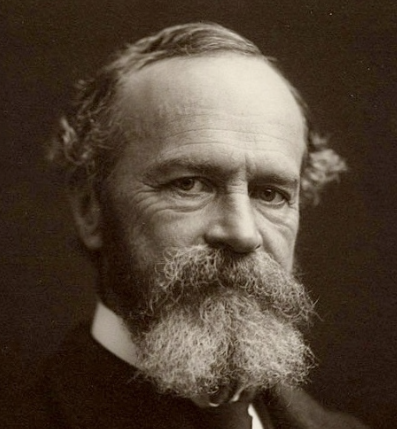
There are two motives for reading a book: one, that you enjoy it; the other, that you can boast about it.
3 months 1 week ago
In modern eyes, precious though wars may be they must not be waged solely for the sake of the ideal harvest. Only when forced upon one, is a war now thought permissible. It was not thus in ancient times. The earlier men were hunting men, and to hunt a neighboring tribe, kill the males, loot the village and possess the females, was the most profitable, as well as the most exciting, way of living. Thus were the more martial tribes selected, and in chiefs and peoples a pure pugnacity and love of glory came to mingle with the more fundamental appetite for plunder. Modern war is so expensive that we feel trade to be a better avenue to plunder; but modern man inherits all the innate pugnacity and all the love of glory of his ancestors. Showing war's irrationality and horror is of no effect on him. The horrors make the fascination. War is the strong life; it is life in extremis; war taxes are the only ones men never hesitate to pay, as the budgets of all nations show us.

1 month 3 weeks ago
The ultimate metaphysical principle is the advance from disjunction to conjunction, creating a novel entity other than the entities given in disjunction.
▼
Source
source
Pt. I, ch. 2, sec. 2.
2 months 1 week ago
Whether directly or indirectly all nations are originally nothing but Indian colonies... the oriental antiquity could, if we consented to deepen it, bring us back more safely towards the divine....
▼
Source
source
Friedrich Schlegel, Essay on the Language and Wisdom of the Indians, quoted by Roger-Pol Droit in L'Oubli de I'Inde, Paris Presses Universitaires de France, 1989, p. 129.

2 months 3 weeks ago
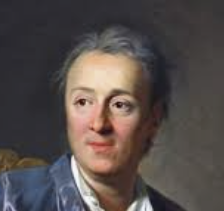
Without Justice, no realm may prosper.
2 months 2 weeks ago
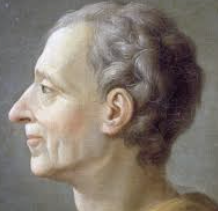
The pit of a theatre is the one place where the tears of virtuous and wicked men alike are mingled.
1 month 3 weeks ago
In a free nation, it matters not whether individuals reason well or ill; it is sufficient that they do reason. Truth arises from the collision and from hence springs liberty, which is a security from the effects of reasoning.
▼
Source
source
Quoted by Thomas Erskine in the trial of Thomas Paine, 1792
1 month 4 weeks ago
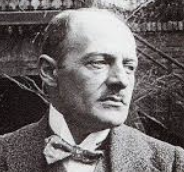
It is precisely the essential feature of egoism that it does not apprehend the full value of the isolated self. The egoist sees himself only with regard to the others, as a member of society who wishes to possess and acquire more than the others. Self-directedness or other-directedness have no essential bearing on the specific quality of love or hatred. These acts are different in themselves, quite independently of their direction.
▼
Source
source
L. Coser, trans. (1961), p. 96

2 months 1 week ago
...what I look to with seriousness is the Phalanx of Party which exists in the body of the dissenters, who are, at the very least, nine tenths of them entirely devoted, some with greater some with less zeal, to the principles of the French Revolution.
▼
Source
source
Letter to the Home Secretary, Henry Dundas (30 September 1791), quoted in Alfred Cobban and Robert A. Smith (eds.), The Correspondence of Edmund Burke, Volume VI: July 1789-December 1791 (1967), p. 419
3 months 1 week ago
To think that because those who wield power in society wield in the end that of government, therefore it is of no use to attempt to influence the constitution of the government by acting on opinion, is to forget that opinion is itself one of the greatest active social forces. One person with a belief is a social power equal to ninety-nine who have only interests.
▼
Source
source
Ch. I: To What Extent Forms of Government Are a Matter of Choice (p. 155)
3 months 1 week ago
The militarily-patriotic and the romantic-minded everywhere, and especially the professional military class, refuse to admit for a moment that war may be a transitory phenomenon in social evolution. The notion of a sheep's paradise like that revolts, they say, our higher imagination. Where then would be the steeps of life? If war had ever stopped, we should have to re-invent it, on this view, to redeem life from flat degeneration. Reflective apologists for war at the present day all take it religiously. It is a sort of sacrament. It's profits are to the vanquished as well as to the victor; and quite apart from any question of profit, it is an absolute good, we are told, for it is human nature at its highest dynamic.

3 months 2 weeks ago
Writing does not cause misery. It is born of misery.
3 weeks 1 day ago
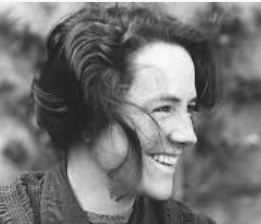
Life itself is always pulling you away from the understanding of life.
3 months 1 week ago
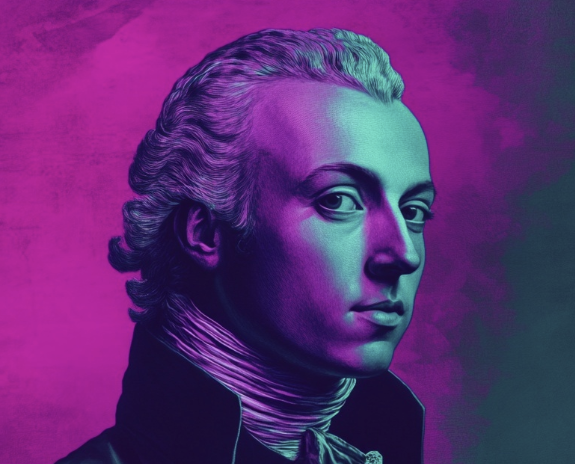
I have therefore found it necessary to deny knowledge in order to make room for faith.

3 months 1 week ago
He who is in love is wise and is becoming wiser, sees newly every time he looks at the object beloved, drawing from it with his eyes and his mind those virtues which it possesses.
▼
Source
source
The Method of Nature, 1841
Just now
That, on the whole, if you have got the intrinsic qualities, you have got everything, and the preliminaries will prove attainable; but that if you have got only the preliminaries, you have yet got nothing. A man of real dignity will not find it impossible to bear himself in a dignified manner; a man of real understanding and insight will get to know, as the fruit of his very first study, what the laws of his situation are, and will conform to these.
3 months 2 weeks ago
I have ever loved to repose myself, whether sitting or lying, with my heels as high or higher than my head.
▼
Source
source
Book III, Ch. 13. Of Experience

4 days ago
To be free in an age like ours, one must be in a position of authority. That in itself would be enough to make me ambitious.
▼
Source
source
Letter to his elder sister Henriette (1841).
3 months 1 week ago
Either Man will abolish war, or war will abolish Man.
▼
Source
source
Fact and Fiction (1961), Part IV, Ch. 10: "Can War Be Abolished?", p. 276
2 months 1 week ago
In this choice of inheritance we have given to our frame of polity the image of a relation in blood, binding up the constitution of our country with our dearest domestic ties, adopting our fundamental laws into the bosom of our family affections, keeping inseparable and cherishing with the warmth of all their combined and mutually reflected charities our state, our hearths, our sepulchres, and our altars.
3 days ago
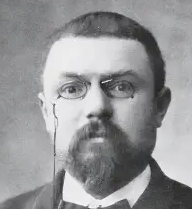
A scientist worthy of the name, above all a mathematician, experiences in his work the same impression as an artist; his pleasure is as great and of the same nature. ...we work not only to obtain the positive results which, according to the profane, constitute our one and only affection, as to experience this esthetic emotion and to convey it to others who are capable of experiencing it.
▼
Source
source
"Notice sur Halphen," Journal de l'École Polytechnique (Paris, 1890), 60ème cahier, p. 143.
1 month 3 weeks ago
An absolute power would be one that never becomes apparent, never pointed to itself, one that rather blended completely into what goes without saying. Power shines in its own absence.
CivilSimian.com created by AxiomaticPanic, CivilSimian, Kalokagathia