


4 months 1 week ago
I wouldn't give an astrologer the time of day.
3 months 1 week ago
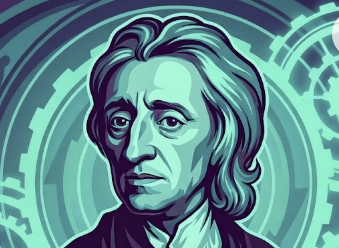
The end of law is not to abolish or restrain, but to preserve and enlarge freedom. For in all the states of created beings, capable of laws, where there is no law there is no freedom.
▼
Source
source
Second Treatise of Government, Ch. VI, sec. 57

3 months 1 week ago
I am against a League war in present circumstances, because the anti-League powers are strong. The analogy is not King v. Barons, but the War of the Roses. If the League were strong enough I should favour sanctions, because the effect would suffice, or the war would be short and small. The whole question is quantitative.
▼
Source
source
Letter to Kingsley Martin shortly before the Italo-Abyssinian War (7 August 1935), quoted in Kingsley Martin, Editor: A Second Volume of Autobiography, 1931-45 (1968), p. 207

3 months 1 week ago
In the Catholic Church, especially, they go into chancery, make a clean confession, give up all, and think to start again. Thus men will lie on their backs, talking about the fall of man, and never make an effort to get up.
▼
Source
source
p. 487
2 months 2 days ago
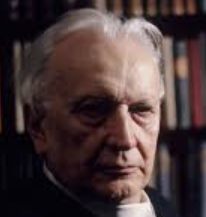
My path was not the normal one of professors of philosophy. I did not intend to become a doctor of philosophy by studying philosophy (I am in fact a doctor of medicine) nor did I by any means, intend originally to qualify for a professorship by a dissertation on philosophy. To decide to become a philosopher seemed as foolish to me as to decide to become a poet. Since my schooldays, however, I was guided by philosophical questions. Philosophy seemed to me the supreme, even the sole, concern of man. Yet a certain awe kept me from making it my profession.
2 months 2 weeks ago
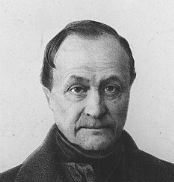
To understand a science it is necessary to know its history.
▼
Source
source
A Course of Positive Philosophy (1832 - 1842) [Six volumes]

3 months 2 weeks ago
Music is a hidden arithmetic exercise of the soul, which does not know that it is counting.
▼
Source
source
Letter to Christian Goldbach, April 17, 1712.

3 months 6 days ago
A critique is not a matter of saying that things are not right as they are. It is a matter of pointing out on what kinds of assumptions, what kinds of familiar, unchallenged, unconsidered modes of thought the practices that we accept rest.
▼
Source
source
"Practicing criticism, or, is it really important to think?", interview by Didier Eribon, May 30-31, 1981, in Politics, Philosophy, Culture, ed. L. Kriztman (1988), p. 155
1 month 2 weeks ago
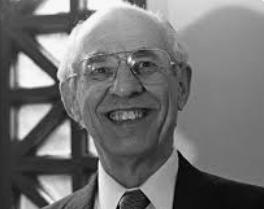
The real significance of the Russell paradox, from the standpoint of the modal-logic picture, is this: it shows that no concrete structure can be a standard model for the naive conception of the totality of all sets; for any concrete structure has a possible extension that contains more 'sets'. (If we identify sets with the points that represent them in the various possible concrete structures, we might say: it is not possible for all possible sets to exist in any one world!) Yet set theory does not become impossible. Rather, set theory becomes the study of what must hold in, e.g. any standard model for Zermelo set theory.
▼
Source
source
Mathematics without foundations
3 days ago
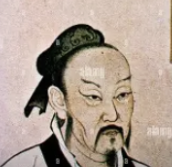
At forty, I had attained the unperturbed mind.
▼
Source
source
"Discipline and Character", no. 41
4 months 1 week ago
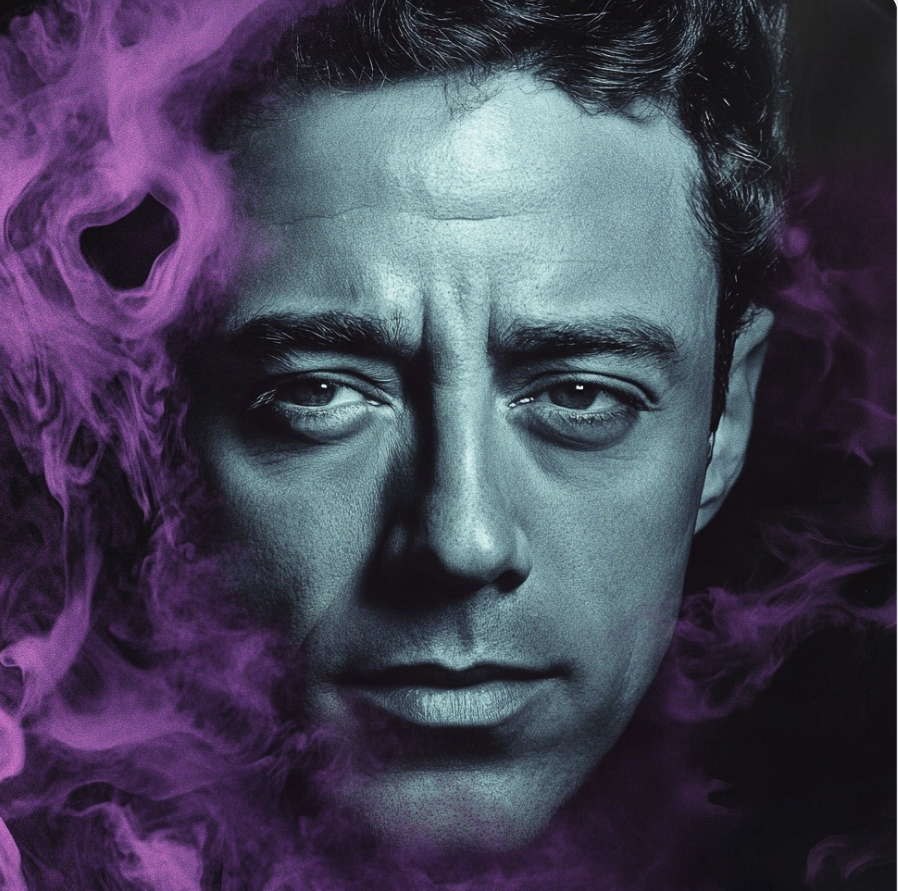
Believe me, there is no such thing as great suffering, great regret, great memory...Everything is forgotten, even great love.
4 months 1 week ago
The essential is to cease being free and to obey, in repentance, a greater rogue than oneself. When we are all guilty, that will be democracy.
3 months 1 week ago
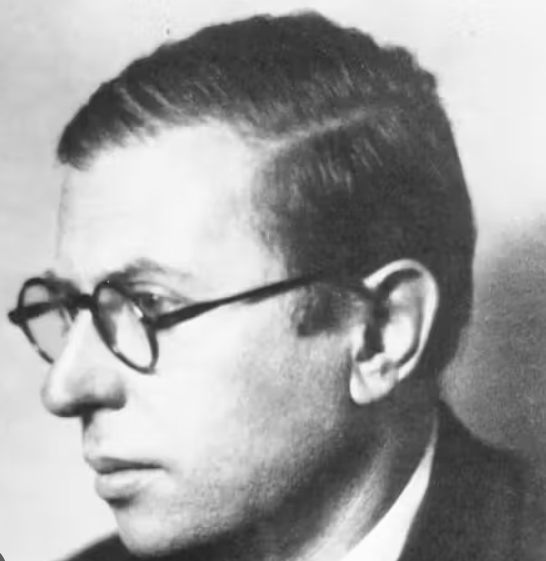
I say a murder is abstract. You pull the trigger and after that you do not understand anything that happens.
▼
Source
source
Act 5, sc. 2

3 months 2 weeks ago
The ceaseless labour of your life is to build the house of death.
▼
Source
source
Book I, Ch. 20
3 months 6 days ago
The guillotine takes life almost without touching the body, just as prison deprives of liberty or a fine reduces wealth. It is intended to apply the law not so to a real body capable of feeling pain as to a juridical subject, the possessor, among other rights, of the right to exist it had to have the abstraction of the law itself.
▼
Source
source
pp. 13, Chapter One The Body of the Condemned
3 months 2 weeks ago
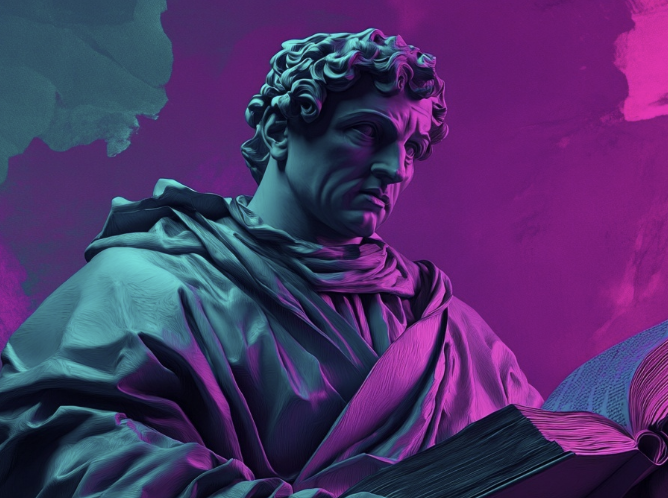
His Mohammed, as has been said, commands that ruling is to be done by the sword, and in his Koran the sword is the commonest and noblest work. Thus the Turk is, in truth, nothing but a murderer or highwayman, as his deeds show before men's eyes.
▼
Source
source
On War against the Turk

1 month 2 days ago
However long Jewish, Christian and Muslim theologians struggle to find multiple meanings in this text, the dominant seems to be this: Abraham's unquestioning willingness to heed gods command to sacrifice the thing he loved most is what qualified him to become the father of what are called still the Abrahamic faiths.
3 months 1 week ago
When I was 4 years old ... I dreamt that I'd been eaten by a wolf, and to my great surprise I was in the wolf's stomach and not in heaven.
▼
Source
source
BBC interview on "Face to Face" (1959); The Listener, Vol. 61 (1959), p. 503
3 months 2 days ago
May we be those who shall heal this world.
▼
Source
source
Yasna 30,9
1 month 1 week ago
If you are going to be a writer, you must be paranoid. The thing is, in the arts if you don't overreact, you fall asleep.


4 months 1 day ago
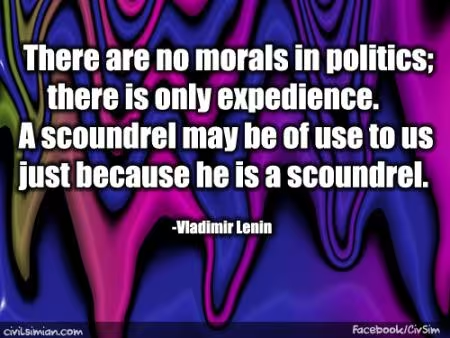
No pleasure is in itself evil, but the things which produce certain pleasures entail annoyances many times greater than the pleasures themselves.

2 months 1 week ago
As there must be moderation in other things, so there must be moderation in self-criticism. Perpetual contemplation of our own actions produces a morbid consciousness, quite unlike that normal consciousness accompanying right actions spontaneously done; and from a state of unstable equilibrium long maintained by effort, there is apt to be a fall towards stable equilibrium, in which the primitive nature reasserts itself. Retrogression rather than progression may hence result.
▼
Source
source
Ch. 10, General Conclusions
3 months 1 week ago
The native and untaught suggestions of inquisitive children do often offer things, that may set a considering man's thoughts on work. And I think there is frequently more to be learn'd from the unexpected questions of a child than the discourses of men, who talk in a road, according to the notions they have borrowed, and the prejudices of their education.
▼
Source
source
Sec. 121

1 week ago
It is not easy for any of us to stop measuring the world against the standard of Europe, but the concept of the multitude requires it of us. It is a challenge. Embrace it.
1 month 1 week ago
Natural selection is an extremely simple process, in the sense that very little machinery needs to be set up in order for it to work. Of course the effects and consequences of natural selection are complex in the extreme. But in order to set natural selection going on a real planet, all that is required is the existence of inherited information.
▼
Source
source
Chapter 2, "Silken Fetters" (p. 68)
1 month 2 weeks ago
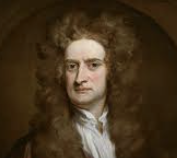
I do not define time, space, place, and motion, as being well known to all. Only I must observe, that the common people conceive those quantities under no other notions but from the relation they bear to sensible objects. And thence arise certain prejudices, for the removing of which it will be convenient to distinguish them into absolute and relative, true and apparent, mathematical and common.
▼
Source
source
Definitions - Scholium

3 months 1 week ago
We have just seen that, apart from money-capital, circulating capital is only another name for commodity-capital. But to the extent that labour power circulates in the market,it is not capital, no form of commodity-capital. It is not capital at all; the labourer is not a capitalist, although he brings a commodity to market, namely his own skin.
▼
Source
source
Vol. II, Ch. X, p. 211.
1 month 2 weeks ago
To me it seems clear that the descriptions of human life we find in the novels of Tolstoy or George Eliot are not mere entertainment; they teach us to perceive what goes on in social and individual life. And such descriptions require the many subtle distinctions that ordinary language has made available to us. The question of the relevance or irrelevance of "how we speak" is not just a question for philosophers, although it is that too. It is a question for philosophers because once ordinary language is laughed out of the room, philosophical theories are no longer held responsible at all to the ways we actually speak and actually live; but it is a question for more than just philosophers because, at bottom, contempt for ordinary language is contempt for all the humanities.
▼
Source
source
"Science and Philosophy"

2 days ago
It is a most important social act; nay, at bottom, the one important social act. Given the men a People choose, the People itself, in its exact worth and worthlessness, is given. A heroic people chooses heroes, and is happy; a valet or flunkey people chooses sham-heroes, what are called quacks, thinking them heroes, and is not happy.
2 weeks 6 days ago
We are passengers, comprehended and displaced by metaphor.
▼
Source
source
Chapter 8, Performative Reflexivity, p. 137
4 months 1 week ago
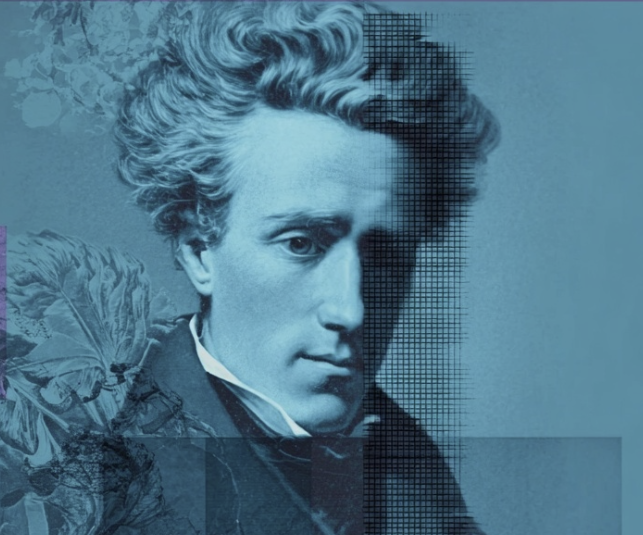
The similarity between Christ and Socrates consists essentially in their dissimilarity. Just as philosophy begins with doubt, so also a life that may be called human begins with irony.
1 month 3 weeks ago
Steiner goes further than this -- and this is his own central contribution to modern thought. He states that once we have made a habit of remembering Mozart and the stars, we shall find ourselves developing powers of 'spiritual vision.' We shall never again feel ourselves to be helpless victims of the external world.
▼
Source
source
p. 169
1 month 3 weeks ago
Education is the acquisition of the art of the utilisation of knowledge.

3 months 2 weeks ago
To found a great empire for the sole purpose of raising up a people of customers, may at first appear a project fit only for a nation of shopkeepers. It is however, a project altogether unfit for a nation of shopkeepers; but extremely fit for a nation whose government is influenced by shopkeepers.
▼
Source
source
Chapter VII, Part Third, p. 667.
2 months 1 week ago
Every man may claim the fullest liberty to exercise his faculties compatible with the possession of like liberties by every other man.
▼
Source
source
Pt. II, Ch. 4 : Derivation of a First Principle, § 3
2 months 1 week ago
It is of great importance to observe that the character of every man is, in some degree, formed by his profession. A man of sense may only have a cast of countenance that wears off as you trace his individuality, whist the weak, common man has scarcely ever any character, but what belongs to the body; at least, all his opinions have been so steeped in the vat consecrated by authority, that the faint spirit which the grape of his own vine yields, cannot be distinguished.
▼
Source
source
Ch. 1
1 month 3 weeks ago
Once we can see how this question of freedom of the will has been vitiated by post-romantic philosophy, with its inbuilt tendency to laziness and boredom, we can also see how it came about that existentialism found itself in a hole of its own digging, and how the philosophical developments since then have amounted to walking in circles round that hole.
▼
Source
source
p. 214
1 month 1 week ago
For him who loves labor, there is always something to do.
▼
Source
source
Maxim 219
3 months 6 days ago
The 'Enlightenment', which discovered the liberties, also invented the disciplines.

3 months 1 week ago
Gentlemen, there is a sublime and friendly Destiny by which the human race is guided, - the race never dying, the individual never spared, - to results affecting masses and ages. Men are narrow and selfish, but the Genius or Destiny is not narrow, but beneficent. It is not discovered in their calculated and voluntary activity, but in what befalls, with or without their design. Only what is inevitable interests us, and it turns out that love and good are inevitable, and in the course of things. That Genius has infused itself into nature. It indicates itself by a small excess of good, a small balance in brute facts always favorable to the side of reason.
2 months 1 week ago
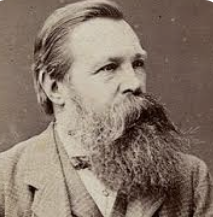
The first act by virtue of which the State really constitutes itself the representative of the whole of society-the taking possession of the means of production in the name of society-this is, at the same time, its last independent act as a State. State interference in social relations becomes, in one domain after another, superfluous, and then dies out of itself; the government of persons is replaced by the administration of things, and by the conduct of processes of production. The State is not "abolished." It dies out.
▼
Source
source
Socialism, Utopian and Scientific

2 months 1 week ago
His power to adore is responsible for all his crimes: a man who loves a god unduly forces other men to love his god, eager to exterminate them if they refuse.
3 weeks 3 days ago
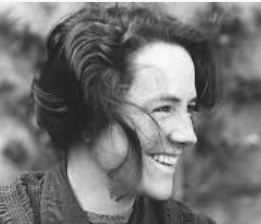
The punctuation of anniversaries is terrible, like the closing of doors, one after another between you and what you want to hold on to.
▼
Source
source
Diary entry on the first anniversary of the kidnapping and death of her son Charles Augustus Lindbergh III (1 March 1932)

2 months 3 weeks ago
Evil destroyeth itself.

3 months 3 weeks ago
So potent was Religion in persuading to do wrong.
▼
Source
source
Book I, line 101 (tr. Alicia Stallings) H. A. J. Munro's translation: So great the evils to which religion could prompt! W. H. D. Rouse's translation: So potent was Superstition in persuading to evil deeds.
3 months 1 week ago
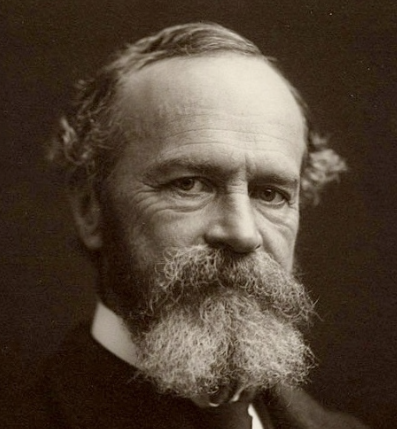
It is an odd circumstance that neither the old nor the new, by itself, is interesting; the absolutely old is insipid; the absolutely new makes no appeal at all. The old in the new is what claims the attention,-the old with a slightly new turn.
▼
Source
source
Chapter XI: Attention
4 months ago
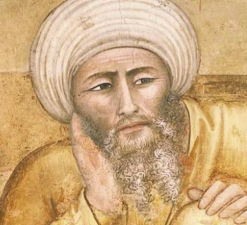
Philosophers do not claim that God does not know particulars; they rather claim that He does not know them the way humans do. God knows particulars as their Creator whereas humans know them as a privileged creations of God might know them.
1 month 4 days ago
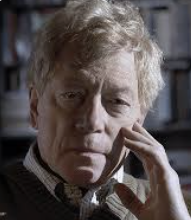
Of course, there are those - Sandel, Walzer and Dworkin, for example - who propose "communitarian" ways of thinking, as a further move in the direction which a sophisticated liberalism requires. But none of them is prepared to accept the real price of community: which is sanctity, intolerance, exclusion, and a sense that life's meaning depends upon obedience, and also on vigilance against the enemy.
▼
Source
source
'In Defence of the Nation', The Philosopher on Dover Beach (1990), p. 310
CivilSimian.com created by AxiomaticPanic, CivilSimian, Kalokagathia