

3 months 3 weeks ago
There are hardly any truths upon which we always remain agreed, and still fewer objects of pleasure which we do not change every hour, I do not know whether there is a means of giving fixed rules for adapting discourse to the inconstancy of our caprices.
1 month 1 week ago
I have often regretted my speech, never my silence.
▼
Source
source
Maxim 1070
3 weeks 6 days ago
I have endeavoured to show that no absolute structural line of demarcation, wider than that between the animals which immediately succeed us in the scale, can be drawn between the animal world and ourselves; and I may add the expression of my belief that the attempt to draw a physical distinction is equally futile, and that even the highest faculties of feeling and of intellect begin to germinate in lower forms of life.
▼
Source
source
Ch.2, p. 129
4 months 1 day ago
The superior man is satisfied and composed; the mean man is always full of distress. The virtuous is frank and open; the non-virtuous is secretive and worrying.

3 months 1 week ago
You get tragedy where the tree, instead of bending, breaks.
2 months 3 days ago
Equally there is no rhythm when variations are not placed. There is a wealth of suggestions in the phrase "takes place". The change not only comes but it belongs; it had its definite place in a larger whole.
▼
Source
source
p. 160

3 months 1 week ago
Merely to come into the world the heir of a fortune is not to be born, but to be still-born, rather. To be supported by the charity of friends, or a government-pension, - provided you continue to breathe, - by whatever fine synonymes you describe these relations, is to go into the almshouse.
▼
Source
source
p. 487

3 months 1 week ago
Virtuous men alone possess friends.
▼
Source
source
"Friendship", 1764

2 months 4 days ago
I came to set fire to the earth, and I wish it were already on fire!
▼
Source
source
12:49 (CEV)

3 months 1 week ago
A man who belongs to some communist or revolutionary society wills certain concrete ends, which imply the will to freedom, and that freedom is willed in community. We will freedom for freedom's sake, and in and through the particular circumstances. And in thus willing freedom, we discover that it depends entirely upon the freedom of others and that the freedom of others depends upon our own.
▼
Source
source
pp. 51-52
3 months 1 week ago
Let us cultivate our garden.
4 days ago
The social conditions that nourished and made use of this ideology can still revive; perhaps - who knows? - the virus is dormant, waiting for the next opportunity. Dreams about the perfect society belong to the enduring stock of civilization.
▼
Source
source
New Preface, p. vi
3 months 1 week ago
I am here to plead his cause with you. I plead not for his life, but for his character - his immortal life; and so it becomes your cause wholly, and is not his in the least. Some eighteen hundred years ago Christ was crucified; this morning, perchance, Captain Brown was hung. These are the two ends of a chain which is not without its links. He is not Old Brown any longer; he is an angel of light.

2 months 2 weeks ago
The First thing that strikes a traveler in the United States is the innumerable multitude of those who seek to emerge from their original condition; and the second is the rarity of lofty ambition to be observed in the midst of the universally ambitious stir of society. No Americans are devoid of a yearning desire to rise, but hardly any appear to entertain hopes of great magnitude or to pursue very lofty aims. All are constantly seeking to acquire property, power, and reputation.
▼
Source
source
Book Three, Chapter XIX.
3 months 1 day ago
But, when the elements have been mingled in the fashion of a man and come to the light of day, or in the fashion of the race of wild beasts or plants or birds, then men say that these come into being; and when they are separated, they call that woeful death. They call it not aright; but I too follow the custom, and call it so myself.
▼
Source
source
fr. 9 As quoted by John Burnet, Early Greek philosophy (1908) p. 240

3 months 2 weeks ago
We do not become righteous by doing righteous deeds but, having been made righteous, we do righteous deeds.
▼
Source
source
Thesis 40


1 month 2 weeks ago
It is not my aim to surprise or shock you - but the simplest way I can summarize is to say that there are now in the world machines that think, that learn and that create. Moreover, their ability to do these things is going to increase rapidly until - in a visible future - the range of problems they can handle will be coextensive with the range to which the human mind has been applied.
▼
Source
source
Newell & Simon (1958), quoted in AI, by Daniel Crevier

1 month 3 weeks ago
It is impossible to feel equal respect for things that are in fact unequal unless the respect is given to something that is identical in all of them. Men are unequal in all their relations with the things of this world, without exception. The only thing that is identical in all men is the presence of a link with the reality outside the world. All human beings are absolutely identical in so far as they can be thought of as consisting of a centre, which is an unquenchable desire for good, surrounded by an accretion of psychical and bodily matter.

2 months 1 week ago
Opinion is ultimately determined by the feelings, and not by the intellect.
▼
Source
source
Pt. IV, Ch. 30 : General Considerations

1 month 1 week ago
The assertion that art may be good art and at the same time incomprehensible to a great number of people is extremely unjust, and its consequences are ruinous to art itself...it is the same as saying some kind of food is good but most people can't eat it.
2 months 1 week ago
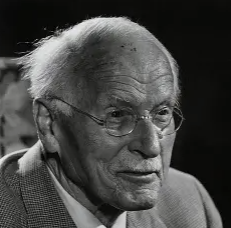
The great decisions of human life have as a rule far more to do with the instincts and other mysterious unconscious factors than with conscious will and well-meaning reasonableness. The shoe that fits one person pinches another; there is no recipe for living that suits all cases. Each of us carries his own life-form-an indeterminable form which cannot be superseded by any other.
▼
Source
source
p. 69
3 weeks 3 days ago
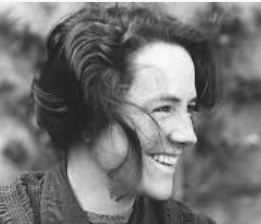
Good communication is as stimulating as black coffee, and just as hard to sleep after. Variant: Good communication is just as stimulating as...

4 months 1 week ago
My lectures are published and not published; they will be intelligible to those who heard them, and to none beside.

1 month 1 week ago
Attention spans get very weak at the speed of light, and that goes along with a very weak identity.
2 months 1 week ago
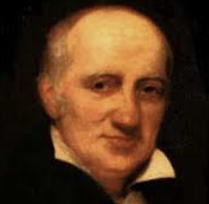
It is comparatively easy for the philosopher in his closet to invent imaginary schemes of policy, and to shew how mankind, if they were without passions and without prejudices, might best be united in the form of a political community. But, unfortunately, men in all ages are the creatures of passions, perpetually prompting them to defy the rein, and break loose from the dictates of sobriety and speculation.
▼
Source
source
History of the Commonwealth of England. From its Commencement, to the Restoration of Charles the Second. Volume the Fourth. Oliver, Lord Protector (1828), p. 579

2 months 1 week ago
Self-pity is not as sterile as we suppose. Once we feel its mere onset, we assume a thinker's attitude, and come to think of it, we come to think!

3 months 2 weeks ago
All that time is lost which might be better employed.
▼
Source
source
As quoted in A Dictionary of Quotations in Most Frequent Use: Taken Chiefly from the Latin and French, but comprising many from the Greek, Spanish, and Italian Languages, translated into English (1809) by David Evans Macdonnel
3 months 1 week ago
Most men would feel insulted, if it were proposed to employ them in throwing stones over a wall, and then in throwing them back, merely that they might earn their wages. But many are no more worthily employed now.
▼
Source
source
p. 485
3 months 1 week ago
My difficulty is only an - enormous - difficulty of expression.
▼
Source
source
Journal entry (8 March 1915) p. 40

2 months 3 weeks ago
Power is the near neighbour of necessity.
▼
Source
source
As quoted in Aurea Carmina (8) by Hierocles of Alexandria, as translated in Dictionary of Quotations (1906) by Thomas Benfield Harbottle, p. 356

3 months 1 week ago
How significant is the enormous heightening, under mescalin, of the perception of color! ... Man's highly developed color sense is a biological luxury-inestimably precious to him as an intellectual and spiritual being, but unnecessary to his survival as an animal. ... Mescalin raises all colors to a higher power and makes the percipient aware of innumerable fine shades of difference, to which, at ordinary times, he is completely blind. It would seem that, for Mind at Large, the so-called secondary characters of things are primary.
▼
Source
source
describing his experiment with mescaline, pp. 26-27
2 months 1 week ago
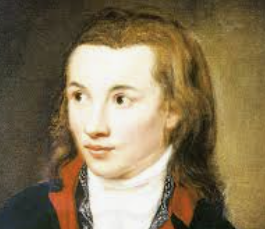
There is but one Temple in the World; and that is the Body of Man. Nothing is holier than this high form. Bending before men is a reverence done to this Revelation in the Flesh. We touch Heaven, when we lay our hand on a human body. Variant translation: There is but one temple in the Universe and that is the Body of Man.
▼
Source
source
As inscribed on the Library of Congress, quoted in Handbook of the New Library of Congress (1897) by Herbert Small, p. 53

3 months 1 week ago
Money often costs too much.
▼
Source
source
Wealth
2 months 1 week ago
It makes no sense to say that death is the goal of life, but what else is there to say?

2 months 1 week ago
Freedom and not servitude is the cure of anarchy; as religion, and not atheism, is the true remedy for superstition.
3 months 1 week ago
Each man is a hero and an oracle to somebody.
▼
Source
source
Quotation and Originality
3 weeks 6 days ago
Life is too short to occupy oneself with the slaying of the slain more than once. One of a series of exchanges when Richard Owen repeated generally repudiated claims about the Gorilla brain in a Royal Institution lecture.
▼
Source
source
Athenaeum (13 April 1861) p. 498; Browne Vol 2, p. 159
2 months 4 days ago
Wherefore by their fruits ye shall know them.
▼
Source
source
Matthew 7:20 (KJV)

3 months 2 days ago
With a malicious man carry on no conflict, and do not molest him in any way whatever.
3 months 3 weeks ago
It is difficulties that show what men are.
▼
Source
source
Book I, ch. 24, 1.
1 month 3 weeks ago
The dominant, almost general, idea of revolution - particularly the Socialist idea - is that revolution is a violent change of social conditions through which one social class, the working class, becomes dominant over another class, the capitalist class. It is the conception of a purely physical change, and as such it involves only political scene shifting and institutional rearrangements. Bourgeois dictatorship is replaced by the "dictatorship of the proletariat" - or by that of its "advance guard," the Communist Party. Lenin takes the seat of the Romanovs, the Imperial Cabinet is rechristened Soviet of People's Commissars, Trotsky is appointed Minister of War, and a labourer becomes the Military Governor General of Moscow. That is, in essence, the Bolshevik conception of revolution, as translated into actual practice.
2 months 1 week ago
Skepticism is the sadism of embittered souls.

3 months 2 weeks ago
I care not so much what I am to others as what I am to myself. I will be rich by myself, and not by borrowing.
▼
Source
source
Book II, Ch. 16
3 months 2 weeks ago
My trade and my art is living.
▼
Source
source
Ch. 6 (tr. Donald M. Frame)

3 months 2 weeks ago
This disposition to admire, and almost to worship, the rich and powerful, and to despise or, at least, neglect persons of poor and mean conditions, though necessary both to establish and to maintain the distinction of ranks and the order of society, is, at the same time, the great and most universal cause of the corruption of our moral sentiments.
▼
Source
source
Section III, Chap. III.
1 month 3 weeks ago
The bastard form of mass culture is humiliated repetition: content, ideological schema, the blurring of contradictions-these are repeated, but the superficial forms are varied: always new books, new programs, new films, news items, but always the same meaning.
▼
Source
source
Modern, in The Pleasure of the Text
2 months 1 week ago
The true Poet is all-knowing; he is an actual world in miniature.

3 months 3 weeks ago
Let the public good overcome all private and selfish regards of every kind and degree; though in truth, even private and selfish regards, and every man's own interest, will be best promoted by the preservation of peace.

3 months 1 week ago
Apart from logical cogency, there is to me something a little odd about the ethical valuations of those who think that an omnipotent, omniscient, and benevolent Deity, after preparing the ground by many millions of years of lifeless nebulae, would consider Himself adequately rewarded by the final emergence of Hitler and Stalin and the H-bomb.
▼
Source
source
Preface
CivilSimian.com created by AxiomaticPanic, CivilSimian, Kalokagathia