

1 month 1 week ago
The argument of this book is that we, and all other animals, are machines created by our genes.
▼
Source
source
Ch. 1. Why Are People?
2 months 1 week ago
Murder begins where self-defense ends.
▼
Source
source
Act I.

3 months 2 weeks ago
Let us give Nature a chance; she knows her business better than we do.
▼
Source
source
Ch. 13

3 months 1 week ago
The supreme maxim in scientific philosophising is this: wherever possible, logical constructions are to be substituted for inferred entities.
▼
Source
source
Quoted in Hawes The Logic of Contemporary English Realism (1923), p. 110
1 month 1 week ago
Tension weakens the bow; the want of it, the mind.
▼
Source
source
Maxim 59

1 month 4 weeks ago
Faith makes us live by showing us that life, although it is dependent upon reason, has its well spring and source of power elsewhere, in something supernatural and miraculous. Cournot the mathematician, a man of singularly well-balanced and scientifically equipped mind has said that it is this tendency towards the supernatural and miraculous that gives life, and that when it is lacking, all the speculations of reason lead to nothing but affliction of the spirit. ...And in truth we wish to live.

2 months 1 week ago
The real, the unique misfortune: to see the light of day. A disaster which dates back to aggressiveness, to the seed of expansion and rage within origins, to the tendency to the worst which first shook them up.
2 months 4 days ago
The free will, the actual motor of reason in society, necessarily creates wrong. The individual must clash with the social order that claims to represent his own will in its objective form. But the wrong and the 'avenging justice' that remedies it not only expresses a 'higher logical necessity,' but also prepare the transition to a higher social form of freedom, the transition from abstract right to morality. For, in committing a wrong, and in accepting punishment for his deed, the individual becomes conscious of the 'infinite subjectivity' of his freedom. He learns that he is free only as a private person.
▼
Source
source
P. 198
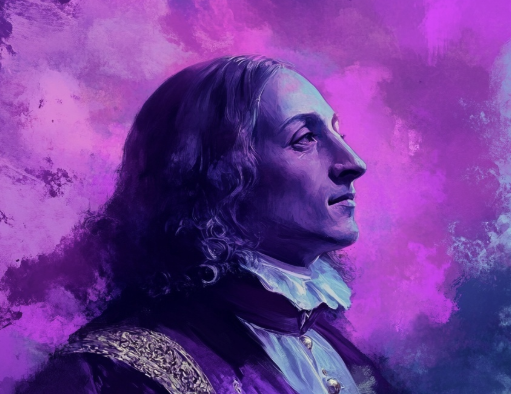
3 months 3 weeks ago
If you act externally with men in conformity with your rank, you should recognize, by a more secret but truer thought, that you have nothing naturally superior to them.

3 months 1 week ago
Any fool can make a ruleAnd every fool will mind it.
▼
Source
source
February 3, 1860
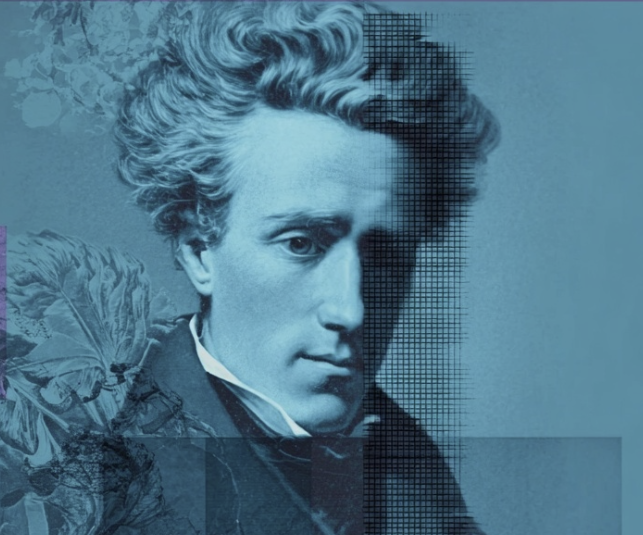
4 months 1 week ago
A son is a mirror in which the father sees himself reflected, and the father is a mirror in which the son sees himself as he will be in the future.

3 months 1 week ago
A sect or party is an elegant incognito devised to save a man from the vexation of thinking.
▼
Source
source
June 20, 1831

4 months ago
To master this instrument the religious thinker must make a preliminary study of logic, just as the lawyer must study legal reasoning. This is no more heretical in the one case than in the other. And logic must be learned from the ancient masters, regardless of the fact that they were not Muslims.

4 months 2 weeks ago
The modern scientific counterpart to belief in God is the belief in the universe as an organism: this disgusts me. This is to make what is quite rare and extremely derivative, the organic, which we perceive only on the surface of the earth, into something essential, universal, and eternal! This is still an anthropomorphizing of nature!

2 months 1 week ago
The effect of liberty to individuals is, that they may do what they please: we ought to see what it will please them to do, before we risk congratulations.
4 months 1 week ago
Spontaneous love can reach the point of despair, shows that it is in despair, that even when it is happy it loves with the power of despair.

3 months 1 week ago
As the chosen people bore in their features the sign manual of Jehovah, so the division of labour brands the manufacturing workman as the property of capital.
▼
Source
source
Vol. I, Ch. 14, Section 5, pg. 396.

4 months 1 day ago
Corpses are more fit to be cast out than dung.
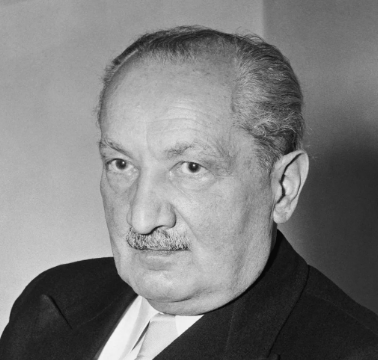
3 months 1 week ago
Nietzsche ... does not shy from conscious exaggeration and one-sided formulations of his thought, believing that in this way he can most clearly set in relief what in his vision and in his inquiry is different from the run-of-the-mill.
▼
Source
source
p. 50
1 month 1 week ago
Times are changed with him who marries; there are no more by-path meadows, where you may innocently linger, but the road lies long and straight and dusty to the grave. Idleness, which is often becoming and even wise in the bachelor, begins to wear a different aspect when you have a wife to support.
▼
Source
source
Virginibus Puerisque, Ch. 2.

1 week ago
We share bodies with two eyes, ten fingers, ten toes; we share life on this earth; we share capitalist regimes of production and exploitation; we share common dreams of a better future.
▼
Source
source
128
3 months 2 weeks ago
Things are not so painful and difficult of themselves, but our weakness or cowardice makes them so.
▼
Source
source
Ch. 14, tr. Cotton, rev. W. Carew Hazlitt, 1877
1 week 1 day ago
We have come to see that Huxley was right when he said that "a man's worst difficulties begin when he is able to do as he likes." The evidences of these greater difficulties lie all about us: in the brave and brilliant atheists who have defied the Methodist God, and have become very nervous; in the women who have emancipated themselves from the tyranny of fathers, husbands, and homes, and with the intermittent but expensive help of a psychoanalyst, are now enduring liberty as interior decorators; in the young men and women who are world-weary at twenty-two; in the multitudes who drug themselves with pleasure; in the crowds enfranchised by the blood of heroes who cannot be persuaded to take an interest in their destiny; in the millions, at last free to think without fear of priest or policeman, who have made the moving pictures and the popular newspapers what they are.
▼
Source
source
Preface
4 months 1 day ago
If names be not correct, language is not in accordance with the truth of things. Paraphrased as a chinese proverb stating "The beginning of wisdom is to call things by their proper name."
1 month 4 weeks ago
Isolation is the worst possible counselor.
▼
Source
source
Civilization is Civilism
2 months 4 weeks ago
Perseverance is more prevailing than violence; and many things which cannot be overcome when they are together, yield themselves up when taken little by little.
▼
Source
source
Sertorius 16 (Tr. Dryden and Clough)

3 months 2 weeks ago
Hear the verbal protestations of all men: Nothing so certain as their religious tenets. Examine their lives: You will scarcely think that they repose the smallest confidence in them. The greatest and truest zeal gives us no security against hypocrisy: The most open impiety is attended with a secret dread and compunction. No theological absurdities so glaring that they have not, sometimes, been embraced by men of the greatest and most cultivated understanding. No religious precepts so rigorous that they have not been adopted by the most voluptuous and most abandoned of men.
▼
Source
source
Part XV - General corollary
1 day ago
Philosophy accepts the hard and hazardous task of dealing with problems not yet open to the methods of science - problems like good and evil, beauty and ugliness, order and freedom, life and death; so soon as a field of inquiry yields knowledge susceptible of exact formulation it is called science. Every science begins as philosophy and ends as art; it arises in hypothesis and flows into achievement.

3 months 1 week ago
Men will always be mad, and those who think they can cure them are the maddest of all.
▼
Source
source
Letter to Louise Dorothea of Meiningen, duchess of Saxe-Gotha Madame, 30 January 1762
2 months 3 days ago
In the late eighteenth and the greater part of the nineteenth centuries appeared the first marked cultural shift in the attitude taken toward change. Under the names of indefinite perfectibility, progress, and evolution, the movement of things in the universe itself and of the universe as a whole began to take on a beneficent instead of hateful aspect.
3 months 1 week ago
The best government is a benevolent tyranny tempered by an occasional assassination.
▼
Source
source
Attributed to Voltaire in Likharev, K.K. (2021). On Government and Politics. In: Likharev, K.K. (eds) Essential Quotes for Scientists and Engineers.
6 days ago
What we call objective reality is, in the last analysis, what is common to many thinking beings, and could be common to all; this common part, we shall see, can only be the harmony expressed by mathematical laws. It is this harmony... which is the sole objective reality, the only truth we can attain; and when I add that the universal harmony of the world is the source of all beauty, it will be understood what price we should attach to the slow and difficult progress which little by little enables us to know it better.

3 months 1 week ago
John - I'm trying to find the Island in the West. Sensible - You refer, no doubt to some aesthetic experience.
▼
Source
source
Pilgrim's Regress 77
3 months 1 week ago
Everything great glitters, glitter begets ambition, and ambition can easily have caused the inspiration or what we thought to be inspiration. But reason can no longer restrain one who is lured by the fury of ambition. He tumbles where his vehement drive calls him; no longer does he choose his position, but rather chance and luster determine it.
3 months 1 week ago
Beauty is the mark God sets upon virtue.
▼
Source
source
Beauty
1 month ago
It is surely delightful, Sir, to look forward to that period when a series of liberal and prudent measures shall have delivered islands, so highly favoured by the bounty of Providence, from the curse inflicted on them by the frantic rapacity of man. Then the peasant of the Antilles will no longer crawl in listless and trembling dejection round a plantation from whose fruits he must derive no advantage, and a hut whose door yields him no protection; but, when his cheerful and voluntary labour is performed, he will return with the firm step and erect brow of a British citizen from the field which is his freehold to the cottage which is his castle.
▼
Source
source
Speech to a meeting of the Anti-Slavery Society held in Freemasons' Tavern (25 June 1824), quoted in Report of the Committee of the Society for the Mitigation and Gradual Abolition of Slavery Throughout the British Dominions, Volume I (1824), p. 77

3 months 1 week ago
Catherine: Why commit Evil? Goetz: Because Good has already been done. Catherine: Who has done it? Goetz: God the Father. I, on the other hand, am improvising.
▼
Source
source
Act 3, sc. 4
1 month ago
Perhaps no person can be a poet, or even enjoy poetry, without a certain unsoundness of mind.
▼
Source
source
p. 7

1 month 3 weeks ago
He who does not realize to what extent shifting fortune and necessity hold in subjection every human spirit, cannot regard as fellow-creatures nor love as he loves himself those whom chance separated from him by an abyss. The variety of constraints pressing upon man give rise to the illusion of several distinct species that cannot communicate.
▼
Source
source
p. 192
3 months 6 days ago
There is object proof that homosexuality is more interesting than heterosexuality. It's that one knows a considerable number of heterosexuals who would wish to become homosexuals, whereas one knows very few homosexuals who would really like to become heterosexuals.
▼
Source
source
As quoted in Who's Who in Contemporary Gay & Lesbian History: From World War II to the Present Day (2001) by Robert Aldrich and Gary Wotherspoon ISBN 041522974X

1 month 1 week ago
Having acknowledged the measure of the good to be pleasure, i.e., beauty, the European upper classes went back in their comprehension of art to the gross conception of the primitive Greeks which Plato had already condemned. And with this understanding of life, a theory of art was formulated.
6 days ago
It is by logic that we prove, but by intuition that we discover. To know how to criticize is good, to know how to create is better.
▼
Source
source
Part II. Ch. 2 : Mathematical Definitions and Education, p. 129

1 month 1 week ago
Manuscript culture is conversational if only because the writer and his audience are physically related by the form of publication as performance.
▼
Source
source
(p. 96)

2 months 4 days ago
Adam came from great power and great wealth, but he was not worthy of you. For had he been worthy, [he would] not [have tasted] death.
3 months 1 week ago
All exact science is dominated by the idea of approximation. When a man tells you that he knows the exact truth about anything, you are safe in inferring that he is an inexact man.
▼
Source
source
The Scientific Outlook (1931), Part I, chapter II, "Characteristics of the Scientific Method"

2 weeks 4 days ago
Not everything in religion is precious or deserving of reverence. There is an inheritance of anthropocentrism, the ugly fantasy that the Earth exists to serve humans, which most secular humanists share. There is the claim of religious authorities, also made by atheist regimes, to decide how people can express their sexuality, control their fertility and end their lives, which should be rejected categorically. Nobody should be allowed to curtail freedom in these ways, and no religion has the right to break the peace.
3 months 2 weeks ago
I am an investigator by inclination. I feel a great thirst for knowledge and an impatient eagerness to advance, also satisfaction at each progressive step. There was a time when I thought that all this could constitute the honor of humanity, and I despised the mob, which knows nothing about it. Rousseau set me straight. This dazzling excellence vanishes; I learn to honor men, and would consider myself much less useful than common laborers if I did not believe that this consideration could give all the others a value, to establish the rights of humanity.
▼
Source
source
Part III : Selection on Education from Kant's other Writings, Ch. I Pedagogical Fragments, # 55

3 weeks 4 days ago
The system of technological production that we have today has been justified in terms of creating more goods to feed more people and to meet more needs. But it actually destroys more of the resources that we need in order to meet those multiple needs. If we shift to an ecological perception, a diversity perception, we realize that some of the instruments of which we are very proud are actually extremely primitive for dealing with nature. To me that is the great lesson of ecological awareness at the turn of the millennium.
▼
Source
source
1998
1 month 3 weeks ago
Cultivate that kind of knowledge which enables us to discover for ourselves in case of need that which others have to read or be told of.
▼
Source
source
D 89
CivilSimian.com created by AxiomaticPanic, CivilSimian, Kalokagathia