

2 months 1 week ago
Liberal philosophy, at this point, ceases to be empirical and British in order to become German and transcendental. Moral life, it now believes, is not the pursuit of liberty and happiness of all sorts by all sorts of different creatures; it is the development of a single spirit in all life through a series of necessary phases, each higher than the preceding one. No man, accordingly, can really or ultimately desire anything but what the best people desire. This is the principle of the higher snobbery; and in fact, all earnest liberals are higher snobs.
▼
Source
source
"The Irony of Liberalism"

4 months 6 days ago
Now, as the Word of God is the Son of God, so the love of God is the Holy Spirit.
▼
Source
source
Art. 8

2 months 1 day ago
I could see clearly that this problem could only be solved on the individual and personal level; political revolt is irrelevant. Both Camus and Sartre had been neatly hog-tied by their earlier radicalism. Camus came to see that rebellion is a political roundabout that revolves back to the same old tyranny; too ashamed to admit that he had outgrown his leftism, he found himself in an intellectual cul-de-sac. Sartre accused Camus of being a reactionary; but he paid for his own refusal to reexamine his political convictions by congealing into a grotesque attitude of permanent indignation, shaking his fist at some abstract Authority. Where politics is concerned, he seemed determined to be guided by his emotions.
▼
Source
source
p. 101

2 months 3 weeks ago
How shall the dead arise, is no question of my faith; to believe only possibilities, is not faith, but mere philosophy.
▼
Source
source
Section 48



3 months 2 weeks ago
Friendship is the greatest of worldly goods. Certainly to me it is the chief happiness of life. If I had to give a piece of advice to a young man about a place to live, I think I shd. say, 'sacrifice almost everything to live where you can be near your friends.
▼
Source
source
Letter to Arthur Greeves (29 December 1935) - in They Stand Together: The Letters of C. S. Lewis to Arthur Greeves (1914-1963) (1979), p. 477
2 months 2 weeks ago
We are only puppets, our strings are being pulled by unknown forces.
▼
Source
source
Act II.
1 month 2 weeks ago
When Fortune flatters, she does it to betray.
▼
Source
source
Maxim 277
2 months 2 weeks ago
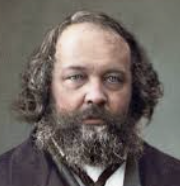
Every state, like every theology, assumes man to be fundamentally bad and wicked.
▼
Source
source
As quoted in Michael Bakunin (1937), E.H. Carr, p. 453
3 months 1 week ago
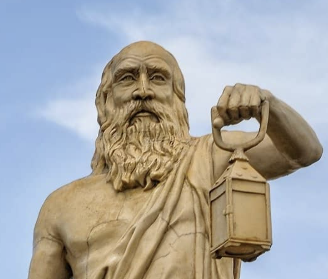
He lit a lamp in broad daylight and said, as he went about, "I am looking for a human."
▼
Source
source
Diogenes Laërtius, vi. 41. This line is frequently translated as "I am looking for an honest man."

1 week 6 days ago
He whom God has touched will always be a being apart: he is, whatever he may do, a stranger among men; he is marked by a sign.
▼
Source
source
Oeuvres Complètes, vol. 3. L'Avenir de la Science (1890).

3 months 3 weeks ago
A man must be perfectly crazy who, where there is tolerable security, does not employ all the stock which he commands…
▼
Source
source
Chapter I, p. 313 (see opportunity cost).

2 months 3 weeks ago
Indeed, the drunken man while in that condition does not know the definition of drunkenness nor the scientific account of it; he has not the very least scientific knowledge of it. The sober man, on the other hand, knows the definition of drunkenness and its basis, yet he is not drunk in the very least. Again the doctor, when he is himself ill, knows the definition and causes of health and the remedies which restore it, and yet is lacking in health. Similarly there is a difference between knowing the true nature and causes and conditions of the ascetic life and actually leading such a life and forsaking the world.
▼
Source
source
III. The Classes of Seekers, p. 47.
1 month 2 weeks ago
We are not arrogant, not hubristic, to celebrate the sheer bulk and detail of what we know through science. We are simply telling the honest and irrefutable truth. Also honest is the frank admission of how much we don't yet know - how much more work remains to be done. That is the very antithesis of hubristic arrogance. Science combines a massive contribution, in volume and detail, of what we do know with humility in proclaiming what we don't. Religion, by embarrassing contrast, has contributed literally zero to what we know, combined with huge hubristic confidence in the alleged facts it has simply made up.
▼
Source
source
The Intellectual and Moral Courage of Atheism

3 months 1 week ago
Good breeding in cattle depends on physical health, but in men on a well-formed character.
▼
Source
source
Freeman (1948), p. 151
1 month 3 weeks ago
"If he is this good at acting crazy, it's because he is." Nor is military psychology mistaken in this regard: in this sense, all crazy people simulate, and this lack of distinction is the worst kind of subversion. It is against this lack of distinction that classical reason armed itself in all its categories. But it is what today again outflanks them, submerging the principle of truth.
▼
Source
source
"The Precession of Simulacra," p. 4

1 month 4 weeks ago
I have remarked very clearly that I am often of one opinion when I am lying down and of another when I am standing up.
▼
Source
source
F 73
2 months 3 weeks ago
For those endowed with insight there is in reality no object of love but God, nor does anyone but He deserve love Love, Longing, Intimacy and Contentment.
▼
Source
source
Islamic Texts Society. 2011. p. 23. ISBN 978-1-903682-27-2. Translated with an introduction and notes by Eric Ormsby.
2 months 2 weeks ago
The recognition of the light of reality within the darkness of abstraction is a contradiction - both the affirmation and the negation of the real at one and the same time. The new philosophy, which thinks the concrete not in an abstract but a concrete way, which acknowledges the real in its reality - that is, in a way corresponding to the being of the real as true, which elevates it into the principle and object of philosophy - is consequently the truth of the Hegelian philosophy, indeed of modern philosophy as a whole.
▼
Source
source
Part III, Section 31

2 months 2 weeks ago
If not reason, then the devil.

3 days ago
You will die, not because you are ill, but because you are alive; even when you have been cured, thesame end awaits you; when you have recovered, it will be not death, but ill health, that you have escaped.
2 months 2 weeks ago
Most observers of the French Revolution, especially the clever and noble ones, have explained it as a life-threatening and contagious illness. They have remained standing with the symptoms and have interpreted these in manifold and contrary ways. Some have regarded it as a merely local ill. The most ingenious opponents have pressed for castration. They well noticed that this alleged illness is nothing other than the crisis of beginning puberty.
▼
Source
source
Fragment No. 105

4 months 1 week ago
Natural justice is a symbol or expression of usefulness, to prevent one person from harming or being harmed by another.

3 months 2 weeks ago
The community has no bribe that will tempt a wise man. You may raise money enough to tunnel a mountain, but you cannot raise money enough to hire a man who is minding his own business. An efficient and valuable man does what he can, whether the community pay him for it or not. The inefficient offer their inefficiency to the highest bidder, and are forever expecting to be put into office. One would suppose that they were rarely disappointed.
▼
Source
source
p. 486
4 months 2 weeks ago
It occurs to me that artists go forward by going backward, something which I have nothing against intrinsically when it is a reproduced retreat - as is the case with the better artists. But it does not seem right that they stop with the historical themes already given and, so to speak, think that only these are suitable for poetic treatment, because these particular themes, which intrinsically are no more poetic than others, are now again animated and inspirited by a great poetic nature. In this case the artists advance by marching on the spot. - Why are modern heroes and the like not just as poetic? Is it because there is so much emphasis on clothing the content in order that the formal aspect can be all the more finished?
2 months ago
The progressive world is necessarily divided into two classes - those who take the best of what there is and enjoy it - those who wish for something better and try to create it. Without these two classes the world would be badly off. They are the very conditions of progress, both the one and the other. Were there none who were discontented with what they have, the world would never reach anything better.

3 months 2 weeks ago
Paradise on earth is where I am.
▼
Source
source
Le Mondain, 1736
4 months 4 days ago
Christ is not valued at all unless He be valued above all.
▼
Source
source
p. 395
1 week 4 days ago
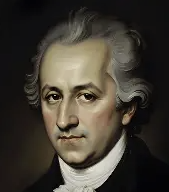
One never goes so far as when one doesn't know where one is going.
▼
Source
source
Letter to Carl Friedrich Zelter

3 months 2 weeks ago
Three passions, simple but overwhelmingly strong, have governed my life: the longing for love, the search for knowledge, and unbearable pity for the suffering of mankind. These passions, like great winds, have blown me hither and thither, in a wayward course, over a deep ocean of anguish, reaching to the very verge of despair.
4 months 6 days ago
It is on account neither of God's weakness nor ignorance that evil comes into the world, but rather it is due to the order of his wisdom and the greatness of his goodness that diverse grades of goodness occur in things, many of which would be lacking if no evil were permitted. Indeed, the good of patience would not exist without the evil of persecution; nor the good of preservation of life in a lion if not for the evil of the destruction of the animals on which it lives.
▼
Source
source
q. 3, art. 6, ad 4
2 months 2 weeks ago
I have never in my life met a man like him for noble simplicity, and boundless truthfulness. I understood from the way he talked that anyone who chose could deceive him, and that he would forgive anyone afterwards who had deceived him, and that was why I grew to love him.
▼
Source
source
Part 4, Chapter 8
3 months 4 weeks ago
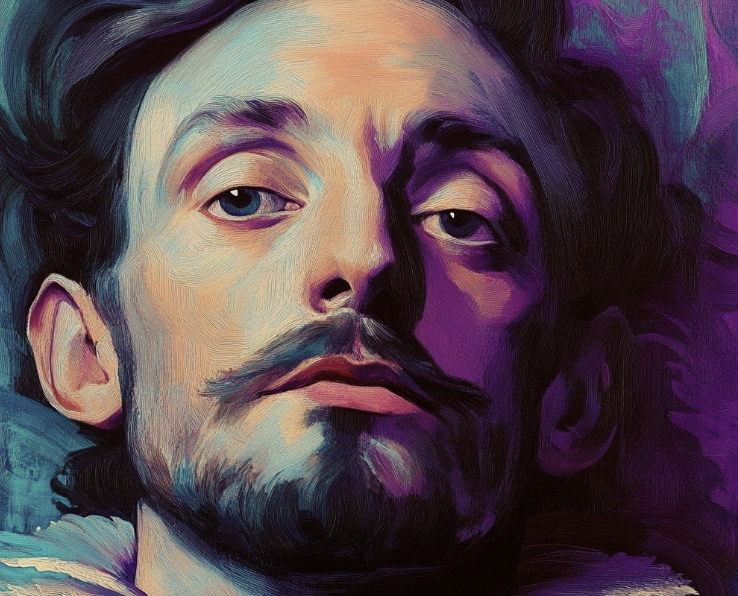
For a man to love again where he is loved, it is the charity of publicans contracted by mutual profit and good offices; but to love a man's enemies is one of the cunningest points of the law of Christ, and an imitation of the divine nature.
▼
Source
source
Of The Exaltation of Charity

1 week 2 days ago
It is a greatness not of mere body and gigantic bulk, but a rude greatness of soul. There is a sublime uncomplaining melancholy traceable in these old hearts. A great free glance into the very deeps of thought. They seem to have seen, these brave old Northmen, what Meditation has taught all men in all ages, That this world is after all but a show,-a phenomenon or appearance, no real thing. All deep souls see into that,-the Hindoo Mythologist, the German Philosopher,-the Shakspeare, the earnest Thinker, wherever he may be.

3 months 2 weeks ago
Thus, while the refugee serfs only wished to be free to develop and assert those conditions of existence which were already there, and hence, in the end, only arrived at free labour, the proletarians, if they are to assert themselves as individuals, will have to abolish the very condition of their existence hitherto (which has, moreover, been that of all society up to the present), namely, labour. Thus they find themselves directly opposed to the form in which, hitherto, the individuals, of which society consists, have given themselves collective expression, that is, the State. In order, therefore, to assert themselves as individuals, they must overthrow the State.
▼
Source
source
"Communism. The Production of the Form of Intercourse Itself", The Marx-Engels Reader
1 month 2 weeks ago
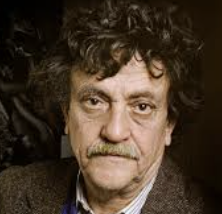
What should young people do with their lives today? Many things, obviously. But the most daring thing is to create stable communities in which the terrible disease of loneliness can be cured.
▼
Source
source
Commencement Address to Hobart and William Smith Colleges, May 26, 1974
1 month 4 weeks ago
Rational free spirits are the light brigade who go on ahead and reconnoitre the ground which the heavy brigade of the orthodox will eventually occupy.
▼
Source
source
H 36
1 month 4 weeks ago
The pleasures of the imagination are as it were only drawings and models which are played with by poor people who cannot afford the real thing.
▼
Source
source
C 38

3 months 2 weeks ago
The concrete man has but one interest - to be right. That to him is the art of all arts, and all means are fair which help him to it.
1 week 2 days ago
"Do the Duty which lies nearest thee," which thou knowest to be a Duty! Thy second Duty will already have become clearer.
▼
Source
source
Bk. II, ch. 9.
2 months 1 week ago
History is nothing but assisted and recorded memory. It might almost be said to be no science at all, if memory and faith in memory were not what science necessarily rest on. In order to sift evidence we must rely on some witness, and we must trust experience before we proceed to expand it. The line between what is known scientifically and what has to be assumed in order to support knowledge is impossible to draw. Memory itself is an internal rumour; and when to this hearsay within the mind we add the falsified echoes that reach us from others, we have but a shifting and unseizable basis to build upon. The picture we frame of the past changes continually and grows every day less similar to the original experience which it purports to describe.
▼
Source
source
Ch. 2 "History"

3 months 2 weeks ago
It is not only when it takes the form of physical addiction that sex is evil. It is also evil when it manifests itself as a way of satisfying the lust for power or the climber's craving for position and social distinction.
▼
Source
source
Ch. 14, p. 358 [2012 reprint]
3 months 3 weeks ago
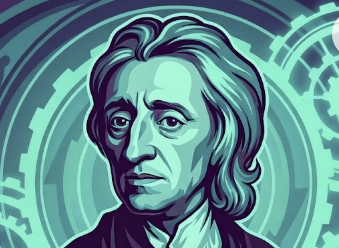
Beating is the worst, and therefore the last means to be us'd in the correction of children, and that only in the cases of extremity, after all gently ways have been try'd, and proved unsuccessful; which, if well observ'd, there will very seldom be any need of blows.
▼
Source
source
Sec. 84
3 months 4 weeks ago
Reading maketh a full man; conference a ready man; and writing an exact man.
▼
Source
source
Of Studies

2 months 1 week ago
It is written, Man shall not live by bread alone, but by every word that proceedeth out of the mouth of God.
▼
Source
source
4:4 (KJV) Said to Satan. The reference is to Deuteronomy 8:3, "... that he might make thee know that man doth not live by bread only, but by every word that proceedeth out of the mouth of the Lord doth man live." (KJV)
2 months 2 weeks ago
To become properly acquainted with a truth, we must first have disbelieved it, and disputed against it.
1 month 1 day ago
Compassion is the desire that moves the individual self to widen the scope of its self-concern to embrace the whole of the universal self.
▼
Source
source
The Toynbee-Ikeda Dialogue: Man Himself Must Choose
2 months 2 weeks ago
The third category of which I come now to speak is precisely that whose reality is denied by nominalism. For although nominalism is not credited with any extraordinarily lofty appreciation of the powers of the human soul, yet it attributes to it a power of originating a kind of ideas the like of which Omnipotence has failed to create as real objects, and those general conceptions which men will never cease to consider the glory of the human intellect must, according to any consistent nominalism, be entirely wanting in the mind of Deity.
▼
Source
source
Lecture II : The Universal Categories, §3. Laws: Nominalism, CP 5.62
4 months 2 weeks ago
The male has more teeth than the female in mankind, and sheep, and goats, and swine. This has not been observed in other animals.
CivilSimian.com created by AxiomaticPanic, CivilSimian, Kalokagathia