

2 months 2 weeks ago
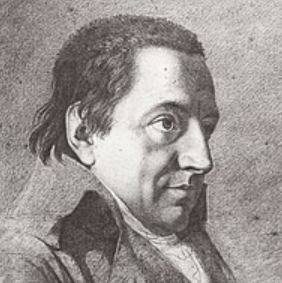
There is nothing enduring, permanent, either in me or out of me, nothing but everlasting change. I know of no existence, not even of my own. I know nothing and am nothing. Images - pictures - only are, pictures which wander by without anything existing past which they wander, without any corresponding reality which they might represent, without significance and without aim. I myself am one of these images, or rather a confused image of these images. All reality is transformed into a strange dream, without a world of which the dream might be, or a mind that might dream it. Contemplation is a dream; thought, the source of all existence and of all that I fancied reality, of my own existence, my own capacities, is a dream of that dream.
▼
Source
source
Jane Sinnett, trans 1846 p. 60
2 months ago
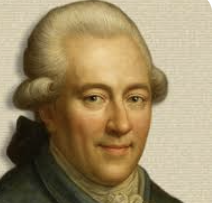
Those who have racked their brains to discover new proofs have perhaps been induced to do so by a compulsion they could not quite explain to themselves. Instead of giving us their new proofs they should have explained to us the motivation that constrained them to search for them.
▼
Source
source
L24

3 months 2 weeks ago
All human activities are equivalent ... and ... all are on principle doomed to failure.
▼
Source
source
Conclusion, II
2 months 2 days ago
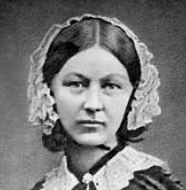
To have no food for our heads no food for our hearts, no food for our activity, is that nothing? If we have no food for the body, how do we cry out, how all the world hears of it, how all the newspapers talk of it, with a paragraph headed in great capital letters, DEATH FROM STARVATION! But suppose one were to put a paragraph in the Times, Death of Thought from Starvation, or Death of Moral Activity from Starvation, how people would stare, how they would laugh and wonder! One would think we had no heads nor hearts, by the total indifference of the public towards them. Our bodies are the only things of any consequence.
3 months 2 weeks ago
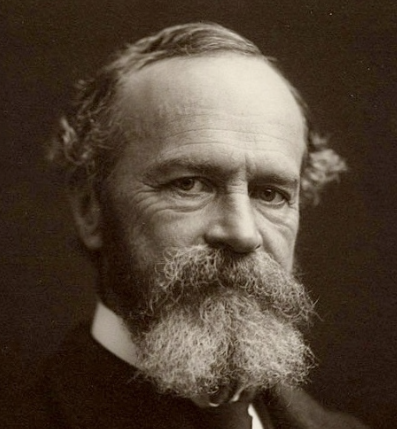
I wished, by treating Psychology like a natural science, to help her to become one.
▼
Source
source
A Plea for Psychology as a Natural Science, 1892
3 months 2 weeks ago
The plain fact is that men's minds are built, as has been often said, in water-tight compartments. Religious after a fashion, they yet have many other things in them beside their religion, and unholy entanglements and associations inevitably obtain. The basenesses so commonly charged to religion's account are thus, almost all of them, not chargeable at all to religion proper, but rather to religion's wicked practical partner, the spirit of corporate dominion. And the bigotries are most of them in their turn chargeable to religion's wicked intellectual partner, the spirit of dogmatic dominion, the passion for laying down the law in the form of an absolutely closed-in theoretic system. The ecclesiastical spirit in general is the sum of these two spirits of dominion.
▼
Source
source
Lectures XIV and XV, "The Value of Saintliness"
2 months ago
The greatest events occur without intention playing any part in them; chance makes good mistakes and undoes the most carefully planned undertaking. The world's greatest events are not produced, they happen.
▼
Source
source
K 68
1 week 6 days ago
It seems to us that the past is our property. Well, on the contrary - we are its property, because we are not able to make changes in it, while it fills the whole of our existence.
▼
Source
source
Original: "Otóż przeciwnie - to my jesteśmy jej własnością, ponieważ nie jesteśmy w stanie dokonać w niej zmian, ona natomiast wypełnia całość naszego istnienia." Klucz niebieski albo opowieści biblijne zebrane ku pouczeniu i przestrodze
3 months 1 week ago
A soldier told Pelopidas, "We are fallen among the enemies." Said he, "How are we fallen among them more than they among us?"
▼
Source
source
63 Pelopidas

2 months 4 days ago
The deepest definition of youth is life as yet untouched by tragedy.
▼
Source
source
p. 285.
3 months 2 weeks ago
You must be afraid, my son. That is how one becomes an honest citizen.
▼
Source
source
Mother to her young son, Act 1
1 day ago
How is it possible that a being with such sensitive jewels as the eyes, such enchanted musical instruments as the ears, and such fabulous arabesque of nerves as the brain can experience itself anything less than a god.
▼
Source
source
Page 138

3 months 2 days ago
You will know that wretched men are the cause of their own suffering, who neither see nor hear the good that is near them, and few are the ones who know how to secure release from their troubles. Such is the fate that harms their minds; like pebbles they are tossed about from one thing to another with cares unceasing. For the dread companion Strife harms them unawares, whom one must not walk behind, but withdraw from and flee.
▼
Source
source
As quoted in Divine Harmony: The Life and Teachings of Pythagoras by John Strohmeier and Peter Westbrook
1 month 1 week ago
I would not give up the keys to the granary, because I know that, by doing so, I should turn scarcity into a famine.
▼
Source
source
Sullivan, p. 266

4 months 3 weeks ago
Who is the most moral man? First, he who obeys the law most frequently, who ... is continually inventive in creating opportunities for obeying the law. Then, he who obeys it even in the most difficult cases. The most moral man is he who sacrifices the most to custom. ... Self-overcoming is demanded, not on account of any useful consequences it may have for the individual, but so that hegemony of custom and tradition shall be made evident.
2 months 4 days ago
In training a child to activity of thought, above all things we must beware of what I will call "inert ideas"-that is to say, ideas that are merely received into the mind without being utilised, or tested, or thrown into fresh combinations.In the history of education, the most striking phenomenon is that schools of learning, which at one epoch are alive with a ferment of genius, in a succeeding generation exhibit merely pedantry and routine. The reason is, that they are overladen with inert ideas. Education with inert ideas is not only useless: it is, above all things, harmful.

1 month 6 days ago
The consciousness of brutes would appear to be related to the mechanism of their body simply as a collateral product of its working, and to be as completely without any power of modifying that working as the steam-whistle which accompanies the work of a locomotive engine is without influence upon its machinery. Their volition, if they have any, is an emotion indicative of physical changes, not a cause of such changes.

4 months 2 weeks ago
I am an atheist, out and out. It took me a long time to say it. I've been an atheist for years and years, but somehow I felt it was intellectually unrespectable to say one was an atheist, because it assumed knowledge that one didn't have. Somehow, it was better to say one was a humanist or an agnostic. I finally decided that I'm a creature of emotion as well as of reason. Emotionally, I am an atheist. I don't have the evidence to prove that God doesn't exist, but I so strongly suspect he doesn't that I don't want to waste my time.

3 months 2 weeks ago
Every poet and musician and artist, but for Grace, is drawn away from love of the thing he tells to love of the telling till, down in Deep Hell, they cannot be interested in God at all but only in what they say about Him.
▼
Source
source
Ch. 9

4 months 1 week ago
The superior man governs men, according to their nature, with what is proper to them, and as soon as they change what is wrong, he stops.

2 months 6 days ago
The human soul has need of consented obedience and of liberty. Consented obedience is what one concedes to an authority because one judges it to be legitimate. It is not possible in relation to a political power established by conquest or coup d'etat nor to an economic power based upon money. Liberty is the power of choice within the latitude left between the direct constraint of natural forces and the authority accepted as legitimate. The latitude should be sufficiently wide for liberty to be more than a fiction, but it should include only what is innocent and should never be wide enough to permit certain kinds of crime.

2 months 1 week ago
And killing time is perhaps the essence of comedy, just as the essence of tragedy is killing eternity.

1 week 4 days ago
The Public is an old woman. Let her maunder and mumble.
▼
Source
source
Journal (1835).
2 months 3 days ago
Eros and depression are opposites.
2 months 1 week ago
I know well that many of my readers do not think as I do. This also is most natural and confirms the theorem. For although my opinion turn out erroneous, there will always remain the fact that many of those dissentient readers have never given five minutes' thought to this complex matter. How are they going to think as I do? But by believing that they have a right to an opinion on the matter without previous effort to work one out for themselves, they prove patently that they belong to that absurd type of human being which I have called the "rebel mass." It is precisely what I mean by having one's soul obliterated, hermetically closed. Here it would be the special case of intellectual hermetism.
▼
Source
source
Chap. VIII: The Masses Intervene In Everything, And Why Their Intervention Is Solely By Violence

3 months 3 weeks ago
"Optimism," said Cacambo, "What is that?" "Alas!" replied Candide, "It is the obstinacy of maintaining that everything is best when it is worst!
3 months 2 days ago
Step not beyond the beam of the balance.
▼
Source
source
Symbol 14

3 months 2 weeks ago
Genius borrows nobly. When Shakespeare is charged with debts to his authors, Landor replies: "Yet he was more original than his originals. He breathed upon dead bodies and brought them into life."
▼
Source
source
Quotation and Originality
2 months 2 weeks ago
When anything is present to the mind, what is the very first and simplest character to be noted in it, in every case, no matter how little elevated the object may be? Certainly, it is its presentness.
▼
Source
source
Lecture II : The Universal Categories, § 1 : Presentness, CP 5.44
4 months 2 weeks ago
It is important to remember that the viciousness and wrongs of life stick out very plainly but that even at the worst times there is a great deal of goodness, kindness, and day-to-day decency that goes unnoticed and makes no headlines.
3 months 2 weeks ago
Thinking withdraws radically and for its own sake from this world and its evidential nature, whereas science profits from a possible withdrawal for the sake of specific results.
▼
Source
source
p. 56
4 months 5 days ago
If a person gave your body to any stranger he met on his way, you would certainly be angry. And do you feel no shame in handing over your own mind to be confused and mystified by anyone who happens to verbally attack you?
▼
Source
source
(28) [tr. Elizabeth Carter]
2 months 2 weeks ago
The Austrian Germans and Magyars will be set free and wreak a bloody revenge on the Slav barbarians. The general war which will then break out will smash this Slav Sonderbund and wipe out all these petty hidebound nations, down to their very names. The next world war will result in the disappearance from the face of the earth not only of reactionary classes and dynasties, but also of entire reactionary peoples. And that, too, is a step forward.
▼
Source
source
The Magyar Struggle in Neue Rheinische Zeitung (13 January 1849) Referring to the Serb uprising of 1848-49

3 months 2 weeks ago
The worker becomes all the poorer the more wealth he produces, the more his production increases in power and range. The worker becomes an ever cheaper commodity the more commodities he creates. With the increasing value of the world of things proceeds in direct proportion the devaluation of the world of men. Labour produces not only commodities; it produces itself and the worker as a commodity - and does so in the proportion in which it produces commodities generally.
▼
Source
source
p. 71, The Marx-Engels Reader

2 months 3 days ago
Nietzsche's great concept of Yea-saying gave him a notion of purpose that is seen as positive.
▼
Source
source
Nietzsche, in short, was a religious mystic. p. 275

3 months 4 weeks ago
Since the law is good, the will, which is hostile to it, cannot be good.
▼
Source
source
Thesis 87

1 month 2 weeks ago
All words at every level of prose and poetry and all devices of language and speech derive their meaning from figure / ground relation.
▼
Source
source
quoted in McLuhan: A Guide for the Perplexed by W. Terrence Gordon, 2010, p. 167

3 months 2 weeks ago
All gods are homemade, and it is we who pull their strings, and so, give them the power to pull ours Vijaya in Island.
▼
Source
source
1962
3 months 4 weeks ago
There can be no doubt that the Virgin Mary is in heaven. How it happened we do not know.
▼
Source
source
Weimar edition of Martin Luther's Works (Translation by William J. Cole) Vol. 10, p. 268

3 months 3 weeks ago
My philosophical views approach somewhat closely those of the late Countess of Conway, and hold a middle position between Plato and Democritus, because I hold that all things take place mechanically as Democritus and Descartes contend against the views of Henry More and his followers, and hold too, nevertheless, that everything takes place according to a living principle and according to final causes - all things are full of life and consciousness, contrary to the views of the Atomists.
▼
Source
source
Letter to Thomas Burnet (1697), as quoted in Platonism, Aristotelianism and Cabalism in the Philosophy of Leibniz (1938) by Joseph Politella, p. 18
4 months 1 week ago
If the Superior Man is not serious, then he will not inspire awe in others. If he is not learned, then he will not be on firm ground. He takes loyalty and good faith to be of primary importance, and has no friends who are not of equal (moral) caliber. When he makes a mistake, he doesn't hesitate to correct it.
2 weeks 2 days ago
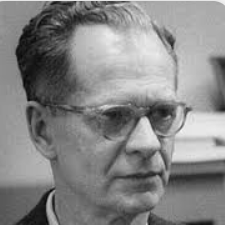
Man's power appears to have increased out of all proportion to his wisdom. He has never been in a better position to build a healthy, happy, and productive world; yet things have perhaps never seemed so black.
▼
Source
source
Science and Human Behavior

2 months 2 weeks ago
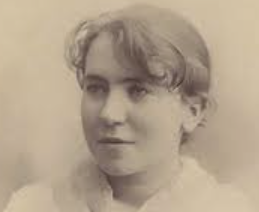
Throughout all organic nature there is at work a modifying influence of the kind... as the cause, these specific differences: an influence which, though slow in its action, does, in time, if the circumstances demand it, produce marked changes-an influence, which to all appearance, would produce in the millions of years, and under the great varieties of condition which geological records imply, any amount of change.
2 months 3 days ago
Station, power, wealth-how inadequate they have proved! How useless and insecure!
4 months 3 days ago
Logic has borrowed, perhaps, the rules of geometry, without comprehending their force... it does not thence follow that they have entered into the spirit of geometry, and I should be greatly averse... to placing them on a level with that science that teaches the true method of directing reason.
3 months 2 days ago
Order thyself so, that thy Soul may always be in good estate; whatsoever become of thy body.
2 months 1 week ago
I would say that teleology is theology, and that God is not a "because," but rather an "in order to."
CivilSimian.com created by AxiomaticPanic, CivilSimian, Kalokagathia