

1 month 6 days ago
Anyone can hold the helm when the sea is calm.
▼
Source
source
Maxim 358

2 months 1 day ago
It is not for you to know the times or the seasons, which the Father hath put in his own power. But ye shall receive power, after that the Holy Ghost is come upon you: and ye shall be witnesses unto me both in Jerusalem, and in all Judaea, and in Samaria, and unto the uttermost part of the earth.
▼
Source
source
1:7-8 (KJV)

3 months 2 weeks ago
For where God built a church, there the Devil would also build a chapel...Thus is the Devil ever God's ape.
▼
Source
source
67. Compare "Where God hath a temple, the Devil will have a chapel", Robert Burton, Anatomy of Melancholy, part III, section 4, member 1, subsection 1

3 months 1 week ago
Assembled in a crowd, people lose their powers of reasoning and their capacity for moral choice.
▼
Source
source
Chapter 5 (p. 42)
3 weeks 3 days ago
I do not advocate burning your ship to get rid of the cockroaches.
▼
Source
source
Said in reference to those who wished to abolish all religious teaching, rather than freeing state education from Church controls, in Critiques and Addresses (1873) p. 90
3 months 2 weeks ago
Now I say this to keep the conscience free from mischievous laws and fictitious sins, and not because I would defend images. Nor would I condemn those who have destroyed them, especially those who destroy divine and idolatrous images. But images for memorial and witness, such as crucifixes and images of saints, are to be tolerated.
▼
Source
source
p. 91
2 months 6 days ago
If there is a devil in human history, that devil is the principle of command. It alone, sustained by the ignorance and stupidity of the masses, without which it could not exist, is the source of all the catastrophes, all the crimes, and all the infamies of history.
▼
Source
source
On the Program of the Alliance (1871), in Bakunin on Anarchy (1971), translated and edited by Sam Dolgoff Variant translation: If there is a devil in history, it is the power principle.
3 months 4 days ago
A philosopher is a man who has to cure many intellectual diseases in himself before he can arrive at the notions of common sense.
▼
Source
source
p. 44e
2 months 1 day ago
Suppose ye that I am come to give peace on earth? I tell you, Nay; but rather division: For from henceforth there shall be five in one house divided, three against two, and two against three. The father shall be divided against the son, and the son against the father; the mother against the daughter, and the daughter against the mother; the mother in law against her daughter in law, and the daughter in law against her mother in law. And he said also to the people, When ye see a cloud rise out of the west, straightway ye say, There cometh a shower; and so it is. And when ye see the south wind blow, ye say, There will be heat; and it cometh to pass. Ye hypocrites, ye can discern the face of the sky and of the earth; but how is it that ye do not discern this time? Yea, and why even of yourselves judge ye not what is right?
▼
Source
source
12:51-57 (KJV) Variant translation of 12:57: Why do you not judge for yourselves what is right?
1 month 6 days ago
You should hammer your iron when it is glowing hot.
▼
Source
source
Maxim 262

3 months 1 week ago
Nature has pointed out a mixed kind of life as most suitable to the human race, and secretly admonished them to allow none of these biases to draw too much, so as to incapacitate them for other occupations and entertainments. Indulge your passion for science, says she, but let your science be human, and such as may have a direct reference to action and society. Abstruse thought and profound researches I prohibit, and will severely punish, by the pensive melancholy which they introduce, by the endless uncertainty in which they involve you, and by the cold reception which your pretended discoveries shall meet with, when communicated. Be a philosopher; but, amidst all your philosophy, be still a man.
▼
Source
source
Section 1 : Of The Different Species of Philosophy

3 months 1 week ago
...wickedness, when you examine it, turns out to be the pursuit of some good in the wrong way. You can be good for the mere sake of goodness: you cannot be bad for the mere sake of badness. You can do a kind action when you are not feeling kind and when it gives you no pleasure, simply because kindness is right; but no one ever did a cruel action simply because cruelty is wrong - only because cruelty was pleasant or useful to him. in other words badness cannot succeed even in being bad in the same way in which goodness is good. Goodness is, so to speak, itself: badness is only spoiled goodness.
▼
Source
source
Book II, Chapter 2, "The Invasion"

3 months 2 weeks ago
In this present that God has made us, there is nothing unworthy our care; we stand accountable for it even to a hair; and is it not a commission to man, to conduct man according to his condition; 'tis express, plain, and the very principal one, and the Creator has seriously and strictly prescribed it to us. Authority has power only to work in regard to matters of common judgment, and is of more weight in a foreign language; therefore let us again charge at it in this place.
▼
Source
source
Ch. 13
3 months 3 weeks ago
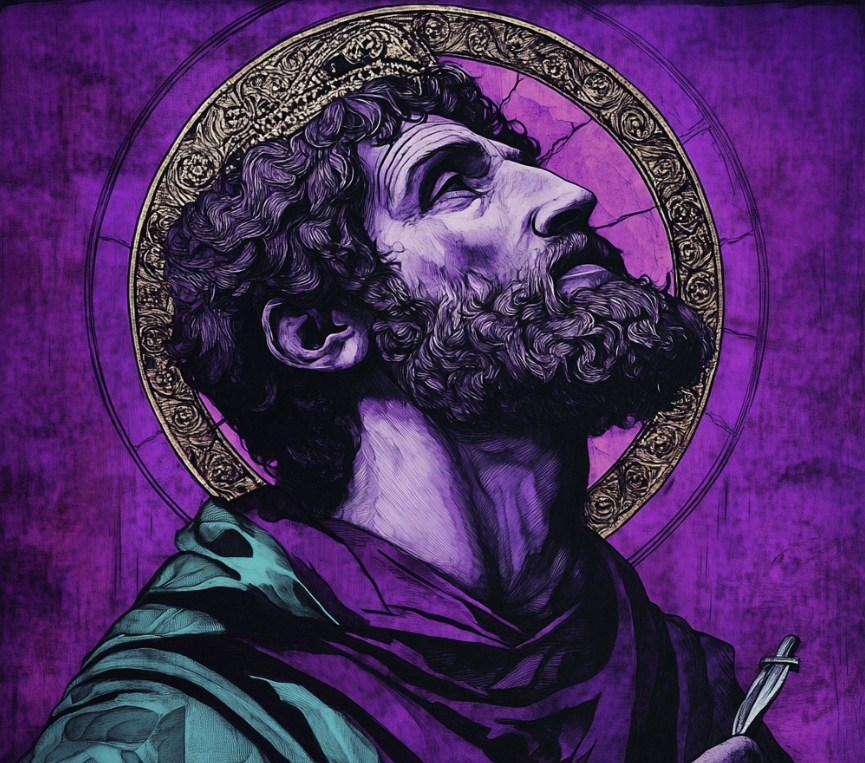
Now, justification in this life is given to us according to these three things: first by the laver of regeneration by which all sins are forgiven; then, by a struggle with the faults from whose guilt we have been absolved; the third, when our prayer is heard, in which we say: Forgive us our debts, because however bravely we fight against our faults, we are men; but the grace of God so aids as we fight in this corruptible body that there is reason for His hearing us as we ask forgiveness.
▼
Source
source
Against Julian, Book II, ch. 8, 22. In The Fathers of the Church, Matthew A. Schumacher, tr., 1957, ISBN 0813214009 ISBN 9780813214009 pp. 83-84.

3 months 1 week ago
Association, applied to land, shares the economic advantage of large-scale landed property, and first brings to realization the original tendency inherent in land-division, namely, equality. In the same way association also re-establishes, now on a rational basis, no longer mediated by serfdom, overlordship and the silly mysticism of property, the intimate ties of man with the earth, since the earth ceases to be an object of huckstering, and through free labour and free enjoyment becomes once more a true personal property of man.
▼
Source
source
Rent of Land, p. 65.
4 months 1 week ago
Since... nature is a principle of motion and mutation... it is necessary that we should not be ignorant of what motion is... But motion appears to belong to things continuous; and the infinite first presents itself to the view in that which is continuous. ...Frequently ...those who define the continuous, employ the nature or the infinite, as if that which is divisible to infinity is continuous.
3 months 3 weeks ago
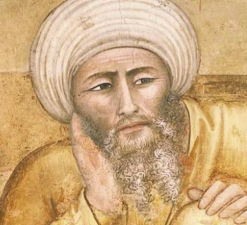
If we admit the existence of the prophetic mission, by putting the idea of possibility, which is in fact ignorance, in place of certainty, and make miracles a proof of the truth of man who claims to be a prophet it becomes necessary that they should not be used by a person, who says that they can be performed by others than prophets, as the Mutakallimun do.
4 months 5 days ago
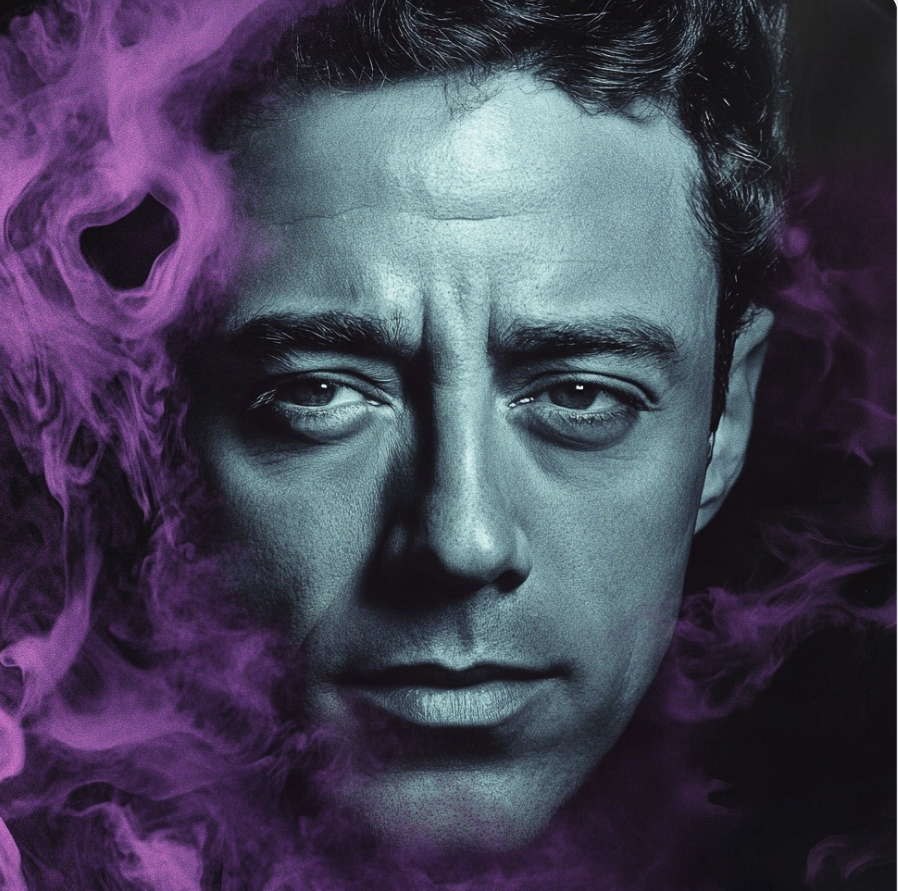
Ironic philosophies produce passionate works. Any thought that abandons unity glorifies diversity! And diversity is the home of art. The only thought to liberate the mind is that which leaves it alone, certain of its limits and of its impending end. No doctrine tempts it. It awaits the ripening of the work and of life.
2 weeks 3 days ago
Today, empathetic intelligence entails sharing the sorrows of other sentient beings. In our posthuman future, will empathy consist entirely in sharing each other's joys?
▼
Source
source
"What Is Empathetic Superintelligence?" presentation, 29 Jan. 2011


1 day ago
I have found a paper of mine among some others in which I call architecture 'petrified music.' Really there is something in this; the tone of mind produced by architecture approaches the effect of music.
▼
Source
source
Conversations with Eckermann (23 March 1829) - Often quoted as "Architecture is frozen music."
2 months 1 day ago
Everyone who has left houses or brothers or sisters or father or mother or children or fields for my sake will receive a hundred times as much and will inherit eternal life.
▼
Source
source
19:29
1 month 3 weeks ago
The aim of science is to seek the simplest explanations of complex facts. We are apt to fall into the error of thinking that the facts are simple because simplicity is the goal of our quest. The guiding motto in the life of every natural philosopher should be, "Seek simplicity and distrust it."
▼
Source
source
The Concept of Nature (1919), Chapter VII, p.143.

2 months 4 days ago
I define a Sign as anything which is so determined by something else, called its Object, and so determines an effect upon a person, which effect I call its Interpretant, that the latter is thereby mediately determined by the former.
▼
Source
source
Letter to Victoria, Lady Welby (1908) SS 80-81
2 months 1 day ago
“What man among you with 100 sheep, on losing one of them, will not leave the 99 behind in the wilderness and go after the lost one until he finds it? And when he has found it, he puts it on his shoulders and rejoices. And when he gets home, he calls his friends and his neighbors together, saying to them, ‘Rejoice with me, for I have found my sheep that was lost.' I tell you that in the same way, there will be more joy in heaven over one sinner who repents than over 99 righteous ones who have no need of repentance.
▼
Source
source
Luke 15: 4-7

3 months 1 week ago
The fundamental cause of the trouble is that in the modern world the stupid are cocksure while the intelligent are full of doubt.
3 months 1 week ago
Men who are unhappy, like men who sleep badly, are always proud of the fact.
1 month 6 days ago
What happens to one man may happen to all.
▼
Source
source
Maxim 171

1 month 3 weeks ago
At the bottom of the heart of every human being, from earliest infancy until the tomb, there is something that goes on indomitably expecting, in the teeth of all experience of crimes committed, suffered, and witnessed, that good and not evil will be done to him. It is this above all that is sacred in every human being.The good is the only source of the sacred. There is nothing sacred except the good and what pertains to it.
▼
Source
source
p. 51
2 months 6 days ago
Sleep is for the inhabitants of Planets only. In another time, Man will sleep and wake continually at once. The greater part of our Body, of our Humanity itself, yet sleeps a deep sleep.
1 day ago
As for one-party rule, it was questioned neither by the Left Opposition nor by the Right [wing of the Communist party]. All were prisoners of their own doctrine and their own past: all had worked with a will to create the apparatus of violence that crushed them. Bukharin's hopeless attempt to form a league with Kamenev was no more than a pitiful epilogue to his career. In November 1929 the deviationists performed a public act of penance, but even this did not save them. Stalin's victory was complete; the collapse of the Bukharinite opposition meant the triumph of autocracy in the party and in the country. In December 1929 Stalin's fiftieth birthday was celebrated as a major historical event, and from this point we may date the "cult of personality". Trotsky's prophecy of 1903 had come true: party rule had become Central Committee rule, and this in turn had becorne the personal tyranny of a dictator.
▼
Source
source
(pp. 42-3)
1 month 4 weeks ago
When even the dictators of today appeal to reason, they mean that they possess the most tanks. They were rational enough to build them; others should be rational enough to yield to them.
▼
Source
source
p. 28.
3 months 1 week ago
Hypothetical liberty is allowed to everyone who is not a prisoner and in chains
▼
Source
source
§ 8.23

3 months 1 week ago
Whatever is known to us by consciousness, is known beyond possibility of question. What one sees or feels, whether bodily or mentally, one cannot but be sure that one sees or feels. No science is required for the purpose of establishing such truths; no rules of art can render our knowledge of them more certain than it is in itself. There is no logic for this portion of our knowledge.
▼
Source
source
p. 4
1 month 4 weeks ago
The metaphor is perhaps one of man's most fruitful potentialities. Its efficacy verges on magic, and it seems a tool for creation which God forgot inside one of His creatures when He made him. All our other faculties keep us within the realm of the real, of what is already there. The most we can do is to combine things or to break them up. The metaphor alone furnishes an escape; between the real things, it lets emerge imaginary reefs, a crop of floating islands. A strange thing, indeed, the existence in man of this mental activity which substitutes one thing for another - from an urge not so much to get at the first as to get rid of the second.
▼
Source
source
"Taboo and Metaphor"

2 months 1 day ago
Culture is on the horns of this dilemma: if profound and noble, it must remain rare, if common, it must become mean.
▼
Source
source
Ch. IV: The Aristocratic Ideal
3 months 4 days ago
Reading the Socratic dialogues one has the feeling: what a frightful waste of time! What's the point of these arguments that prove nothing and clarify nothing?
▼
Source
source
p. 14e
3 months 3 weeks ago
This right which you have, is not founded any more than his upon any quality or any merit in yourself which renders you worthy of it. Your soul and your body are, of themselves, indifferent to the state of boatman or that of duke; and there is no natural bond that attaches them to one condition rather than to another.
4 months 5 days ago
Whatever we may do, excess will always keep its place in the heart of man, in the place where solitude is found. We all carry within us our places of exile, our crimes and our ravages. But our task is not to unleash them on the world; it is to fight them in ourselves and in others.

1 month 3 weeks ago
The Diary of Vaslav Nijinjsky reaches a limit of sincerity beyond any of the documents that we have referred to on this study. There are other modern works that express the same sense that civilized life is a form of living death; notably the poetry of T. S. Eliot and the novels of Franz Kafka; but there is an element of prophetic denunciation in both, the attitude of healthy men rebuking their sick neighbors. We possess no other record of the Outsider's problems that was written by a man about to be defeated and permanently smashed by those problems.
▼
Source
source
p. 115
1 month 3 weeks ago
Man is as much a slave to his immediate surroundings now as he was when he lived in tree-huts. Give him the highest, the most exciting thoughts about man's place in the universe, the meaning of history; they can all be snuffed out in a moment if he wants his dinner, or feels irritated by a child squalling on a bus. He is bound by pettiness.
▼
Source
source
Chapter Two, World Without Values
3 months 3 weeks ago
All the excesses, all the violence, and all the vanity of great men, come from the fact that they know not what they are: it being difficult for those who regard themselves at heart as equal with all men... For this it is necessary for one to forget himself, and to believe that he has some real excellence above them, in which consists this illusion that I am endeavoring to discover to you.

2 months 4 weeks ago
Teach him what has been said in the past; then he will set a good example to the children of the magistrates, and judgement and all exactitude shall enter into him. Speak to him, for there is none born wise.
▼
Source
source
Introduction.
3 months 1 week ago
The directing motive, the end and aim of capitalist production, is to extract the greatest possible amount of surplus value, and consequently to exploit labor-power to the greatest possible extent.
▼
Source
source
Vol. I, Ch. 13, pg. 363.
2 months 6 days ago
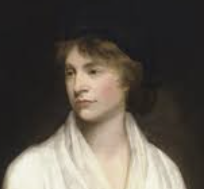
In the present state of society it appears necessary to go back to first principles in search of the most simple truths, and to dispute with some prevailing prejudice every inch of ground. To clear my way, I must be allowed to ask some plain questions, and the answers will probably appear as unequivocal as the axioms on which reasoning is built; though, when entangled with various motives of action, they are formally contradicted either by the words or conduct of men.
▼
Source
source
Ch. 1, opening

1 month 6 days ago
The present is always invisible because it's environmental. No environment is perceptible, simply because it saturates the whole field of attention.
▼
Source
source
Mademoiselle: the magazine for the smart young woman, Volume 64, 1966, p. 114
1 month 3 weeks ago
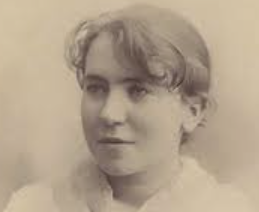
Our institutions and conditions rest upon deep-seated ideas. To change those conditions and at the same time leave the underlying ideas and values intact means only a superficial transformation, one that cannot be permanent or bring real betterment. It is a change of form only, not of substance, as so tragically proven by Russia.

2 months 2 weeks ago
Heroic love is the property of those superior natures who are called insane not because they do not know, but because they over-know.
▼
Source
source
As quoted in The Tragic Sense of Life (1913), by Miguel de Unamuno, as translated by J. E. Crawford
2 weeks 1 day ago
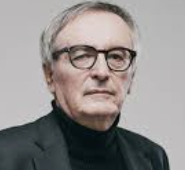
The whole world is in some ways better than it's ever been in the past. And, indeed, I think for many people the meaning of their lives really depends on that belief. If you strip out that belief in progress, if you start thinking of the world in the way in which the ancient pre-Christian Europeans did, or the Buddhists and the Hindus or the Taoists of China do, many people think that's a kind of despair. I don't know how many times I've been told "If I thought that, John, I wouldn't get up in the morning" and "If I agreed with you, John, that history had no pattern of that kind, I wouldn't get up in the morning." I said, "Well, stay in bed a bit longer, you might find a better reason for getting up."
▼
Source
source
Quoted in John Gray at the Writers' Festival, part 1," The Philosopher's Zone, a discussion with Alan Saunders on ABC Radio National
CivilSimian.com created by AxiomaticPanic, CivilSimian, Kalokagathia