
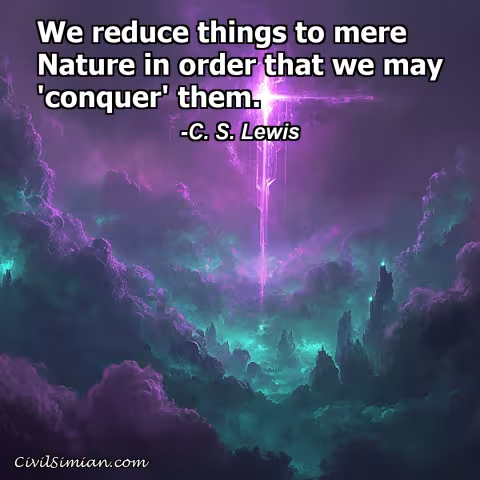
...or justify inhumane treatment, human over human, because animals do it...


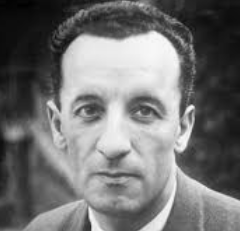
By becoming the pure subject who knows the world objectively, man ultimately realizes that absolute consciousness with respect to which the body and individual existence are no longer anything but objects; death is deprived of meaning. Reduced to the status of object of consciousness, the body could not be conceived as an intermediary between "things" and the consciousness which knows them.

There is no good father who would want to resemble our Heavenly Father.

The selfish gene theory is Darwin's theory, expressed in a way that Darwin did not choose but whose aptness, I should like to think, he would instantly have recognized and delighted in. It is in fact a logical outgrowth of orthodox neo-Darwinism, but expressed as a novel image. Rather than focus on the individual organism, it takes a gene's eye view of nature. It is a different way of seeing, not a different theory.

Because people have no thoughts to deal in, they deal cards, and try and win one another's money. Idiots!

If production be capitalistic in form, so, too, will be reproduction.
Women will be no longer made the slaves of, or dependent upon men ... They will be equal in education, rights, privileges and personal liberty.

As the mathematics are now understood, each branch - or, if you please, each problem, - is but the study of the relations of a collection of connected objects, without parts, without any distinctive characters, except their names or designating letters. These objects are commonly called points; but to remove all notion of space relations, it may be better to name them monads. The relations between these points are mere complications of two different kinds of elementary relations, which may be termed immediate connection and immediate non-connection. All the monads except as serve as intermediaries for the connections have distinctive designations.
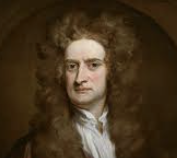
The best and safest method of philosophizing seems to be, first to enquire diligently into the properties of things, and to establish these properties by experiment, and then to proceed more slowly to hypothesis for the explanation of them. For hypotheses should be employed only in explaining the properties of things, but not assumed in determining them, unless so far as they may furnish experiments.

More than a century ago, in 1804, in Letter XC of that series that constitutes the immense monody of his Obermann, Sénancour wrote the words which I have put at the head of this chapter - and of all the spiritual descendants of the patriarchal Rousseau, Sénancour was the most profound and intense; of all the men of heart and feeling that France has produced, not excluding Pascal, he was the most tragic. "Man is perishable. That may be; but let us perish resisting, and if it is nothingness that awaits us, do not let us so act that it shall be a just fate." Change this sentence from it negative to the positive form - "And if it is nothingness that awaits us, let us so act that it shall be an unjust fate" - and you get the firmest basis of action for the man who cannot or will not be a dogmatist.
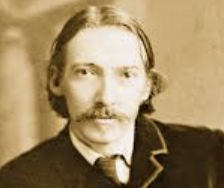
Though the coming of the day is still the most inspiriting, yet day's departure, also, and the return of night refresh, renew, and quiet us; and in the pastures of the dusk we stand, like cattle, exulting in the absence of the load.

Lightly men talk of saying what they mean. Often when he was teaching me to write in Greek the Fox would say, "Child, to say the very thing you really mean, the whole of it, nothing more or less or other than what you really mean; that's the whole art and joy of words." A glib saying. When the time comes to you at which you will be forced at last to utter the speech which has lain at the center of your soul for years, which you have, all that time, idiot-like, been saying over and over, you'll not talk about joy of words. I saw well why the gods do not speak to us openly, nor let us answer. Till that word can be dug out of us, why should they hear the babble that we think we mean? How can they meet us face to face till we have faces?

As for my own business, even that kind of surveying which I could do with most satisfaction my employers do not want. They would prefer that I should do my work coarsely and not too well, ay, not well enough. When I observe that there are different ways of surveying, my employer commonly asks which will give him the most land, not which is most correct.

We can be knowledgeable with other men's knowledge, but we cannot be wise with other men's wisdom.
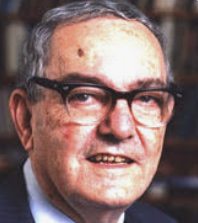
The first consequence of the principle of bounded rationality is that the intended rationality of an actor requires him to construct a simplified model of the real situation in order to deal with it. He behaves rationally with respect to this model, and such behavior is not even approximately optimal with respect to the real world. To predict his behavior we must understand the way in which this simplified model is constructed, and its construction will certainly be related to his psychological properties as a perceiving, thinking, and learning animal.
I would say that teleology is theology, and that God is not a "because," but rather an "in order to."
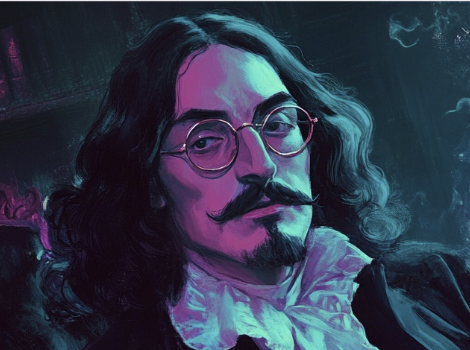
I think, therefore I am.
Through the emancipation of private property from the community, the State has become a separate entity, beside and outside civil society; but is it nothing more than the form of organization which the bourgeois necessarily adopt both for internal and external purposes, for the mutual guarantee of their property and interests.

Criticism is a misconception: we must read not to understand others but to understand ourselves.

A moral point of view too often serves as a substitute for understanding in technological matters.
There is the name and the thing: the name is a voice which denotes and signifies the thing; the name is no part of the thing, nor of the substance; 'tis a foreign piece joined to the thing, and outside it. God, who is all fulness in Himself and the height of all perfection, cannot augment or add anything to Himself within; but His name may be augmented and increased by the blessing and praise we attribute to His exterior works: which praise, seeing we cannot incorporate it in Him, forasmuch as He can have no accession of good, we attribute to His name, which is the part out of Him that is nearest to us. Thus is it that to God alone glory and honour appertain; and there is nothing so remote from reason as that we should go in quest of it for ourselves; for, being indigent and necessitous within, our essence being imperfect, and having continual need of amelioration, 'tis to that we ought to employ all our endeavour.

A witty saying proves nothing.

In reading Jung's account of his cases, it is impossible not to be aware that his success was due partly to an element of ruthlessness; he was dominated by curiosity rather than compassion.

The university, in a society ruled by public opinion, was to have been an island of intellectual freedom where all views were investigated without restriction. ... But by consenting to play an active or "positive," a participatory role in society, the university has become inundated and saturated with the backflow of society's "problems." Preoccupied with questions of Health, Sex, Race, War, academics make their reputations and their fortunes. ... Any proposed reforms of liberal education which might bring the university into conflict with the whole of the U.S.A. are unthinkable. Increasingly, the people "inside" are identical in their appetites and motives with the people "outside" the university.
We define only out of despair, we must have a formula... to give a facade to the void.
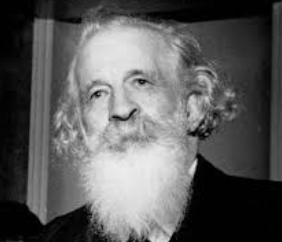
Poetry is one of the destinies of speech.... One would say that the poetic image, in its newness, opens a future to language.

England and France, the two most civilized nations on earth, who are in contrast to each other because of their different characters, are, perhaps chiefly for that reason, in constant feud with one another. Also, England and France, because of their inborn characters, of which the acquired and artificial character is only the result, are probably the only nations who can be assumed to have a particular and, as long as both national characters are not blended by the force of war, unalterable characteristics. That French has become the universal language of conversation, especially in the feminine world, and that English is the most widely used language of commerce among tradesmen, probably reflects the difference in their continental and insular geographic situation.
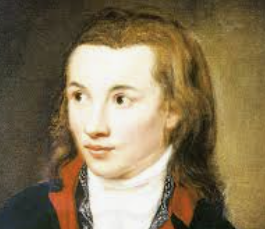
There are ideal series of events which run parallel with the real ones. They rarely coincide. Men and circumstances generally modify the ideal train of events, so that it seems imperfect, and its consequences are equally imperfect. Thus with the Reformation; instead of Protestantism came Lutheranism.
Today the theory of evolution is about as much open to doubt as the theory that the earth goes round the sun, but the full implications of Darwin's revolution have yet to be widely realized.

There is no more consensus on what justice means than there is on the character of the good. If anything, there is less. Among the virtues, justice is one of the most shaped by convention. For that reason it is among the most changeable.
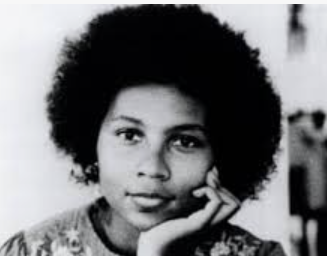
The process begins with the individual woman's acceptance that American women, without exception, are socialized to be racist, classist and sexist, in varying degrees, and that labeling ourselves feminists does not change the fact that we must consciously work to rid ourselves of the legacy of negative socialization.

For those who want 'to change life", 'to reinvent love,' God is nothing but a hindrance.
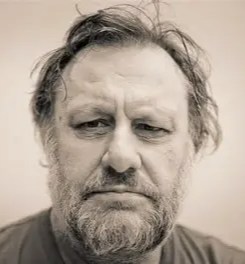
This is probably the fundamental dimension of 'ideology': ideology is not simply a 'false consciousness', an illusory representation of reality, it is rather this reality itself which is already to be conceived as 'ideological' - 'ideological' is a social reality whose very existence implies the non-knowledge of its participants as to its essence -that is, the social effectivity, the very reproduction of which implies that the individuals 'do not know what they are doing'. 'Ideological is not the false consciousness of a (social) being but this being itself in so far as it is supported by "false consciousness"'. Thus we have finally reached the dimension of the symptom, because one of its possible definitions would also be 'a formation whose very consistency implies a certain non-knowledge on the part of the subject': the subject can 'enjoy his symptom' only in so far as its logic escapes him - the measure of the success of its interpretation is precisely its dissolution.
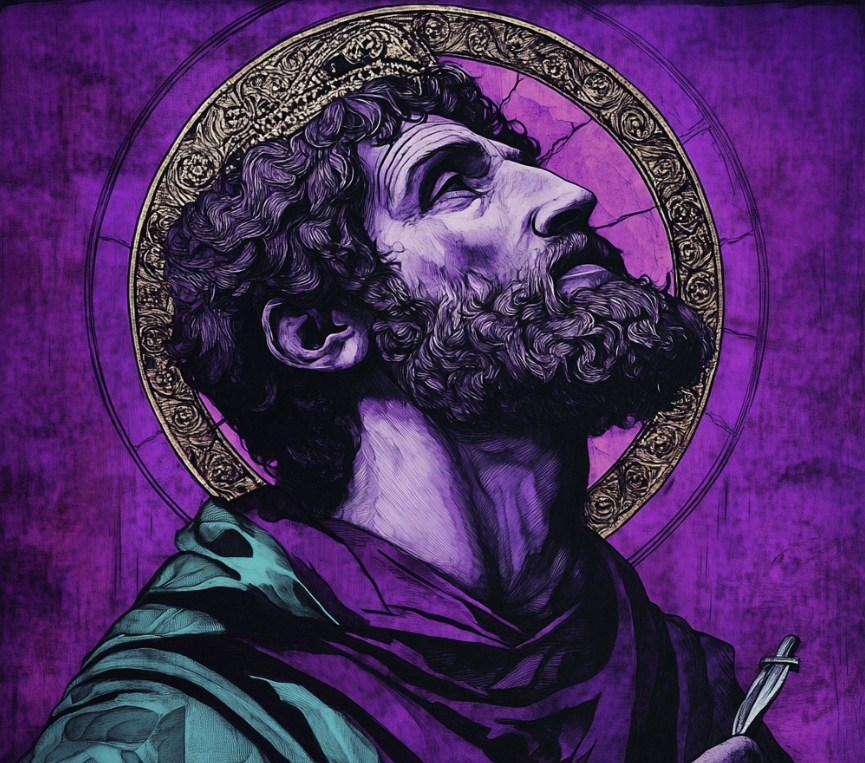
The true servants of God are not solicitous that He should order them to do what they desire to do, but that they may desire to do what He orders them to do.
For well-being and health, again, the homestead should be airy in summer, and sunny in winter. A homestead possessing these qualities would be longer than it is deep; and its main front would face the south.

We think it also necessary to express our astonishment that a government, desirous of being called free, should prefer connection with the most despotic and arbitrary powers in Europe.
To a person uninstructed in natural history, his country or sea-side stroll is a walk through a gallery filled with wonderful works of art, nine-tenths of which have their faces turned to the wall.

The assertion that art may be good art and at the same time incomprehensible to a great number of people is extremely unjust, and its consequences are ruinous to art itself...it is the same as saying some kind of food is good but most people can't eat it.
Love is a contradiction if there is no God.
First, [the bourgeoisie] must recognize his own impotence, his incapacity to believe in a sense of history, even if his reason leans towards the truth, the passions and prejudices produced by his class position, prevent him from accepting it. So he should not exert himself with proving the truth of the historical mission of the working class; rather, he should learn to subdue his petty bourgeois passions and prejudices. He should take lessons from those who were once as important as he is now but are ready to risk all for the revolutionary Cause.
In the most secret chamber of the spirit of him who believes himself convinced that death puts an end to his personal consciousness, his memory, for ever, and all unknown to him perhaps, there lurks a shadow, a vague shadow, a shadow of uncertainty, and while he says within himself, "Well, let us live this life that passes away, for there is no other!" the silence of this secret chamber speaks to him and murmurs, "Who knows!... " These voices are like the humming of a mosquito when the south-west wind roars through the trees in the wood; we cannot distinguish this faint humming, yet nevertheless, merged in the clamor of the storm, it reaches the ear.
It is very strange that men should deny a creator and yet attribute to themselves the power of creating eels.

I've got a one-dimensional mind.
We need to augment and amend the existing body of classical and neoclassical economic theory to achieve a more realistic picture of economic process.

The need of black conservatives to gain the respect of their white peers deeply shapes certain elements of their conservatism. In this regard, they simply want what most people want, to be judged by the quality of their skills, not by the color of their skin. But the black conservatives overlook the fact that affirmative action policies were political responses to the pervasive refusal of most white Americans to judge black Americans on that basis.
In forming a store of good works thou shouldst be diligent, so that it may come to thy assistance among the spirits.

An agreeable companion on a journey is as good as a carriage.

It is better to be a human being dissatisfied than a pig satisfied; better to be Socrates dissatisfied than a fool satisfied. And if the fool, or the pig, are of a different opinion, it is because they only know their own side of the question. The other party to the comparison knows both sides.
CivilSimian.com created by AxiomaticPanic, CivilSimian, Kalokagathia

