


3 days ago
Wherever an altar is found, there civilization exists.
▼
Source
source
Original text:Partout où vous verrez un autel, là se trouve la civilisation. "Second Dialogue," p. 44
2 weeks 6 days ago
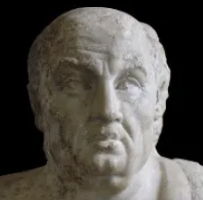
Two elements must therefore be rooted out once for all-the fear of future suffering, and the recollection of past suffering; since the latter no longer concerns me, and the former concerns me not yet.

3 months 1 week ago
When shall we see poets born? After a time of disasters and great misfortunes, when harrowed nations begin to breathe again. And then, shaken by the terror of such spectacles, imaginations will paint things entirely strange to those who have not witnessed them.
3 months 2 days ago
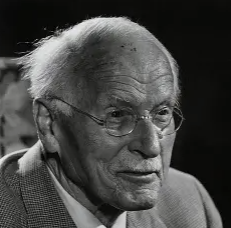
The dynamic principle of fantasy is play, a characteristic also of the child, and as such it appears inconsistent with the principle of serious work. But without this playing with fantasy no creative work has ever yet come to birth. The debt we owe to the play of imagination is incalculable. It is therefore short-sighted to treat fantasy, on account of its risky or unacceptable nature, as a thing of little worth.
▼
Source
source
Ch. 1, p. 82
4 months 4 days ago
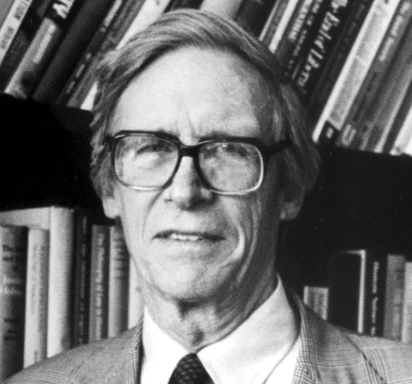
Let us now consider whether justice requires the toleration of the intolerant, and if so under what conditions. There are a variety of situations in which this question arises. Some political parties in democratic states hold doctrines that commit them to suppress the constitutional liberties whenever they have the power. Again, there are those who reject intellectual freedom but who nevertheless hold positions in the university. It may appear that toleration in these cases is inconsistent with the principles of justice, or at any rate not required by them.
▼
Source
source
p. 216

2 months 4 weeks ago
Adam came from great power and great wealth, but he was not worthy of you. For had he been worthy, [he would] not [have tasted] death.
4 months 6 days ago
I do not know but it is too much to read one newspaper a week. I have tried it recently, and for so long it seems to me that I have not dwelt in my native region. The sun, the clouds, the snow, the trees say not so much to me. You cannot serve two masters. It requires more than a day's devotion to know and to possess the wealth of a day.
▼
Source
source
p. 491
6 days ago
Our profound human duty is not to interpret or to cast light on the rhythm of God's arch, but to adjust, as much as we can, the rhythm of our small and fleeting life to his. Only thus may we mortals succeed in achieving something immortal, because then we collaborate with One who is Deathless. Only thus may we conquer mortal sin, the concentration on details, the narrowness of our brains; only thus may we transubstantiate into freedom the slavery of earthen matter given us to mold.
3 days ago
I hate relativism. I hate relativism more than I hate anything else, excepting, maybe, fiberglass powerboats... surely, surely, no one but a relativist would drive a fiberglass powerboat.
▼
Source
source
Précis of The Modularity of Mind, 1985.

3 months 6 days ago
The formula 'two plus two equals five' is not without its attractions.
▼
Source
source
Part 1, Chapter 9 (tr. ?)

3 months 3 days ago
We reason deeply, when we forcibly feel.
▼
Source
source
Letter 19
3 months 2 days ago
Modern man may assert that he can dispense with them, and he may bolster his opinion by insisting that there is no scientific evidence of their truth. But since we are dealing with invisible and unknowable things (for God is beyond human understanding, and there is no mean of proving immortality), why should we bother with evidence?
▼
Source
source
p. 75-76
2 months 2 weeks ago
The ideas of Freud were popularized by people who only imperfectly understood them, who were incapable of the great effort required to grasp them in their relationship to larger truths, and who therefore assigned to them a prominence out of all proportion to their true importance.
▼
Source
source
Ch. 28, June 3, 1943.
2 months 2 weeks ago
If there were no limits to human rationality administrative theory would be barren. It would consist of the single precept: Always select that alternative, among those available, which will lead to the most complete achievement of your goals.
▼
Source
source
Simon (1945, p. 240); As cited in:

4 months 4 days ago
The true Enlightenment thinker, the true rationalist, never wants to talk anyone into anything. No, he does not even want to convince; all the time he is aware that he may be wrong. Above all, he values the intellectual independence of others too highly to want to convince them in important matters. He would much rather invite contradiction, preferably in the form of rational and disciplined criticism. He seeks not to convince but to arouse - to challenge others to form free opinions.

2 days ago
The nature of the universe is the nature of things that are. Now, things that are have kinship with things that are from the beginning. Further, this nature is styled Truth; and it is the first cause of all that is true.
▼
Source
source
IX, 1
3 months 1 day ago
The consciousness of a general idea has a certain "unity of the ego" in it, which is identical when it passes from one mind to another. It is, therefore, quite analogous to a person, and indeed, a person is only a particular kind of general idea.
▼
Source
source
Man's Glassy Essence in The Monist, Vol. III, No. 1

4 months 4 days ago
In its flight from death, the craving for permanence clings to the very things sure to be lost in death.
▼
Source
source
p. 17
2 weeks 6 days ago
Now a life of honour includes various kinds of conduct; it may include the chest in which Regulus was confined, or the wound of Cato which was torn open by Cato's own hand, or the exile of Rutilius, or the cup of poison which removed Socrates from gaol to heaven.

4 months 3 weeks ago
What then is time? If no one asks me, I know what it is. If I wish to explain it to him who asks, I do not know.
▼
Source
source
XI, 14
4 weeks 1 day ago
After the publication of my dialogues, I was summoned to Rome by the Congregation of the holy Office, where, being arrived on the 10th of February 1633, I was subjected to the infinite clemency of that tribunal, and of the Sovereign Pontiff, Urban the Eighth; who, notwithstanding, thought me deserving of his esteem.
▼
Source
source
pp. 145-146
3 months 5 days ago
I would rather be a devil in alliance with truth, than an angel in alliance with falsehood.
2 months 3 weeks ago
The characteristic activity of science is not construction, but induction. The more often something has occurred in the past, the more certain that it will in all the future. Knowledge relates solely to what is and to its recurrence. New forms of being, especially those arising from the historical activity of man, lie beyond empiricist theory. Thoughts which are not simply carried over from the prevailing pattern of consciousness, but arise from the aims and resolves of the individual, in short, all historical tendencies that reach beyond what is present and recurrent, do not belong to the domain of science.
▼
Source
source
p. 144.

4 months 1 week ago
One ought to fast, watch, and labor to the extent that such activities are needed to harness the body's desires and longings; however, those who presume that they are justified by works pay no attention to the need for self-discipline but see the works themselves as the way to righteousness. They believe that if they do a great number of impressive works all will be well and righteousness will be the result. Sometimes this is pursued with such zeal that they become mentally unstable and their bodies are sapped of all strength. Such disastrous consequences demonstrate that the belief that we are justified and saved by works without faith is extremely foolish.
▼
Source
source
p. 73
2 weeks 6 days ago
Do you ask me whom I have conquered? Neither the Persians, nor the far-off Medes, nor any warlike race that lies beyond the Dahae; not these, but greed, ambition, and the fear of death that has conquered the conquerors of the world.
2 months 4 weeks ago
They that be whole need not a physician, but they that are sick. But go ye and learn what that meaneth, I will have mercy, and not sacrifice: for I am not come to call the righteous, but sinners to repentance.
▼
Source
source
9:12-13 (KJV)
2 months 4 weeks ago
Hegel's theological discussion repeatedly asks what the true relation is between the individual man and a state that no longer satisfies his capacities but exists rather as an 'estranged' institution from which the active political interest of the citizens has disappeared. Hegel defined this state with almost the same categories as those of eighteenth century liberalism: the state rests on the consent of the individuals, it circumscribes their rights and duties and protects its members from those internal and external dangers that might threaten the perpetuation of the whole.
▼
Source
source
P. 32
2 days ago
Learn to ask of all actions, "Why are they doing that?" Starting with your own.
▼
Source
source
(Hays translation) X, 37

3 months 5 days ago
It is provable both that the historical sequence was, in its main outlines, a necessary one; and that the causes which determined it apply to the child as to the race. ...as the mind of humanity placed in the midst of phenomena and striving to comprehend them has, after endless comparisons, speculations, experiments, and theories, reached its present knowledge of each subject by a specific route; it may rationally be inferred that the relationship between mind and phenomena is such as to prevent this knowledge from being reached by any other route; and that as each child's mind stands in this same relationship to phenomena, they can be accessible to it only through the same route. Hence in deciding upon the right method of education, an inquiry into the method of civilization will help to guide us.

3 months 1 week ago
When an opinion has taken root in a democracy and established itself in the minds of the majority, it afterward persists by itself, needing no effort to maintain it since no one attacks it. Those who at first rejected it as false come in the end to adopt it as accepted, and even those who still at the bottom of their hearts oppose it keep their views to themselves, taking great care to avoid a dangerous and futile contest.
▼
Source
source
Book Three, Chapter XXI.
4 months 6 days ago
The career a young man should choose should be] one that is most consonant with our dignity, one that is based on ideas of whose truth we are wholly convinced, one that offers us largest scope in working for humanity and approaching that general goal towards which each profession offers only one of the means: the goal of perfection ... If he works only for himself he can become a famous scholar, a great sage, an excellent imaginative writer [Dichter], but never a perfected, a truly great man.
▼
Source
source
in Karl Marx and World Literature (1976) by S. S. Prawer, p. 2.

5 months 1 week ago
We are, all of us, growing volcanoes that approach the hour of their eruption; but how near or distant that is, nobody knows not even God.
2 days ago
What is my ruling faculty now to me? and of what nature am I now making it? and for what purpose am I now using it? is it void of understanding? is it loosed and rent asunder from social life? is it melted and mixed with the poor flesh so as to move together with it?
▼
Source
source
X, 24
2 months 4 weeks ago
I am Alpha and Omega, the beginning and the end, the first and the last.
▼
Source
source
Revelation 22:13
2 months 1 week ago
The Marxist critique is only a critique of capital, a critique coming from the heart of the middle and petit bourgeois classes, for which Marxism has served for a century as a latent ideology.... The Marxist seeks a good use of economy. Marxism is therefore only a limited petit bourgeois critique, one more step in the banalization of life toward the "good use" of the social!
▼
Source
source
Canadian Journal of Political and Social Theory 15 (1987) "When Bataille Attacked the Metaphysical Principle of Economy"
3 months 3 weeks ago
If we tried to rely entirely on reason, and pressed it hard, our lives and beliefs would collapse - a form of madness that may actually occur if the inertial force of taking the world and life for granted is somehow lost. If we lose our grip on that, reason will not give it back to us.
▼
Source
source
"The Absurd" (1971), p. 20.
2 months 4 weeks ago
Is it always permissible to speak of the extension of a concept, of a class? And if not, how do we recognize the exceptional cases? Can we always infer from the extension of one concept's coinciding with that of a second, that every object which falls under the first concept also falls under the second?
▼
Source
source
Vol. 2, p. 127. Replying to Bertrand Russell's letter about Russell's Paradox; quoted in The Stanford Encyclopedia of Philosophy
4 weeks ago
When young, one is confident to be able to build palaces for mankind, but when the time comes one has one's hands full just to be able to remove their trash.
▼
Source
source
Letter to Johann Kaspar Lavatar
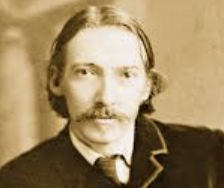
2 months 1 day ago
When things fall out opportunely for the person concerned, he is not apt to be critical about the how or why, his own immediate personal convenience seeming a sufficient reason for the strangest oddities and revolutions in our sublunary things.
▼
Source
source
The Sire de Maletroit's Door.
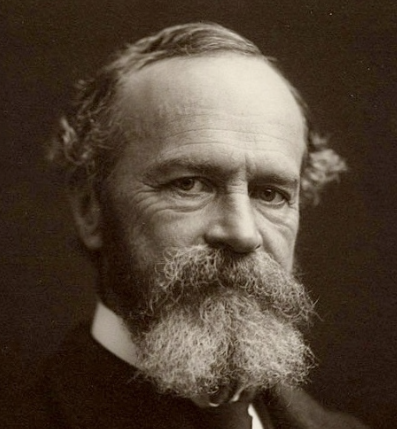
4 months 5 days ago
What interest, zest, or excitement can there be in achieving the right way, unless we are enabled to feel that the wrong way is also a possible and a natural way, - nay, more, a menacing and an imminent way? And what sense can there be in condemning ourselves for taking the wrong way, unless we need have done nothing of the sort, unless the right way was open to us as well? I cannot understand the willingness to act, no matter how we feel, without the belief that acts are really good and bad.
▼
Source
source
The Dilemma of Determinism, 1884
2 days ago
Only to the rational animal is it given to follow voluntarily what happens; but simply to follow is a necessity imposed on all.
▼
Source
source
X, 28
1 month 2 weeks ago
We have been Godlike in our planned breeding of our domesticated plants and animals, but we have been rabbitlike in our unplanned breeding of ourselves.
▼
Source
source
Man and Hunger: The Perspectives of History, entered into the Congressional Record by Senator Ernest Gruening

2 months 3 weeks ago
There is only one thing that can form a bond between men, and that is gratitude...we cannot give someone else greater power over us than we have ourselves.
▼
Source
source
No. 104. (Usbek writing to Ibben)

3 months 1 day ago
Since it is difficult to approve the reasons people invoke, each time we leave one of our 'fellow men', the question which comes to mind is invariably the same: how does he keep from killing himself?
6 days ago
I subdue matter and force it to become my mind's good medium. I rejoice in plants, in animals, in man and in gods, as though they were my children. I feel all the universe nestling about me and following me as though it were my own body.

2 days ago
It seems like those without money are forced to be focused on money. There's no option. But something else is going on. Those who are treated unfairly are forced to focus on ethics, while those who are well off and view life as fair from their perspective SEEM like they are less ethical...all the way up to just straight evil. Ultimately this is a generalization, but, I still think there's something to it.
2 months 3 weeks ago
It is questionable whether there does not exist in man an obscure and blind will to make war; an impulse towards change, towards emergence from the familiarities of everyday life and from the stabilities of well-known conditions - something like a will to death as a will to annihilation and self-sacrifice, a vague enthusiasm for the upbuilding of a new world.
4 months 6 days ago
Each pursues his private interest and only his private interest; and thereby serves the private interests of all, the general interest, without willing it or knowing it. The real point is not that each individual's pursuit of his private interest promotes the totality of private interests, the general interest. One could just as well deduce from this abstract phrase that each individual reciprocally blocks the assertion of the others' interests, so that, instead of a general affirmation, this war of all against all produces a general negation.
▼
Source
source
Notebook I, The Chapter on Money, p. 76.
CivilSimian.com created by AxiomaticPanic, CivilSimian, Kalokagathia