


4 months 1 week ago
Few men have been admired by their own households.
▼
Source
source
Ch. 2
2 days ago
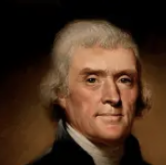
To begin an affair of that kind now, and carry it on so long a time in form, is by no means a proper plan ... whatever assurances I may give her in private of my esteem for her, or whatever assurances I may ask in return from her, depend on it - they must be kept in private. Necessity will oblige me to proceed in a method which is not generally thought fair; that of treating with a ward before obtaining the approbation of her guardian. I say necessity will oblige me to it, because I never can bear to remain in suspense so long a time. If I am to succeed, the sooner I know it, the less uneasiness I shall have to go through. If I am to meet with a disappointment, the sooner I know it, the more of life I shall have to wear it off: and if I do meet with one, I hope in God, and verily believe; it will be the last.
▼
Source
source
Letter to John Page (15 July 1763); published in The Works of Thomas Jefferson
2 months 1 week ago
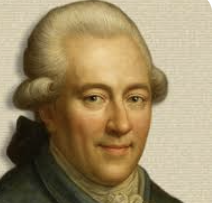
If it is permissible to write plays that are not intended to be seen, I should like to see who can prevent me from writing a book no one can read.
▼
Source
source
F 1

2 months 2 weeks ago
What is so remarkable about Crowley the 'magician' is that he remains Crowley the scientist, and always applies the same probing intellectual curiosity to every field he surveys. This is ultimately the most impressive quality about his mind, and the one that might -- if he had concentrated on developing it to the full -- have brought him the fame that he craved. Crowley's tragedy was that he never concentrated long enough to develop anything to the full.
▼
Source
source
p. 150

5 months ago
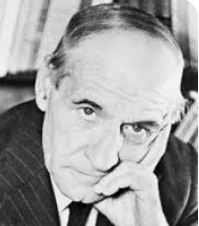
Someone once asked me, "If you had your choice, Dr. Asimov, would it be women or writing?" My answer was, "Well, I can write for twelve hours at a time without getting tired."
2 months 3 weeks ago
This grave dissociation of past and present is the generic fact of our time and the cause of the suspicion, more or less vague, which gives rise to the confusion characteristic of our present-day existence. We feel that we actual men have suddenly been left alone on the earth; that the dead did not die in appearance only but effectively; that they can no longer help us. Any remains of the traditional spirit have evaporated. Models, norms, standards are no use to us. We have to solve our problems without any active collaboration of the past, in full actuality, be they problems of art, science, or politics. The European stands alone, without any living ghosts by his side; like Peter Schlehmil he has lost his shadow. This is what always happens when midday comes.
▼
Source
source
"The Dehumanisation of Art"; Ortega y Gasset later used this passage in The Revolt of the Masses (1929), quoting it in Ch. III: The Height Of The Times
4 months 5 days ago
The death of dogma is the birth of morality.
▼
Source
source
As quoted in Faith Or Fact (1897) by Henry Moorehouse Taber, p. 86

2 months 2 days ago
The whole plan of our order should be based on the idea of preparing men of firmness and virtue bound together by unity of conviction-aiming at the punishment of vice and folly, and patronizing talent and virtue: raising worthy men from the dust and attaching them to our Brotherhood. Only then will our order have the power unobtrusively to bind the hands of the protectors of disorder and to control them without their being aware of it. In a word, we must found a form of government holding universal sway, which should be diffused over the whole world without destroying the bonds of citizenship, and beside which all other governments can continue in their customary course and do everything except what impedes the great aim of our order, which is to obtain for virtue the victory over vice.
▼
Source
source
Book VI, Chapter VII

4 months 1 week ago
Though I certainly deserve no ill treatment from mortals, yet if the insults and repulses I receive were attended with any advantage to them, I would content myself with lamenting in silence my own unmerited indignities and man's injustice.

4 months 6 days ago
If the whole of natural theology, as some people seem to maintain, resolves itself into one simple, though somewhat ambiguous, at least undefined proposition, that the cause or causes of order in the universe probably bear some remote analogy to human intelligence: If this proposition be not capable of extension, variation, or more particular explication: If it affords no inference that affects human life, or can be the source of any action or forbearance: And if the analogy, imperfect as it is, can be carried no farther than to the human intelligence, and cannot be transferred, with any appearance of probability, to the other qualities of the mind; if this really be the case, what can the most inquisitive, contemplative, and religious man do more than give a plain, philosophical assent to the proposition, as often as it occurs, and believe that the arguments on which it is established exceed the objections which lie against it?
▼
Source
source
Philo to Cleanthes, Part XII

4 months 3 days ago
This bird sees the white man come and the Indian withdraw, but it withdraws not. Its untamed voice is still heard above the tinkling of the forge... It remains to remind us of aboriginal nature.
▼
Source
source
March 23, 1856; of the crow
2 months 2 days ago
The compassionate are not rich; therefore, the rich are not compassionate.
▼
Source
source
p. 89

3 months 2 days ago
How often misused words generate misleading thoughts!
▼
Source
source
Ch. 8, Humanity

4 months 1 day ago
Lightly men talk of saying what they mean. Often when he was teaching me to write in Greek the Fox would say, "Child, to say the very thing you really mean, the whole of it, nothing more or less or other than what you really mean; that's the whole art and joy of words." A glib saying. When the time comes to you at which you will be forced at last to utter the speech which has lain at the center of your soul for years, which you have, all that time, idiot-like, been saying over and over, you'll not talk about joy of words. I saw well why the gods do not speak to us openly, nor let us answer. Till that word can be dug out of us, why should they hear the babble that we think we mean? How can they meet us face to face till we have faces?
▼
Source
source
Orual

4 months 6 days ago
Mercantile jealousy is excited, and both inflames, and is itself inflamed, by the violence of national animosity.
▼
Source
source
Chapter III, Part II, p. 534.

4 months 4 weeks ago
No human being, even the most passionately loved and passionately loving, is ever in our possession.

2 months 4 weeks ago
I dream of wanting - and all I want seems to me worthless.
4 weeks ago
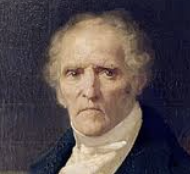
Agricultural association, which in all ages has been deemed impossible, would produce results of unbounded magnificence the rigorous demonstrations, the mathematical calculations by which these results will be verified, will not, however, prevent the picture of the future harmony and happiness which they present from repelling minds habituated to the miseries and wretchedness of our present civilization. The Theory of Social Organization.
▼
Source
source
Harmonian Man: Selected Writings of Charles Fourier, p. 5.
2 months 4 days ago
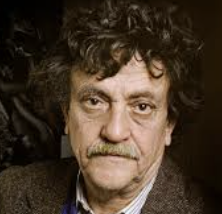
Literature is idiosyncratic arrangements in horizontal lines in only twenty-six symbols, ten arabic numbers, and about eight punctuation marks.
▼
Source
source
Public conversation with Lee Stringer, in Like Shaking Hands With God
8 months 1 week ago
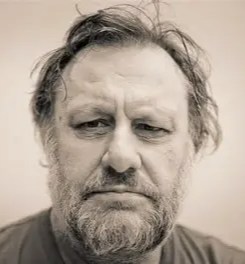
First, [the bourgeoisie] must recognize his own impotence, his incapacity to believe in a sense of history, even if his reason leans towards the truth, the passions and prejudices produced by his class position, prevent him from accepting it. So he should not exert himself with proving the truth of the historical mission of the working class; rather, he should learn to subdue his petty bourgeois passions and prejudices. He should take lessons from those who were once as important as he is now but are ready to risk all for the revolutionary Cause.

4 months 3 days ago
In the name of national security, the Commission's hearings were held in secret, thereby continuing the policy which has marked the entire course of the case. This prompts my second question: If, as we are told, Oswald was the lone assassin, where is the issue of national security? Indeed, precisely the same question must be put here as was posed in France during the Dreyfus case: If the Government is so certain of its case, why has it conducted all its inquiries in the strictest secrecy? "
▼
Source
source
16 Questions on the Assassination" in The Minority of One, ed. M.S. Arnoni (1964-09-06), pp. 6-8

2 weeks 3 days ago
Tis the first art of kings, the power to suffer hate.

2 months 2 weeks ago
The ancient world takes its stand upon the drama of the Universe, the modern world upon the inward drama of the Soul.
▼
Source
source
Ch. 9: "Science and Philosophy", p. 196
3 months 3 weeks ago
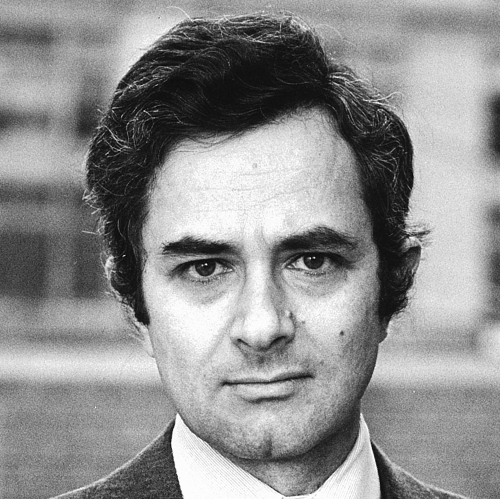
What is more subjective is not necessarily more private. In general it is intersubjectively available. I assume that the intersubjective ideas of experience, of action, and of the self are in some sense public or common property. That is why the problems of mind and body, free will, and personal identity are not just problems about one's own case.
▼
Source
source
"Subjective and Objective" (1979), p. 207.
4 months 3 days ago
Good nature is, of all moral qualities, the one that the world needs most, and good nature is the result of ease and security, not of a life of arduous struggle. Modern methods of production have given us the possibility of ease and security for all; we have chosen, instead, to have overwork for some and starvation for the others. Hitherto we have continued to be as energetic as we were before there were machines; in this we have been foolish, but there is no reason to go on being foolish for ever.
▼
Source
source
Ch. 1: In Praise of Idleness

4 months 4 days ago
Life is a task to be done. It is a fine thing to say defunctus est; it means that the man has done his task.
▼
Source
source
"On the Sufferings of the World"
2 months 2 days ago
What is now happening to the people of the East as of the West is like what happens to every individual when he passes from childhood to adolescence and from youth to manhood. He loses what had hitherto guided his life and lives without direction, not having found a new standard suitable to his age, and so he invents all sorts of occupations, cares, distractions, and stupefactions to divert his attention from the misery and senselessness of his life. Such a condition may last a long time.
▼
Source
source
VI
3 days ago
What is the purpose of this struggle? This is what the wretched self-seeking mind of man is always asking, forgetting that the Great Spirit does not toil within the bounds of human time, place, or casualty. The Great Spirit is superior to these human questionings. It teems with many rich and wandering drives which to our shallow minds seem contradictory; but in the essence of divinity they fraternize and struggle together, faithful comrades-in-arms. The primordial Spirit branches out, overflows, struggles, fails, succeeds, trains itself. It is the Rose of the Winds.
3 months ago
Ah! why do women condescend to receive a degree of attention and respect from strangers different from that reciprocation of civility which the dictates of humanity and the politeness of civilization authorize between man and man? And why do they not discover, when, "in the noon of beauty's power", that they are treated like queens only to be deluded by hollow respect. Confined, then, in cages like the feathered race, they have nothing to do but to plume themselves, and stalk with mock majesty from perch to perch.
▼
Source
source
Ch. 4
1 month 1 week ago
Even if I set out to make a film about a fillet of sole, it would be about me.
▼
Source
source
On the autobiographical nature of his films, in The Atlantic

3 weeks 2 days ago
The English are a dumb people. They can do great acts, but not describe them.
▼
Source
source
Bk. III, ch. 5.
2 days ago
According to the technical language of old writers, a thing and its qualities are described as subject and attributes; and thus a man's faculties and acts are attributes of which he is the subject. The mind is the subject in which ideas inhere. Moreover, the man's faculties and acts are employed upon external objects; and from objects all his sensations arise. Hence the part of a man's knowledge which belongs to his own mind, is subjective: that which flows in upon him from the world external to him, is objective.
▼
Source
source
Part I Of Ideas, Book I Of Ideas in General, Chap. 4 Of the Difference and Opposition of Sensation and Ideas
4 months 1 day ago
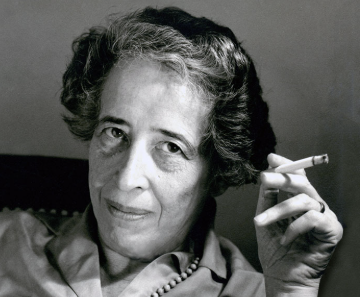
Man cannot be free if he does not know that he is subject to necessity, because his freedom is always won in his never wholly successful attempts to liberate himself from necessity.
▼
Source
source
The Human Condition (1958), part 3, chapter 16

3 months 2 weeks ago
The mathematician speculates the causes of a certain sensible effect, without considering its actual existence; for the contemplation of universals excludes the knowledge of particulars; and he whose intellectual eye is fixed on that which is general and comprehensive, will think but little of that which is sensible and singular.
▼
Source
source
A Dissertation on the Doctrine of Ideas, &c.
3 weeks 5 days ago
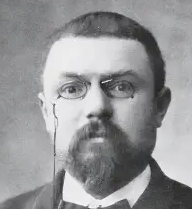
Or... they observe an astronomic phenomenon... an eclipse of the moon, and... suppose... this... is perceived simultaneously from all points of the earth. That is not altogether true, since the propagation of light is not instantaneous; if absolute exactitude were desired, there would be a correction... according to a complicated rule.
3 months 3 weeks ago
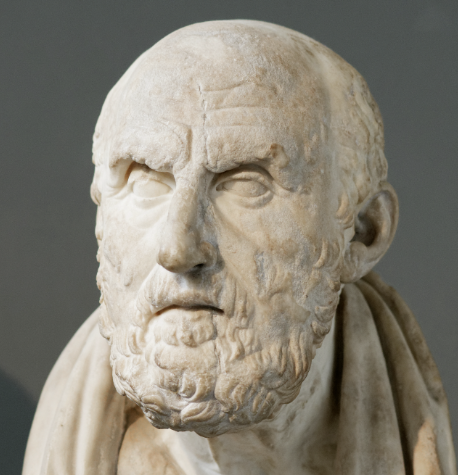
If I had followed the multitude, I should not have studied philosophy.
▼
Source
source
As quoted by Diogenes Laërtius, vii. 182.
5 months ago
Economics is on the side of humanity now.

4 months 2 days ago
What is a weed? A plant whose virtues have yet to be discovered.
▼
Source
source
Fortune of the Republic, 1878
3 months 4 weeks ago
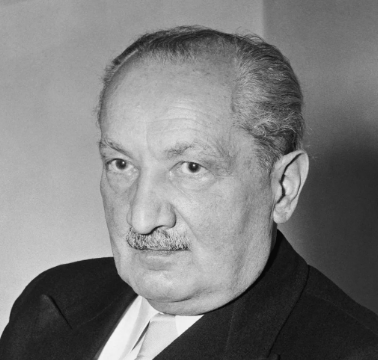
There is no information about the thingness of the thing without knowledge of the kind of truth in which the thing stands. But there is no information about this truth of the thing without knowledge of the thingness of the thing whose truth is in question. Where are we to get a foothold? The ground slips away under us. Perhaps we are already close to falling into the well. At any rate the housemaids are already laughing.
▼
Source
source
p. 27

2 months 3 weeks ago
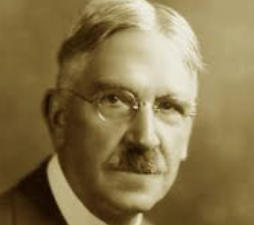
The artist in realizing his own individuality reveals potentialities hitherto unrealized. The revelation is the inspiration of other individuals to make the potentialities real, for it is not sheer revolt against things as they are which stirs human endeavor to its depth, but vision of what might be and is not. Subordination of the artists to any special cause no matter how worthy does violence not only to the artist but to the living source of a new and better future.

4 months 6 days ago
The ordinary surroundings of life which are esteemed by men (as their actions testify) to be the highest good, may be classed under the three heads - Riches, Fame, and the Pleasures of Sense: with these three the mind is so absorbed that it has little power to reflect on any different good. I, 3 Variant translation: The things which ... are esteemed as the greatest good of all ... can be reduced to these three headings, to wit : Riches, Fame, and Pleasure. With these three the mind is so engrossed that it cannot scarcely think of any other good.

3 months 1 week ago
Pursue Virtue virtuously.
▼
Source
source
These words also appear in Christian Morals, Part I, Section I
2 months 4 weeks ago
Crime in full glory consolidates authority by the sacred fear it inspires.
2 weeks 3 days ago
The point is, not how long you live, but how nobly you live. And often this living nobly means that you cannot live long.
4 months 2 days ago
The manly part is to do with might and main what you can do.
▼
Source
source
Wealth
4 months 4 days ago
It is asserted that beasts have no rights; the illusion is harboured that our conduct, so far as they are concerned, has no moral significance, or, as it is put in the language of these codes, that "there are no duties to be fulfilled towards animals." Such a view is one of revolting coarseness, a barbarism of the West, whose source is Judaism. In philosophy, however, it rests on the assumption, despite all evidence to the contrary, of the radical difference between man and beast,-a doctrine which, as is well known, was proclaimed with more trenchant emphasis by Descartes than by any one else: it was indeed the necessary consequence of his mistakes.
▼
Source
source
Part III, Ch. VIII, 7, p. 218

3 months 2 weeks ago
Let thy mind rule thy tongue!

3 months 4 weeks ago
An entire mythology is stored within our language.
▼
Source
source
Ch. 7 : Remarks on Frazer's Golden Bough, p. 133
4 months 4 days ago
For an author to write as he speaks is just as reprehensible as the opposite fault, to speak as he writes; for this gives a pedantic effect to what he says, and at the same time makes him hardly intelligible.
▼
Source
source
The Art of Literature
CivilSimian.com created by AxiomaticPanic, CivilSimian, Kalokagathia