I think there's a certain amount of luck necessary to become rich. So fate is the right word in this sense. But it's interesting, this quote makes me want to react in a sense that nobody is fated better inherently.


The noblest people are those despising wealth, learning, pleasure and life; esteeming above them poverty, ignorance, hardship and death.
Human beings can lose their lives in libraries. They ought to be warned.
To subdue destruction is one of the most important affirmations of which we are capable in this world. It is the affirmation of this life, bound up with yours, and with the realm of the living: an affirmation caught up with a potential for destruction and its countervailing force.

True and perfect Friendship is, to make one heart and mind of many hearts and bodies.
Audacity augments courage; hesitation, fear.

Enlighten the people generally, and tyranny and oppressions of body and mind will vanish like evil spirits at the dawn of day.
A few rules include all that is necessary for the perfection of the definitions, the axioms, and the demonstrations, and consequently of the entire method of the geometrical proofs of the art of persuading.
As we shall see later, the most important factor in the training of good mental habits consists in acquiring the attitude of suspended conclusion, and in mastering the various methods of searching for new materials to corroborate or to refute the first suggestions that occur. To maintain the state of doubt and to carry on systematic and protracted inquiry ― these are the essentials of thinking.

The soul active sees absolute truth; and utters truth, or creates.
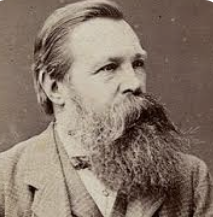
The bourgeoisie ... lets him have the appearance of acting from a free choice, of making a contract with free, unconstrained consent, as a responsible agent who has attained his majority. Fine freedom, where the proletarian has no other choice than that of either accepting the conditions which the bourgeoisie offers him, or of starving, of freezing to death, of sleeping naked among the beasts of the forests!
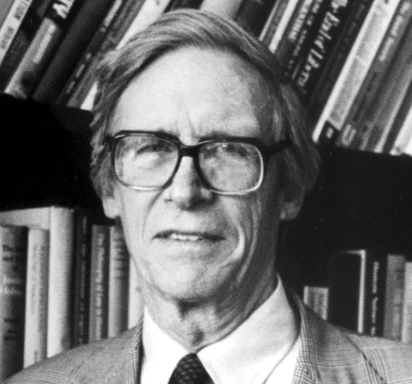
A conception of justice cannot be deduced from self evident premises or conditions on principles; instead, its justification is a matter of the mutual support of many considerations, of everything fitted together into one coherent view.
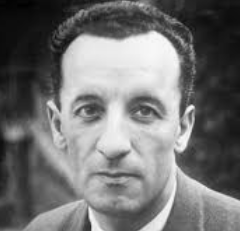
The function of objective thinking is to reduce all phenomena which bear witness to the union of subject and world, putting in their place the clear idea of the object as in itself and of the subject as pure consciousness. It therefore severs the links which unite the thing and the embodied subject, leaving only sensible qualities to make up our world (to the exclusion of the modes of appearance which we have described), and preferably visual qualities, because these give the impression of being autonomous, and because they are less directly linked to our body and present us with an object rather than introducing us into an atmosphere. But in reality all things are concretions of a setting, and any explicit perception of a thing survives in virtue of a previous communication with a certain atmosphere.

The human soul has need of truth and of freedom of expression. The need for truth requires that intellectual culture should be universally accessible, and that it should be able to be acquired in an environment neither physically remote nor psychologically alien.
Nothing is too terrible to be true if it is consistent with the laws of nature.

There never was in the world two opinions alike, no more than two hairs or two grains; the most universal quality is diversity.

Ye know not what manner of spirit ye are of. For the Son of man is not come to destroy men's lives, but to save them. (KJV) 9:55-56 Rebuking James and John for asking if he would command fire to come down from heaven, to consume a village of Samaritans for not receiving them, because they seemed to be headed for Jerusalem.
How is it possible that the poorer classes can remain healthy and have a reasonable expectation of life under such conditions? What can one expect but that they should suffer from continual outbreaks of epidemics and an excessively low expectation of life? The physical condition of the workers shows a progressive deterioration.

A proposition is completely logically analyzed if its grammar is made completely clear: no matter what idiom it may be written or expressed in...
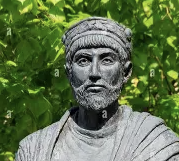
I consider myself especially indebted to all the gods together, and more than all to the Great Mother in this particular instance (as in all others) that she did not suffer me to wander about, as it were in the dark, but firstly commanded me to cut away, not as regards my body, but as regards the irrational appetites and motions of the soul, all that was superfluous and empty, by the aid of the Cause, the object of intellect, and which presides over souls, whilst she herself enabled me to conceive certain notions perhaps not discordant with a true, and at the same time, reverential understanding of divine matters.

It is remarkable that among all the preachers there are so few moral teachers. The prophets are employed in excusing the ways of men.
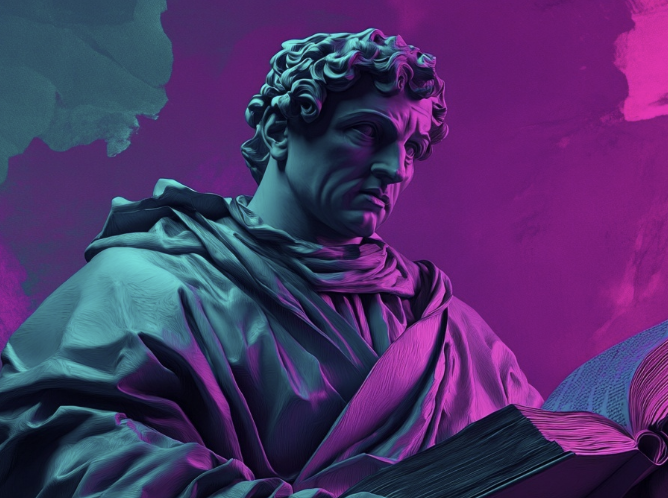
The Apostle Paul wants us to work with our hands in order to share with the needy (Ephesians 5:28). Notice that he could have said that we should work to support ourselves. But Paul says that we work to give to those in need. This is why caring for our body is also a Christian work. If the body is healthy and fit, we are able to work and save money that can be used to help those in need.
He was breakfasting in the marketplace, and the bystanders gathered round him with cries of "dog." "It is you who are dogs," cried he, "when you stand round and watch me at my breakfast."

The term many presupposes the term one, and the term one presupposes the term many.
Tension weakens the bow; the want of it, the mind.
Blessed art thou, Simon Barjona: for flesh and blood hath not revealed it unto thee, but my Father which is in heaven. And I say also unto thee, That thou art Peter, and upon this rock I will build my church; and the gates of hell shall not prevail against it. And I will give unto thee the keys of the kingdom of heaven: and whatsoever thou shalt bind on earth shall be bound in heaven: and whatsoever thou shalt loose on earth shall be loosed in heaven.
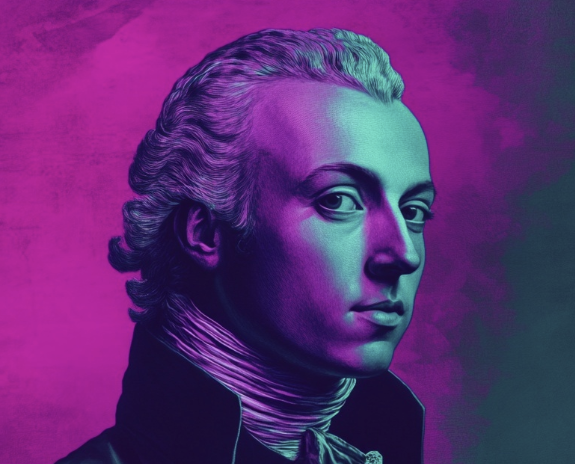
Beneficence is a duty. He who often practices this, and sees his beneficent purpose succeed, comes at last really to love him whom he has benefited. When, therefore, it is said, "Thou shalt love thy neighbor as thyself," this does not mean, "Thou shalt first of all love, and by means of love (in the next place) do him good"; but: "Do good to thy neighbour, and this beneficence will produce in thee the love of men (as a settled habit of inclination to beneficence)."
Intellectuals ... advertise their superiority to political practice but are absolutely in its thrall. ... It is no accident that Marxist theory and practice use the intellectuals as tools and keep them in brutal subservience.
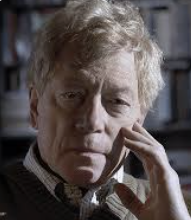
Conservatives have, on the whole, accepted nationality as a sphere of local duties and loyalties, defining an inheritance and a community that has a right to pass on its values from generation to generation. The nation may indeed be the best that we now have, by way of a society linking the dead to the unborn, in the manner extolled by Burke. And for this very reason it arouses the hostility of liberals, who are constantly searching for a place outside loyalty and obedience, from which all human claims can be judged. Hence, in the conflicts of our times, while conservatives leap to the defense of the nation and its interests, wishing to maintain its integrity and to enforce its law, liberals advocate transnational initiatives, international courts, and doctrines of universal rights, all of which, they believe, should stand in judgment over the nation and hold it to account.
Is a democracy, such as we know it, the last improvement possible in government? Is it not possible to take a step further towards recognizing and organizing the rights of man? There will never be a really free and enlightened State until the State comes to recognize the individual as a higher and independent power, from which all its own power and authority are derived, and treats him accordingly. I please myself with imagining a State at least which can afford to be just to all men, and to treat the individual with respect as a neighbor; which even would not think it inconsistent with its own repose if a few were to live aloof from it, not meddling with it, nor embraced by it, who fulfilled all the duties of neighbors and fellow-men. A State which bore this kind of fruit, and suffered it to drop off as fast as it ripened, would prepare the way for a still more perfect and glorious State, which also I have imagined, but not yet anywhere seen.
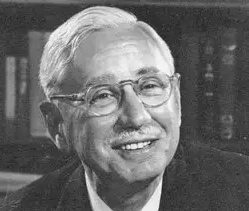
Here is a fulfillment of long centuries of civilization and culture; here, in romantic love, more than the triumph of thought or the victories of power is the topmost reach of human beings.

All the opinions of the world agree in this, that pleasure is our end.
The invention and spread of contraceptives is the proximate cause of our changing morals. The old moral code restricted sexual experience to marriage, because copulation could not be effectively separated from parentage, and parentage could be made responsible only through marriage. But to-day the dissociation of sex from reproduction has created a situation unforeseen by our fathers. All the relations of men and women are being changed by this one factor; and the moral code of the future will have to take account of these new facilities which invention has placed at the service of ancient desires.
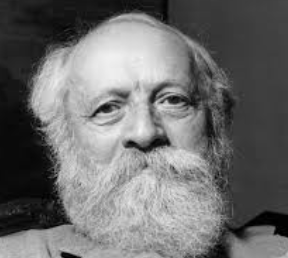
The Thou encounters me by grace - it cannot be found by seeking. But that I speak the basic word to it is a deed of my whole being, is my essential deed.

It goes without saying that the normal durability of fixed capital is calculated on the supposition that all the conditions under which it can perform its functions normally during that time are fulfilled, just as we assume, in placing a mans life at 30 years on the average,that he will wash himself.
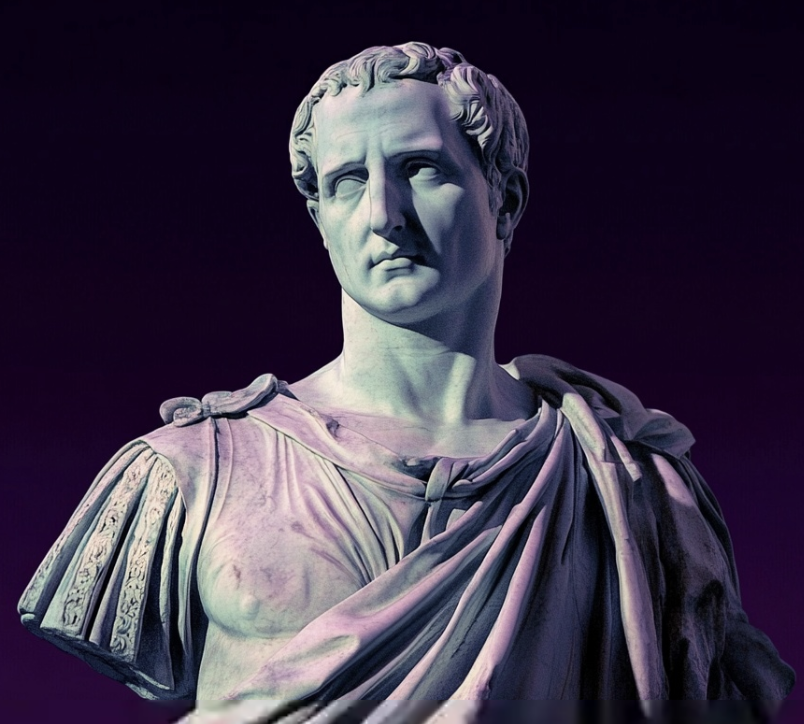
Do not blame Caesar, blame the people of Rome who have so enthusiastically acclaimed and adored him and rejoiced in their loss of freedom and danced in his path and gave him triumphal processions. Blame the people who hail him when he speaks in the Forum of the 'new, wonderful good society' which shall now be Rome, interpreted to mean 'more money, more ease, more security, more living fatly at the expense of the industrious.
There is not a truth existing which I fear or would wish unknown to the whole world.

It is wrong to condemn people for doing a thing and then offer no alternative but failure. A person could get mad about that.

Contrary to earlier prejudices, there is nothing inherently progressive about evolution.

A little water makes a sea, a small puff of wind a Tempest.
All men are almost led to believe not of proof, but by attraction. This way is base, ignoble, and irrelevant; every one therefore disavows it. Each one professes to believe and even to love nothing but what he knows to be worthy of belief and love.
We have a tendency to overcome any strong tension between desire and impotence by depreciating or denying the positive value of the desired object.

One cannot live without motives. I have no motives left, and I am living.

This I know, that between finite and infinite there is no comparison; so that the difference between God and the greatest and most excellent created thing is no less than the difference between God and the least created thing.

Of course a war is entertaining. The immediate fear and suffering of the humans is a legitimate and pleasing refreshment for our myriads of toiling workers. But what permanent good does it do us unless we make use of it for bringing souls to Our Father Below? When I see the temporal suffering of humans who finally escape us, I feel as if I had been allowed to taste the first course of a rich banquet and then denied all the rest. It is worse than not to have tasted it at all. The Enemy, true to His barbarous methods of warfare, allows us to see the short misery of His favourites only to tantalize and torment us - to mock the incessant hunger, which, during this present phase of great conflict, His blockade is admittedly imposing.
He was a one-book man. Some men have only one book in them; others, a library.

Nothing but the most exemplary morals can give dignity to a man of small fortune.
This realistic image, however, does not catch at all what really is, but what should not be - death and misery - what should not exist, from our moral and humanistic point of view. And at the same time making an aesthetic and commercial, perfectly immoral use and abuse of this misery. Images that actually testify, behind their pretended "objectivity", of a deep denial of the real, and of an equal denial of the image - assigned to present what does not even want to be represented, assigned to the rape of the real by burglary.
CivilSimian.com created by AxiomaticPanic, CivilSimian, Kalokagathia