

4 months 6 days ago
The good is the idea, or unity of the conception of the will with the particular will. Abstract right, well-being, the subjectivity of consciousness, and the contingency of external reality, are in their independent and separate existences superseded in this unity, although in their real essence they are contained in it and preserved. This unity is realized freedom, the absolute final cause of the world. Addition.-Every stage is properly the idea, but the earlier steps contain the idea only in more abstract form. The I, as person, is already the idea, although in its most abstract guise. The good is the idea more completely determined; it is the unity of the conception of will with the particular will. It is not something abstractly right, but has a real content, whose substance constitutes both right and well-being.
▼
Source
source
Georg Wilhelm Friedrich Hegel, Philosophy of Right translated by SW Dyde Queen's University Canada 1896 p. 123

4 months 6 days ago
The tool, as we have seen, is not exterminated by the machine.
▼
Source
source
Vol. I, Ch. 15, Section 2, pg. 422.
2 months 4 weeks ago
Men looke not at the greatnesse of the evill past, but the greatnesse of the good to follow.
▼
Source
source
The First Part, Chapter 15, p. 76 (Italics as per text)
4 months 1 week ago
I assert once again as a truth to which history as a whole bears witness that men may second their fortune, but cannot oppose it; that they may weave its warp, but cannot break it. Yet they should never give up, because there is always hope, though they know not the end and more towards it along roads which cross one another and as yet are unexplored; and since there is hope, they should not despair, no matter what fortune brings or in what travail they find themselves.
▼
Source
source
Book 2, Ch. 29 (as translated by LJ Walker and B Crick)

2 months 2 weeks ago
It is a profoundly erroneous truism, repeated by all copy-books and by eminent people when they are making speeches, that we should cultivate the habit of thinking of what we are doing. The precise opposite is the case. Civilization advances by extending the number of important operations which we can perform without thinking about them. Operations of thought are like cavalry charges in a battle - they are strictly limited in number, they require fresh horses, and must only be made at decisive moments.
▼
Source
source
ch. 5.

4 months 4 days ago
Our aim as scientists is objective truth; more truth, more interesting truth, more intelligible truth. We cannot reasonably aim at certainty. Once we realize that human knowledge is fallible, we realize also that we can never be completely certain that we have not made a mistake.
4 months 1 week ago
Though you give no countenance to the complaints of the querulous, yet take care to curb the insolence and ill nature of the injurious. When you observe it yourself, reprove it before the injur'd party: but if the complaint be of something really worth your notice, and prevention another time, then reprove the offender by himself alone, out of sight of him who complain'd and make him go and ask pardon, and make reparation; which ooming thus, as it were from himself, will be the more cheerfully performed, and more kindly receiv'd, the love strenghten'd between them, and a custom of civility grow familiar amongst your children.
▼
Source
source
Sec. 109

4 months 5 days ago
If things are ever to move upward, some one must take the first step, and assume the risk of it. No one who is not willing to try charity, to try non-resistance as the saint is always willing, can tell whether these methods will or will not succeed.
▼
Source
source
Lectures XIV and XV, "The Value of Saintliness"


4 months 4 days ago
The humans live in time but our Enemy (God) destines them for eternity.
▼
Source
source
Letter XV

2 months 5 days ago
Understand then all of you, especially the young, that to want to impose an imaginary state of government on others by violence is not only a vulgar superstition, but even a criminal work. Understand that this work, far from assuring the well-being of humanity is only a lie, a more or less unconscious hypocrisy, camouflaging the lowest passions we possess.
▼
Source
source
Passage written for for The Law of Love and the Law of Violence (1908), released in 1917

2 days ago
Whatsoever any man either doth or saith, thou must be good; not for any man's sake, but for thine own nature's sake; as if either gold, or the emerald, or purple, should ever be saying to themselves, Whatsoever any man either doth or saith, I must still be an emerald, and I must keep my colour.
▼
Source
source
VII, 12

3 months 1 day ago
A distant enemy is always preferable to one at the gate.

4 months 2 weeks ago
He that gives quickly gives twice.
▼
Source
source
Adagia, 1508

4 months 1 week ago
The life of man is of no greater importance to the universe than that of an oyster.
▼
Source
source
On Suicide

5 months 3 days ago
I am an atheist, out and out. It took me a long time to say it. I've been an atheist for years and years, but somehow I felt it was intellectually unrespectable to say one was an atheist, because it assumed knowledge that one didn't have. Somehow, it was better to say one was a humanist or an agnostic. I finally decided that I'm a creature of emotion as well as of reason. Emotionally, I am an atheist. I don't have the evidence to prove that God doesn't exist, but I so strongly suspect he doesn't that I don't want to waste my time.
3 months 1 day ago
Society: an inferno of saviors!

5 months 1 week ago
The Philology of Christianity. How little Christianity cultivates the sense of honesty can be inferred from the character of the writings of its learned men. They set out their conjectures as audaciously as if they were dogmas, and are but seldom at a disadvantage in regard to the interpretation of Scripture. Their continual cry is: am right, for it is written and then follows an explanation so shameless and capricious that a philologist, when he hears it, must stand stock-still between anger and laughter, asking himself again and again: Is it possible? Is it honest? Is it even decent?It is only those who never or always attend church that underestimate the dishonesty with which this subject is still dealt in Protestant pulpits; in what a clumsy fashion the preacher takes advantage of his security from interruption; how the Bible is pinched and squeezed; and how the people are made acquainted with every form of the art of false reading.

4 months 4 days ago
Kant [...] stated that he had "found it necessary to deny knowledge [...] to make room for faith," but all he had "denied" was knowledge of things that are unknowable, and he had not made room for faith but for thought.
▼
Source
source
p. 63
4 weeks 1 day ago
I would say here something that was heard from an ecclesiastic of the most eminent degree [probably Caesar Baronius]: "The intention of the Holy Ghost is to teach us how one goes to heaven, not how heaven goes.
▼
Source
source
Variant translation: I would say here something that was heard from an ecclesiastic of the most eminent degree: "That the intention of the Holy Spirit is to teach us how one goes to heaven, not how the heavens go."
2 months 1 week ago
I urge you to please notice when you are happy, and exclaim or murmur or think at some point, "If this isn't nice, I don't know what is."
▼
Source
source
Knowing What's Nice, an essay from In These Times
2 months 5 days ago
"He who exalts himself shall be humbled; and he who humbles himself shall be exalted." (Matthew 23:12) The person who exalts himself ... will be humbled, because a person who considers himself to be good, intelligent, and kind will not even try to become better, smarter, kinder. The humble person will be exalted, because he considers himself bad and will try to become better, kinder, and more reasonable.
▼
Source
source
p. 110
6 days ago
The worm stood straight on God's blood-splattered threshold thenand beat his drum, beat it again, and raised his throat:'You've matched all well on earth, wine, women, bread, and song,but why, you Murderer, must you slay our children? Why?'God foamed with rage and raised his sword to pierce that throat,but his old copper sword, my lads, stuck at the bone.Then from his belt the worm drew his black-hilted sword,rushed up and slew that old decrepit god in heaven!And now, my gallant lads - I don't know when or how -that worm's god-slaying sword has fallen into my hands;I swear that from its topmost iron tip the blood still drips!
▼
Source
source
Odysseus' song, Book III, line 424
2 days ago
In the constitution of that rational animal I see no virtue which is opposed to justice, but I see a virtue which is opposed to love of pleasure, and that is temperance.
▼
Source
source
VIII, 39

2 months 3 days ago
Environments are not just containers, but are processes that change the content totally.
▼
Source
source
American scholar, Volume 35, 1965, p. 200

5 days ago
We haven't accepted - we can't really believe - that the most characteristic product of our age of scientific miracles is junk, but that is so. And we still think and behave as though we face an unspoiled continent, with thousands of acres of living space for every man. We still sing "America the Beautiful" as though we had not created in it, by strenuous effort, at great expense, and with dauntless self-praise, an unprecedented ugliness.
▼
Source
source
"The Rise"
2 months 3 days ago
The images of mankind have become the most basic thing about them. And they're all software, and disembodied.
▼
Source
source
(p. 346)
1 week 6 days ago
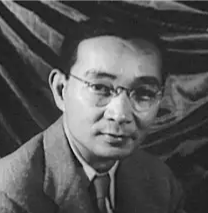
Human history is not the product of the wise direction of human reason, but is shaped by the forces of emotion-our dreams, our pride, our greed, our fears, and our desire for revenge.
▼
Source
source
Confucius Saw Nancy and Essays about Nothing (1936), p. 95
2 months 5 days ago
The attitude of the ruling classes to the laborers is that of a man who has felled his adversary to the earth and holds him down, not so much because he wants to hold him down, as because he knows that if he let him go, even for a second, he would himself be stabbed, for his adversary is infuriated and has a knife in his hand. And therefore, whether their conscience is tender or the reverse, our rich men cannot enjoy the wealth they have filched from the poor as the ancients did who believed in their right to it. Their whole life and all their enjoyments are embittered either by the stings of conscience or by terror.
▼
Source
source
Chapter V, Contradiction Between our Life and our Christian Conscience

2 weeks 6 days ago
You can tell the character of every man when you see how he gives and receives praise.
▼
Source
source
Line 12.
2 weeks 2 days ago
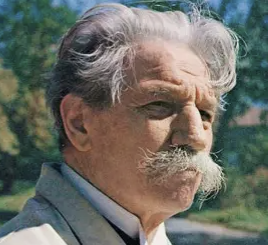
There slowly grew up in me an unshakable conviction that we have no right to inflict suffering and death on another living creature unless there is some unavoidable necessity for it, and that we ought all of us to feel what a horrible thing it is to cause suffering and death out of mere thoughtlessness. And this conviction has influenced me only more and more strongly with time. I have grown more and more certain that at the bottom of our heart we all think this, and that we fail to acknowledge it because we are afraid of being laughed at by other people as sentimentalists, though partly also because we allow our best feelings to get blunted. But I vowed that I would never let my feelings get blunted, and that I would never be afraid of the reproach of sentimentalism.
▼
Source
source
p. 275
6 days ago
Death gestured with his hands and bade the king thrice welcome.
▼
Source
source
Book VIII, line 168

5 months 2 days ago
Can one be a saint without God?, that's the problem, in fact the only problem, I'm up against today.

1 month ago
A further threat to liberalism has to do with the mode of cognition that we call modern natural science. The early liberals were very closely aligned with the founders of modern natural science, people like Bacon and Descartes and Newton, who believed that there was an objective world beyond our subjective consciousnesses, that we could perceive this world through the experimental method, and then come to manipulate it. Natural science gave us technology... that made the world much more habitable, by conquering disease, by inventing things that vastly increased human productivity. So... it's closely related to the wealth, and... the safety and comfort of a modern economically developed world.
▼
Source
source
18:49

1 month 1 day ago
Some economists also use the terms Fordism and pos-Fordism to mark the shift from an economy characterized by the stable-long-term employment typical of factory workers to one marked by flexible, mobile, and precarious labor relations: flexible because workers have to adapt to different tasks, mobile because workers have to move frequently between jobs, and precarious because no contracts guarantee stable, long-term employment. Whereas economic modernization, which developed Fordist labor relations, centered on the conomies of scale and larga systems of production and exchange, economic postmodernization, with its post-Fordist labor relations, develops smaller-scale, flexible systems.
▼
Source
source
112
5 months 2 days ago
The rest of the story, to Grand's thinking, was very simple. The common lot of married couples. You get married, you go on loving a bit longer, you work. And you work so hard that it makes you forget to love.

3 weeks 5 days ago
The Great Man here too, as always, is a Force of Nature. Whatsoever is truly great in him springs up from the inarticulate deeps.
4 months 6 days ago
As a beast of toil an ox is fixed capital. If he is eaten, he no longer functions as an instrument of labour, nor as fixed capital either.
▼
Source
source
Vol. II, Ch. VIII, p. 163.

2 months 2 weeks ago
He who says he hates every kind of flattery, and says it in earnest, certainly does not yet know every kind of flattery.
▼
Source
source
K 41
4 months 5 days ago
Religion, therefore, as I now ask you arbitrarily to take it, shall mean for us the feelings, acts, and experiences of individual men in their solitude, so far as they apprehend themselves to stand in relation to whatever they may consider the divine. Since the relation may be either moral, physical, or ritual, it is evident that out of religion in the sense in which we take it, theologies, philosophies, and ecclesiastical organizations may secondarily grow.
▼
Source
source
Lecture II, "Circumscription of the Topic"
2 months 3 weeks ago
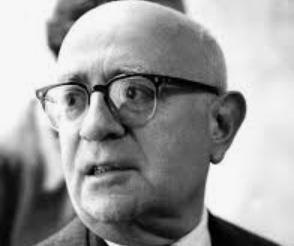
In the general tendency toward specialization, philosophy too has established itself as a specialized discipline, one purified of all specific content. In so doing, philosophy has denied its own constitutive concept: the intellectual freedom that does not obey the dictates of specialized knowledge.
▼
Source
source
p. 6

4 months 5 days ago
I should as soon think of swimming across Charles River when I wish to go to Boston, as of reading all my books in originals when I have them rendered for me in my mother tongue.
▼
Source
source
Books

3 months 6 days ago
Abstract liberty, like other mere abstractions, is not to be found.
4 months 6 days ago
Consumption is also immediately production, just as in nature the consumption of the elements and chemical substances is the production of the plant.
▼
Source
source
Introduction, p. 10.

2 months 3 weeks ago
For what is specific in the Catholic religion is immortalization and not justification, in the Protestant sense. Rather is this latter ethical. It is from Kant, in spite of what orthodox Protestants may think of him, that Protestantism derived its penultimate conclusions - namely, that religion rests upon morality, and not morality upon religion, as in Catholicism.

3 months 3 weeks ago
'Tis not in strength of body nor in gold that men find happiness, but in uprightness and in fulness of understanding.
4 months 1 week ago
Though the Earth, and all inferior Creatures be common to all Men, yet every Man has a Property in his own Person. Thus no Body has any Right to but himself.
▼
Source
source
Second Treatise of Government, Ch. V, sec. 27
2 days ago
How much more damage anger and grief do than the things that cause them.
▼
Source
source
(Hays translation) XI, 18

4 months 3 weeks ago
Christ is not valued at all unless He be valued above all.
▼
Source
source
p. 395
4 months 4 days ago
There is something which unites magic and applied science while separating both from the wisdom of earlier ages. For the wise men of old the cardinal problem had been how to conform the soul to reality, and the solution had been knowledge, self-discipline, and virtue. For magic and applied science alike the problem is how to subdue reality to the wishes of men.
CivilSimian.com created by AxiomaticPanic, CivilSimian, Kalokagathia