


3 months 1 day ago
Frugality is founded on the principle that all riches have limits.

1 day ago
Lay down true principles and adhere to them inflexibly. Do not be frightened into their surrender by the alarms of the timid, or the croakings of wealth against the ascendency of the people.
▼
Source
source
Letter to Samuel Kercheval

3 months 4 weeks ago
The real nature of the present revealed itself: it was what exists, all that was not present did not exist.

3 months 3 weeks ago
From an ill-natured man take no loan.

3 months 3 weeks ago
Man has to awaken to wonder - and so perhaps do peoples. Science is a way of sending him to sleep again.
▼
Source
source
p. 5e

1 month 4 weeks ago
The sculptural qualities of the image dim down the purely personal identity.
▼
Source
source
(p. 369)

3 weeks 1 day ago
Complete, at the same time, was his confidence in his own judgment when it spoke to him decisively. He was one of those few that could believe and know as well as inquire and be of opinion. When I remember how much he admired intellectual force, how much he had of it himself, and yet how unconsciously and contentedly he gave others credit for superiority, I again see the healthy spirit of the genuine man.
2 months 3 days ago
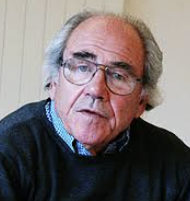
To dissimulate is to pretend not to have what one has. To simulate is to feign to have what one doesn't have. One implies a presence, the other an absence. But it is more complicated than that because simulating is not pretending: "Whoever fakes an illness can simply stay in bed and make everyone believe he is ill. Whoever simulates an illness produces in himself some of the symptoms" (Littré). Therefore, pretending, or dissimulating, leaves the principle of reality intact: the difference is always clear, it is simply masked, whereas simulation threatens the difference between the "true" and the "false," the "real" and the "imaginary."
▼
Source
source
"The Precession of Simulacra," p. 3

4 months 3 weeks ago
With rebellion, awareness is born.
3 months 2 weeks ago
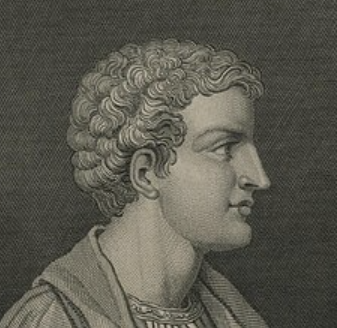
People are enticed by a desire which continually cheats them.'Nothing is enough,' they say, 'for you're only worth what you have.'
▼
Source
source
Book I, satire i, lines 61-62, as translated by N. Rudd
1 month 1 week ago
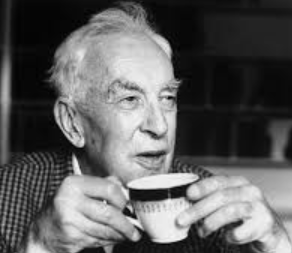
There is no such thing as gratitude in international politics.
▼
Source
source
Abridgement of Vols. 7-10 by D. C. Somervell
3 weeks ago
Normal science, the activity in which most scientists inevitably spend almost all their time, is predicated on the assumption that the scientific community knows what the world is like. Normal science often suppresses fundamental novelties because they are necessarily subversive of its basic commitments.
▼
Source
source
p. 5

2 months 2 weeks ago
He alone is aware of the truth, and if all men were aware of it, there would be an end of life. In the country of the blind, the one-eyed man is king. But his kingship is kingship over nothing. It brings no powers and privileges, only loss of faith and exhaustion of the power to act. Its world is a world without values.
▼
Source
source
Chapter one, The Country of the Blind, referencing a quote by Desiderius Erasmus.
4 months 1 day ago
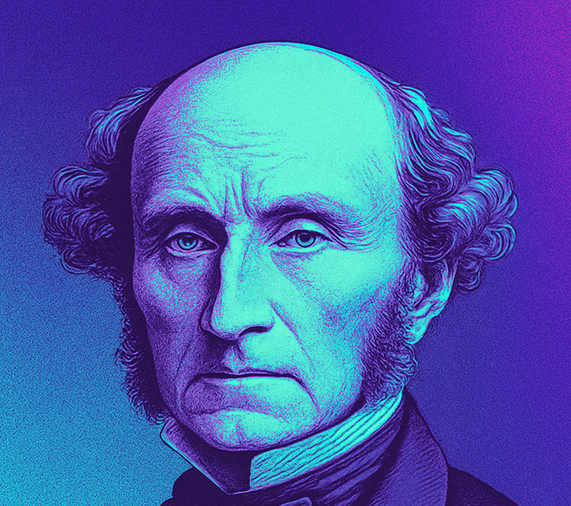
The application of algebra to geometry... far more than any of his metaphysical speculations, has immortalized the name of Descartes, and constitutes the greatest single step ever made in the progress of the exact sciences.
▼
Source
source
An Examination of Sir William Hamilton's Philosophy (1865) as quoted in 5th ed. (1878) p. 617.

4 months 1 week ago
He who remembers the evils he has undergone, and those that have threatened him, and the slight causes that have changed him from one state to another, prepares himself in that way for future changes and for recognizing his condition. The life of Caesar has no more to show us than our own; an emperor's or an ordinary man's, it is still a life subject to all human accidents.
▼
Source
source
Ch. 13
2 months 2 weeks ago
The salvation of reality is its obstinate, irreducible, matter-of-fact entities, which are limited to be no other than themselves. Neither science, nor art, nor creative action can tear itself away from obstinate, irreducible, limited facts.
▼
Source
source
Ch. 5: "The Romantic Reaction", p. 132
2 months 4 weeks ago
I did not hate the author of my misfortunes - truth and justice acquit me of that; I rather pitied the hard destiny to which he seemed condemned. But I thought with unspeakable loathing of those errors, in consequence of which every man is fated to be, more or less, the tyrant or the slave. I was astonished at the folly of my species, that they did not rise up as one man, and shake off chains so ignominious, and misery so insupportable. So far as related to myself, I resolved - and this resolution has never been entirety forgotten by me - to hold myself disengaged from this odious scene, and never fill the part either of the oppressor or the sufferer.
3 months 3 weeks ago
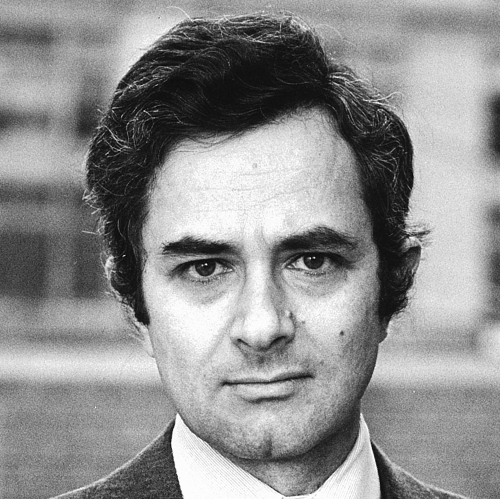
Eventually, I believe, current attempts to understand the mind by analogy with man-made computers that can perform superbly some of the same external tasks as conscious beings will be recognized as a gigantic waste of time.
▼
Source
source
p. 16.
4 months 1 week ago
Wars begin when you will, but they do not end when you please. Variant translation: Wars are begun at will but not ended at will.
▼
Source
source
Book III, Chapter 7.

4 months 4 days ago
The administration of the great system of the universe, however, the care of the universal happiness of all rational and sensible beings, is the business of God and not of man. To man is allotted a much humbler department, but one much more suitable to the weakness of his powers, and to the narrowness of his comprehension; the care of his own happiness, of that of his family, his friends, his country: that he is occupied in contemplating the more sublime, can never be an excuse for his neglecting the more humble department.
▼
Source
source
Section II, Chap. III.
1 week 4 days ago
The rapid development of science... has, as it were, burst its old shell, now become too narrow.
▼
Source
source
Introduction
2 months 2 weeks ago
The exploration of oneself is usually also an exploration of the world at large, of other writers, a process of comparison with oneself with others, discoveries of kinships, gradual illumination of one's own potentialities.
▼
Source
source
p. 231
1 week 5 days ago
The man who has become a thinking being feels a compulsion to give every will-to-live the same reverence for life that he gives to his own. He experiences that other life in his own.
3 months 1 day ago
The unbought grace of life, the cheap defence of nations, the nurse of manly sentiment and heroic enterprise, is gone!
▼
Source
source
Volume iii, p. 331

4 months 1 day ago
If anything is certain, it is that I myself am not a Marxist
▼
Source
source
Marx quoted and translated by Engels (in an 1882 letter to Eduard Bernstein) about the peculiar Marxism which arose in France 1882.
2 months 3 weeks ago
In solitude it is possible to love mankind; in the world, for one who knows the world, there can be nothing but secret or open war.
1 day ago
Some are whigs, liberals, democrats, call them what you please. Others are tories, serviles, aristocrats, &c. The latter fear the people, and wish to transfer all power to the higher classes of society; the former consider the people as the safest depository of power in the last resort; they cherish them therefore, and wish to leave in them all the powers to the exercise of which they are competent.
▼
Source
source
Letter to William Short
3 months 3 weeks ago
Your questions refer to words; so I have to talk about words. You say: The point isn't the word, but its meaning, and you think of the meaning as a thing of the same kind as the word, though also different from the word. Here the word, there the meaning.
▼
Source
source
§ 120

2 months 1 week ago
One has to do something new in order to see something new.
▼
Source
source
J 1770
1 day ago
I agree with you that there is a natural aristocracy among men. The grounds of this are virtue and talents... The natural aristocracy I consider as the most precious gift of nature, for the instruction, the trusts, and government of society... Every one, by his property, or by his satisfactory situation, is interested in the support of law and order. And such men may safely and advantageously reserve to themselves a wholesome control over their public affairs, and a degree of freedom, which, in the hands of the canaille [the masses] of the cities of Europe, would be instantly perverted to the demolition and destruction of everything public and private.
▼
Source
source
Letter to John Adams

1 month 1 week ago
The evidence of science and history is that humans are only ever partly and intermittently rational, but for modern humanists the solution is simple: human beings must in future be more reasonable. These enthusiasts for reason have not noticed that the idea that humans may one day be more rational requires a greater leap of faith than anything in religion. Since it requires a miraculous breach in the order of things, the idea that Jesus returned from the dead is not as contrary to reason as the notion that human beings will in future be different from how they have always been.
▼
Source
source
An Old Chaos: Humanism and Flying Saucers (p. 75)
1 week 2 days ago
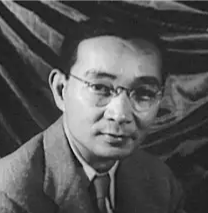
Life after all is made up of eating and sleeping, of meeting and saying good-by to friends, of reunions and farewell parties, of tears and laughter, of having a haircut once in two weeks, of watering a potted flower and watching one's neighbor fall off his roof.
▼
Source
source
p. 202
2 months 3 weeks ago
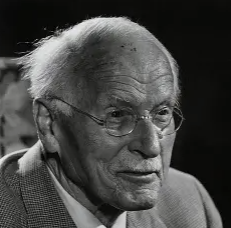
Whereas logic and objectivity are usually the predominant features of a man's outer attitude, or are at least regarded as ideals, in the case of a woman it is feeling. But in the soul it is the other way round: inwardly it is the man who feels, and the woman who reflects. Hence a man's greater liability to total despair, while a woman can always find comfort and hope; accordingly a man is more likely to put an end to himself than a woman. However much a victim of social circumstances a woman may be, as a prostitute for instance, a man is no less a victim of impulses from the unconscious, taking the form of alcoholism and other vices.
▼
Source
source
Psychological Types (1921). CW 6. P.805
3 months 3 weeks ago
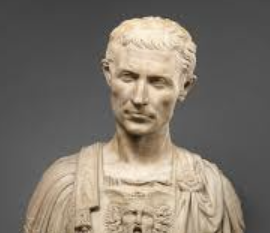
Bear in mind, that if through toil you accomplish a good deed, that toil will quickly pass from you, the good deed will not leave you so long as you live; but if through pleasure you do anything dishonourable, the pleasure will quickly pass away, that dishonourable act will remain with you for ever.
▼
Source
source
In the speech which he delivered ('At Numantia to the Knights'); quoted by Aulus Gellius, Attic Nights, XVI, i, 4 John C. Rolfe, ed. The Attic Nights of Aulus Gellius, Vol. 3, LCL 212 (1928), p. 131
2 months 3 weeks ago
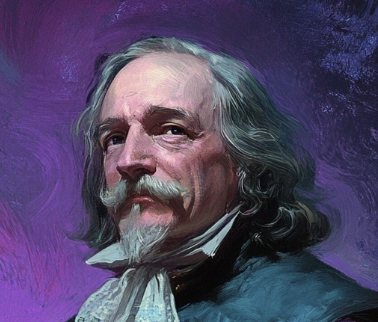
The office of the sovereign, be it a monarch or an assembly, consisteth in the end for which he was trusted with the sovereign power, namely the procuration of the safety of the people, to which he is obliged by the law of nature, and to render an account thereof to God, the Author of that law, and to none but Him. But by safety here is not meant a bare preservation, but also all other contentments of life, which every man by lawful industry, without danger or hurt to the Commonwealth, shall acquire to himself. And this is intended should be done, not by care applied to individuals, further than their protection from injuries when they shall complain; but by a general providence, contained in public instruction, both of doctrine and example; and in the making and executing of good laws to which individual persons may apply their own cases.
▼
Source
source
The Second Part, Chapter 30: Of the Office of the Sovereign Representative
1 day ago
I am a mariner of Odysseus with heart of fire but with mind ruthless and clear.
▼
Source
source
Toda Raba

4 months 2 days ago
The most essential characteristic of scientific technique is that it proceeds from experiment, not from tradition. The experimental habit of mind is a difficult one for most people to maintain; indeed, the science of one generation has already become the tradition of the next...
▼
Source
source
The Scientific Outlook, 1931
2 months 2 weeks ago
Epochs do not rise from the dead.... [W]hereas you can make a replica of an ancient statue, there is no possible replica of an ancient state of mind. There can be no nearer approximation than that which a masquerade bears to real life. There may be understanding of the past, but there is a difference between the modern and the ancient reactions to the same stimuli.
▼
Source
source
Ch. 9: "Science and Philosophy", p. 194
2 months 2 weeks ago
No art can be judged by purely aesthetic standards, although a painting or a piece of music may appear to give a purely aesthetic pleasure. Aesthetic enjoyment is an intensification of the vital response, and this response forms the basis of all value judgements. The existentialist contends that all values are connected with the problems of human existence, the stature of man, the purpose of life. These values are inherent in all works of art, in addition to their aesthetic values, and are closely connected with them.
▼
Source
source
The Chicago Review, Volume 13, no. 2, 1959, p. 152-181

2 months 3 weeks ago
Look at the birds of the air, for they neither sow nor reap nor gather into barns; yet your heavenly Father feeds them.
▼
Source
source
Matthew 6:26 (NKJV)

4 months 1 day ago
I wish to write such rhymes as shall not suggest a restraint, but contrariwise the wildest freedom.
▼
Source
source
June 27, 1839

3 months 4 weeks ago
It seems to me that I may be living too long. Indeed: my nearest relations have all died, and so have some of my best friends, and even some of my best pupils. However, I do not have a reason to complain. I am grateful and happy to be alive, and still be able to continue with my work, if only just. My work seems to me more important than ever.
▼
Source
source
As quoted in "At 90, and Still Dynamic : Revisiting Sir Karl Popper and Attending His Birthday Party" by Eugene Yue-Ching Ho, in Intellectus 23
4 months 2 days ago
There is no logical impossibility in the hypothesis that the world sprang into being five minutes ago, exactly as it then was, with a population that "remembered" a wholly unreal past. There is no logically necessary connection between events at different times; therefore nothing that is happening now or will happen in the future can disprove the hypothesis that the world began five minutes ago.
▼
Source
source
The Analysis of Mind (1921), Lecture IX: Memory, p. 159

4 months ago
The difference between the first- and second-best things in art absolutely seems to escape verbal definition - it is a matter of a hair, a shade, an inward quiver of some kind - yet what miles away in the point of preciousness!
▼
Source
source
To Henry Rutgers Marshall, 7 February 1899

1 month 1 week ago
Good communication is as stimulating as black coffee, and just as hard to sleep after. Variant: Good communication is just as stimulating as...

4 months 2 weeks ago
To master this instrument the religious thinker must make a preliminary study of logic, just as the lawyer must study legal reasoning. This is no more heretical in the one case than in the other. And logic must be learned from the ancient masters, regardless of the fact that they were not Muslims.

2 months 1 week ago
The great reformers of the world turn into the great misanthropists, if circumstances or organisation do not permit them to act. Christ, if He had been a woman, might have been nothing but a great complainer. Peace be with the misanthropists! They have made a step in progress; the next will make them great philanthropists; they are divided but by a line. The next Christ will perhaps be a female Christ. But do we see one woman who looks like a female Christ? or even like "the messenger before" her "face", to go before her and prepare the hearts and minds for her? To this will be answered that half the inmates of Bedlam begin in this way, by fancying that they are "the Christ." People talk about imitating Christ, and imitate Him in the little trifling formal things, such as washing the feet, saying His prayer, and so on; but if anyone attempts the real imitation of Him, there are no bounds to the outcry with which the presumption of that person is condemned.
3 weeks 2 days ago
If the gist of the controversy were to be expressed in a single sentence, one might say that the mechanists represented the opposition of the natural sciences to philosophic interference, while the dialecticians stood for the supremacy of philosophy over the sciences and thus reflected the characteristic tendency of Soviet ideological development. The mechanists' outlook might be called negative, while the dialecticians ascribed immense importance to philosophy and regarded themselves as specialists. The mechanists, however, had a much better idea of what science was about. The dialecticians were ignoramuses in this sphere and confined themselves to general formulas about the philosophical need to "generalize" and unify the sciences; on the other hand, they knew more than the mechanists about the history of philosophy. (Eventually the party condemned both camps, and created a dialectical synthesis of both forms of ignorance.)
▼
Source
source
(pg. 64)
1 week 2 days ago
When the mirror meets with an ugly woman, when a rare ink-stone finds a vulgar owner, and when a good sword is in the hands of a common general, there is utterly nothing to be done about it.
▼
Source
source
p. 317
3 months 1 day ago
There is, however, a limit at which forbearance ceases to be a virtue.
▼
Source
source
Observations on a Late Publication on the Present State of the Nation (1769), volume i, p. 273
CivilSimian.com created by AxiomaticPanic, CivilSimian, Kalokagathia