

3 months 1 week ago
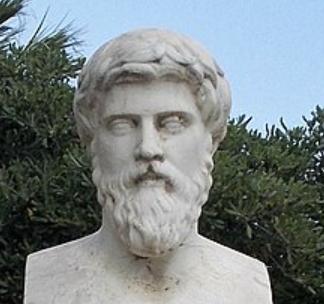
Being nimble and light-footed, his father encouraged him to run in the Olympic race. "Yes," said he, "if there were any kings there to run with me."
▼
Source
source
41 Alexander
2 months 2 weeks ago
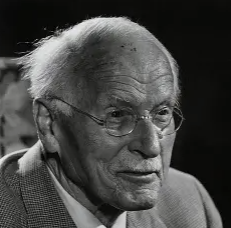
There are as many nights as days, and the one is just as long as the other in the year's course. Even a happy life cannot be without a measure of darkness, and the word "happy" would lose its meaning if it were not balanced by sadness.
▼
Source
source
"The Art of Living", interview with journalist Gordon Young first published in 1960
1 month 1 week ago
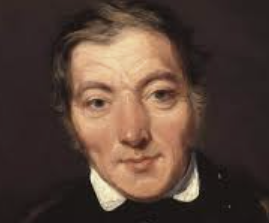
The errors of the times of superstition and bigotry still hold some sway, and compel those who wish to preserve a regard to their respectability in society to an over strained demeanor; and this demeanor sometimes degenerates into hypocrisy, and is often the cause of great inconsistency. It is destructive of every open, honest, generous, and manly feeling. It disgusts many, and drives them to the opposite extreme. It is sometimes the cause of insanity. It is founded in ignorance. While erroneous customs prevail in any country, it would evince an ignorance of human nature in any individual to offend against them, until he has convinced the community of their error.
▼
Source
source
Essay Third

1 month 2 weeks ago
Such is the content of the mental life of the Hemingway hero and the good guy in general. Every day he gets beaten into a servile pulp by his own mechanical reflexes, which are constantly busy registering and reacting to the violent stimuli which his big, noisy, kinesthetic environment has provided for his unreflective reception.
▼
Source
source
Eye Appeal, p. 79-80

2 months 2 weeks ago
I have never in my life met a man like him for noble simplicity, and boundless truthfulness. I understood from the way he talked that anyone who chose could deceive him, and that he would forgive anyone afterwards who had deceived him, and that was why I grew to love him.
▼
Source
source
Part 4, Chapter 8

2 months 2 weeks ago
How many women thus waste life away the prey of discontent, who might have practised as physicians, regulated a farm, managed a shop, and stood erect, supported by their own industry, instead of hanging their heads surcharged with the dew of sensibility, that consumes the beauty to which it at first gave lustre.
▼
Source
source
Ch. 9
3 months 1 week ago
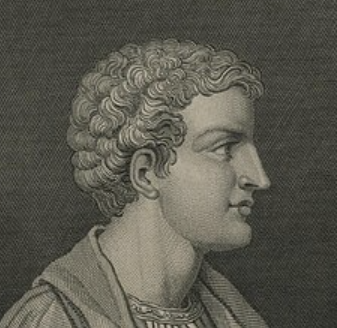
And what he fears he cannot make attractive with his touch he abandons.
▼
Source
source
Line 149 (tr. H. R. Fairclough)
3 weeks 2 days ago
Is there really someone who, searching for a group of wise and sensitive persons to regulate him for his own good, would choose that group of people that constitute the membership of both houses of Congress?
▼
Source
source
Ch. 2 : The State of Nature; Protective Associations, p. 14

3 months 2 weeks ago
A rationalist, as I use the word, is a man who attempts to reach decisions by argument and perhaps, in certain cases, by compromise, rather than by violence. He is a man who would rather be unsuccessful in convincing another man by argument than successful in crushing him by force, by intimidation and threats, or even by persuasive propaganda.
1 week 4 days ago
If the king loves music, there is little wrong in the land.
▼
Source
source
Discourses, as quoted in "I Want to Know!" by Ivan Gogol Esipoff, The Etude, Vol. LXIII, No. 9 (September 1945), p. 496

3 months 2 weeks ago
The opinions that are held with passion are always those for which no good ground exists; indeed the passion is the measure of the holder's lack of rational conviction.
▼
Source
source
Opinions in politics and religion are almost always held passionately. Introduction to 1961 edition of Sceptical Essays, 1961

2 months 2 weeks ago
Deny them this participation of freedom, and you break that sole bond, which originally made, and must still preserve the unity of the empire.

2 months 2 weeks ago
One of the greatest delusions of the average man is to forget that life is death's prisoner.
2 months 1 week ago
The source of every Crime, is some defect of the Understanding; or some error in Reasoning, or some sudden force of the Passions. Defect in the Understanding, is Ignorance; in Reasoning, Erroneous Opinion.
▼
Source
source
The Second Part, Chapter 27, p. 152

3 weeks 2 days ago
Whatever the practical origins of aesthetic discernment may have been, it has been used to create great works of art. When the very loftiest human creations are seen to derive from humble origins and functions, what needs revision is not our esteem for these creations but our notion of nobility.
▼
Source
source
The Nature of Rationality (1993), Ch. V : Instrumental Rationality and Its Limits; Rationality's Imagination, p. 181
1 month 2 weeks ago
Privacy invasion is now one of biggest knowledge industries.
▼
Source
source
(p. 24)
2 months 5 days ago
Wyman's overpopulated universe is in many ways unlovely. It offends the aesthetic sense of us who have a taste for desert landscapes.
▼
Source
source
"On What There Is", p. 4. a humorous comment on the idea "unactualized possible".

4 months 2 weeks ago
Above all do not forget your duty to love yourself; do not permit the fact that you have been set apart from life in a way, been prevented from participating actively in it, and that you are superflous in the obtruse eyes of a busy world, above all, do not permit this to deprive you of your idea of yourself, as if your life, if lived in inwardness, did not have just as much meaning and worth as that of any human being in the eyes of all-wise Governance, and considerably more than the busy, busiest haste of busy-ness - busy with wasting life and losing itself.

3 months 3 weeks ago
In this consists the difference between the character of a miser and that of a person of exact economy and assiduity. The one is anxious about small matters for their own sake; the other attends to them only in consequence of the scheme of life which he has laid down to himself.
▼
Source
source
Chap. VI.
2 months 2 weeks ago
The world is chaos. Nothingness is the yet-to-be-born god of the world.
▼
Source
source
Act IV

3 months 2 weeks ago
Man has to awaken to wonder - and so perhaps do peoples. Science is a way of sending him to sleep again.
▼
Source
source
p. 5e
3 months 2 weeks ago
I found one day in school a boy of medium size ill-treating a smaller boy. I expostulated, but he replied: "The bigs hit me, so I hit the babies; that's fair." In these words he epitomized the history of the human race.
▼
Source
source
p. 31
2 months 1 week ago
People from a planet without flowers would think we must be mad with joy the whole time to have such things about us.
▼
Source
source
A Fairly Honourable Defeat (1970); 2001, p. 170.

4 months 1 week ago
The aged are cared for until death; adults are employed in jobs that make full use of their abilities; and children are nourished, educated, and fostered;...orphans... the disabled and the diseased are all well taken care of....

2 months 2 days ago
And at once I saw with great clarity that human beings possess two bodies. One is the physical body, the other -- just as real, just as self-contained -- is the emotional body. Like the physical body, the emotional body reaches a certain level of growth, and then stops. But it stops rather sooner than the physical body. So most of us possess the emotional body of a retarded adolescent.
▼
Source
source
p. 23

4 months 2 weeks ago
Anything could be found in figures if the search were long enough and hard enough and if the proper pieces of information were ignored or overlooked.
3 months 2 weeks ago
Your questions refer to words; so I have to talk about words. You say: The point isn't the word, but its meaning, and you think of the meaning as a thing of the same kind as the word, though also different from the word. Here the word, there the meaning.
▼
Source
source
§ 120
1 month 3 weeks ago
Much early alchemy seems to have been adventure. You heated and mixed and burnt and pounded and to see what would happen. An adventure might suggest an hypothesis that can subsequently be tested, but adventure is prior to theory.
▼
Source
source
Chapter 4, Evidence, p. 36.
1 month 2 weeks ago
By simply moving information and brushing information against information, any medium whatever creates vast wealth.
3 months 1 week ago
Other dogs bite only their enemies, whereas I bite also my friends in order to save them.
▼
Source
source
Stobaeus, iii. 13. 44
2 months 5 days ago
In order to be able to go on living it is possible that the bankrupt peoples will have to enter on a new path of self-denial, by curbing their covetousness and putting a check on the indefinite expansion of their wants, and by having smaller families.
▼
Source
source
p. 94
3 months 2 weeks ago
All sources of energy upon which industry depends are wasted when they are employed; and industry is expending them at a continually increasing rate. Already coal has been largely replaced by oil, and oil is being used up so fast that East and West alike conceive it necessary to their own prosperity to destroy the industry of the other. And what is true of oil is equally true of other natural resources. Every day, many square miles of forest are turned into newspaper, but there is no known process by which newspaper can be turned into forest. You will say that this need not worry us, since newspapers will be replaced by radio, but radio requires electricity, electricity requires power, and power depends upon raw materials.
▼
Source
source
Part I: Man and Nature, Ch. 4: The Limits of Human Power, p. 30
2 months 1 week ago
Injustice in this world is not something comparative; the wrong is deep, clear, and absolute in each private fate.
▼
Source
source
Ch. IV: The Aristocratic Ideal

3 months 4 weeks ago
Those who have handled sciences have been either men of experiment or men of dogmas. The men of experiment are like the ant, they only collect and use; the reasoners resemble spiders, who make cobwebs out of their own substance. But the bee takes a middle course: it gathers its material from the flowers of the garden and of the field, but transforms and digests it by a power of its own. Not unlike this is the true business of philosophy; for it neither relies solely or chiefly on the powers of the mind, nor does it take the matter which it gathers from natural history and mechanical experiments and lay it up in the memory whole, as it finds it, but lays it up in the understanding altered and digested. Therefore from a closer and purer league between these two faculties, the experimental and the rational (such as has never yet been made), much may be hoped.
▼
Source
source
Aphorism 95

3 months 2 weeks ago
It is also a study peculiarly adapted to an early stage in the education of philosophical students, since it does not presuppose the slow process of acquiring, by experience and reflection, valuable thoughts of their own.
▼
Source
source
(pp. 19-20)

2 months 2 weeks ago
As the mathematics are now understood, each branch - or, if you please, each problem, - is but the study of the relations of a collection of connected objects, without parts, without any distinctive characters, except their names or designating letters. These objects are commonly called points; but to remove all notion of space relations, it may be better to name them monads. The relations between these points are mere complications of two different kinds of elementary relations, which may be termed immediate connection and immediate non-connection. All the monads except as serve as intermediaries for the connections have distinctive designations.
▼
Source
source
p. 268
2 months 2 weeks ago
Every act of courage is the work of an unbalanced man. Animals, normal by definition, are always cowardly except when they know themselves to be stronger, which is cowardice itself.
3 months 2 weeks ago
India has always been an object of yearning, a realm of wonder, a world of magic... India is the land of dreams. India had always dreamt - more of the Bliss that is man's final goal. And this has helped India to be more creative in history than any other nation. Hence the effervescence of myths and legends, religious and philosophies, music, and dances and the different styles of architecture." ...
▼
Source
source
quoted in Patri, Umesh Hindu scriptures and American transcendentalists 1st ed. quoted from Londhe, S. (2008).
4 months 2 weeks ago
There was no denying that he would always be conscious of the fact that an Earthman was an Earthman. He couldn't help that. That was the result of a childhood immersed in an atmosphere of bigotry so complete that it was almost invisible, so entire that you accepted its axioms as second nature. Then you left it and saw it for what it was when you looked back.
1 month 3 days ago
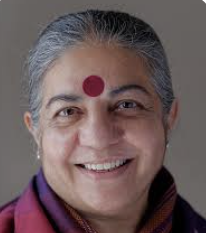
What J.P. Morgan and John D. Rockefeller were to the Age of Robber Barons, Microsoft's Bill Gates and Berkshire Hathaway's Warren Buffett, as well as digital moguls like Mark Zuckerberg and Jeff Bezos are to the contemporary age of the rule of the 1%. Then as now, the super-rich used governments to write laws and rules to allow them to accumulate unlimited wealth; then as now, creating monopolies by enclosing the commons and killing competition is the strategy for becoming the 1%.
2 months 1 week ago
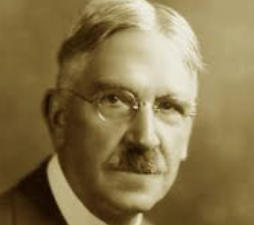
Even the eye that is artificially trained to see color as color, apart from things that colors qualify, cannot shut out the resonances and transfers of value.
▼
Source
source
p. 126

3 months 3 weeks ago
Faith consists in believing what reason cannot.
▼
Source
source
"The Flood", 1764


2 months 1 week ago
The sabbath was made for man, and not man for the sabbath.
▼
Source
source
Mark 2:27 (KJV)

3 months 2 weeks ago
It is in the social sphere, in the realm of politics and economics, that the Will to Order becomes really dangerous.
▼
Source
source
Chapter 3 (p. 22)
1 month 3 days ago
I have had to suffer the violence and brutality that comes with rising fundamentalism, and I've asked myself how a society that is the cradle of peace, the land of Gandhi and Buddha, could be reduced to one of the most volatile societies in the world.

4 months 2 weeks ago
Parmenides: Whatever the subject of your hypothesis, if you suppose that it is or is not, or that it experiences any other affection, you must consider what happens to it and to any other particular things you may choose, and to a greater number and to all in the same way; and you must consider other things in relation to themselves and to anything else you may choose in any instance, whether you suppose that the subject of your hypothesis exists or does not exist, if you are to train yourself completely to see the truth perfectly.
4 months 2 weeks ago
I make no secret about being Jewish ... I just think it's more important to be human and to have a human heritage; and I think it is wrong for anyone to feel that there is anything special about any one heritage of whatever kind. It is delightful to have the human heritage exist in a thousand varieties, for it makes for greater interest, but as soon as one variety is thought to be more important than another, the groundwork is laid for destroying them all.
2 months 1 week ago
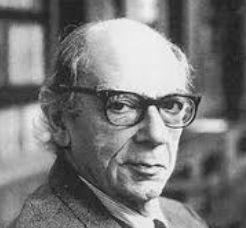
Those, no doubt, are in some way fortunate who have brought themselves, or have been brought by others, to obey some ultimate principle before the bar of which all problems can be brought. Single-minded monists, ruthless fanatics, men possessed by an all-embracing coherent vision do not know the doubts and agonies of those who cannot wholly blind themselves to reality.
CivilSimian.com created by AxiomaticPanic, CivilSimian, Kalokagathia