


3 months 2 weeks ago
Lying... is so ill a quality, and the mother of so many ill ones that spawn from it, and take shelter under it, that a child should be brought up in the greatest abhorrence of it imaginable. It should be always spoke of before him with the utmost detestation, as a quality so wholly inconsistent with the name and character of a gentleman, that no body of any credit can bear the imputation of a lie; a mark that is judg'd in utmost disgrace, which debases a man to the lowest degree of a shameful meanness, and ranks him with the most contemptible part of mankind and the abhorred rascality; and is not to be endured in any one who would converse with people of condition, or have any esteem or reputation in the world.
▼
Source
source
Sec. 131
2 months 1 day ago
In the end, I am moved by causes and ideas that I can actually choose to support because they conform to values and principles that I believe in.
▼
Source
source
p. 88

2 months 2 weeks ago
The only profound thinkers are the ones who do not suffer from a sense of the ridiculous.
4 months 2 days ago
Every habit and faculty is confirmed and strengthened by the corresponding actions, that of walking by walking, that of running by running.
▼
Source
source
Book II, ch. 18, 1

3 months 2 weeks ago
He sees as well as you do that courage is not simply one of the virtues, but the form of every virtue at the testing point, which means, at the point of highest reality. A chastity or honesty, or mercy, which yields to danger will be chaste or honest or merciful only on conditions.
▼
Source
source
Letter XXIX

4 months 6 days ago
Anything done against faith or conscience is sinful.
▼
Source
source
Commentary on Romans, cap 14, I 3

3 months 2 weeks ago
Those who promise us paradise on earth never produced anything but a hell.
▼
Source
source
As quoted in In Passing: Condolences and Complaints on Death, Dying, and Related Disappointments (2005) by Jon Winokur, p. 144
3 months 2 weeks ago
The trade of governing has always been monopolized by the most ignorant and the most rascally individuals of mankind.
▼
Source
source
Earliest citation to Paine appears to be in "Freedom: A Journal of Anarchist Communism Vol. XXIV". Not found in any of his works.

3 months 2 weeks ago
Do you think that I count the days? There is only one day left, always starting over: it is given to us at dawn and taken away from us at dusk.
▼
Source
source
Act 10, sc. 2

2 months 1 day ago
It may seem to be a long way from Blake's innocent talk of love and copulation to De Sade's need to inflict pain. And yet both are the outcome of a sexual mysticism that strives to transcend the everyday world. Simone de Beauvoir said penetratingly of De Sade's work that 'he is trying to communicate an experience whose distinguishing characteristic is, nevertheless its will to remain incommunicable'. De Sade's perversion may have sprung from his dislike of his mother or of other women, but its basis is a kind of distorted religious emotion.
▼
Source
source
p. 90

2 months 2 weeks ago
Once it's been proved to you that you're descended from an ape, it's no use pulling a face; just accept it. Once they've proved to you that a single droplet of your own fat must be dearer to you than a hundred thousand of your fellow human beings and consequently that all so-called virtues and duties are nothing but ravings and prejudices, then accept that too, because there's nothing to be done.
▼
Source
source
Part 1 Chapter 3 (tr. ?)

3 months 2 weeks ago
Wealth begins in a tight roof that keeps the rain and wind out; in a good pump that yields you plenty of sweet water; in two suits of clothes, so to change your dress when you are wet; in dry sticks to burn; in a good double-wick lamp; and three meals; in a horse, or a locomotive, to cross the land; in a boat to cross the sea; in tools to work with; in books to read; and so, in giving, on all sides, by tolls and auxiliaries, the greatest possible extension to our powers, as if it added feet, and hands, and eyes, and blood, length to the day, and knowledge, and good-will.Wealth begins with these articles of necessity.
▼
Source
source
Wealth

4 months 2 days ago
Superstition is now in her turn cast down and trampled underfoot, whilst we by the victory are exalted high as heaven.
▼
Source
source
Book I, lines 78-79 (tr. W. H. D. Rouse)
2 months 1 week ago
Progress, far from consisting in change, depends on retentiveness. When change is absolute there remains no being to improve and no direction is set for possible improvement: and when experience is not retained, as among savages, infancy is perpetual. Those who cannot remember the past are condemned to repeat it. This famous statement has produced many paraphrases and variants: Those who cannot learn from history are doomed to repeat it. Those who do not remember their past are condemned to repeat their mistakes. Those who do not read history are doomed to repeat it. Those who fail to learn from the mistakes of their predecessors are destined to repeat them. Those who do not know history's mistakes are doomed to repeat them.
▼
Source
source
There is a similar quote by Edmund Burke (in Revolution in France) that often leads to misattribution: "People will not look forward to posterity, who never look backward to their ancestors."
1 week ago
Great organizers, as much as inevitable slaves, tend to stoic moods: it is difficult to be either master or servant if one is sensitive.

3 months 2 weeks ago
...it [is] possible to suppose that, if Russia is allowed to have peace, an amazing industrial development may take place, making Russia a rival of the United States.
▼
Source
source
Part I, Ch. 5: Communism and the Soviet Constitution
2 months 2 weeks ago
One of the most marked features about the law of mind is that it makes time to have a definite direction of flow from past to future. ...This makes one of the great contrasts between the law of mind and the law of physical force, where there is no more distinction between the two opposite directions in time than between moving northward and moving southward.

3 months 3 weeks ago
Sacred and inspired divinity, the sabaoth and port of all men's labours and peregrinations.
▼
Source
source
Book II

4 months 1 week ago
To worship to other than one's own ancestral spirits is brown-nosing. If you see what is right and fail to act on it, you lack courage. Variant: To see what is right, and not to do it, is want of courage or of principle.
3 months 2 weeks ago
I wish to propose for the reader's favourable consideration a doctrine which may, I fear, appear wildly paradoxical and subversive. The doctrine in question is this: that it is undesirable to believe a proposition when there is no ground whatever for supposing it true.
▼
Source
source
Ch. 1: The Value of Scepticism

3 months 2 weeks ago
Brutes are merely brutal; men and women are capable of being devils and lunatics. They are no less capable of being fully human-even, occasionally, of being a bit more than fully human, of being saints, heroes and geniuses.
▼
Source
source
Introduction to You Are Not The Target by Laura Archera Huxley, 1963

3 months 3 weeks ago
To call out for the hand of the enemy is a rather extreme measure, yet a better one, I think, than to remain in continual fever over an accident that has no remedy. But since all the precautions that a man can take are full of uneasiness and uncertainty, it is better to prepare with fine assurance for the worst that can happen, and derive some consolation from the fact that we are not sure that it will happen.
▼
Source
source
Ch. 25
3 months 2 weeks ago
Those truly natural wants, which reason alone, without some other help, is not able to fence against, nor keep from disturbing us. The pains of sickness and hurts, hunger, thirst, and cold, want of sleep and rest or relaxation of the part weary'd with labour, are what all men feel and the best dispos'd minds cannot but be sensible of their uneasiness; and therefore ought, by fit applications, to seek their removal, though not with impatience, or over great haste, upon the first approaches of them, where delay does not threaten some irreparable harm. The pains that come from the necessities of nature, are monitors to us to beware of greater mischiefs, which they are the forerunner of; and therefore they must not be wholly neglected, and strain'd too far. But yet the more children can be inur'd to hardships of this kind, by a wise care to make them stronger in body and mind, the better it will be for them.
▼
Source
source
Sec. 107

2 months 1 week ago
Look at the birds of the air, for they neither sow nor reap nor gather into barns; yet your heavenly Father feeds them.
▼
Source
source
Matthew 6:26 (NKJV)
3 months 2 weeks ago
I want to have her back as an ingredient in the restoration of my past. Could I have wished her anything worse? Having got once through death, to come back and then, at some later date, have all her dying to do all over again? They call Stephen the first martyr. Hadn't Lazarus the rawer deal?

3 months 3 weeks ago
Next to the ridicule of denying an evident truth, is that of taking much pains to defend it; and no truth appears to me more evident, than that beasts are endow'd with thought and reason as well as men. The arguments are in this case so obvious, that they never escape the most stupid and ignorant.
▼
Source
source
Part 3, Section 16

3 months 2 weeks ago
Essentially, this war...is a great race-conflict, a conflict of Teuton and Slav, in which certain other nations, England, France and Belgium, have been led into cooperation with the Slav. ... The conflict of Germany and Russia has been produced not by this or that diplomatic incident, but by primitive passions expressing themselves in the temper of the two races.
▼
Source
source
War: The Offspring of Fear (1914), quoted in Ray Monk, Bertrand Russell: The Spirit of Solitude, 1872-1921 (1996), p. 373


4 months 1 week ago
War is the father and king of all: some he has made gods, and some men; some slaves and some free.
3 days ago
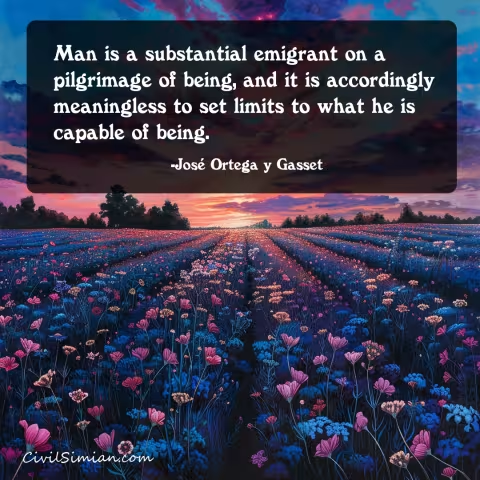
If you have been given a talent, exercise it freely and happily like the sun: give everyone from your splendour.
4 months 1 week ago
Virtuous, worthy, wise and capable people are chosen as leaders.

2 months 2 weeks ago
...they who would make peace without a previous knowledge of the terms, make a surrender. They are conquered. They do not treat; they receive the law. Is this the disposition of the people of England? Then the people of England are contented to seek in the kindness of a foreign systematick enemy combined with a dangerous faction at home, a security which they cannot find in their own patriotism and their own courage. They are willing to trust to the sympathy of Regicides the guarantee of the British Monarchy. They are content to rest their religion on the piety of atheists by establishment. They are satisfied to seek in the clemency of practised murderers the security of their lives. They are pleased to confide their property to the safeguard of those who are robbers by inclination, interest, habit, and system. If this be our deliberate mind, truly we deserve to lose, what it is impossible we should long retain, the name of a nation.
▼
Source
source
p. 48
3 months 3 weeks ago
I bequeath my soul to God (...). My body to be buried obscurely. For my name and memory, I leave it to men's charitable speeches, and to foreign nations, and the next age.
▼
Source
source
His Will, 1626
2 months 1 week ago
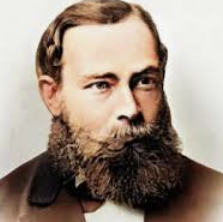
Without some affinity in human ideas art would certainly be impossible; but it can never be exactly determined how far the intentions of the poet are realized.
▼
Source
source
Gottlob Frege (1892). On Sense and Reference.
2 months 1 day ago
From that point, my universe went on crumbling; new cracks appeared all the time. I could see that the pleasant securities of childhood, all of those warm little human emotions, all of those trivial aims and purposes that we allow to rule our lives, were an illusion. We were like sheep munching grass, unaware that the butcher's lorry is already on its way. I got used to living with a deep, underlying feeling of uncertainty that no one around me seemed to share. It was rather like living on death row.
▼
Source
source
pp. 12-13

3 months 2 weeks ago
I asked my guide how it was possible the judicious part of them could suffer such incoherent prating? "We are obliged," said he, "to suffer it, because no one knows, when a brother rises up to hold forth, whether he will be moved by the spirit or by folly. In this uncertainty, we listen patiently to every one. We even allow our women to speak in public; two or three of them are often inspired at the same time, and then a most charming noise is heard in the Lord's house." "You have no priests, then?" said I. "No, no, friend," replied the Quaker; "heaven make us thankful!" Then opening one of the books of their sect, he read the following words in an emphatic tone: "'God forbid we should presume to ordain any one to receive the Holy Spirit on the Lord's day, in exclusion to the rest of the faithful!'
▼
Source
source
Further account of his conversations with Andrew Pit
3 months 2 weeks ago
There is no need to worry about mere size. We do not necessarily respect a fat man more than a thin man. Sir Isaac Newton was very much smaller than a hippopotamus, but we do not on that account value him less.
▼
Source
source
"The Expanding Mental Universe", Saturday Evening Post, 7/1/1959
3 months 2 days ago
Every good thing is gentle and consistent, progressing in good order and not going beyond what is right.
▼
Source
source
2, 39, 4

3 months 2 weeks ago
It appears... that a work similar in its object and general conception to that of Adam Smith, but adapted to the more extended knowledge and improved ideas of the present age, is the kind of contribution which Political Economy at present requires. The Wealth of Nations is in many parts obsolete, and in all, imperfect. Political Economy... has grown up almost from infancy since the time of Adam Smith; and the philosophy of society... has advanced many steps beyond the point at which he left it.
▼
Source
source
Preface, 1848

1 month 2 weeks ago
For us, with the rule of right and wrong given us by Christ, there is nothing for which we have no standard. And there is no greatness where there is not simplicity, goodness, and truth.
▼
Source
source
Bk. XIV, ch. 18

4 months 3 days ago
The confession of evil works is the first beginning of good works.
▼
Source
source
Tractates on the Gospel of John; tractate XII on John 3:6-21, and 13
3 months 1 week ago
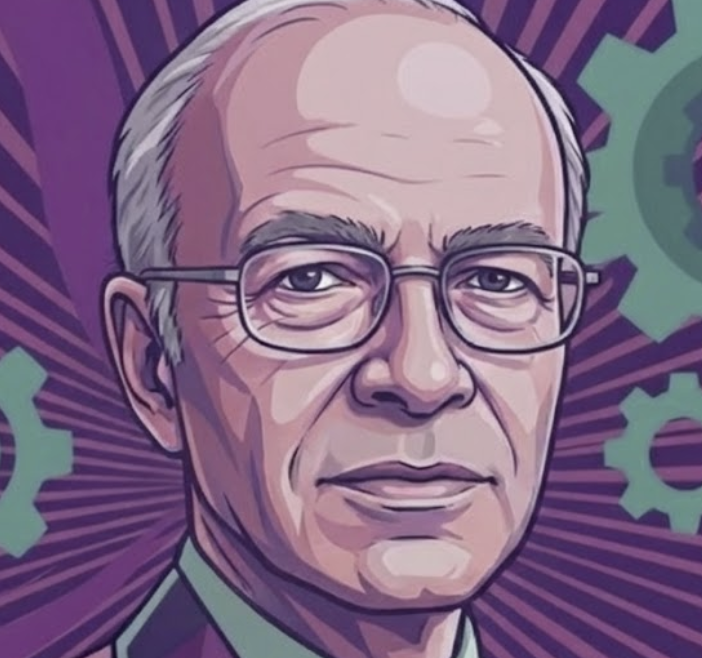
One common strategy on which we should all be able to agree is to take steps to reduce the risk of human extinction when those steps are also highly effective in benefiting existing sentient beings. For example, eliminating or decreasing the consumption of animal products will benefit animals, reduce greenhouse gas emissions, and lessen the chances of a pandemic resulting from a virus evolving among the animals crowded into today's factory farms, which are an ideal breeding ground for viruses. That therefore looks like a high-priority strategy.
▼
Source
source
Chapter 15: Preventing Human Extinction (p. 177)
3 months 2 weeks ago
I have always thought the actions of men the best interpreters of their thoughts.
▼
Source
source
Book 1, Ch. 3, sec. 3 Variant: The actions of men are the best interpreters of their thoughts.
1 month 6 days ago
Such night in England ne'er had been, nor ne'er again shall be.
▼
Source
source
The Armada, l. 34
3 months 2 weeks ago
Eloquence may strike the ear, but the language of poverty strikes the heart; the first may charm like music, but the second alarms like a knell.
▼
Source
source
The Case of the Officers of Excise (1772), p. 20
3 months 2 weeks ago
You can do everything with bayonets except sit on them. If you want to preserve your power indefinitely you have to get the consent of the ruled. And this they will do partly by drugs as I foresaw in "Brave new World", and partly by these new techniques of propaganda. They will do it by bypassing the sort of rational side of man and appealing to his subconscious, and his deeper emotions, and his physiology, even, and so making him actually love his slavery. I mean I think this is the danger that actually people may be, in some ways, happy under the new regime. But they will be happy in situations when they oughtn't be happy.

1 week 2 days ago
May not this religious reticence, in these devout good souls, be perhaps a merit, and sign of health in them? Jocelin, Eadmer, and such religious men, have as yet nothing of 'Methodism;' no Doubt or even root of Doubt. Religion is not a diseased self-introspection, an agonising inquiry: their duties are clear to them, the way of supreme good plain, indisputable, and they are traveling on it. Religion lies over them like an all-embracing heavenly canopy, like an atmosphere and life-element, which is not spoken of, which in all things is presupposed without speech. Is not serene or complete Religion the highest aspect of human nature.
CivilSimian.com created by AxiomaticPanic, CivilSimian, Kalokagathia