


4 months 1 day ago
Whatever we know without inference is mental.
▼
Source
source
Human Knowledge: Its Scope and Limits (1948), p. 224

4 months ago
I see that sensible men and conscientious men all over the world were of one religion.
▼
Source
source
The Preacher
4 months 4 weeks ago
Law could never, by determining exactly what is noblest and must just for one and all, enjoin upon them that which is best; for the differences of men and of actions and the fact that nothing, I may say, in human life is ever at rest, forbid any science whatsoever to promulgate any simple rule for everything and for all time. So, that which is persistently simple is inapplicable to things which are never simple.
3 weeks 3 days ago
All truths are easy to understand once they are discovered; the point is to discover them.
▼
Source
source
As quoted in Angels in the workplace: stories and inspirations for creating a new world of work (1999) by Melissa Giovagnoli
4 months 1 day ago
It is impossible to pursue this nonsense any further.
▼
Source
source
(Bastiat and Carey), p. 813 (last text page, second last line).
2 months 3 weeks ago
But we must not forget that only a very few people are artists in life; that the art of life is the most distinguished and rarest of all the arts. Modern Man in Search of a Soul.
▼
Source
source
Section - The Stages of Life

2 months 1 week ago
It was Rousseau who was largely responsible for the problem by giving currency to the idea that freedom can exist without responsibility and discipline.
▼
Source
source
Introductory Essay, p. xx

4 months 2 weeks ago
Justice respects man as living in society, and is the common bond without which no society can subsist.

2 weeks 1 day ago
I shall never be ashamed of citing a bad author if the line is good.
▼
Source
source
Alternate translation: I shall never be ashamed to go to a bad author for a good quotation. Chapter 11, Section 8

3 months 4 weeks ago
Those who promise us paradise on earth never produced anything but a hell.
▼
Source
source
As quoted in In Passing: Condolences and Complaints on Death, Dying, and Related Disappointments (2005) by Jon Winokur, p. 144
4 months 2 weeks ago
The inclination to seek the truth is safer than the presumption which regards unknown things as known.
▼
Source
source
(Cambridge: 2002), Book 9, Chapter 1, p. 24
3 months 5 days ago
Jews are angry and brutish people, vile and vulgar men, slaves worthy of the yoke [Talmudism] which you bear... Go, take back your books and remove yourselves from me. [ The Talmud ] taught the Jews to steal the goods of Christians, to regard them as savage beasts, to push them over the precipice... to kill them with impunity and to utter every morning the most horrible imprecations against them.
▼
Source
source
See The Jews: A History, Second Edition, by John Efron, Steven Weitzman and Matthias Lehmann
2 weeks 1 day ago
Remember, however, before all else, to strip things of all that disturbs and confuses, and to see what each is at bottom; you will then comprehend that they contain nothing fearful except the actual fear.
▼
Source
source
Line 12
Just now
The natural progress of things is for liberty to yield, and government to gain ground.
▼
Source
source
Letter to Edward Carrington, Paris
3 months 3 weeks ago
Maybe the target nowadays is not to discover what we are but to refuse what we are.
▼
Source
source
p. 785

4 months 1 week ago
They [theologians] will explain to you how Christ was formed in the Virgin's womb; how accident subsists in synaxis without domicile in place. The most ordinary of them can do this. Those more fully initiated explain further whether there is an instans in Divine generation; whether in Christ there is more than a single filiation; whether 'the Father hates the Son' is a possible proposition; whether God can become the substance of a woman, of an ass, of a pumpkin, or of the devil, and whether, if so, a pumpkin could preach a sermon, or work miracles, or be crucified. And they can discover a thousand other things to you besides these. They will make you understand notions, and instants, formalities, and quiddities, things which no eyes ever saw, unless they were eyes which could see in the dark what had no existence.
▼
Source
source
as quoted by Froude ibid.,

3 weeks ago
But oppression by your Mock-Superiors well shaken off, the grand problem yet remains to solve: That of finding government by your Real-Superiors! Alas, how shall we ever learn the solution of that, benighted, bewildered, sniffing, sneering, godforgetting unfortunates as we are? It is a work for centuries; to be taught us by tribulations, confusions, insurrections, obstructions; who knows if not by conflagration and despair! It is a lesson inclusive of all other lessons; the hardest of all lessons to learn.
4 months 4 weeks ago
Socrates: I think the most likely view is, that these ideas exist in nature as patterns, and the other things resemble them and are imitations of them; their participation in ideas is assimilation to them, that and nothing else.Parmenides: It is impossible that anything be like the idea, or the idea like anything; for if they are alike, some further idea, in addition to the first, will always appear, and if that is like anything, still another, and a new idea will always be arising, if the idea is like that which partakes of it.
1 month 1 week ago
If you want to understand the beliefs that are shaping global politics, read the Book of Revelation.
▼
Source
source
Review: Sacred Causes by Michael Burleigh
4 months 2 weeks ago
He who is not satisfied with a little, is satisfied with nothing.
1 week 4 days ago
Every individual is a unique manifestation of the Whole, as every branch is a particular outreaching of the tree. To manifest individuality, every branch must have a sensitive connection with the tree, just as our independently moving and differentiated fingers must have a sensitive connection with the whole body. The point, which can hardly be repeated too often, is that differentiation is not separation. The head and the feet are different, but not separate, and though man is not connected to the universe by exactly the same physical relation as branch to tree or feet to head, he is nonetheless connected-and by physical relations of fascinating complexity. The death of the individual is not disconnection but simply withdrawal. The corpse is like a footprint or an echo-the dissolving trace of something which the Self has ceased to do.
▼
Source
source
p. 60
2 months 3 weeks ago
Long after Plato's time the concept of the Ideas still represented the sphere of aloofness, independence, and in a certain sense even freedom, an objectivity that did not submit to 'our' interests.
▼
Source
source
p. 46.

3 months 1 day ago
There is a sort of enthusiasm in all projectors, absolutely necessary for their affairs, which makes them proof against the most fatiguing delays, the most mortifying disappointments, the most shocking insults; and what is severer than all, the presumptuous judgments of the ignorant upon their designs.
▼
Source
source
Volume I, p. 7

4 months 1 day ago
My life is like a stroll upon the beach, As near the ocean's edge as I can go.
▼
Source
source
"The Fisher's Boy", in Edmund Clarence Stedman (ed.) An American Anthology, 1787-1900, Boston and New York: Houghton, Mifflin and Co., 1900
1 day ago
Every perfect traveller always creates the country where he travels.
▼
Source
source
As quoted in Reporter in Red China (1966) by Charles Taylor
1 month 2 weeks ago
The way out of this violent cycle is to deepen democracy-to bring decisions that directly affect people's lives as close as possible to where people are and to where they can take responsibility.
3 months 3 weeks ago
People are deeply imbedded in philosophical, i.e., grammatical confusions. And to free them presupposes pulling them out of the immensely manifold connections they are caught up in.
▼
Source
source
Ch. 9 : Philosophy, p. 185

2 months 3 weeks ago
The universal view melts things into a blur.
1 month 3 weeks ago
To know what you prefer, instead of humbly saying Amen to what the world tells you you ought to prefer, is to have kept your soul alive.
▼
Source
source
An Inland Voyage (1878), Ch. III, "The Royal Sport Nautique".

3 months 4 weeks ago
What do you want to do with the [Communist] Party? A racing stable? What good is it to sharpen a knife every day if you never use it for slicing? A party is never more than a means. There is only one objective: power.
▼
Source
source
Hoederer to Hugo, Act 5, sc. 3

2 months ago
Three days later the little princess was buried, and Prince Andrei went up the steps to where the coffin stood, to give her the farewell kiss. And there in the coffin was the same face, though with closed eyes. "Ah, what have you done to me?" it still seemed to say, and Prince Andrei felt that something gave way in his soul and that he was guilty of a sin he could neither remedy nor forget.
▼
Source
source
Bk. IV, Ch. 9

3 months 1 day ago
Accept suffering and achieve atonement through it - that is what you must do.
2 months 3 weeks ago
In philosophical anthropology, ... where the subject is man in his wholeness, the investigator cannot content himself, as in anthropology as an individual science, with considering man as another part of nature and with ignoring the fact that he, the investigator, is himself a man and experiences this humanity in his inner experience in a way that he simply cannot experience any part of nature.
▼
Source
source
p. 147
2 months 2 weeks ago
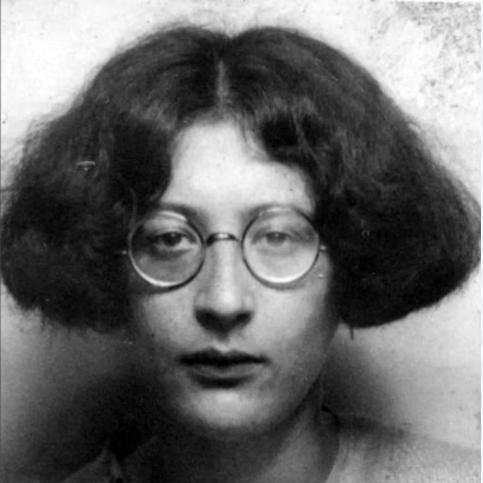
The prospects of revolution seem therefore quite restricted. For can a revolution avoid war? It is, however, on this feeble chance that we must stake everything or abandon all hope. An advanced country will not encounter, in the case of revolution, the difficulties which in backward Russia served as a base for the barbarous regime of Stalin. But a war of any scope will give rise to others as formidable.
▼
Source
source
Reflections on War (1933); also in Formative Writings
3 months 2 weeks ago
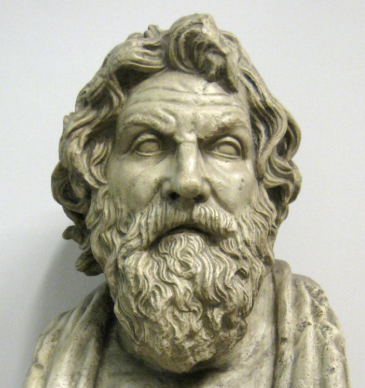
Count all wickedness foreign and alien.
▼
Source
source
§ 5
2 months 3 weeks ago
Prosperity, both for individuals and for states, means possessions; and possessions mean burdens and harness and slavery; and slavery for the mind, too, because it is not only the rich man's time that is pre-empted, but his affections, his judgement, and the range of his thoughts.
▼
Source
source
"The Irony of Liberalism"
4 months 2 days ago
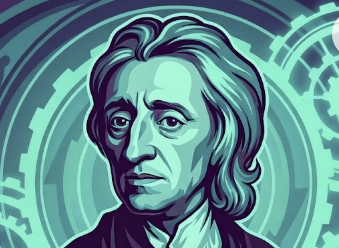
For wherever violence is used, and injury done, though by hands appointed to administer Justice, it is still violence and injury, however colour'd with the Name, Pretences, or Forms of Law, the end whereof being to protect and redress the innocent, by an unbiassed application of it, to all who are under it; wherever that is not bona fide done, War is made upon the Sufferers, who having no appeal on Earth to right them, they are left to the only remedy in such Cases, an appeal to Heaven.
▼
Source
source
Two Treatises of Government. The Second Treatise. Chapter 3: The State of War, §20 p. 281 books.google

4 months 4 days ago
The life of man is of no greater importance to the universe than that of an oyster.
▼
Source
source
On Suicide
4 months 1 day ago
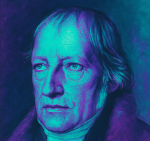
The essence of the modern state is the union of the universal with the full freedom of the particular, and with the welfare of individuals.
▼
Source
source
Sect. 260

3 months 2 weeks ago
If one choose the goods of the soul, he chooses the diviner [portion]; if the goods of the body, the merely mortal.
2 months 3 weeks ago
A heart without music is like beauty without melancholy.
2 months 1 week ago
This, I feel, is missing a vital point: that the sceptic is often a totally honest person who, for perfectly good, sound reasons, simply cannot see a case for belief. In fact many -- like Courty Bryan -- admit that they would like to be convinced, but find it impossible.
▼
Source
source
p. 77

2 months 2 weeks ago
To all this, someone is sure to object that life ought to subject itself to reason, to which we will reply that nobody ought to do what he is unable to do, and life cannot subject itself to reason. "Ought, therefore can," some Kantian will retort. To which we shall demur: "Cannot, therefore ought not." And life cannot submit itself to reason, because the end of life is living and not understanding.

4 months 4 days ago
And as every present state of a simple substance is naturally a consequence of its preceding state, so its present is pregnant with its future.
▼
Source
source
La monadologie (22).
4 months 2 days ago
Long discourses, and philosophical readings, at best, amaze and confound, but do not instruct children. When I say, therefore, that they must be treated as rational creatures, I mean that you must make them sensible, by the mildness of your carriage, and in the composure even in the correction of them, that what you do is reasonable in you, and useful and necessary for them; and that it is not out of caprichio, passion or fancy, that you command or forbid them any thing.
▼
Source
source
Sec. 81

3 months 4 weeks ago
"Milton was right," said my Teacher. "The choice of every lost soul can be expressed in the words 'Better to reign in Hell than to serve in Heaven.' There is always something they insist on keeping even at the price of misery."
▼
Source
source
Ch. 9
2 months 1 week ago
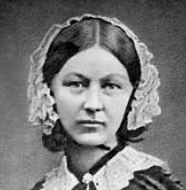
There is a physical, not moral, impossibility of supplying the wants of the intellect in the state of civilisation at which we have arrived. The stimulus, the training, the time, are all three wanting to us; or, in other words, the means and inducements are not there. Look at the poor lives we lead. It is a wonder that we are so good as we are, not that we are so bad. In looking round we are struck with the power of the organisations we see, not with their want of power. Now and then, it is true, we are conscious that there is an inferior organisation, but, in general, just the contrary.
2 months 4 weeks ago
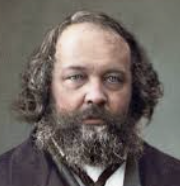
The people should never be deceived, under any pretext or for any purpose. It would not only be criminal but detrimental to the revolutionary cause, for deception of any kind, by its very nature, is shortsighted, petty, narrow, always sewn with rotten threads, so that it inevitably tears and is exposed.
▼
Source
source
"Appendix A"
4 months 2 weeks ago
Will is to grace as the horse is to the rider.
4 months 3 days ago
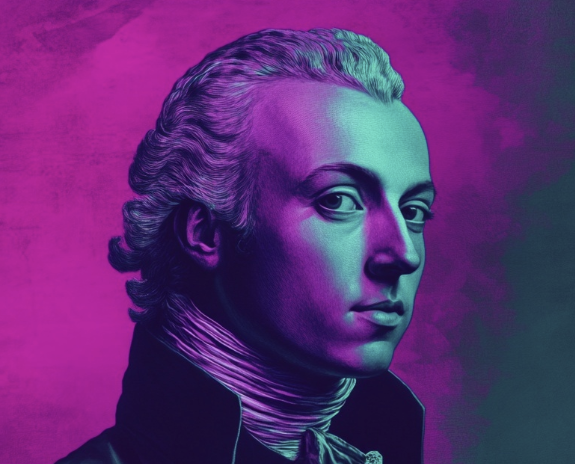
Human reason is by nature architectonic.
▼
Source
source
B 502
CivilSimian.com created by AxiomaticPanic, CivilSimian, Kalokagathia