


4 months 1 week ago
What can only be taught by the rod and with blows will not lead to much good; they will not remain pious any longer than the rod is behind them.
▼
Source
source
The Great Catechism. Second Command

3 months 3 weeks ago
In the Greek conception of parrhesia... truth-having is guaranteed by the possession of... moral qualities... required... to know... and... convey such truth...

3 weeks ago
He has now a second far greater success to gain: to seek out his real superiors, whom not the Tailor but the Almighty God has made superior to him, and see a little what he will do with these! Rebel against these also? Pass by with minatory eagle-glance, with calm-sniffing mockery, or even without any mockery or sniff, when these present themselves? The lion-hearted will never dream of such a thing. Forever far be it from him! His minatory eagle-glance will veil itself in softness of the dove: his lion- heart will become a lamb's; all is just indignation changed into just reverence, dissolved in blessed floods of noble humble love, how much heavenlier than any pride, nay, if you will, how much prouder!
3 months 2 weeks ago
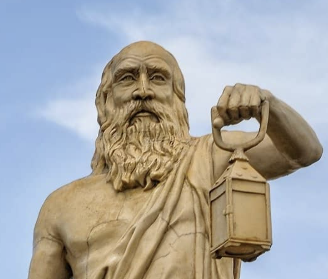
To Xeniades, who had purchased Diogenes at the slave market, he said, "Come, see that you obey orders."
▼
Source
source
Diogenes Laërtius, vi. 36
2 months 3 weeks ago
Without some affinity in human ideas art would certainly be impossible; but it can never be exactly determined how far the intentions of the poet are realized.
▼
Source
source
Gottlob Frege (1892). On Sense and Reference.

3 months 1 day ago
Whenever a separation is made between liberty and justice, neither, in my opinion, is safe.
▼
Source
source
Letter to M. de Menonville
3 months 1 day ago
Religion, always a principle of energy, in this new people, is no way worn out or impaired; and their mode of professing it is also one main cause of this free spirit. The people are Protestants; and of that kind which is the most adverse to all implicit submission of mind and opinion. This is a persuasion not only favourable to liberty, but built upon it.

3 months 4 weeks ago
The First [Friend] is the alter ego, the man who first reveals to you that you are not alone in the world by turning out (beyond hope) to share all your most secret delights. There is nothing to be overcome in making him your friend; he and you join like raindrops on a window. But the Second Friend is the man who disagrees with you about everything... Of course he shares your interests; otherwise he would not become your friend at all. But he has approached them all at a different angle. he has read all the right books but has got the wrong thing out of every one... How can he be so nearly right, and yet, invariably, just not right? He is as fascinating (and infuriating) as a woman.

4 months 1 day ago
I don't like the spirit of socialism - I think freedom is the basis of everything.
▼
Source
source
Letter to Constance Malleson (Colette), September 29, 1916
1 week 1 day ago
Within a nominally Christian world, chivalry upheld without any substantial alterations an Aryan ethics in the following things: (1) upholding the ideal of the hero rather than the saint, and of the conqueror rather than of the martyr; (2) regarding faithfulness and honor, rather than caritas and humbleness, as the highest virtues; (3) regarding cowardice and dishonor, rather than sin, as the worst possible evil; (4) ignoring or hardly putting into practice the evangelical precepts of not opposing evil and not retaliating against offenses, but rather, methodically punishing unfairness and evil; (5) excluding from its ranks those who followed the Christian precept 'Thou Shalt Not Kill' to the letter; and (6) refusing to love one's enemy and instead fighting him and being magnanimous only after defeating him.

4 months 2 weeks ago
The superior man governs men, according to their nature, with what is proper to them, and as soon as they change what is wrong, he stops.

1 week 4 days ago
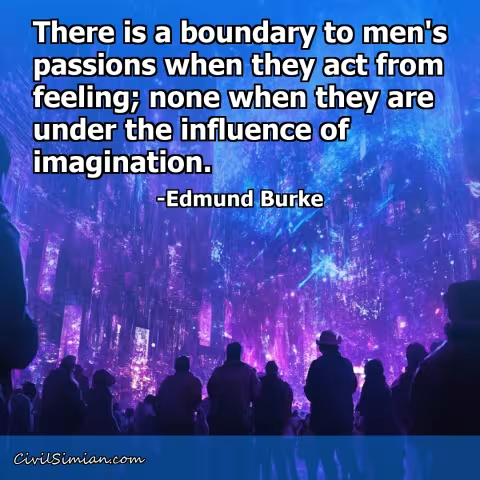
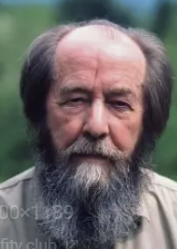
We, holding Art in our hands, confidently consider ourselves to be its masters; boldly we direct it, we renew, reform and manifest it; we sell it for money, use it to please those in power; turn to it at one moment for amusement - right down to popular songs and night-clubs, and at another - grabbing the nearest weapon, cork or cudgel - for the passing needs of politics and for narrow-minded social ends. But art is not defiled by our efforts, neither does it thereby depart from its true nature, but on each occasion and in each application it gives to us a part of its secret inner light.
3 months ago
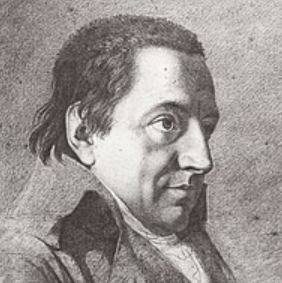
As Being and Life are one and the same, so are Death and Nothingness one and the same. But there is no real Death and no real Nothing ness, as we have already said. There is, however, an Apparent Life, and this is the mixture of life and death, of being and nothingness.
▼
Source
source
P. 4

4 months 2 days ago
Truth that is naked is the most beautiful, and the simpler its expression the deeper is the impression it makes; this is partly because it gets unobstructed hold of the hearer's mind without his being distracted by secondary thoughts, and partly because he feels that here he is not being corrupted or deceived by the arts of rhetoric, but that the whole effect is got from the thing itself.

3 months 1 day ago
'No one but you and one 'jade' I have fallen in love with, to my ruin. But being in love doesn't mean loving. You may be in love with a woman and yet hate her.

2 months 2 weeks ago
In the root of the word "faith" itself... there is implicit the idea of confidence, of surrender to the will of another, to a person. Confidence is placed only in persons. We trust in Providence, which we perceive as something personal and conscious, not in Fate, which is something impersonal. And thus it is in the person who tells us the truth, in the person that gives us hope, that we believe, not directly or immediately in truth itself or in hope itself.
3 weeks 6 days ago
Ideals are imaginative understanding of that which is desirable in that which is possible.
▼
Source
source
Ch. XII: "The Business of the Great Society", §9, p. 259

4 months ago
Great men, great nations, have not been boasters and buffoons, but perceivers of the terror of life, and have manned themselves to face it.
▼
Source
source
Fate

Just now
The Ambassador answered us that it was founded on the laws of their Prophet; that it was written in their Koran; that all nations who should not have acknowledged their authority were sinners; that it was their right and duty to make war upon them wherever they could be found, and to make slaves of all they could take as prisoners; and that every Mussulman who was slain in battle was sure to go to Paradise. He said, also, that the man who was the first to board a vessel had one slave over and above his share, and that when they sprang to the deck of an enemy's ship, every sailor held a dagger in each hand and a third in his mouth; which usually struck such terror into the foe that they cried out for quarter at once. That it was a law that the first who boarded an Enemy's Vessell should have one slave.
▼
Source
source
Concerning an interview in London with the ambassador from Tripoli, Sidi Haji Abdul Rahman Adja.

4 months 2 days ago
This sacrifice of common sense is the certain badge which distinguishes slavery from freedom; for when men yield up the privilege of thinking, the last shadow of liberty quits the horizon.
▼
Source
source
"Reflections on Titles", Pennsylvania Magazine
2 months 1 week ago
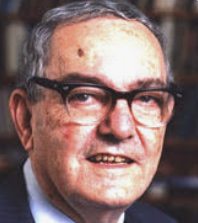
Even Darwin's natural selection only predicts that survivors will be fit enough, that is, fitter than their losing competitors; it postulates satisficing, not optimizing.
▼
Source
source
p. 166; As cited in Ronald J. Baker (2010, p. 122).
3 weeks ago
We shall either learn to know a Hero, a true Governor and Captain, somewhat better, when we see him; or else go on to be forever governed by the Unheroic;-had we ballot-boxes clattering at every street-corner, there were no remedy in these.

4 months 1 day ago
I never turned recreant to intellectual culture, or ceased to consider the power and practice of analysis as an essential condition both of individual and of social improvement. But I thought that it had consequences which required to be corrected, by joining other kinds of cultivation with it. The maintenance of a due balance among the faculties, now seemed to me of primary importance. The cultivation of the feelings became one of the cardinal points in my ethical and philosophical creed.
▼
Source
source
(pp. 143-144)

2 months 3 weeks ago
The next day as they were leaving Bethany, Jesus was hungry. Seeing in the distance a fig tree in leaf, he went to find out if it had any fruit. When he reached it, he found nothing but leaves, because it was not the season for figs. Then he said to the tree, “May no one ever eat fruit from you again.” And his disciples heard him say it. The next day when they came out from Bethany, He was hungry. After seeing in the distance a fig tree with leaves, He went to find out if there was anything on it. When He came to it, He found nothing but leaves, because it was not the season for figs. He said to it, "May no one ever eat fruit from you again!"
▼
Source
source
Mark 11:12-14 11:12-14
3 months 1 day ago
To kill someone for committing murder is a punishment incomparably worse than the crime itself. Murder by legal sentence is immeasurably more terrible than murder by brigands.
▼
Source
source
Part 1, Chapter 2
1 day ago
With clarity and quiet, I look upon the world and say: All that I see, hear, taste, smell, and touch are the creations of my mind. The sun comes up and the sun goes down in my skull. Out of one of my temples the sun rises, and into the other the sun sets. The stars shine in my brain; ideas, men, animals browse in my temporal head; songs and weeping fill the twisted shells of my ears and storm the air for a moment.

3 months 4 weeks ago
Man cannot be free if he does not know that he is subject to necessity, because his freedom is always won in his never wholly successful attempts to liberate himself from necessity.
▼
Source
source
The Human Condition (1958), part 3, chapter 16

4 months 1 day ago
Fire is the most tolerable third party.
▼
Source
source
January 2, 1853

3 months 4 weeks ago
Karsky: I met your father last week. Are you still interested in hearing how he is doing?
Hugo: No.
Karsky: It is very probable that you will be responsible for his death.
Hugo: It is virtually certain that he is responsible for my life. We are even.
▼
Source
source
Act 4, sc. 4
2 months 3 weeks ago
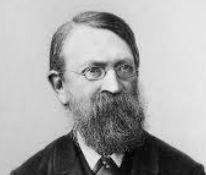
Some Machians were sufficiently impressed by Einstein's interpretations of Brownian movement to accept atomism. Mach himself brushed such objections aside, and also emphatically rejected Einstein's relativity theory.
▼
Source
source
W. W. Bartley III, "Philosophy of biology versus philosphy of physics" (2004) p. 412, Karl Popper: Critical Assessments of Leading Philosophers, Vol. III: Philosophy of Science 2.

3 months ago
Revolution is like the daughters of Pelias: it cuts humanity to pieces in order to rejuvenate it.
▼
Source
source
Act II.

4 months 4 days ago
No regulation of commerce can increase the quantity of industry in any society beyond what its capital can maintain. It can only divert a part of it into a direction into which it might not otherwise have gone; and it is by no means certain that this artificial direction is likely to be more advantageous to the society than that into which it would have gone of its own accord. Every individual is continually exerting himself to find out the most advantageous employment for whatever capital he can command. It is his own advantage, indeed, and not that of the society, which he has in his view. But the study of his own advantage naturally, or rather necessarily leads him to prefer that employment which is most advantageous to the society.
▼
Source
source
Chapter II, p. 486.
4 months 1 week ago
But the Jews are so hardened that they listen to nothing; though overcome by testimonies they yield not an inch. It is a pernicious race, oppressing all men by their usury and rapine. If they give a prince or magistrate a thousand florins, they extort twenty thousand from the subjects in payment. We must ever keep on guard against them.
▼
Source
source
863
Just now
Terms which imply theoretical views are admissible, as far as the theory is proved.

4 months 1 week ago
Let us not flutter too high, but remain by the manger and the swaddling clothes of Christ, in whom dwelleth all the fulness of the Godhead bodily.
▼
Source
source
50

1 month 1 week ago
Of the twenty or so civilizations known to modern Western historians, all except our own appear to be dead or moribund, and, when we diagnose each case, in extremis or post mortem, we invariably find that the cause of death has been either War or Class or some combination of the two. To date, these two plagues have been deadly enough, in partnership, to kill off nineteen out of twenty representatives of this recently evolved species of human society; but, up to now, the deadliness of these scourges has had a saving limit.
▼
Source
source
Ch. 2: The Present Point in History

2 months 1 week ago
Capitalism dislikes silence.

2 months 3 weeks ago
Existing is plagiarism.

4 months 1 week ago
Above all, every relation must be considered as suspicious, which depends in any degree upon religion, as the prodigies of Livy: And no less so, everything that is to be found in the writers of natural magic or alchemy, or such authors, who seem, all of them, to have an unconquerable appetite for falsehood and fable.
▼
Source
source
Aphorism 29

1 month 4 weeks ago
The media themselves are the avant-garde of our society. Avant-garde no longer exists in painting, music and poetry, it's the media themselves.
▼
Source
source
p. 274
3 months 4 weeks ago
It is certain that we cannot escape anguish, for we are anguish.

2 weeks 1 day ago
What maintains the marriage and what is it? Only the knowledge of the hearts, that is its beginning and end.
4 months 1 day ago
I think people who are unhappy are always proud of being so, and therefore do not like to be told that there is nothing grand about their unhappiness. A man who is melancholy because lack of exercise has upset his liver always believes that it is the loss of God, or the menace of Bolshevism, or some such dignified cause that makes him sad. When you tell people that happiness is a simple matter, they get annoyed with you.
▼
Source
source
Letter to W. W. Norton, 17 February, 1931
1 week 3 days ago
Mussolini is a man no less extraordinary than Lenin. He, too, is a political genius, of a greater reach than all the statesmen of the day, with the only exception of Lenin...
▼
Source
source
As quoted in The Myth of the Nation and the Vision of Revolution: The Origins of Ideological Polarization in the 20th Century, Jacob L. Talmon, University of California Press (1981) p. 451.
1 month 3 weeks ago
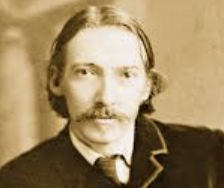
A happy man or woman is a better thing to find than a five-pound note. He or she is a radiating focus of goodwill; and their entrance into a room is as though another candle had been lighted. We need not care whether they could prove the forty-seventh proposition; they do a better thing than that, they practically demonstrate the great Theorem of the Liveableness of Life.
▼
Source
source
An Apology for Idlers.

4 months 1 week ago
Saturninus said, "Comrades, you have lost a good captain to make him an ill general."
▼
Source
source
Book III, Ch. 9. Of Vanity
3 weeks 2 days ago
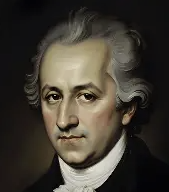
A talent is formed in stillness, a character in the world's torrent.
▼
Source
source
Torquato Tasso, Act I, sc. ii
CivilSimian.com created by AxiomaticPanic, CivilSimian, Kalokagathia