


1 month 4 weeks ago
Although meaningless in a tribal context, numbers and statistics assume mythic and magical qualities of infallibility in literate societies.
▼
Source
source
(p. 114)
2 months 3 weeks ago
Labour is the source of all wealth, the political economists assert. And it really is the source -- next to nature, which supplies it with the material that it converts into wealth. But it is even infinitely more than this. It is the prime basic condition for all human existence, and this to such an extent that, in a sense, we have to say that labour created man himself.
▼
Source
source
The Part Played by Labour in the Transition from Ape to Man

4 months ago
The film concludes with ... the most nauseatingly luscious, the most penetratingly vulgar mammy song that it has ever been my lot to hear. My flesh crept as the loud speaker poured out those sodden words, the greasy, sagging melody. I felt ashamed of myself for listening to such things, for even being a member of the species to which such things are addressed.
▼
Source
source
"Silence is Golden," p. 62



2 months 2 weeks ago
Is there not therefore rational necessity, but vital anguish that impels us to believe in God. And to believe in God - I must reiterate it yet again - is, before all and above all, to feel a hunger for God, a hunger for divinity, to be sensible to his lack and absence, to wish that God may exist. And it is the wish to save the human finality of the Universe. For one might even come to resign oneself to being absorbed by God, if it be that our consciousness is based upon Consciousness, if consciousness is the end of the Universe.
3 months ago
No nation which has sunk into this state of dependence can raise itself out of it by the means which have usually been adopted hitherto. Since resistance was useless to it when it was still in possession of all its powers, what can such resistance avail now that it has been deprived of the greater part of them?
▼
Source
source
Introduction p. 9-10

2 months 3 weeks ago
Everyone is mistaken, everyone lives in illusion. At best, we can admit a scale of fictions, a hierarchy of unrealities, giving preference to one rather than to another; but to choose, no, definitely not that...
3 months 3 weeks ago
I see the situation of man in the world of planetary technicity not as an inexitricable and inescapable destiny, but I see the task of thought precisely in this, that within its own limits it helps man as such achieve a satisfactory relationship to the essence of technicity. National Socialism did indeed go in this direction. Those people, however, were far too poorly equipped for thought to arrive at a really explicit relationship to what is happening today and has been underway for the past 300 years.
▼
Source
source
As translated by William Richardson in Risk and Meaning, Nicolas Bouleau (translated by Dené Oglesby and Martin Crossley), ed. Springer, 2011

3 months 5 days ago
Americans combine to give fêtes, found seminaries, build churches, distribute books, and send missionaries to the antipodes. Hospitals, prisons, and schools take shape in that way. Finally, if they want to proclaim a truth or propagate some feeling by the encouragement of a great example, they form an association. In every case, at the head of any new undertaking, where in France you would find the government or in England some territorial magnate, in the United States you are sure to find an association. I have come across several types of association in America of which, I confess, I had not previously the slightest conception, and I have often admired the extreme skill they show in proposing a common object for the exertions of very many and in inducing them voluntarily to pursue it.
▼
Source
source
Book Two, Chapter V.
4 months 1 week ago
For my own part, I cannot without grief see so much as an innocent beast pursued and killed that has no defence, and from which we have received no offence at all.
▼
Source
source
Ch. 11, tr. Cotton, 1685
3 months 2 weeks ago
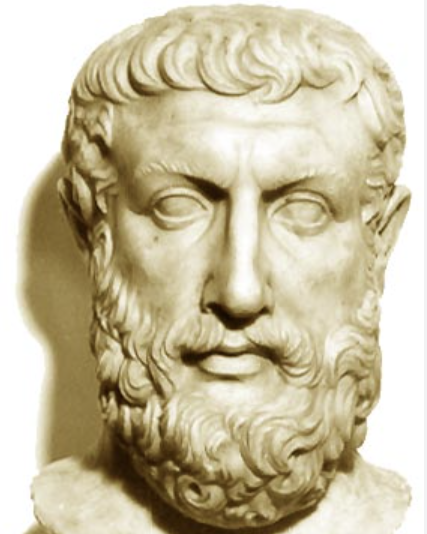
There is one story left, one road: that it is. And on this road there are very many signs that, being, is uncreated and imperishable, whole, unique, unwavering, and complete.
▼
Source
source
Frag. B 8.1-4, quoted by Simplicius, Commentary on the Physics, 144

4 months 2 days ago
If God has made us in his image, we have returned him the favor.
▼
Source
source
Notebooks, c.1735-c.1750
2 months ago
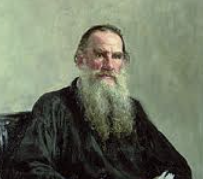
Science is meaningless because it gives no answer to our question, the only question important for us: 'what shall we do and how shall we live.
▼
Source
source
Quoted by Max Weber in his lecture "Science as a Vocation"; in Lynda Walsh (2013)
2 weeks 2 days ago
The tiger that assails me is in the right, and I who strike him down am also in the right. I defend against him not my right, but myself.
▼
Source
source
S. Byington, trans. (1913), p. 191
4 months ago
The more powerful and original a mind, the more it will incline towards the religion of solitude.
2 months 2 days ago
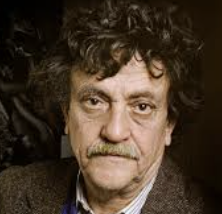
You learn about life by the accidents you have, over and over again, and your father is always in your head when that stuff happens. Writing, most of the time, for most people, is an accident and your father is there for that, too. You know, I taught writing for a while and whenever somebody would tell me they were going to write about their dad, I would tell them they might as well go write about killing puppies because neither story was going to work. It just doesn't work. Your father won't let it happen.
▼
Source
source
Interviewed by J. Rentilly, "The Best Jokes Are Dangerous", McSweeny's
3 months 5 days ago
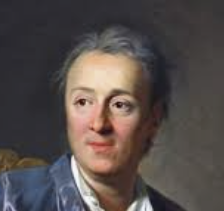
When one compares the talents one has with those of a Leibniz, one is tempted to throw away one's books and go die quietly in the dark of some forgotten corner.
▼
Source
source
Oeuvres complètes, vol. 7, p. 678
1 week 4 days ago
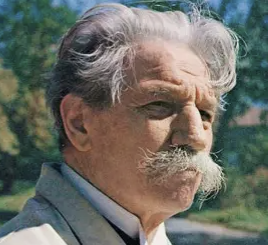
Altogether, Jesus never behaves like a man wandering in a system of delusions. He reacts in absolutely normal fashion to what is said to Him, and to the events that concern Him. He is never out of touch with reality.
▼
Source
source
Ch. 12 : Literary Work During My Medical Course, p. 133.
2 months 3 weeks ago
By capitulating to life, this world has betrayed nothingness. . . . I resign from movement, and from my dreams. Absence! You shall be my sole glory. . . . Let "desire" be forever stricken from the dictionary, and from the soul! I retreat before the dizzying farce of tomorrows. And if I still cling to a few hopes, I have lost forever the faculty of hoping.

3 weeks 4 days ago
Liberalism... has a left of center meaning in the United States. It has a slightly right of center meaning in much of continental Europe.

Just now
The whole art of government consists in the art of being honest.

3 months 6 days ago
Not to be content with Life is the unsatisfactory state of those which destroy themselves; who being afraid to live, run blindly upon their own Death, which no Man fears by Experience.

3 weeks ago
Far be it from me to say or insinuate a word of disparagement against such characters as Hampden, Elliot, Pym; whom I believe to have been right worthy and useful men. I have read diligently what books and documents about them I could come at;-with the honestest wish to admire, to love and worship them like Heroes; but I am sorry to say, if the real truth must be told, with very indifferent success! At bottom, I found that it would not do. They are very noble men, these; step along in their stately way, with their measured euphemisms, philosophies, parliamentary eloquences, Ship-moneys, Monarchies of Man; a most constitutional, unblamable, dignified set of men. But the heart remains cold before them.

4 months 1 day ago
He who gives himself entirely to his fellow-men appears to them useless and selfish; but he who gives himself partially to them is pronounced a benefactor and philanthropist.

3 months 1 day ago
Yes! We believe in a higher principle than your virtue and the kind of morality you speak of so paltrily and without much conviction. We believe that there is no imperative or reward for virtue for the soul because it simply acts according to the necessity of its inherent nature. The moral imperative expresses itself in an ought and presupposes the concept of an evil next to that of good.
▼
Source
source
P. 43
1 day ago
How difficult, how extremely difficult for the soul to sever itself from its body the world: from mountains, seas, cities, people. The soul is an octopus and these are its tentacles. ... No force anywhere on earth is as imperialistic as the human soul. It occupies and is occupied in turn, but it always considers its empire too narrow. Suffocating, it desires to conquer the world in order to breathe freely.
▼
Source
source
My Friend The Poet. Mount Athos., Ch. 19, p. 188

2 months 1 week ago
I use the word nursing for want of a better. It has been limited to signify little more than the administration of medicines and the application of poultices. It ought to signify the proper use of fresh air, light, warmth, cleanliness, quiet, and the proper selection and administration of diet - all at the least expense of vital power to the patient.
▼
Source
source
Notes on Nursing
2 months ago
Is not the reason of the confidence of the positive, critical, experimental scientists, and of the reverent attitude of the crowd towards their doctrines, still the same? At first it seems strange how the theory of evolution (which, like the redemption in theology, serves the majority as a popular expression of the whole new creed) can justify people in their injustice, and it seems as if the scientific theory dealt only with facts and did nothing but observe facts. But that only seems so. It seemed just the same in the case of theological doctrine: theology, it seemed, was only occupied with dogmas and had no relation to people's lives, and it seemed the same with regard to philosophy, which appeared to be occupied solely with transcendental reasonings. But that only seemed so. It was just the same with the Hegelian doctrine on a large scale and with the particular case of the Malthusian teaching.

2 weeks 1 day ago
What is more affectionate to others than man? Yet what is more savage against them than anger?

2 months 2 weeks ago
Glorious is the risk! - καλος γαρ ο κινδυνος, glorious is the risk that we are able to run of our souls never dying ... Faced with this risk, I am presented with arguments designed to eliminate it, arguments demonstrating the absurdity of the belief in the immortality of the soul; but these arguments fail to make any impression on me, for they are reasons and nothing more than reasons, and it is not with reasons that the heart is appeased. I do not want to die - no; I neither want to die nor do I want to want to die; I want to live for ever and ever and ever. I want this "I" to live - this poor "I" that I am and that I feel myself to be here and now, and therefore the problem of the duration of my soul, of my own soul, tortures me.
5 months 1 day ago
The natural way of doing this [seeking scientific knowledge or explanation of fact] is to start from the things which are more knowable and obvious to us and proceed towards those which are clearer and more knowable by nature; for the same things are not 'knowable relatively to us' and 'knowable' without qualification. So in the present inquiry we must follow this method and advance from what is more obscure by nature, but clearer to us, towards what is more clear and more knowable by nature. Now what is to us plain and obvious at first is rather confused masses, the elements and principles of which became known to us by later analysis...

4 months 1 week ago
Since my logic aims to teach and instruct the understanding, not that it may with the slender tendrils of the mind snatch at and lay hold of abstract notions (as the common logic does), but that it may in very truth dissect nature, and discover the virtues and actions of bodies, with their laws as determined in matter; so that this science flows not merely from the nature of the mind, but also from the nature of things.
▼
Source
source
Aphorism 52

2 months 1 week ago
Power tends to reduce openness... Power tries to solidify and stabilize its position by eradicating spaces open to play, or incalculable spaces.
2 months ago
Truth is ... one approach to the attainment of the good, but in and of itself, it is neither the good nor the beautiful ... Socrates, Pascal, and others regarded knowledge of the truth with regard to purposeless objects as incongruous with the good ... [by] exposing deception, truth destroys illusion, which is the principle attribute of beauty.
2 months 3 days ago
You need to know enough of the natural sciences so that you are not a stranger in the world.
2 months 4 weeks ago
No theory, no ready-made system, no book that has ever been written will save the world. I cleave to no system. I am a true seeker.
▼
Source
source
As quoted in Michael Bakunin (1937) by E.H. Carr, p. 175

3 months 1 week ago
It is manifest that every soul has a certain continuity with the soul of the Universe, so that it must be understood to exist and to be included not only there where it liveth and feeleth, but it is also by its essence and substance diffused throughout immensity. The power of each soul is itself somehow present afar in the Universe. It is not mixed, yet is there in some presence.
3 weeks ago
Philosophers of science have repeatedly demonstrated that more than one theoretical construction can always be placed upon a given collection of data. History of science indicates that, particularly in the early developmental stages of a new paradigm, it is not even very difficult to invent such alternates. But that invention of alternates is just what scientists seldom undertake except during the pre-paradigm stage of their science's development and at very special occasions during its subsequent evolution. So long as the tools a paradigm supplies continue to prove capable of solving the problems it defines, science moves fastest and penetrates most deeply through confident employment of those tools. The reason is clear. As in manufacture so in science-retooling is an extravagance to be reserved for the occasion that demands it. The significance of crises is the indication they provide that an occasion for retooling has arrived.
▼
Source
source
p. 76
2 months 3 weeks ago
The "kingdom of God" has become the "other world," which stands mechanically beside "this world"-an opposition unknown to the strongest periods of Christianity.
▼
Source
source
L. Coser, trans. (1961), p. 97
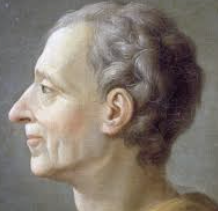
2 months 2 weeks ago
There are only two cases in which war is just: first, in order to resist the aggression of an enemy, and second, in order to help an ally who has been attacked.
▼
Source
source
No. 95. (Usbek writing to Rhedi)
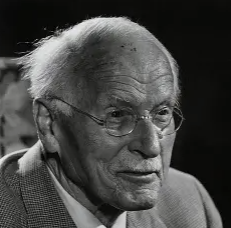
2 months 3 weeks ago
It is imperative that we should not pare down the meaning of a dream to fit some narrow doctrine. ... No language exists that cannot be misused. It is hard to realize how badly we are fooled by the abuse of ideas, it even seems as if the unconscious had a way of strangling the physician in the coils of his own theory. p 11; this was originally listed here in a somewhat misleading form combining it with another statement on the interpretations of dreams on p. 14: No language exists that cannot be misused ... Every Interpretation is hypothetical, for it is a mere attempt to read an unfamiliar text.

3 months 4 weeks ago
The worst of misfortunes is still a stroke of luck, since one feels oneself living when one experiences it.
▼
Source
source
p. 275
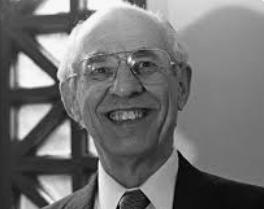
2 months 1 week ago
Truth and falsity are the most fundamental terms of rational criticism, and any adequate philosophy must give some account of these, or failing that, show that they can be dispensed with.
▼
Source
source
"Introduction: Philosophy of language and the rest of philosophy"
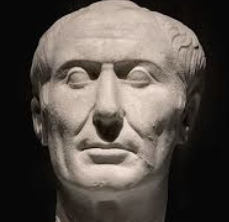
1 month 4 weeks ago
He who is bent on doing evil can never want occasion.
▼
Source
source
Maxim 459
3 weeks ago
We call that fire of the black thunder-cloud "electricity," and lecture learnedly about it, and grind the like of it out of glass and silk: but what is it? What made it? Whence comes it? Whither goes it? Science has done much for us; but it is a poor science that would hide from us the great deep sacred infinitude of Nescience, whither we can never penetrate, on which all science swims as a mere superficial film. This world, after all our science and sciences, is still a miracle; wonderful, inscrutable, magical and more, to whosoever will think of it.
1 month 3 weeks ago
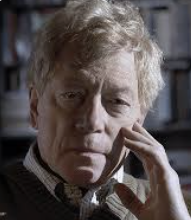
In discussing tradition, we are not discussing arbitrary rules and conventions. We are discussing answers that have been discovered to enduring questions.
▼
Source
source
(p. 21)
2 weeks 1 day ago
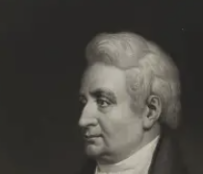
Preaching has become a byword for long and dull conversation of any kind; and whoever wishes to imply, in any piece of writing, the absence of everything agreeable and inviting, calls it a sermon.
▼
Source
source
Vol. I, ch. 3, p. 81
4 months 3 weeks ago
Everything considered, a determined soul will always manage.

3 months 3 weeks ago
Form no covetous desire, so that the demon of greediness may not deceive thee, and the treasure of the world may not be tasteless to thee.
CivilSimian.com created by AxiomaticPanic, CivilSimian, Kalokagathia