


2 months 1 week ago
Catastrophic fatality abruptly switches over into salvation.
2 months 3 weeks ago
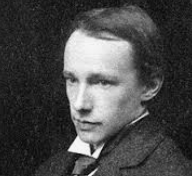
The study of Ethics would, no doubt, be far more simple, and its results far more "systematic," if, for instance, pain were an evil of exactly the same magnitude as pleasure is a good; but we have no reason whatever to assume that the Universe is such that ethical truths must display this kind of symmetry ... .
▼
Source
source
Principia Ethica (1903), ch. VI.

2 weeks ago
Very often the things that cost nothing cost us the most heavily; I can show you many objects the quest and acquisition of which have wrested freedom from our hands.
2 months 3 weeks ago
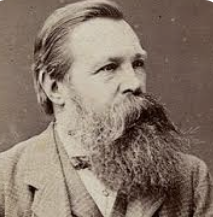
The slave is sold once and for all; the proletarian must sell himself daily and hourly. The individual slave, property of one master, is assured an existence, however miserable it may be, because of the master's interest. The individual proletarian, property as it were of the entire bourgeois class which buys his labor only when someone has need of it, has no secure existence. This existence is assured only to the class as a whole.
3 months 2 weeks ago
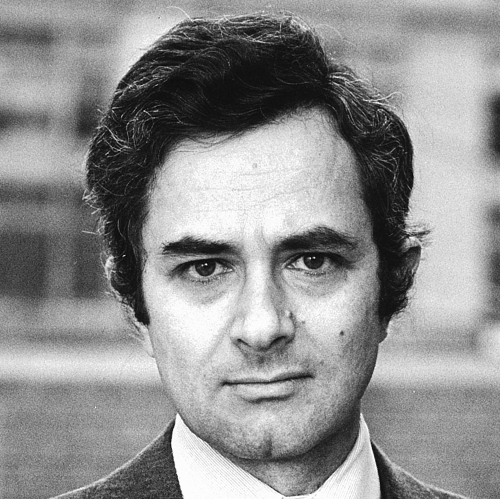
If we tried to rely entirely on reason, and pressed it hard, our lives and beliefs would collapse - a form of madness that may actually occur if the inertial force of taking the world and life for granted is somehow lost. If we lose our grip on that, reason will not give it back to us.
▼
Source
source
"The Absurd" (1971), p. 20.
3 months 2 weeks ago
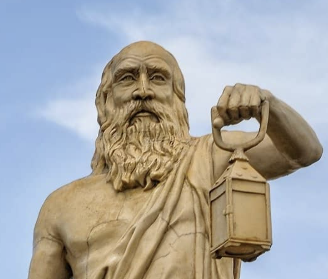
Asked where he came from, he said, "I am a citizen of the world."
▼
Source
source
Diogenes Laërtius, vi. 63

4 months 1 day ago
It is a serious question among them whether they [Africans] are descended from monkeys or whether the monkeys come from them. Our wise men have said that man was created in the image of God. Now here is a lovely image of the Divine Maker: a flat and black nose with little or hardly any intelligence. A time will doubtless come when these animals will know how to cultivate the land well, beautify their houses and gardens, and know the paths of the stars: one needs time for everything.
▼
Source
source
Les Lettres d'Amabed (1769): Septième Lettre d'Amabed

4 months 3 days ago
Look round this universe. What an immense profusion of beings, animated and organised, sensible and active! You admire this prodigious variety and fecundity. But inspect a little more narrowly these living existences, the only beings worth regarding. How hostile and destructive to each other! How insufficient all of them for their own happiness! How contemptible or odious to the spectator! The whole presents nothing but the idea of a blind Nature, impregnated by a great vivifying principle, and pouring forth from her lap, without discernment or parental care, her maimed and abortive children!
▼
Source
source
Philo to Cleanthes, Part XI
3 months 2 weeks ago
That is what is meant, I think by the allegation that it is good simply to be alive, even if one is undergoing terrible experiences. The situation is roughly this: There are elements which, if added to one's experience, make life better; there are other elements which, if added to one's experience, make life worse. But what remains when these are set aside is not merely neutral: it is emphatically positive. Therefore life is worth living even when the bad elements of experience are plentiful, and the good ones too meager to outweigh the bad ones on their own. The additional positive weight is supplied by experience itself, rather than by any of its contents.
▼
Source
source
"Death", p. 2. This passage not present in the 1970 version (Nous, IV, no. 1), but present in the 1979 version.
2 months 2 weeks ago
And yet there is nothing so badly imagined: nature seems to have provided, that the follies of men should be transient, but they by writing books render them permanent. A fool ought to content himself with having wearied those who lived with him: but he is for tormenting future generations; he is desirous that his folly should triumph over oblivion, which he ought to have enjoyed as well as his grave; he is desirous that posterity should be informed that he lived, and that it should be known for ever that he was a fool. Commonly paraphrased as "An author is a fool who, not content with having bored those who have lived with him, insists on boring future generations".
▼
Source
source
No. 66. (Rica writing to * * *)

4 months ago
The vessel, though her masts be firm, beneath her copper bears a worm.
▼
Source
source
"Though All the Fates Should Prove Unkind", st. 2

3 months ago
Those who have been once intoxicated with power, and have derived any kind of emolument from it, even though but for one year, never can willingly abandon it. They may be distressed in the midst of all their power; but they will never look to any thing but power for their relief.
4 months 3 weeks ago
By such reflections and by the continuance in them of a divine nature, the qualities which we have described grew and increased among them; but when the divine portion began to fade away, and became diluted too often and too much with the mortal admixture, and the human nature got the upper hand, they then, being unable to bear their fortune, behaved unseemly, and to him who had an eye to see grew visibly debased, for they were losing the fairest of their precious gifts; but to those who had no eye to see the true happiness, they appeared glorious and blessed at the very time when they were full of avarice and unrighteous power.
3 weeks ago
He who outrages benevolence is called a ruffian: he who outrages righteousness is called a villain. I have heard of the cutting off of the villain Chow, but I have not heard of the putting of a ruler to death.
▼
Source
source
1B:8, In relation to righteousness and the overthrow of the tyrannous King Zhou of Shang, as translated by Sir Robert Kennaway Douglas, China (1904), p. 8

2 months 3 weeks ago
Verily I say unto thee, That this night, before the cock crow, thou shalt deny me thrice.
▼
Source
source
26:34 (KJV) Said to Peter.
3 months ago
Whatever is supreme in a state, ought to have, as much as possible, its judicial authority so constituted as not only not to depend upon it, but in some sort to balance it. It ought to give a security to its justice against its power. It ought to make its judicature, as it were, something exterior to the state.

4 months ago
We later learned that all the nineteen passengers in the non-smoking compartment had been killed. When the plane had hit the water a hole had been made in the plane and the water had rushed in. I had told a friend at Oslo who was finding me a place that he must find me a place where I could smoke, remarking jocularly, 'If I cannot smoke, I shall die'. Unexpectedly, this turned out to be true.
2 months 1 week ago
Popular presentation today is all too often that which puts the mob in a position to talk about something without understanding it.
▼
Source
source
G 32

2 months 3 weeks ago
Far from diminishing the appetite for power, suffering exasperates it; hence the mind feels more comfortable in the society of a braggart than in that of a martyr; and nothing is more repugnant to it than the spectacle of dying for an idea.

3 months 4 weeks ago
This world belongs to the energetic.
▼
Source
source
Resources
1 month 2 weeks ago
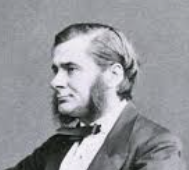
All truth, in the long run, is only common sense clarified.
▼
Source
source
"On the Study of Biology"

4 months 1 day ago
It was the excess to which imaginary systems of religion had been carried, and the intolerance, persecutions, burnings, and massacres, they occasioned, that first induced certain persons to propagate infidelity; thinking, that upon the whole, that it was better not to believe at all, than to believe a multitude of things and complicated creeds, that occasioned so much mischief in the world. But those days are past, persecution has ceased, and the antidote then set up against it has no longer even the shadow of apology. We profess, and we proclaim in peace, the pure, unmixed, comfortable, and rational belief of a God, as manifested to us in the universe. We do this without any apprehension of that belief being made a cause of persecution as other beliefs have been, or of suffering persecution ourselves. To God, and not to man, are all men to account for their belief.
▼
Source
source
A Discourse, &c. &c.
2 weeks 5 days ago
Let us ask the Gods not for possessions, but for things to do; happiness is in making things rather than consuming them.
▼
Source
source
Ch. 2 : On Youth
3 months ago
To the Deity must be left the task of infinite perfection, while to us poor, weak, incapable mortals, there was no rule of conduct so safe as experience.
▼
Source
source
Speech in the House of Commons (6 May 1791), quoted in The Parliamentary History of England, From the Earliest Period to the Year 1803, Vol. XXIX (1817), column 388
2 months 1 week ago
Ritual practices ensure that we treat not only other people but also things in beautiful ways, that there is an affinity between us and other people as well as things.

2 weeks 6 days ago
Thus Mr. Sale informs me, the old Arab Tribes would gather in liveliest gaudeamus, and sing, and kindle bonfires, and wreathe crowns of honour, and solemnly thank the gods that, in their Tribe too, a Poet had shewn himself. As indeed they well might; for what usefuller, I say not nobler and heavenlier thing could the gods, doing their very kindest, send to any Tribe or Nation, in any time or circumstances?
2 months 1 week ago
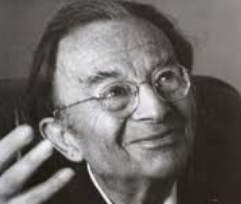
Temperament refers to the mode of reaction and is constitutional and not changeable; character is essentially formed by a person's experiences, especially of those in early life, and changeable, to some extent, by insights and new kinds of experiences. If a person has a choleric temperament, for instance, his mode of reaction is "quick and strong." But what he is quick or strong about depends on his kind of relatedness, his character. If he is a productive, just, loving person he will react quickly and strongly when he loves, when he is enraged by injustice, and when he is impressed by a new idea. If he is a destructive or sadistic character, he will be quick and strong in his destructiveness or in his cruelty. The confusion between temperament and character has had serious consequences for ethical theory. Preferences with regard to differences in temperament are mere matters of subjective taste. But differences in character are ethically of the most fundamental importance.
▼
Source
source
Ch. 3
Just now
The wife of my God is matter; they wrestle with each other, they laugh and weep, they cry out in the nuptial bed of flesh. They spawn and are dismembered. They fill sea, land, and air with species of plants, animals, men, and spirits. This primordial pair embraces, is dismembered, and multiplies in every living creature. All the concentrated agony of the Universe bursts out in every living thing. God is imperiled in the sweet ecstasy and bitterness of flesh. But he shakes himself free, he leaps out of brains and loins, then clings to new brains and new loins until the struggle for liberation again breaks out from the beginning.
2 weeks 6 days ago
They understood in their heart that it was indispensable to be brave; that Odin would have no favor for them, but despise and thrust them out, if they were not brave. Consider too whether there is not something in this! It is an everlasting duty, valid in our day as in that, the duty of being brave. Valor is still value. The first duty for a man is still that of subduing Fear. We must get rid of Fear; we cannot act at all till then.

4 months 1 week ago
A little folly is desirable in him that will not be guilty of stupidity.
▼
Source
source
Book III, Ch. 9. Of Vanity
4 months 3 weeks ago
He is a dreamer of ancient times, or rather, of the myths of what ancient times used to be. Such men are harmless in themselves, but their queer lack of realism makes them fools for others.

3 months 3 weeks ago
It has no sense and cannot just unless it comes to terms with death. Mine as (well as) that of the other. Between life and death, then, this is indeed the place of a sententious injunction that always feigns to speak the just.
▼
Source
source
Exordium

4 weeks 1 day ago
It's quite true that there were billions of years that I didn't exist that I was never bothered about.
Life itself is sitting in a room with a murderer, while eating a nice meal. You're just waiting for the meal to be over...
LIFE is the terrible condition.
2 months 3 weeks ago
Fact be vertuous, or vicious, as Fortune pleaseth.
▼
Source
source
The Second Part, Chapter 27, p. 153

3 months 4 weeks ago
[T]hings are impressed better by active than by passive repetition. ...[I]t pays better to wait and recollect by an effort from within, than to look at the book again.
▼
Source
source
Ch. 16
2 weeks 6 days ago
"No man in this fashionable London of yours," friend Sauerteig would say, "speaks a plain word to me. Every man feels bound to be something more than plain; to be pungent withal, witty, ornamental. His poor fraction of sense has to be perked into some epigrammatic shape, that it may prick into me;-perhaps (this is the commonest) to be topsyturvied, left standing on its head, that I may remember it the better! Such grinning inanity is very sad to the soul of man. Human faces should not grin on one like masks; they should look on one like faces! I love honest laughter, as I do sunlight; but not dishonest: most kinds of dancing too; but the St.-Vitus kind not at all! A fashionable wit, ach Himmel, if you ask, Which, he or a Death's- head, will be the cheerier company for me? pray send not him!"
4 months 3 weeks ago
The military mind remains unparalleled as a vehicle of creative stupidity.
3 months 4 weeks ago
Romeo wants Juliet as the filings want the magnet; and if no obstacles intervene he moves towards her by as straight a line as they. But Romeo and Juliet, if a wall be built between them, do not remain idiotically pressing their faces against its opposite sides like the magnet and the filings with the card. Romeo soon finds a circuitous way, by scaling the wall or otherwise, of touching Juliet's lips directly. With the filings the path is fixed; whether it reaches the end depends on accidents. With the lover it is the end which is fixed, the path may be modified indefinitely.
▼
Source
source
Ch. 1 : The Scope of Psychology

1 month 3 weeks ago
The TV generation is postliterate and retribalized. It seeks by violence to scrub the old private image and to merge in a new tribal identity, like any corporate executive.
▼
Source
source
(p. 201)
2 months 2 weeks ago
Is it not altogether absurd that, under actual circumstances, the average man does not feel spontaneously, and without being preached at, an ardent enthusiasm for those sciences and the related ones of biology?... Every day furnishes a new invention which this average man utilises. Every day produces a new anesthetic or vaccine from which this average man benefits. ... How is it, nevertheless, that there is no sign of the masses imposing on themselves any sacrifice of money or attention in order to endow science more worthily? Far from this being the case, the post-war period has converted the man of science into a new social pariah.
▼
Source
source
Chap.IX: The Primitive and the Technical
4 months 1 day ago
If I had had more time, this letter would have been shorter.
▼
Source
source
Written by Voltaire in an over-long letter to a friend, quoted to A. P. Martinich in Philosophical Writing: An Introduction, Note to the Second Edition, 1996
2 months 3 weeks ago
The world begins and ends with us. Only our consciousness exists, it is everything, and this everything vanishes with it. Dying, we leave nothing. Then why so much fuss around an event that is no such thing?
3 months 4 weeks ago
I regard it as the irresistible effect of the Copernican astronomy to have made the theological scheme of redemption absolutely incredible.
▼
Source
source
Quoted in Robert D. Richardson, Jr., Emerson, the Mind On Fire (Univ. of Calif Press 1995), p. 124
Just now
The worm stood straight on God's blood-splattered threshold thenand beat his drum, beat it again, and raised his throat:'You've matched all well on earth, wine, women, bread, and song,but why, you Murderer, must you slay our children? Why?'God foamed with rage and raised his sword to pierce that throat,but his old copper sword, my lads, stuck at the bone.Then from his belt the worm drew his black-hilted sword,rushed up and slew that old decrepit god in heaven!And now, my gallant lads - I don't know when or how -that worm's god-slaying sword has fallen into my hands;I swear that from its topmost iron tip the blood still drips!
▼
Source
source
Odysseus' song, Book III, line 424

1 week 1 day ago
If every one in the world will love universally; states not attacking one another; houses not disturbing one another; thieves and robbers becoming extinct; emperor and ministers, fathers and sons, all being affectionate and filial -- if all this comes to pass the world will be orderly. Therefore, how can the wise man who has charge of governing the empire fail to restrain hate and encourage love? So, when there is universal love in the world it will be orderly, and when there is mutual hate in the world it will be disorderly.
▼
Source
source
Book 4; Universal Love I

4 months ago
What's sauce for the gander is sauce for the goose.
▼
Source
source
Introduction, p. 37.
1 week 2 days ago
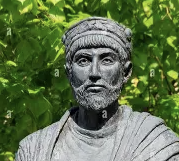
Are you not aware that all offerings whether great or small that are brought to the gods with piety have equal value, whereas without piety, I will not say hecatombs, but, by the gods, even the Olympian sacrifice of a thousand oxen is merely empty expenditure and nothing else?
▼
Source
source
Oration to the Cynic Heracleios
2 months 1 week ago
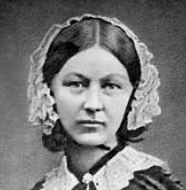
You ask me why I do not write something... I think one's feelings waste themselves in words; they ought all to be distilled into actions and into actions which bring results.
▼
Source
source
Letter to a friend, quoted in The Life of Florence Nightingale (1913) by Edward Tyas Cook, p. 94
2 months 4 weeks ago
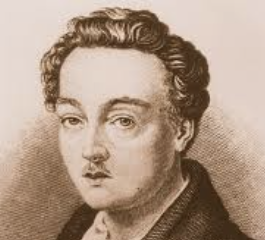
Peace to the shacks! War on the palaces!
CivilSimian.com created by AxiomaticPanic, CivilSimian, Kalokagathia