



2 months 1 week ago
And the central assertion of his philosophy is that this inner realm is the 'spiritual world' and that once man has learned to enter this realm, he realizes that it is not a mere imaginative reflection of the external world, but a world that possesses its own independent reality.
▼
Source
source
p. 161
4 months 2 weeks ago
The wise is one only. It is unwilling and willing to be called by the name of Zeus.

3 weeks 3 days ago
So this is something... we see happening... in the war in Ukraine. A lot of people raise the question, "Why are Ukrainians resisting the Russian invasion as ferociously as they are?" and there's been a little bit of a debate over whether this is due to the fact that Ukrain is democratic, a liberal democracy, and Russia is not, or whether it's simply a fight over sovereignty... I think that that's a false dichotomy because you really don't fight for liberalism as an abstract principle. You fight for it as it is embedded in... your nation... From my... frequent visits to Ukraine... I believe... that's what's really going on, that Ukrainians want their sovereignty, but the reason they want it so desperately is that they want to have a free Ukraine and not Putin's Ukraine, not a... centralized dictatorship, and that's why they're willing to fight so tenaciously.
▼
Source
source
25:44:00
3 months 2 weeks ago
When Eudæmonidas heard a philosopher arguing that only a wise man can be a good general, "This is a wonderful speech," said he; "but he that saith it never heard the sound of trumpets."
▼
Source
source
62 Eudæmonidas
4 months 1 day ago
Prose is when all the lines except the last go on to the end. Poetry is when some of them fall short of it.
▼
Source
source
As quoted in Life of John Stuart Mill (1954) by M. St.J. Packe, Bk. I, Ch. II
4 months 2 days ago
A mind of slow apprehension is therefore not necessarily a weak mind. The one who is alert with abstractions is not always profound, he is more often very superficial.
▼
Source
source
Kant, Immanuel (1996), page 99
2 months 1 week ago
In a certain sense, everything is everywhere at all times. For every location involves an aspect of itself in every other location. Thus every spatio-temporal standpoint mirrors the world.
▼
Source
source
Ch. 5: "The Romantic Reaction", p. 128
1 week 2 days ago
The individual is reduced to a negligible quantity, perhaps less in his consciousness than in his practice and in the totality of his obscure emotional states that are derived from this practice. The individual has become a mere cog in an enormous organization of things and powers which tear from his hands all progress, spirituality, and value in order to transform them from their subjective form into the form of a purely objective life. It needs merely to be pointed out that the metropolis is the genuine arena of this culture which outgrows all personal life. Here in buildings and educational institutions, in the wonders and comforts of space-conquering technology, in the formations of community life, and in the visible institutions of the state, is offered such an overwhelming fullness of crystallized and impersonalized spirit that the personality, so to speak, cannot maintain itself under its impact.
▼
Source
source
p. 422
4 months 1 day ago
Freedom of Men under Government is, to have a standing Rule to live by, common to every one of that Society, and made by the Legislative Power erected in it; a Liberty to follow my own Will in all things, where the Rule prescribes not; and not to be subject to the inconstant, uncertain, unknown, Arbitrary Will of another Man: as Freedom of Nature is, to be under no other restraint but the Law of Nature.
▼
Source
source
Second Treatise of Civil Government, Ch. IV, sec. 21
1 month 1 week ago
Given our anthropocentric bias, thinking of non-human vertebrates not just as equivalent in moral status to toddlers or infants, but as though they were toddlers or infants, is a useful exercise. Such reconceptualisation helps correct our lack of empathy for sentient beings whose physical appearance is different from "us". Ethically, the practice of intelligent "anthropomorphism" shouldn't be shunned as unscientific, but embraced insofar as it augments our stunted capacity for empathy. Such anthropomorphism can be a valuable corrective to our cognitive and moral limitations. This is not a plea to be sentimental, simply for impartial benevolence.
▼
Source
source
Reprogramming Predators, BLTC Research, 2009

2 months 3 weeks ago
In that very hour he became overjoyed in the holy spirit and said: “I publicly praise you, Father, Lord of heaven and earth, because you have carefully hidden these things from wise and intellectual ones and have revealed them to young children. Yes, O Father, because this is the way you approved.
▼
Source
source
Luke 10:21, New World Translation of the Holy Scriptures
2 months 3 weeks ago
Since the Devil is the adversary of Christ he should occupy a position equivalent to his and be the Son of God as well. Satan would be the first Son of God and Christ the second.
▼
Source
source
Paris, 1991, p. 207. As quoted in Curzio Nitoglia
2 months 1 week ago
Violence and freedom are the two endpoints on the scale of power.

2 months 3 weeks ago
To devastate by language, to blow up the word and with it the world.

4 months 6 days ago
Nature forms us for ourselves, not for others; to be, not to seem.
▼
Source
source
Book II, Ch. 37. Of the Resemblance of Children to their Brothers
3 weeks ago
Of the radical and iconoclastic ideals preached in the early years of the revolution, all were discarded except those which helped the state to exert absolute control over the individual. Hence the idea of collective education and reduction of parental authority to the minimum continued to hold sway, but an end was put to "progressive" educational methods designed to promote initiative and independence. Strict discipline became once more the rule, and in this respect Soviet schools differed from Tsarist ones only in the immensely increased emphasis on indoctrination. In due course, puritanical sexual ethics were restored to favour.
▼
Source
source
(pg. 53)
2 months 3 weeks ago
Ye fools, did not he that made that which is without make that which is within also?
▼
Source
source
11:40 (KJV)

3 months 4 days ago
I could never divide myself from any man upon the difference of an opinion, or be angry with his judgement for not agreeing with me in that, from which perhaps within a few days I should dissent myself.
▼
Source
source
Section 6

5 months 1 day ago
Style ought to prove that one believes in an idea; not only that one thinks it but also feels it.

2 weeks ago
There is no sorrow in the world, when we have escaped from the fear of death.
2 months 2 days ago
I do not define time, space, place, and motion, as being well known to all. Only I must observe, that the common people conceive those quantities under no other notions but from the relation they bear to sensible objects. And thence arise certain prejudices, for the removing of which it will be convenient to distinguish them into absolute and relative, true and apparent, mathematical and common.
▼
Source
source
Definitions - Scholium
2 months 3 weeks ago
This very second has vanished forever, lost in the anonymous mass of the irrevocable. It will never return. I suffer from this and I do not. Everything is unique - and insignificant.
2 months 3 weeks ago
If to describe a misery were as easy to live through it!

4 months ago
No doubt, when modesty was made a virtue, it was a very advantageous thing for the fools, for everybody is expected to speak of himself as if he were one.
▼
Source
source
Vol. 1, Ch. 3, Section 2: Pride
2 months 3 weeks ago
The illustrious archbishop of Cambray was of more worth than his chambermaid, and there are few of us that would hesitate to pronounce, if his palace were in flames, and the life of only one of them could be preserved, which of the two ought to be preferred ... Supposing the chambermaid had been my wife, my mother or my benefactor. This would not alter the truth of the proposition. The life of Fenelon would still be more valuable than that of the chambermaid; and justice, pure, unadulterated justice, would still have preferred that which was most valuable. Justice would have taught me to save the life of Fenelon at the expence of the other. What magic is there in the pronoun "my", to overturn the decisions of everlasting truth?
▼
Source
source
Vol.1, bk. 2, ch. 2

3 months 4 weeks ago
To aspire to be superhuman is a most discreditable admission that you lack the guts, the wit, the moderating judgment to be successfully and consummately human.
▼
Source
source
Spinoza's Worm," p. 75

3 months 4 weeks ago
We must have kings, and we must have nobles. Nature provides such in every society, - only let us have the real instead of the titular. Let us have our leading and our inspiration from the best. In every society some men are born to rule, and some to advise. Let the powers be well directed, directed by love, and they would everywhere be greeted with joy and honor.
4 months 1 day ago
I doubt not but one great reason why many children abandon themselves wholly to silly sports, and trifle away all their time insipidly, is, because they have found their curiosity baulk'd, and their inquiries neglected. But had they been treated with more kindness and respect, and their questions answered, as they should, to their satisfaction; I doubt not but that they would have taken more pleasure in learning, and improving their knowledge, wherein there would still be newness and variety, which is what they are delighted with, than in returning over and over to the same play and play-things.
▼
Source
source
Sec. 118
2 weeks ago
It is truly not the merit of the school if we do not come out selfish. Each sort of corresponding pride and every wind of covetousness, eagerness for office, mechanical and servile officiousness, hypocrisy, etc., is bound as much with extensive knowledge as with elegant, classical education, and since this whole instruction exercises no influence of any sort on our ethical behavior, it thus frequently falls to the fate of being forgotten in the same measure as it is not used: one shakes off the dust of the school.
▼
Source
source
p. 22

2 months 4 weeks ago
Nothing made a happy slave, but a degraded man. In proportion as the mind grew callous to its degradation, and all sense of manly pride was lost, the slave felt comfort. In fact, he was no longer a man. If he were to define a man, he would say with Shakspeare,"Man is a being, holding large discourse,Looking before and after."A slave was incapable of either looking before or after.
▼
Source
source
Speech in the House of Commons (12 May 1789), quoted in The Parliamentary History of England, From the Earliest Period to the Year 1803, Vol. XXVIII (1816), column 71

3 months 5 days ago
Divinity reveals herself in all things... everything has Divinity latent within itself. For she enfolds and imparts herself even unto the smallest beings, and from the smallest beings, according to their capacity. Without her presence nothing would have being, because she is the essence of the existence of the first unto the last being.
▼
Source
source
As translated by Arthur Imerti

4 months ago
The first thing to realize, if you wish to become a philosopher, is that most people go through life with a whole world of beliefs that have no sort of rational justification, and that one man's world of beliefs is apt to be incompatible with another man's, so that they cannot both be right. People's opinions are mainly designed to make them feel comfortable; truth, for most people is a secondary consideration.
▼
Source
source
"How to Become a Philosopher" (1942), in The Art of Philosophizing, and Other Essays (New York: Philosophical Library, 1968), p. 2
4 months 1 week ago
I make no doubt... that these rules are simple, artless, and natural.

1 month 3 weeks ago
The public has yet to see TV as TV. Broadcasters have no awareness of its potential. The movie people are just beginning to get a grasp on film.
▼
Source
source
quoted in "Marshall McLuhan, Author, Dies; Declared 'Medium Is the Message'" by Alden Whitman, The New York Times, January 1, 1981

3 months 1 week ago
Meditate upon my counsels; love them; follow them; To the divine virtues will they know how to lead thee. I swear it by the One who in our hearts engraved The sacred Tetrad, symbol immense and pure, Source of Nature and model of the Gods.
▼
Source
source
As translated by Fabre d'Olivet
4 months 2 weeks ago
I too have sworn heedlessly and all the time, I have had this most repulsive and death-dealing habit. I'm telling your graces; from the moment I began to serve God, and saw what evil there is in forswearing oneself, I grew very afraid indeed, and out of fear I applied the brakes to this old, old, habit.
▼
Source
source
180:10:1
1 month 3 weeks ago
We take foreigners to be incomplete Americans - convinced that we must help and hasten their evolution.
▼
Source
source
" A Second Half Life" (1991), p. 324
2 months 1 week ago
There is something between the gross specialised values of the mere practical man, and the thin specialised values of the mere scholar. Both types have missed something; and if you add together the two sets of values, you do not obtain the missing elements.
▼
Source
source
Ch. 13: "Requisites for Social Progress", p. 279

4 months 4 weeks ago
Forgetting when God does it in relation to sin, is the opposite of creating, since to create is to bring forth from nothing and to forget is to take back into nothing. What is hidden from my eyes, that I have never seen; but what is hidden behind my back, that I have seen. The one who loves forgives in this way; he forgives, he forgets, he blots out the sin, in love he turns toward the one he forgives; but when he turns toward him, he of course, cannot see what is lying behind his back.

3 months 4 weeks ago
Talk of mysteries! - Think of our life in nature, - daily to be shown matter, to come in contact with it, - rocks, trees, wind on our cheeks! The solid earth! the actual world! the common sense! Contact! Contact! Who are we? where are we?
▼
Source
source
The Maine Woods (1848)
3 months 3 weeks ago
All those movements which took place in the fifteenth and sixteenth centuries and which had the Reformation as their main expression and result should be analyzed as a great crisis of the Western experience of subjectivity and a revolt against the kind of religious and moral power which gave form, during the Middle Ages, to this subjectivity. The need to take a direct part in spiritual life, in the work of salvation, in the truth which lies in the Book-all that was a struggle for a new subjectivity.
▼
Source
source
p. 782
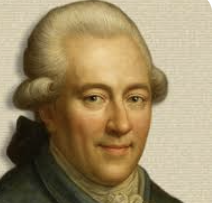
2 months 1 week ago
What is called an acute knowledge of human nature is mostly nothing but the observer's own weaknesses reflected back from others.
▼
Source
source
G 7

2 months 2 weeks ago
In a general way, the literature of the twentieth century is essentially psychological; and psychology consists of describing states of the soul by displaying them all on the same plane, without any discrimination of value, as though good and evil were external to them, as though the effort toward the good could be absent at any moment from the thought of any man.
▼
Source
source
"The responsibility of writers," p. 168
4 months 4 weeks ago
It occurs to me that artists go forward by going backward, something which I have nothing against intrinsically when it is a reproduced retreat - as is the case with the better artists. But it does not seem right that they stop with the historical themes already given and, so to speak, think that only these are suitable for poetic treatment, because these particular themes, which intrinsically are no more poetic than others, are now again animated and inspirited by a great poetic nature. In this case the artists advance by marching on the spot. - Why are modern heroes and the like not just as poetic? Is it because there is so much emphasis on clothing the content in order that the formal aspect can be all the more finished?
3 months 3 weeks ago
A critique is not a matter of saying that things are not right as they are. It is a matter of pointing out on what kinds of assumptions, what kinds of familiar, unchallenged, unconsidered modes of thought the practices that we accept rest.
▼
Source
source
"Practicing criticism, or, is it really important to think?", interview by Didier Eribon, May 30-31, 1981, in Politics, Philosophy, Culture, ed. L. Kriztman (1988), p. 155

2 months 4 weeks ago
People ... become so preoccupied with the means by which an end is achieved, as eventually to mistake it for the end. Just as money, which is a means of satisfying wants, comes to be regarded by a miser as the sole thing to be worked for, leaving the wants unsatisfied; so the conduct men have found preferable because most conducive to happiness, has come to be thought of as intrinsically preferable: not only to be made a proximate end (which it should be), but to be made an ultimate end, to the exclusion of the true ultimate end.
▼
Source
source
Ethics (New York:1915), § 14, pp. 38-39

3 months 3 weeks ago
My aim is: to teach you to pass from a piece of disguised nonsense to something that is patent nonsense.
▼
Source
source
§ 464
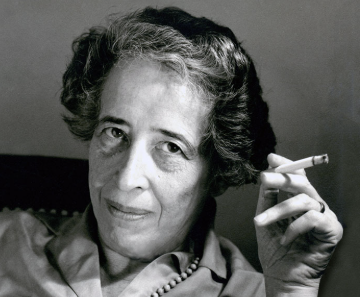
3 months 4 weeks ago
The phenomenon of the will [in Epictetus ] [...] a different mental ability whose chief characteristic is that it speaks an imperative even when it commands nothing but our ability to think. The goal is to annihilate reality insofar it concerns me.
▼
Source
source
Hannah Arendt Lecture on Thinking
CivilSimian.com created by AxiomaticPanic, CivilSimian, Kalokagathia