

1 week 2 days ago
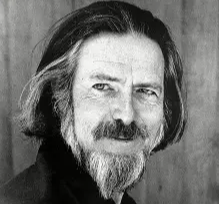
There is obviously a place in life for a religious attitude for awe and astonishment at existence. That is also a basis for respect for existence. We don't have much of it in this culture, even though we call it materialistic. In this culture we call materialistic, today we are of course bent on the total destruction of material and its conversion into junk and poisonous gases. This is of course not a materialistic culture because it has no respect for material. And respect is in turn based on wonder.
▼
Source
source
Images of God

4 months 2 weeks ago
If you believe what you like in the gospels, and reject what you don't like, it is not the gospel you believe, but yourself.
▼
Source
source
Earliest attribution found in Who Said That?: More than 2,500 Usable Quotes and Illustrations (1995) by George Sweeting. Online sources always attribute the quote to Augustine, but never specify in which of his works it is to be found.

3 months 4 weeks ago
The charming landscape which I saw this morning, is indubitably made up of some twenty or thirty farms. Miller owns this field, Locke that, and Manning the woodland beyond. But none of them owns the landscape. There is a property in the horizon which no man has but he whose eye can integrate all the parts, that is, the poet. This is the best part of these men's farms, yet to this their warranty-deeds give no title. To speak truly, few adult persons can see nature. Most persons do not see the sun. At least they have a very superficial seeing. The sun illuminates only the eye of the man, but shines into the eye and the heart of the child. The lover of nature is he whose inward and outward senses are still truly adjusted to each other; who has retained the spirit of infancy even into the era of manhood. His intercourse with heaven and earth, becomes part of his daily food.
▼
Source
source
Nature
2 months 3 weeks ago
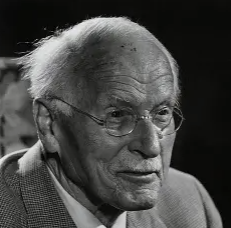
Metaphysical assertions, however, are statements of the psyche, and are therefore psychological. ... Whenever the Westerner hears the word "psychological," it always sounds to him like "only psychological."
▼
Source
source
Psyche and Symbol (1958), p. 285

3 months 3 weeks ago
You know how much I admire Che Guevara. In fact, I believe that the man was not only an intellectual but also the most complete human being of our age: as a fighter and as a man, as a theoretician who was able to further the cause of revolution by drawing his theories from his personal experience in battle.
▼
Source
source
As quoted in Marianne Alexandre (ed.), !Viva Che!: Contributions in Tribute to Ernesto 'Che' Guevara, 1968
2 months 6 days ago
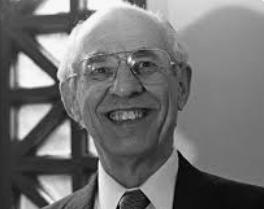
The philosophy of physics is continuous with physics itself. Just as certain issues in the Foundations of Mathematics have been discussed by both mathematicians and by philosophers of mathematics, so certain issues in the philosophy of physics have been discussed by both physicists and by philosophers of physics. And just as there are issues of a more epistemological kind that tend to concern philosophers of mathematics more than they do working mathematicians, so there are issues that concern philosophers of physics more than they do working physicists.
▼
Source
source
Philosophy of physics

2 months 2 weeks ago
What objection is there in reason to there being no other purpose in the sum of things save only to exist and happen as it does exist and happen? For him who places himself outside of himself, none; but for him who lives and suffers and desires within himself - for him it is a question of life or death.
3 weeks 2 days ago
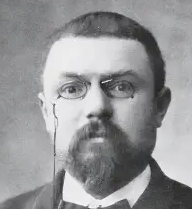
Thought must never submit, neither to a dogma, nor to a party, nor to a passion, nor to an interest, nor to a preconceived idea, nor to whatever it may be, save to the facts themselves, because, for thought, submission would mean ceasing to be.
▼
Source
source
Speech, University of Brussels (19 November 1909), during the festival for the 75th anniversary of the university's foundation; published in Œuvres de Henri Poincaré (1956), p. 152

4 months 4 weeks ago
The reason I cannot really say that I positively enjoy nature is that I do not quite realize what it is that I enjoy. A work of art, on the other hand, I can grasp. I can - if I may put it this way - find that Archimedian point, and as soon as I have found it, everything is readily clear for me. Then I am able to pursue this one main idea and see how all the details serve to illuminate it.

3 months 3 weeks ago
A proposition is completely logically analyzed if its grammar is made completely clear: no matter what idiom it may be written or expressed in...
▼
Source
source
Philosophical Remarks (1930), Part I (1)

3 months 3 days ago
Only a very bad theologian would confuse the certainty that follows revelation with the truths that are revealed. They are entirely different things.
▼
Source
source
Apology for the Abbé de Prades
3 months 3 weeks ago
The problems are dissolved in the actual sense of the word - like a lump of sugar in water.
▼
Source
source
Ch. 9 : Philosophy, p. 183

3 months 4 weeks ago
It goes without saying that the normal durability of fixed capital is calculated on the supposition that all the conditions under which it can perform its functions normally during that time are fulfilled, just as we assume, in placing a mans life at 30 years on the average,that he will wash himself.
▼
Source
source
Volume II, Ch. VIII, p. 176-177.
1 week 6 days ago
I do not mean to be disrespectful, but the attempt of the Lords to stop the progress of reform reminds me very forcibly of the great storm at Sidmouth, and of the conduct of the excellent Mrs Partington on that occasion. In the winter of 1824 there set in a great flood upon that town - the tide rose to an incredible height - the waves rushed in upon the houses, and everything was threatened with destruction. In the midst of this sublime and terrible storm, Dame Partington, who lived upon the beach, was seen at the door of her house with mop and pattens, trundling her mop, squeezing out the sea-water, and vigorously pushing away the Atlantic Ocean. The Atlantic was roused; Mrs. Partington's spirit was up. But I need not tell you that the contest was unequal.
▼
Source
source
The Atlantic Ocean beat Mrs. Partington. Speech at Taunton
2 months 6 days ago
Statistics began as the systematic study of quantitative facts about the state.
▼
Source
source
Chapter 12, Political Arithmetic, p. 102.
3 months 2 weeks ago
The core of ethics runs deep in our species and is common to human beings everywhere. It survives the most appalling hardships and the most ruthless attempts to deprive human beings of their humanity. Nevertheless, some people resist the idea that his core has a biological basis which we have inherited from our pre-human ancestors.
▼
Source
source
Chapter 2, The Biological Basis Of Ethics, p. 27

2 months 2 weeks ago
The first thing that we know about ourselves is our imperfection.

4 months 6 days ago
I approached the task of destroying images by first tearing them out of the heart through God's Word and making them worthless and despised. This indeed took place before Dr. Karlstadt ever dreamed of destroying images. For when they are no longer in the heart, they can do no harm when seen with the eyes. But Dr. Karlstadt, who pays no attention to matters of the heart, has reversed the order by removing them from sight and leaving them in the heart. For he does not preach faith, nor can he preach it; unfortunately, only now do I see that. Which of these two forms of destroying images is best, I will let each man judge for himself.
▼
Source
source
pp. 84-85

1 week 2 days ago
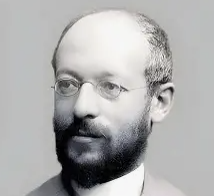
If wandering is the liberation from every given point in space, and thus the conceptional opposite to fixation at such a point, the sociological form of the "stranger" presents the unity, as it were, of these two characteristics.
▼
Source
source
p. 402; Opening line.
1 week ago
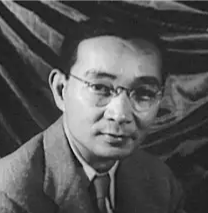
A good traveler is one who does not know where he is going to, and a perfect traveler does not know where he came from.
▼
Source
source
p. 332

4 months 2 days ago
I have resolved to demonstrate by a certain and undoubted course of argument, or to deduce from the very condition of human nature, not what is new and unheard of, but only such things as agree best with practice.
▼
Source
source
Ch. 1, Introduction

2 months 4 weeks ago
I have never in my life met a man like him for noble simplicity, and boundless truthfulness. I understood from the way he talked that anyone who chose could deceive him, and that he would forgive anyone afterwards who had deceived him, and that was why I grew to love him.
▼
Source
source
Part 4, Chapter 8

4 months 2 weeks ago
The superior man, while there is anything he has not studied, or while in what he has studied there is anything he cannot understand, Will not intermit his labor. While there is anything he has not inquired about, or anything in what he has inquired about which he does not know, he will not intermit his labor. While there is anything which he has not reflected on, or anything in what he has reflected on which he does not apprehend, he will not intermit his labor. While there is anything which he has not discriminated or his discrimination is not clear, he will not intermit his labor. If there be anything which he has not practiced, or his practice fails in earnestness, he will not intermit his labor. If another man succeed by one effort, he will use a hundred efforts. If another man succeed by ten efforts, he will use a thousand. Let a man proceed in this way, and, though dull, he will surely become intelligent; though weak, he will surely become strong.

2 months 3 weeks ago
Buddhism calls anger "corruption of the mind," Manicheism "root of the tree of death." I know this, but what good does it do me to know?
2 months 3 weeks ago
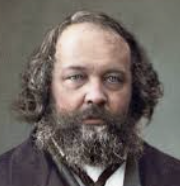
All religions are cruel, all founded on blood; for all rest principally on the idea of sacrifice - that is, on the perpetual immolation of humanity to the insatiable vengeance of divinity.
4 months 1 week ago
It is necessary to show that there is nothing so little known [as the above rules], nothing more difficult to practice, or nothing more useful and universal.

1 week 6 days ago
That man, I declare, is happy whom nothing makes less strong than he is; he keeps to the heights, leaning upon none but himself; for one who sustains himself by any prop may fall.
3 months 4 weeks ago
Never read any book that is not a year old.
▼
Source
source
Books

4 months 2 days ago
There are two kinds of truths: those of reasoning and those of fact. The truths of reasoning are necessary and their opposite is impossible; the truths of fact are contingent and their opposites are possible.
▼
Source
source
La monadologie (33).

3 months 4 weeks ago
A thing is important if anyone think it important.
▼
Source
source
Ch. 28, Note 35

4 months 1 week ago
No Man is wise at all Times, or is without his blind Side.
▼
Source
source
The Alchymyst, in Colloquies of Erasmus, Volume I.
4 months 2 days ago
Human infirmity in moderating and checking the emotions I name bondage: for, when a man is a prey to his emotions, he is not his own master, but lies at the mercy of fortune: so much so, that he is often compelled, while seeing that which is better for him, to follow that which is worse.
▼
Source
source
Part IV, Preface; translation by R. H. M. Elwes

1 month 5 days ago
The modern world inherits the Christian view in which salvation is played out in history. In Christian myth human events follow a design known only to God; the history of humankind is an ongoing story of redemption. This is an idea that informs virtually all of western thought - not least when it is intensely hostile to religion. From Christianity onwards, human salvation would be understood (at least in the west) as involving movement through time. All modern philosophies in which history is seen as a process of human emancipation - whether through revolutionary change or incremental improvement - are garbled versions of this Christian narrative, itself a garbled version of the original message of Jesus.
▼
Source
source
The Faith of Puppets: The Revelation of Philip K. Dick (p. 60)
2 months 3 weeks ago
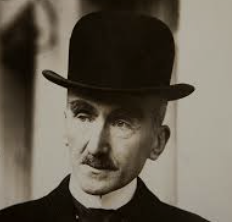
I would say act like a man of thought and think like a man of action.
▼
Source
source
Speech at the Descartes Conference in Paris (1937) Quoted in The Forbes Scrapbook of Thoughts on the Business of Life (1950), p. 442, as "Think like a man of action, act like a man of thought."
4 months 1 day ago
Whatever concept one may hold, from a metaphysical point of view, concerning the freedom of the will, certainly its appearances, which are human actions, like every other natural event are determined by universal laws. However obscure their causes, history, which is concerned with narrating these appearances, permits us to hope that if we attend to the play of freedom of the human will in the large, we may be able to discern a regular movement in it, and that what seems complex and chaotic in the single individual may be seen from the standpoint of the human race as a whole to be a steady and progressive though slow evolution of its original endowment.
▼
Source
source
Introduction
3 months 3 weeks ago
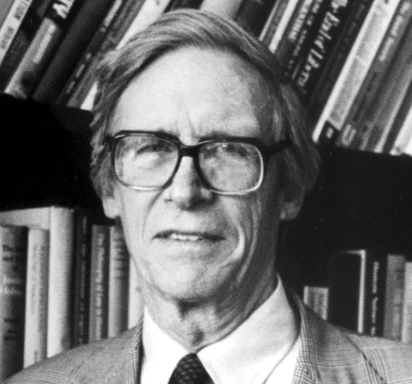
An individual who finds that he enjoys seeing others in positions of lesser liberty understands that he has no claim whatever to this enjoyment.
▼
Source
source
Chapter I, Section 6, pg. 31

2 months 2 weeks ago
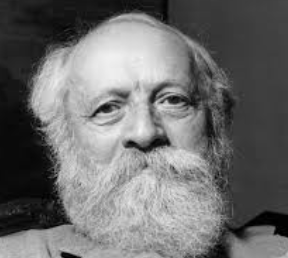
The prophet is appointed to oppose the king, and even more: history.
▼
Source
source
BBC radio broadcast (1962), as quoted in The Great Thoughts (1984) by George Seldes

4 months 1 week ago
Sacred and inspired divinity, the sabaoth and port of all men's labours and peregrinations.
▼
Source
source
Book II
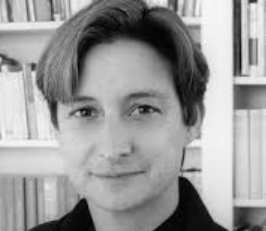
2 months 1 day ago
There was a brief moment after 9/11 when Colin Powell said "we should not rush to satisfy the desire for revenge." It was a great moment, an extraordinary moment, because what he was actually asking people to do was to stay with a sense of grief, mournfulness, and vulnerability.
▼
Source
source
Interview with Judith Butler. in: The Believer. May 2003
2 months 3 weeks ago
The conscious mind allows itself to be trained like a parrot, but the unconscious does not - which is why St. Augustine thanked God for not making him responsible for his dreams.
▼
Source
source
par. 51 p.46
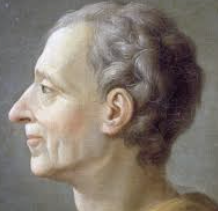
2 months 2 weeks ago
Of all kind of authors there are none I despise more than compilers, who search every where for shreds of other men's works, which they join to their own, like so many pieces of green turf in a garden: they are not at all superior to compositors in a printing house, who range the types, which, collected together, make a book, towards which they contribute nothing but the labours of the hand. I would have original writers respected, and it seems to me a kind of profanation to take those pieces from the sanctuary in which they reside, and to expose them to a contempt they do not deserve. When a man hath nothing new to say, why does not he hold his tongue? What business have we with this double employment?"
▼
Source
source
No. 66.

2 months 4 weeks ago
There never, gentlemen, was a period in which the steadfastness of some men has been nut to so sore a trial. It is not very difficult for well-formed minds to abandon their interest; but the separation of fame and virtue is an harsh divorce. Liberty is in danger of being made unpopular to Englishmen. Contending for an imaginary power, we begin to acquire the spirit of domination, and to lose the relish of honest equality.
2 months 3 weeks ago
We define only out of despair, we must have a formula... to give a facade to the void.
4 months 2 weeks ago
Chi Wan thought thrice, and then acted. When the Master was informed of it, he said, "Twice may do."
3 months 3 weeks ago
The first statement of the two principles reads as follows. First: each person is to have an equal right to the most extensive basic liberty compatible with a similar liberty for others. Second: social and economic inequalities are to be arranged so that they are both (a)reasonably expected to be to everyone's advantage, and (b) attached to positions and offices open to all.
▼
Source
source
Chapter II, Section 11, pg. 60
2 months 3 weeks ago
I live only because it is in my power to die when I choose to: without the idea of suicide, I'd have killed myself right away.
2 months 2 weeks ago
Whenever one tries to suppress doubt, there is tyranny.
▼
Source
source
Lectures in philosophy [Leçons de philosophie] (1959) as translated by Hugh Price p. 103
2 months 4 weeks ago
I think that the principal and most basic spiritual need of the Russian People is the need for suffering, incessant and unslakeable suffering, everywhere and in everything. I think the Russian People have been infused with this need to suffer from time immemorial. A current of martyrdom runs through their entire history, and it flows not only from external misfortunes and disasters but springs from the very heart of the People themselves. There is always an element of suffering even in the happiness of the Russian People, and without it their happiness is incomplete.
▼
Source
source
A Writer's Diary, Vol. 1: 1873-1876 (1994), pp. 161-162
CivilSimian.com created by AxiomaticPanic, CivilSimian, Kalokagathia