


3 months 3 weeks ago
But such is the nature of the human mind, that it always lays hold on every mind that approaches it; and as it is wonderfully fortified by an unanimity of sentiments, so is it shocked and disturbed by any contrariety. Hence the eagerness, which most people discover in a dispute; and hence their impatience of opposition, even in the most speculative and indifferent opinions.
▼
Source
source
Part I, Essay 8: Of Parties in General
1 month 2 weeks ago
There are clear cases in which "understanding" literally applies and clear cases in which it does not apply; and these two sorts of cases are all I need for this argument.

2 months 4 days ago
Nothing is lost, nothing wholly passes away, for in some way or another everything is perpetuated; and everything, after passing through time, returns to eternity.

2 months ago
The inner music of things sounds only when you close your eyes.

2 months 1 week ago
We do not rush toward death, we flee the catastrophe of birth, survivors struggling to forget it. Fear of death is merely the projection into the future of a fear which dates back to our first moment of life. We are reluctant, of course, to treat birth as a scourge: has it not been inculcated as the sovereign good - have we not been told that the worst came at the end, not at the outset of our lives? Yet evil, the real evil, is behind, not ahead of us. What escaped Jesus did not escape Buddha: "If three things did not exist in the world, O disciples, the Perfect One would not appear in the world. ..." And ahead of old age and death he places the fact of birth, source of every infirmity, every disaster.
2 months 2 weeks ago
The statue of Freedom has not been cast yet, the furnace is hot, we can all still burn our fingers.
▼
Source
source
Act I.

4 months 2 weeks ago
I now myself live, in every detail, striving for wisdom, while I formerly merely worshipped and idolized the wise.

1 month 2 weeks ago
Native societies did not think of themselves as being in the world as occupants but considered that their rituals created the world and keep it operational.
▼
Source
source
College and University Journal, Volumes 6-7, American College Public Relations Association, 1967, p. 3

2 months 3 weeks ago
We find that everything that makes up difference and number is pure accident, pure show, pure constitution. Every production, of whatever kind, is an alteration, but the substance remains always the same, because it is only one, one divine immortal being.


3 months 2 weeks ago
If belief consists in an emotional reaction of the entire man on an object, how can we believe at will? We cannot control our emotions.... But gradually our will can lead us to the same results by a very simple method: we need only in cold blood act as if the thing in question were real, and keep acting as if it were real, and it will infallibly end by growing into such a connection with our life that it will become real. It will become so knit with habit and emotion that our interests in it will be those which characterize belief.
▼
Source
source
Ch. 21
4 months 1 week ago
To entire sincerity there belongs ceaselessness. Not ceasing, it continues long. Continuing long, it evidences itself. Evidencing itself, it reaches far. Reaching far, it becomes large and substantial. Large and substantial, it becomes high and brilliant. Large and substantial; this is how it contains all things. High and brilliant; this is how it overspreads all things. Reaching far and continuing long; this is how it perfects all things. So large and substantial, the individual possessing it is the co-equal of Earth. So high and brilliant, it makes him the co-equal of Heaven. So far-reaching and long-continuing, it makes him infinite. Such being its nature, without any display, it becomes manifested; without any movement, it produces changes; and without any effort, it accomplishes its ends.

3 months 3 weeks ago
We are, I know not how, double in ourselves, which is the cause that what we believe we do not believe, and cannot disengage ourselves from what we condemn.
▼
Source
source
Ch. 16. Of Glory, tr. Cotton, rev. W. Carew Hazlitt, 1877

3 months 2 weeks ago
...this our world, which is so real, with all its suns and milky ways is-nothing.
3 months 1 week ago
How far down the evolutionary scale shall we go? Shall we eat fish? What about shrimps? Oysters? To answer these questions we must bear in mind the central principle on which our concern for other beings is based. As I said ... the only legitimate boundary to our concern for the interests of other beings is the point at which it is no longer accurate to say that the other being has interests. To have interests, in a strict, nonmetaphorical sense, a being must be capable of suffering or experiencing pleasure. If a being suffers, there can be no moral justification for disregarding that suffering, or for refusing to count it equally with the like suffering of any other being. But the converse of this is also true. If a being is not capable of suffering, or of enjoyment, there is nothing to take into account.
▼
Source
source
Ch. 4: Becoming a Vegetarian

3 months 2 weeks ago
If anyone would like to acquire humility, I can, I think, tell him the first step. The first step is to realise that one is proud. And a biggish step, too. At least, nothing whatever can be done before it. If you think you are not conceited, it means you are very conceited indeed.
▼
Source
source
Book III, Chapter 8, "The Great Sin"

3 months 3 weeks ago
Nobody ever saw a dog make a fair and deliberate exchange of one bone for another with another dog.
▼
Source
source
Chapter II, p. 14.

3 months 2 weeks ago
Thou animated torrid-zone.
▼
Source
source
To the Humble Bee, st. 1

1 week 1 day ago
The uttered part of a man's life, let us always repeat, bears to the unuttered, unconscious part a small unknown proportion. He himself never knows it, much less do others.

2 months ago
For me [fiction] is a manner of philosophizing ... Philosophy may be only a shadow of the reality it tries to grasp, but the novel is altogether more satisfactory. I am almost tempted to say that no philosopher is qualified to do his job unless he is also a novelist ... I would certainly exchange any of the works of Whitehead or Wittgenstein for the novels they ought to have written.
▼
Source
source
p. 160-1
1 month 1 week ago
The modern world gives proof at every point that it is far easier to destroy institutions than to create them. Nevertheless, few people seem to understand this truth.
▼
Source
source
Rousseau & the origins of liberalism, The New Criterion
2 months 4 days ago
And thus the soul pities God and feels itself pitied by him; loves Him and feels loved by Him, sheltering its misery in the bosom of the eternal and infinite misery, which, in eternalizing itself and infinitizing itself, is the supreme happiness itself.

3 months 2 weeks ago
Art, I suppose, is only for beginners, or else for those resolute dead-enders, who have made up their minds to be content with the ersatz of Suchness, with symbols rather than with what they signify, with the elegantly composed recipe in lieu of actual dinner.
3 months 2 weeks ago
Every man is a new method.
▼
Source
source
"The Natural History of Intellect", p. 28
1 month 1 week ago
The conservative response to modernity is to embrace it, but to embrace it critically, in full consciousness that human achievements are rare and precarious, that we have no God-given right to destroy our inheritance, but must always patiently submit to the voice of order, and set an example of orderly living.
▼
Source
source
"Eliot and Conservatism" (p. 208)

3 months 2 weeks ago
The universe is what it is, not what I choose that it should be.
▼
Source
source
The Value of Free Thought: How to Become a Truth-seeker and Break the Chains of Mental Slavery (1944), p. 24
3 months 2 weeks ago
The most any one can do is to confess as candidly as he can the grounds for the faith that is in him, and leave his example to work on others as it may.
▼
Source
source
The Dilemma of Determinism, 1884
2 months 1 week ago
Love, a tacit agreement between two unhappy parties to overestimate each other. p. 111, first American edition
▼
Source
source
1970
3 months 2 weeks ago
There are infinitely many variations of the initial situation and therefore no doubt indefinitely many theorems of moral geometry.
▼
Source
source
Chapter III, Section 21, pg. 126

3 months 2 weeks ago
Capital is money, capital is commodities. ... By virtue of it being value, it has acquired the occult ability to add value to itself. It brings forth living offspring, or, at the least, lays golden eggs.
▼
Source
source
Vol. I, Ch. 4, pp. 171-172
3 months 1 week ago
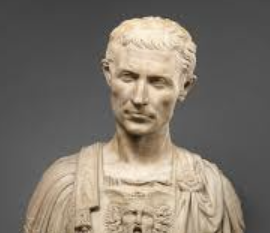
Bear in mind, that if through toil you accomplish a good deed, that toil will quickly pass from you, the good deed will not leave you so long as you live; but if through pleasure you do anything dishonourable, the pleasure will quickly pass away, that dishonourable act will remain with you for ever.
▼
Source
source
In the speech which he delivered ('At Numantia to the Knights'); quoted by Aulus Gellius, Attic Nights, XVI, i, 4 John C. Rolfe, ed. The Attic Nights of Aulus Gellius, Vol. 3, LCL 212 (1928), p. 131

2 months 2 weeks ago
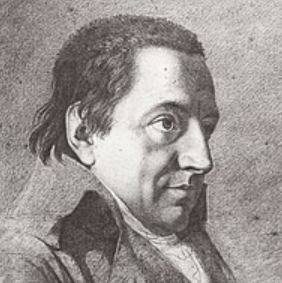
Marriage is a union between two persons - one man and one woman. A woman who has given herself up to one, can not give herself up to a second, for her whole dignity requires that she should belong only to this one.
▼
Source
source
p. 406
2 months 1 week ago
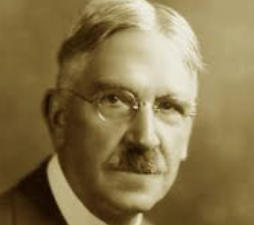
This idea is that laws which purport to be statements of what actually occurs are statistical in character as distinct from so-called dynamic laws that are abstract and mathematical, and disguised definitions. Recognition of the statistical nature of physical laws was first effected in the case of gases when it became evident that generalizations regarding the behavior of swarms of molecules were not descriptions or predictions of the behavior of any individual particle. A single molecule is not and cannot be a gas. It is consequently absurd to suppose that a scientific law is about the elementary constituents of a gas. It is a statement of what happens when a large number of such constituents interact with one another under certain conditions.
3 weeks 5 days ago
The biology of suffering in intelligent agents is a deep underlying source of existential risk - and one that can potentially be overcome.
▼
Source
source
"Unsorted Postings", pre-2014

3 months 2 weeks ago
Always remember that it is impossible to speak in such a way that you cannot be misunderstood: there will always be some who misunderstand you.
4 months 2 weeks ago
It is change, continuing change, inevitable change, that is the dominant factor in society today. No sensible decision can be made any longer without taking into account not only the world as it is, but the world as it will be ... This, in turn, means that our statesmen, our businessmen, our everyman must take on a science fictional way of thinking.
3 months 2 weeks ago
I had better never see a book than to be warped by its attraction clean out of my own orbit, and made a satellite instead of a system. The one thing in the world, of value, is the active soul.
▼
Source
source
par. 15
1 month 6 days ago
Let us remember that the government and the society act and react on each other. Sometimes the government is in advance of the society, and hurries the society forward. So urged, the society gains on the government, comes up with the government, outstrips the government, and begins to insist that the government shall make more speed. If the government is wise, it will yield to that just and natural demand. The great cause of revolutions is this, that, while nations move onward, constitutions stand still. The peculiar happiness of England is that here, through many generations, the constitution has moved onward with the nation.
▼
Source
source
Speech in the House of Commons on the Reform Bill (5 July 1831), quoted in Speeches of the Right Honourable T. B. Macaulay, M.P. (1854), p. 25
1 week 1 day ago
In brief, all this Mammon-Gospel, of Supply-and-demand, Competition, Laissez-faire, and Devil take the hindmost, begins to be one of the shabbiest Gospels ever preached on Earth; or altogether the shabbiest.
3 months 1 week ago
The problems are dissolved in the actual sense of the word - like a lump of sugar in water.
▼
Source
source
Ch. 9 : Philosophy, p. 183
2 months 4 days ago
What objection is there in reason to there being no other purpose in the sum of things save only to exist and happen as it does exist and happen? For him who places himself outside of himself, none; but for him who lives and suffers and desires within himself - for him it is a question of life or death.

1 month 2 weeks ago
The civilized pagan recognizes life not in himself alone, but in societies of men-in the tribe, the clan, the family, the kingdom -and sacrifices his personal good for these societies. The motive power of his life is glory. His religion consists in the exaltation of the glory of those who are allied to him-the founders of his family, his ancestors, his rulers-and in worshiping gods who are exclusively protectors of his clan, his family, his nation, his government.
▼
Source
source
Chapter IV, Christianity Misunderstood by Men of Science
1 week 2 days ago
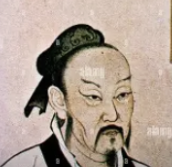
He who outrages benevolence is called a ruffian: he who outrages righteousness is called a villain. I have heard of the cutting off of the villain Chow, but I have not heard of the putting of a ruler to death.
▼
Source
source
1B:8, In relation to righteousness and the overthrow of the tyrannous King Zhou of Shang, as translated by Sir Robert Kennaway Douglas, China (1904), p. 8
3 months 1 week ago
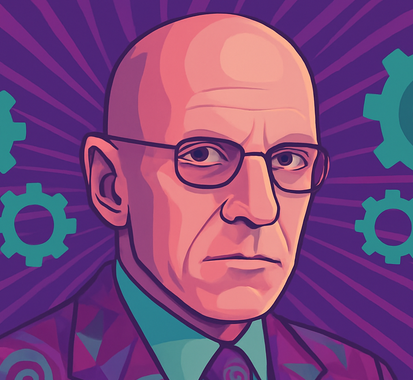
At the end of the Middle Ages, leprosy disappeared from the Western world. In the margins of the community, at the gates of cities, there stretched wastelands which sickness had ceased to haunt but had left sterile and long uninhabitable. For centuries, these reaches would belong to the non-human. From the fourteenth to the seventeenth century, they would wait, soliciting with strange incantations a new incarnation of disease, another grimace of terror, renewed rites of purification and exclusion.
▼
Source
source
Part One: 1. Stultifera Navis

4 months 5 days ago
With regard to the abuse of authority, this also may come about in two ways. First, when what is ordered by an authority is opposed to the object for which that authority was constituted (if, for example, some sinful action is commanded or one which is contrary to virtue, when it is precisely for the protection and fostering of virtue that authority is instituted). In such a case, not only is there no obligation to obey the authority, but one is obliged to disobey it, as did the holy martyrs who suffered death rather than obey the impious commands of tyrants. Secondly, when those who bear such authority command things which exceed the competence of such authority; as, for example, when a master demands payment from a servant which the latter is not bound to make, and other similar cases. In this instance the subject is free to obey or disobey.
▼
Source
source
in Aquinas: Selected Political Writings (Basil Blackwell: 1974), p. 183
3 months 1 week ago
Meaning created links so numerous, so rich and involved that only esoteric knowledge could possibly have the necessary key. Objects became so weighed down with attributes, connections and associations that they lost their own original face. Meaning was no longer read in an immediate perception, and accordingly objects ceased to speak directly: between the knowledge that animated the figures of objects and the forms they were transformed into, a divide began to appear, opening the way for a symbolism more often associated with the world of dreams.
▼
Source
source
Part One: 1. Stultifera Navis

3 months 2 weeks ago
I trust that some may be as near and dear to Buddha, or Christ, or Swedenborg, who are without the pale of their churches. It is necessary not to be Christian to appreciate the beauty and significance of the life of Christ. I know that some will have hard thoughts of me, when they hear their Christ named beside my Buddha, yet I am sure that I am willing they should love their Christ more than my Buddha, for the love is the main thing, and I like him too.
CivilSimian.com created by AxiomaticPanic, CivilSimian, Kalokagathia