
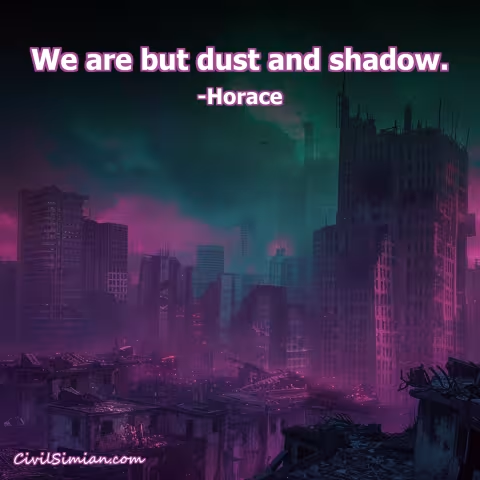
In a block universe, dust and shadow is forever....



This provides us with our first major clue to the solutions of the problem. Even if the left cannot see the world as full of potentiality, it can hold on to the moments of insight and refuse to let go of them. If I know that present difficulties will end in triumph, I am un-discourageable; I merely have to know it intellectually. And if I can 'know' that reality actually has a third dimension, I shall never fall into the mistake of complaining that there is nothing new under the sun and that life is futile.
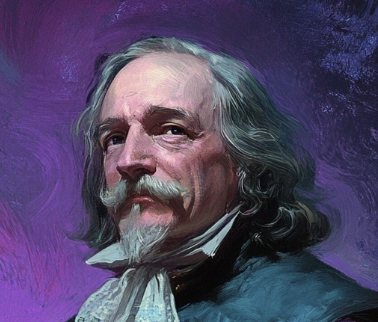
As in the presence of the Master, the Servants are equall, and without any honour at all; So are the Subjects, in the presence of the Soveraign. And though they shine some more, some lesse, when they are out of his sight; yet in his presence, they shine no more than the Starres in presence of the Sun.

Poetry and the arts can't exist in America. Mere exposure to the arts does nothing for a mentality which is incorrigibly dialectical. The vital tensions and nutritive action of ideogram remain inaccessible to this state of mind.
If the church had deadly sins, the state has capital crimes; if the one had heretics, the other has traitors; the one ecclesiastical penalties, the other criminal penalties; the one inquisitorial processes, the other fiscal; in short, there sins, here crimes, there inquisition and here - inquisition. Will the sanctity of the state not fall like the church's? The awe of its laws, the reverence for its highness, the humility of its 'subjects', will this remain? Will the 'saint's' face not be stripped of its adornment?
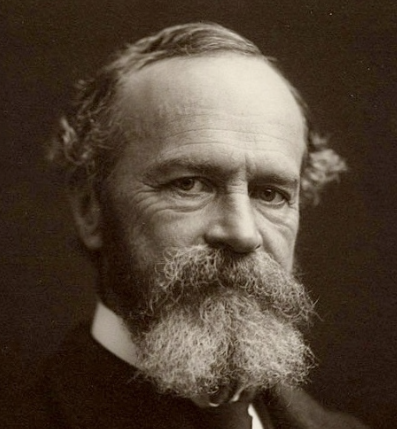
Who does not see that we are likely to ascertain the distinctive significance of religious melancholy and happiness, or of religious trances, far better by comparing them as conscientiously as we can with other varieties of melancholy, happiness, and trance, than by refusing to consider their place in any more general series, and treating them as if they were outside of nature's order altogether?
In the pedagogical as in certain other spheres freedom is not allowed to erupt, the power of the opposition is not allowed to put a word in edgewise: they want submissiveness. Only a formal and material training is being aimed at and only scholars come out of the menageries of the humanists, only "useful citizens" out of those of the realists, both of whom are indeed nothing but subservient people. Our good background of recalcitrancy [sic] gets strongly suppressed and with it the development of knowledge to free will. The result of school is then philistinism.

That I, a funny little gesticulating animal on two legs, should stand beneath the stars and declaim in a passion about my rights - it seems so laughable, so out of all proportion. Much better, like Archimedes, to be killed because of absorption in eternal things... There is a possibility in human minds of something mysterious as the night-wind, deep as the sea, calm as the stars, and strong as Death, a mystic contemplation, the "intellectual love of God." Those who have known it cannot believe in wars any longer, or in any kind of hot struggle. If I could give to others what has come to me in this way, I could make them too feel the futility of fighting. But I do not know how to communicate it: when I speak, they stare, applaud, or smile, but do not understand.

To all this, someone is sure to object that life ought to subject itself to reason, to which we will reply that nobody ought to do what he is unable to do, and life cannot subject itself to reason. "Ought, therefore can," some Kantian will retort. To which we shall demur: "Cannot, therefore ought not." And life cannot submit itself to reason, because the end of life is living and not understanding.

The object of art - like every other product - creates a public which is sensitive to art and enjoys beauty.

In the meanest mortal there lies something nobler. The poor swearing soldier, hired to be shot, has his "honor of a soldier," different from drill-regulations and the shilling a day. It is not to taste sweet things, but to do noble and true things, and vindicate himself under God's Heaven as a god-made Man, that the poorest son of Adam dimly longs. Show him the way of doing that, the dullest day-drudge kindles into a hero. They wrong man greatly who say he is to be seduced by ease.
Every sentence I utter must be understood not as an affirmation, but as a question.

A great profusion of things, which are splendid or valuable in themselves, is magnificent. The starry heaven, though it occurs so very frequently to our view, never fails to excite an idea of grandeur. This cannot be owing to the stars themselves, separately considered. The number is certainly the cause. The apparent disorder augments the grandeur, for the appearance of care is highly contrary to our idea of magnificence. Besides, the stars lie in such apparent confusion, as makes it impossible on ordinary occasions to reckon them. This gives them the advantage of a sort of infinity.
O Fortune, cruellest of heavenly powers, why make such game of this poor life of ours?
By a lie a man throws away and, as it were, annihilates his dignity as a man. A man who himself does not believe what he tells another ... has even less worth than if he were a mere thing. ... makes himself a mere deceptive appearance of man, not man himself.
Not being able to ban sexuality altogether, Catholicism has tried to reduce it to a mere biological fact, allowing its use in marriage only for procreation. Unlike certain ancient traditions, Catholicism has recognized no higher value, not even a potential one, in the sexual experience taken in itself. There is lacking any basis for its transformation in the interests of a more intense life, to integrate and elevate the inner tension of two beings of different sexes, whereas it is in exactly these terms that one should conceive of a concrete "sacralization" of the union and the effect of a higher influence involved in the rite.

Parents will strip themselves of everything, will sacrifice everything for the physical well-being of their child, will wake nights and stand in fear and agony before some physical ailment of their beloved one; but will remain cold and indifferent, without the slightest understanding before the soul cravings and the yearnings of their child, neither hearing nor wishing to hear the loud knocking of the young spirit that demands recognition. On the contrary, they will stifle the beautiful voice of spring, of a new life of beauty and splendor of love; they will put the long lean finger of authority upon the tender throat and not allow vent to the silvery song of the individual growth, of the beauty of character, of the strength of love and human relation, which alone make life worth living.

The more powerful and original a mind, the more it will incline towards the religion of solitude.
Art, at least, teaches us that man cannot be explained by history alone and that he also finds a reason for his existence in the order of nature.

Whenever I happen to be in a city of any size, I marvel that riots do not break out everyday: Massacres, unspeakable carnage, a doomsday chaos. How can so many human beings coexist in a space so confined without hating each other to death?

It is easy to see that the existing generation are conspiring with a beneficence, which, in its working for coming generations, sacrifices the passing one, which infatuates the most selfish men to act against their private interest for the public welfare. We build railroads, we know not for what or for whom; but one thing is certain, that we who build will receive the very smallest share of benefit. Benefit will accrue; they are essential to the country, but that will be felt not until we are no longer countrymen. We do the like in all matters: - 'Man's heart the Almighty to the Future setBy secret and inviolable springs.'
Human progress having reached a high level through respect for the liberty and dignity of men, it has become desirable to re-affirm these evident truths: That differences of race, color, and creed are natural, and that diverse groups, institutions, and ideas are stimulating factors in the development of man; That to promote harmony in diversity is a responsible task of religion and statesmanship; That since no individual can express the whole truth, it is essential to treat with understanding and good will those whose views differ from our own; That by the testimony of history intolerance is the door to violence, brutality and dictatorship; and That the realization of human interdependence and solidarity is the best guard of civilization.
The trade of governing has always been monopolized by the most ignorant and the most rascally individuals of mankind.
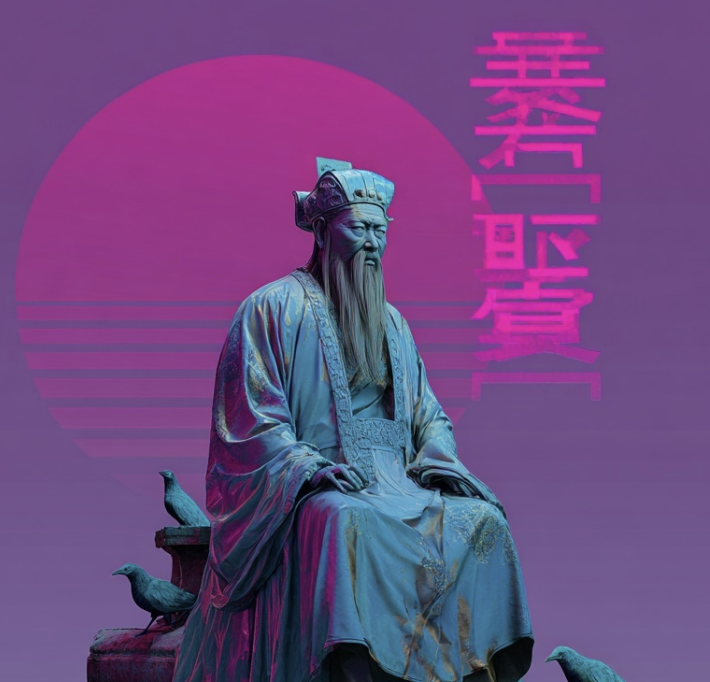
The way which the superior man pursues, reaches wide and far, and yet is secret. Common men and women, however ignorant, may intermeddle with the knowledge of it; yet in its utmost reaches, there is that which even the sage does not know. Common men and women, however much below the ordinary standard of character, can carry it into practice; yet in its utmost reaches, there is that which even the sage is not able to carry into practice. Great as heaven and earth are, men still find some things in them with which to be dissatisfied. Thus it is that, were the superior man to speak of his way in all its greatness, nothing in the world would be found able to embrace it, and were he to speak of it in its minuteness, nothing in the world would be found able to split it.

I think they do it to pass the time, nothing more. But time is too large, it can't be filled up. Everything you plunge into it is stretched and disintegrates.
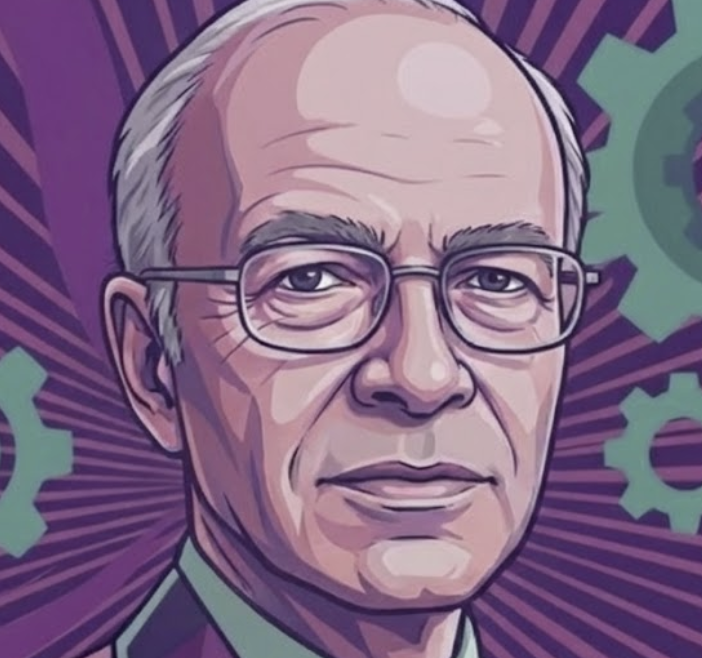
Becoming a vegetarian is not merely a symbolic gesture. Nor is it an attempt to isolate oneself from the ugly realities of the world, to keep oneself pure and so without responsibility for the cruelty and carnage all around. Becoming a vegetarian is a highly practical and effective step one can take toward ending both the killing of nonhuman animals and the infliction of suffering upon them.

From whence are these "rights of individuals" derived, and why should we care? Unless we presume the existence of some greater power that determines what is good, isn't it arbitrary to posit that human survival is more important than private property rights, an equally artificially construed concept? Isn't it arbitrary to assume that some sort of equality is preferable to a system where, say, the poor are assumed to have bad karma? If these 'rights of individuals' are derived only from shared humanity, then do 'individuals' (a thoroughly meaningless term, by the way), begin to lose them when they act inhumanely? And isn't it totally arbitrary to grant rights to humans rather than other creatures anyway?

Temperance is that discreet regulation of the desires and passions, by which we are enabled to enjoy pleasures without suffering any consequent inconvenience. They who maintain such a constant self-command, as never to be enticed by the prospect of present indulgence, to do that which will be productive of evil, obtain the truest pleasure by declining pleasure.
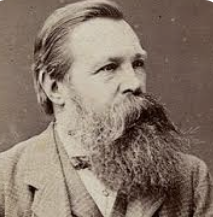
Since the management of industry by individuals necessarily implies private property, and since competition is in reality merely the manner and form in which the control of industry by private property owners expresses itself, it follows that private property cannot be separated from competition and the individual management of industry. Private property must, therefore, be abolished and in its place must come the common utilization of all instruments of production and the distribution of all products according to common agreement - in a word, what is called the communal ownership of goods.
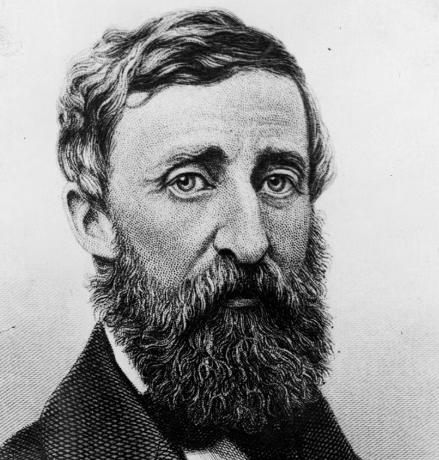
If I knew for a certainty that a man was coming to my house with the conscious design of doing me good, I should run for my life.

Sobriety is the strength of the soul, for it preserves its reason unclouded by passion.
The new overkill is simply an extension of our nervous system into a total ecological service environment. Such a service environment can liquidate or terminate its beneficiaries as naturally as it sustains them.
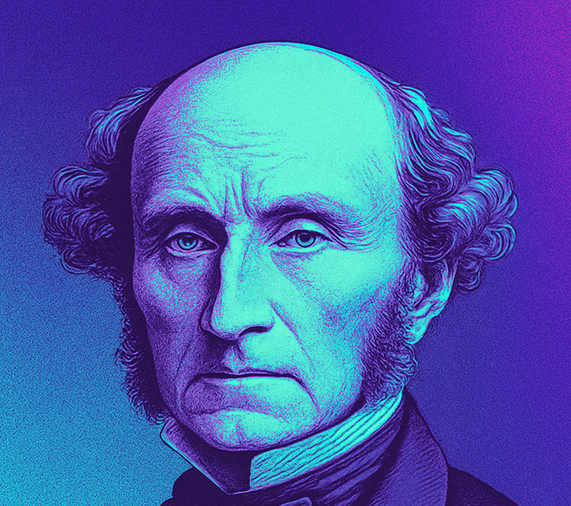
It appears... that a work similar in its object and general conception to that of Adam Smith, but adapted to the more extended knowledge and improved ideas of the present age, is the kind of contribution which Political Economy at present requires. The Wealth of Nations is in many parts obsolete, and in all, imperfect. Political Economy... has grown up almost from infancy since the time of Adam Smith; and the philosophy of society... has advanced many steps beyond the point at which he left it.

There are necessities and impossibilities in reality which do not obtain in fiction, any more than the law of gravity to which we are subject controls what is represented in a picture. ... It is the same with pure good; for a necessity as strong as gravity condemns man to evil and forbids him any good, or only within the narrowest limits and laboriously obtained and soiled and adulterated with evil. ... The simplicity which makes the fictional good something insipid and unable to hold the attention becomes, in the real good, an unfathomable marvel.

For a man petticoat government is the limit of insolence.
One capitalist always kills many.
The gods we stand by are the gods we need and can use, the gods whose demands on us are reinforcements of our demands on ourselves and on one another. What I then propose to do is, briefly stated, to test saintliness by common sense, to use human standards to help us decide how far the religious life commends itself as an ideal kind of human activity . ... It is but the elimination of the humanly unfit, and the survival of the humanly fittest, applied to religious beliefs; and if we look at history candidly and without prejudice, we have to admit that no religion has ever in the long run established or proved itself in any other way. Religions have approved themselves; they have ministered to sundry vital needs which they found reigning. When they violated other needs too strongly, or when other faiths came which served the same needs better, the first religions were supplanted.
Toleration is good for all, or it is good for none.

Death, they say, acquits us of all obligations.
We will not go to Heaven,Goetz, and even if we both entered it, we would not have eyes to see each other, nor hands to touch each other. Up there, God gets all the attention.... We can only love on this earth and against God.

Always remember that it is impossible to speak in such a way that you cannot be misunderstood: there will always be some who misunderstand you.
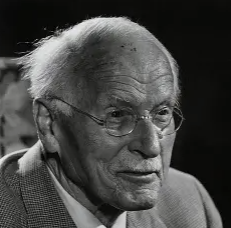
When one is not understood one should as a rule lower one's voice, because when one really speaks loudly enough and is not heard, it is because people do not want to hear. One had better begin to mutter to oneself, then they get curious.
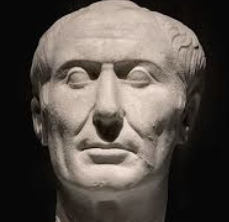
Penitence follows hasty decisions.
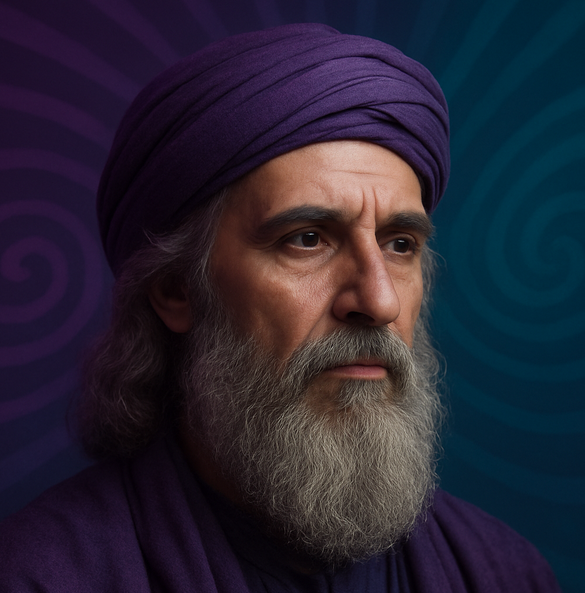
Thou shouldst not become presumptuous through much treasure and wealth; for in the end it is necessary for thee to leave all.

Every man may claim the fullest liberty to exercise his faculties compatible with the possession of like liberties by every other man.
You [a disciple], shall I teach you about knowledge? What you know, you know, what you don't know, you don't know. This is true knowledge.
A marvel that has nothing to offer, democracy is at once a nation's paradise and its tomb.

In every country it always is and must be the interest of the great body of the people to buy whatever they want of those who sell it cheapest. The proposition is so very manifest that it seems ridiculous to take any pains to prove it; nor could it ever have been called in question had not the interested sophistry of merchants and manufacturers confounded the common sense of mankind. Their interest is, in this respect, directly opposite to that of the great body of the people.


All of those who are "without" - without employment, without residence, without housing - are really excluded only in part.
CivilSimian.com created by AxiomaticPanic, CivilSimian, Kalokagathia