

1 month 1 week ago
Now who are the individuals who are the greatest benefactors of the living generation of mankind? I should say: Confucius and Lao-Tse; the Buddha; the Prophets of Israel and Judah; Zoroaster, Jesus, Muhammad; and Socrates.
▼
Source
source
Ch. 8: Civilization on Trial

3 months 3 weeks ago
It seems to me that science has a much greater likelihood of being true in the main than any philosophy hitherto advanced (I do not, of course, except my own). In science there are many matters about which people are agreed; in philosophy there are none. Therefore, although each proposition in a science may be false, and it is practically certain that there are some that are false, yet we shall be wise to build our philosophy upon science, because the risk of error in philosophy is pretty sure to be greater than in science. If we could hope for certainty in philosophy, the matter would be otherwise, but so far as I can see such a hope would be chimerical.
▼
Source
source
Logical Atomism, 1924
4 months 1 week ago
If a person gave your body to any stranger he met on his way, you would certainly be angry. And do you feel no shame in handing over your own mind to be confused and mystified by anyone who happens to verbally attack you?
▼
Source
source
(28) [tr. Elizabeth Carter]

3 months 2 weeks ago
It was an important moment. The old partners of the spectacle of punishment, the body and the blood, gave way. A new character came of the scene, masked. It was the end of a certain kind of tragedy; comedy began, with shadow play, faceless voices, impalpable entities. The apparatus of punitive justice must now bite into this bodiless reality.
▼
Source
source
pp. 17
2 months 3 weeks ago
But like the desire for eternal life, the desire for omniscience and absolute perfection is merely an imaginary desire; and, as history and daily experience prove, the supposed human striving for unlimited knowledge and perfection is a myth. Man has no desire to know everything; he only wants to know the things to which he is particularly drawn.
▼
Source
source
Lecture XXX, Atheism alone a Positive View

3 months 2 weeks ago
There are two forms of knowledge, one genuine, one obscure. To the obscure belong all of the following: sight, hearing, smell, taste, feeling. The other form is the genuine, and is quite distinct from this. [And then distinguishing the genuine from the obscure, he continues:] Whenever the obscure [way of knowing] has reached the minimum sensibile of hearing, smell, taste, and touch, and when the investigation must be carried farther into that which is still finer, then arises the genuine way of knowing, which has a finer organ of thought.
3 months 3 weeks ago
For the lesson of such stories [of resistance to Nazi atrocities] is simple and within everybody's grasp. Politically speaking, it is that under conditions of terror, most people will comply but some people will not, just as the lesson of the countries to which the Final Solution was proposed is that "it could happen" in most places but it did not happen everywhere. Humanly speaking, no more is required, and no more can reasonably be asked, for this planet to remain a place fit for human habitation.
▼
Source
source
Ch. XIV
3 months 3 weeks ago
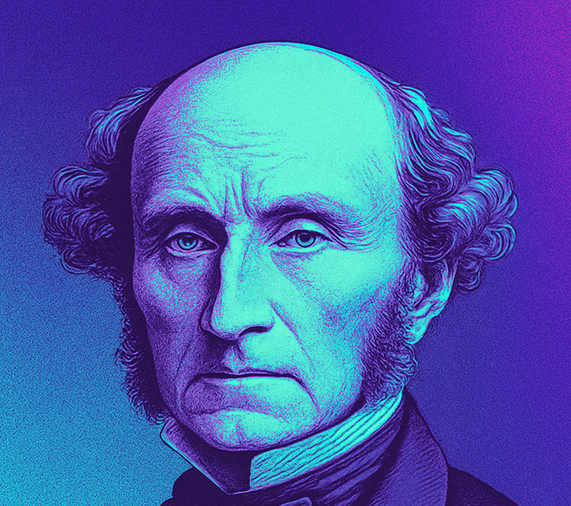
I shall, without further discussion of the other theories, attempt to contribute something towards the understanding and appreciation of the Utilitarian or Happiness theory, and towards such proof as it is susceptible of. It is evident that this cannot be proof in the ordinary and popular meaning of the term. Questions of ultimate ends are not amenable to direct proof. Whatever can be proved to be good, must be so by being shown to be a means to something admitted to be good without proof.
▼
Source
source
Ch. 1
2 months 3 weeks ago
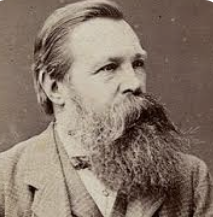
With this as its basic constitution, civilization achieved things of which gentile society was not even remotely capable. But it achieved them by setting in motion the lowest instincts and passions in man and developing them at the expense of all his other abilities. From its first day to this, sheer greed was the driving spirit of civilization; wealth and again wealth and once more wealth, wealth, not of society, but of the single scurvy individual-here was its one and final aim. If at the same time the progressive development of science and a repeated flowering of supreme art dropped into its lap, it was only because without them modern wealth could not have completely realized its achievements.
▼
Source
source
The Origin of the Family, Private Property and the State (1884) as translated by Ernest Untermann (1902)
2 months 3 weeks ago
The more remote and unreal the personal mother is, the more deeply will the son's yearning for her clutch at his soul, awakening that primordial and eternal image of the mother for whose sake everything that embraces, protects, nourishes, and helps assumes maternal form, from the Alma Mater of the university to the personification of cities, countries, sciences and ideals.
▼
Source
source
"Paracelsus as a Spiritual Phenomenon" (1942) In CW 13: Alchemical Studies P.47
1 week 3 days ago
Live always in the best company when you read.
▼
Source
source
Vol. I, ch. 10, p. 370

1 month 3 weeks ago
Literacy, the visual technology, dissolved the tribal magic by means of its stress on fragmentation and specialization and created the individual.

2 months 3 weeks ago
Every thought derives from a thwarted sensation.

3 months 3 weeks ago
Criminals together. We're in hell, my little friend, and there's never any mistake there. People are not damned for nothing. Act 1, sc. 5 Variant translation: Among murderers. We are in hell, my dear, there is never a mistake and people are not damned for nothing.
2 months 2 weeks ago
The music of the soul is also the music of salesmanship. Exchange value, not truth value counts. On it centers the rationality of the status quo, and all alien rationality is bent to It.
▼
Source
source
p. 57
2 months 2 weeks ago
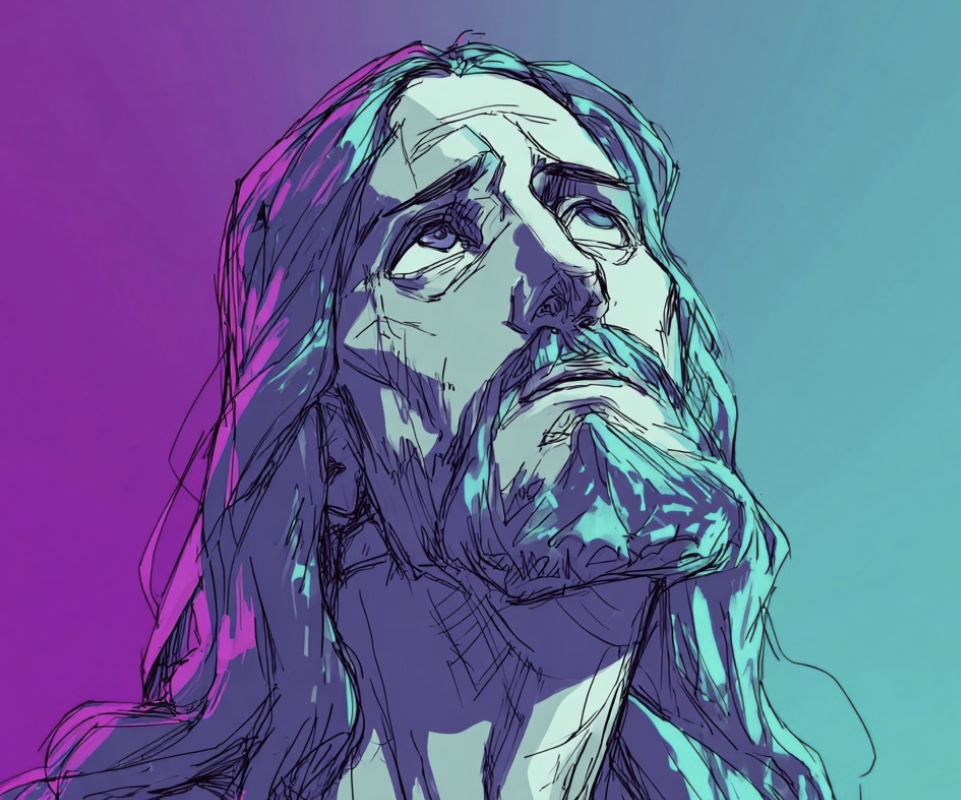
Jesus said to His disciples, "Compare me to someone and tell Me whom I am like." Simon Peter said to Him, "You are like a righteous angel." Matthew said to Him, "You are like a wise philosopher." Thomas said to Him, "Master, my mouth is wholly incapable of saying whom You are like." Jesus said, "I am not your master. Because you have drunk, you have become intoxicated by the bubbling spring which I have measured out." And He took him and withdrew and told him three things. When Thomas returned to his companions, they asked him, "What did Jesus say to you?" Thomas said to them, "If I tell you one of the things which he told me, you will pick up stones and throw them at me; a fire will come out of the stones and burn you up."
2 months 3 weeks ago
Romantic poetry ... recognizes as its first commandment that the will of the poet can tolerate no law above itself.
▼
Source
source
Philosophical Fragments, P. Firchow, trans. (1991) § 116


1 month 3 weeks ago
Fiction is to the grown man what play is to the child; it is there that he changes the atmosphere and tenor of his life.
▼
Source
source
A Gossip on Romance, printed in Longman's Magazine (November 1882).
2 months 5 days ago
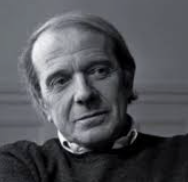
One of the principal motifs of Nietzsche's work is that Kant had not carried out a true critique because he was not able to pose the problem of critique in terms of values.
▼
Source
source
p. 1
3 weeks ago
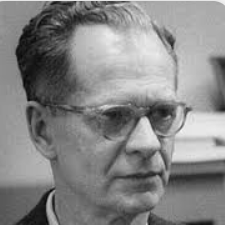
The way positive reinforcement is carried out is more important than the amount.
▼
Source
source
As quoted in Meditations for Parents Who Do Too Much (1993) by Jonathon Lazear and Wendy Lazear, p. 5

4 months 3 days ago
My appetite comes to me while eating.
▼
Source
source
Book III, Ch. 9. Of Vanity
2 months 2 weeks ago
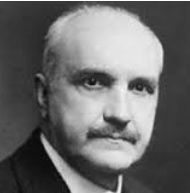
Injustice in this world is not something comparative; the wrong is deep, clear, and absolute in each private fate.
▼
Source
source
Ch. IV: The Aristocratic Ideal

2 months 3 weeks ago
You have the representatives of that [Christian] religion which says that their God is love, that the very vital spirit of their institution is charity,-a religion which so much hates oppression, that, when the God whom we adore appeared in human form, He did not appear in a form of greatness and majesty, but in sympathy with the lowest of the people, and thereby made it a firm and ruling principle that their welfare was the object of all government, since the Person who was the Master of Nature chose to appear Himself in a subordinate situation. These are the considerations which influence them, which animate them, and will animate them, against all oppression,-knowing that He who is called first among them, and first among us all, both of the flock that is fed and of those who feed it, made Himself "the servant of all."
▼
Source
source
Speech in opening the impeachment of Warren Hastings (19 February 1788), quoted in The Works of the Right Honourable Edmund Burke, Volume the Tenth (1899), p. 144

3 months 3 weeks ago
You could attach prices to ideas. Some cost a lot some little. ... And how do you pay for ideas? I believe: with courage.
▼
Source
source
p. 60e
2 months 3 weeks ago
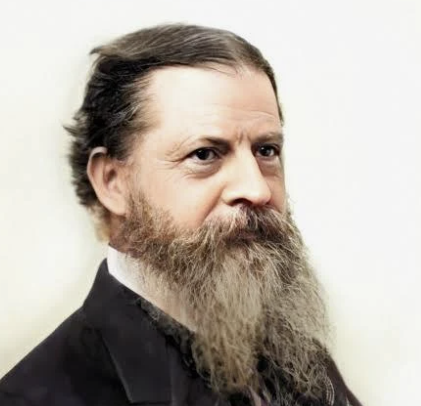
What distinct meaning can attach to saying that an idea in the past in any way affects an idea in the future, from which it is completely detached?
2 months 1 week ago
Law is the continuous manifestation of God's presence - not reason for believing him absent. Great confusion arises from our using the same word law in two totally distinct senses ... as the cause and the effect. It is said that to "explain away" everything by law is to enable us to do without God. But law is no explanation of anything; law is simply a generalization, a category of facts. Law is neither a cause, nor a reason, nor a power, nor a coercive force. It is nothing but a general formula, a statistical table. Law brings us continually back to God instead of carrying us away from him.
▼
Source
source
Suggestions for Thought : Selections and Commentaries (1994), edited by Michael D. Calabria and Janet A. MacRae, p. 41
3 months 3 weeks ago
Generally speaking there is no irreducible taste or inclination. They all represent a certain appropriative choice of being. It is up to existential psychoanalysis to compare and classify them. Ontology abandons us here; it has merely enabled us to determine the ultimate ends of human reality, its fundamental possibilities, and the value which haunts it.
2 months 3 weeks ago
To reckon on anything at all, here or elsewhere, is to afford proofs that we are still burdened with chains. The reprobate aspires to paradise; this aspiration disparages, compromises him. To be free is to rid yourself forever of the notion of reward, it is to expect nothing of men or gods, it is to renounce not only this world and all worlds but salvation itself-it is to destroy even the notion of it, that chain among chains.
3 months 3 weeks ago
The heavens are as deep as our aspirations are high.
▼
Source
source
Quoted in Maturin M. Ballou (ed.) Pearls of Thought (Boston: Houghton, Mifflin and Co., 1881) p. 21
3 months 3 weeks ago
Setting the mind to remember... involves a continual minimal irradiation of excitement into paths which lead thereto... the continued presence of the thing in the 'fringe' of our consciousness. Letting the thing go involves withdrawal of the irradiation, unconsciousness of the thing, and... obliteration of the paths.
▼
Source
source
Ch. 16

2 months 1 week ago
It is not only in literature that fiction generates immorality. It does it also in life itself. For the substance of our life is almost exclusively composed of fiction. We fictionalize our future, and, unless we are heroically devoted to truth, we fictionalize our past, refashioning it to our taste. We do not study other people; we invent what they are thinking, saying, and doing. Reality provides us with some raw material, just as novelists often take a theme from a news item, but we envelop it in a fog in which, as in all fiction, values are reversed, so that evil is attractive and good is tedious.
▼
Source
source
"Morality and literature," pp. 161-162
3 months 2 weeks ago
Becoming a vegetarian is not merely a symbolic gesture. Nor is it an attempt to isolate oneself from the ugly realities of the world, to keep oneself pure and so without responsibility for the cruelty and carnage all around. Becoming a vegetarian is a highly practical and effective step one can take toward ending both the killing of nonhuman animals and the infliction of suffering upon them.
▼
Source
source
Ch. 4: Becoming a Vegetarian

3 months 3 weeks ago
To hold a pen is to be at war.
▼
Source
source
Letter to Jeanne-Grâce Bosc du Bouchet, comtesse d'Argental (4 October 1748)
2 months 5 days ago
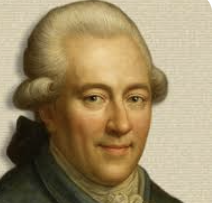
The greatest events occur without intention playing any part in them; chance makes good mistakes and undoes the most carefully planned undertaking. The world's greatest events are not produced, they happen.
▼
Source
source
K 68
2 months 1 week ago
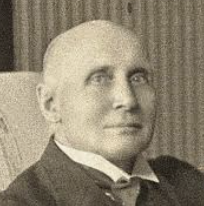
If science is not to degenerate into a medley of ad hoc hypotheses, it must become philosophical and must enter upon a thorough criticism of its own foundations.
▼
Source
source
Ch. 1: "The Origins of Modern Science", p. 24
2 months 3 weeks ago
The third category of which I come now to speak is precisely that whose reality is denied by nominalism. For although nominalism is not credited with any extraordinarily lofty appreciation of the powers of the human soul, yet it attributes to it a power of originating a kind of ideas the like of which Omnipotence has failed to create as real objects, and those general conceptions which men will never cease to consider the glory of the human intellect must, according to any consistent nominalism, be entirely wanting in the mind of Deity.
▼
Source
source
Lecture II : The Universal Categories, §3. Laws: Nominalism, CP 5.62
4 months 2 weeks ago
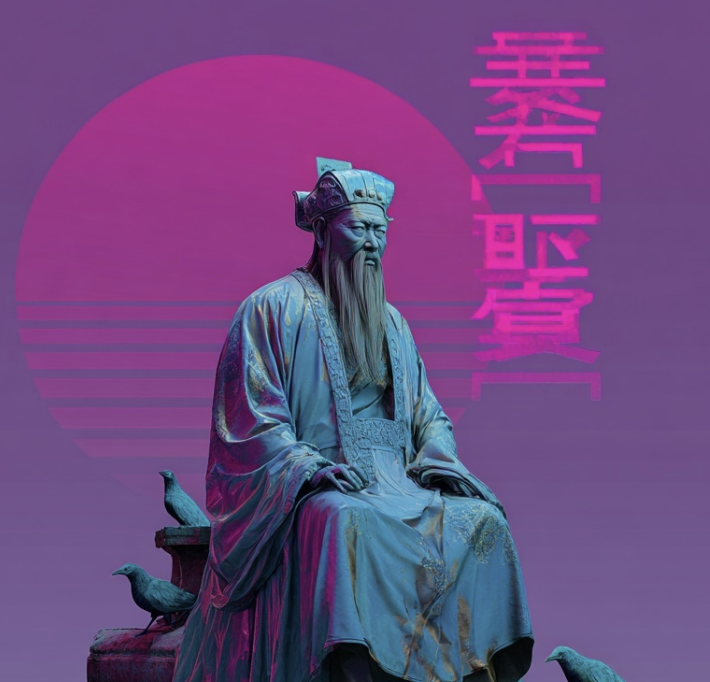
In archery we have something like the way of the superior man. When the archer misses the center of the target, he turns round and seeks for the cause of his failure in himself.
4 months 3 weeks ago
Homer has taught all other poets the art of telling lies skillfully.
4 months 2 weeks ago
Earnest in practicing the ordinary virtues, and careful in speaking about them, if, in his practice, he has anything defective, the superior man dares not but exert himself; and if, in his words, he has any excess, he dares not allow himself such license. Thus his words have respect to his actions, and his actions have respect to his words; is it not just an entire sincerity which marks the superior man?

1 month 3 weeks ago
The civilized pagan recognizes life not in himself alone, but in societies of men-in the tribe, the clan, the family, the kingdom -and sacrifices his personal good for these societies. The motive power of his life is glory. His religion consists in the exaltation of the glory of those who are allied to him-the founders of his family, his ancestors, his rulers-and in worshiping gods who are exclusively protectors of his clan, his family, his nation, his government.
▼
Source
source
Chapter IV, Christianity Misunderstood by Men of Science

4 months 4 weeks ago
Who is the most moral man? First, he who obeys the law most frequently, who ... is continually inventive in creating opportunities for obeying the law. Then, he who obeys it even in the most difficult cases. The most moral man is he who sacrifices the most to custom. ... Self-overcoming is demanded, not on account of any useful consequences it may have for the individual, but so that hegemony of custom and tradition shall be made evident.
1 month 4 weeks ago
There are only a few images that are not forced to provide meaning, or have to go through the filter of a specific idea.
4 months 3 weeks ago
Miniaturization doesn't actually make sense unless you miniaturize the very atoms of which matter is composed. Otherwise a tiny brain in a man the size of an insect, composed of normal atoms, is composed of too few atoms for the miniaturized man to be any more intelligent than the ant. Also, miniaturizing atoms is impossible according to the rules of quantum mechanics.
3 months 3 weeks ago
...the prisoner's dreams is the guard's spirituality.
▼
Source
source
p. 400
3 months 3 weeks ago
It is forbidden to kill; therefore all murderers are punished unless they kill in large numbers and to the sound of trumpets.
▼
Source
source
"Rights", 1771
6 days ago
Proletarian violence, carried on as a pure and simple manifestation of the sentiment of class struggle, appears thus as a very fine and heroic thing; it is at the service of the immemorial interests of civilization; it is not perhaps the most appropriate method of obtaining immediate material advantages, but it may save the world from barbarism.
▼
Source
source
p. 85
2 months 3 weeks ago
What is that one crucifixion compared to the daily kind any insomniac endures?

2 weeks 2 days ago
He who would write heroic poems should make his whole life a heroic poem.
▼
Source
source
Life of Schiller.
CivilSimian.com created by AxiomaticPanic, CivilSimian, Kalokagathia