


2 months 2 weeks ago
Master, we saw one casting out devils in thy name, and he followeth not us: and we forbad him, because he followeth not us. But Jesus said, Forbid him not: for there is no man which shall do a miracle in my name, that can lightly speak evil of me. For he that is not against us is on our part.
▼
Source
source
Mark 9:38-40 (KJV)

3 months 3 weeks ago
Men of learning are those who have read the contents of books. Thinkers, geniuses, and those who have enlightened the world and furthered the race of men, are those who have made direct use of the book of the world.
▼
Source
source
"Thinking for Oneself"
4 days ago
Men's works also are naturally perishable and mutable and subject to every kind of alteration. But since God is eternal, it follows that of such sort are his ordinances also. And since they are such, they are either the natures of things or are accordant with the nature of things. For how could nature be at variance with the ordinance of God? How could it fall out of harmony therewith?
3 weeks 4 days ago
Of course, not everything old is beautiful, any more than everything black, or everything white, or everything young. But the notion that old means ugly is every bit as harmful as the prejudice that black is ugly. In one way it is even more pernicious. The notion that only what is new and young is beautiful poisons our relationship to the past and to our own future. It keeps us from understanding our roots and the greatest works of our culture and other cultures. It also makes us dread what lies ahead of us and leads many to shirk reality.
▼
Source
source
Time is an Artist (1978) Epilogue : Old is Beautiful

1 week 3 days ago
It makes a big difference whether you give something back or pay it off... The framers of the laws instituted festivals, in order that men should be publicly compelled to gaiety, as a necessary temperance for labors; We remember the great orator Pollio Asinius, who was not detained by anything beyond the tenth hour: he did not even need letters for an hour after that, so that no new concern arose, but he put the fatigue of the whole day in those two hours. Some joined in the middle of the day and put off some lighter work in the afternoon hours. Our elders also forbade a new report to be made in the senate after ten o'clock. The army divided the vigils, and the night was safe from the return of the expedition.

2 months 3 weeks ago
Sooner or later, each desire must encounter its lassitude: its truth . . .

4 months 4 days ago
States as great engines move slowly.
▼
Source
source
Book II

2 months 3 weeks ago
It was evident that he revived by fits and starts. He would suddenly come to himself from actual delirium for a few minutes; he would remember and talk with complete consciousness, chiefly in disconnected phrases which he had perhaps thought out and learnt by heart in the long weary hours of his illness, in his bed, in sleepless solitude.
▼
Source
source
Part 2, Chapter 10
2 months 3 weeks ago
Wit is the appearance, the external flash of imagination. Thus its divinity, and the witty character of mysticism.
▼
Source
source
Aphorism 26, as translated in Dialogue on Poetry and Literary Aphorisms (1968)

3 months 2 weeks ago
Seek after the good, and with much toil shall ye find it; the evil turns up of itself without your seeking it.

3 months 3 weeks ago
My thought is me: that's why I can't stop. I exist because I think ... and I can't prevent myself from thinking.
▼
Source
source
Lundi ("Monday")

2 months 2 weeks ago
An integral part of totalitarian control is the attack on critical and independent thought. The appeal to facts is substituted for the appeal to reason. No reason can sanction a regime that uses the greatest productive apparatus man has ever created in the interest of an increasing restriction on human satisfactions-no reason except the fact that the economic system can be retained in no other way. Just as the Fascist emphasis on action and change prevents the insight into necessity of rational courses of action and change, [Giovanni] Gentile's deification of thinking prevents the liberation of thought from the shackles of 'the given.'
▼
Source
source
P. 405
4 months 2 weeks ago
The Master said, "Hard is it to deal with him, who will stuff himself with food the whole day, without applying his mind to anything good! Are there not gamesters and chess players? To be one of these would still be better than doing nothing at all.
1 week 3 days ago
Growth is slow but collapse is rapid.
▼
Source
source
Ugo Bardi (2017) . "The Seneca Effect: Why growth is slow but collapse is rapid". ISSN 1612-3018. DOI:10.1007/978-3-319-57207-9.
4 months 1 week ago
The inclination to seek the truth is safer than the presumption which regards unknown things as known.
▼
Source
source
(Cambridge: 2002), Book 9, Chapter 1, p. 24

4 months 3 days ago
We are brought to a belief of God either by reason or by force. Atheism being a proposition as unnatural as monstrous, difficult also and hard to establish in the human understanding, how arrogant soever, there are men enough seen, out of vanity and pride, to be the authors of extraordinary and reforming opinions, and outwardly to affect the profession of them; who, if they are such fools, have, nevertheless, not the power to plant them in their own conscience. Yet will they not fail to lift up their hands towards heaven if you give them a good thrust with a sword in the breast, and when fear or sickness has abated and dulled the licentious fury of this giddy humour they will easily re-unite, and very discreetly suffer themselves to be reconciled to the public faith and examples.
▼
Source
source
Ch. 12
4 months 4 days ago
The obliteration of the evil hath been practised by two means, some kind of redemption or expiation of that which is past, and an inception or account de novo for the time to come. But this part seemeth sacred and religious, and justly; for all good moral philosophy (as was said) is but a handmaid to religion.
▼
Source
source
Book II, xxii, 14

2 weeks 2 days ago
All work, even cotton spinning, is noble; work is alone noble ... A life of ease is not for any man, nor for any god.
▼
Source
source
Bk. III, ch. 4.
4 months 2 weeks ago
A lifetime is a child playing, playing checkers; the kingdom belongs to a child.

1 month 3 weeks ago
A real work of art destroys, in the consciousness of the receiver, the separation between himself and the artist.

3 months 2 weeks ago
In its most general form, confinement was explained, or at least justified, by a will to avoid scandal. It thereby signalled an important change in the consciousness of evil. The Renaissance had let unreason in all its forms come out into the light of day, as public exposure gave evil the chance to redeem itself and to serve as an exemplum.
▼
Source
source
Part One: 5. The Insane
2 months 3 weeks ago
Not official revolutionary commissars in any sort of sashes, but rather revolutionary propagandists are to be dispatched into all the provinces and communes and particularly among the peasants who cannot be revolutionised by principles, nor by the decrees of any dictatorship, but only by the act of revolution itself, that is to say, by the consequences that will inevitably ensure in every commune from complete cessation of the legal and official existence of the state.
1 week 4 days ago
If the press was to be free, nothing would be so important as precisely its liberation from every coercion that could be put on it in the name of a law. And, that it might come to that, I my own self should have to have absolved myself from obedience to the law.
▼
Source
source
Cambridge 1995, p. 249
3 months 2 weeks ago
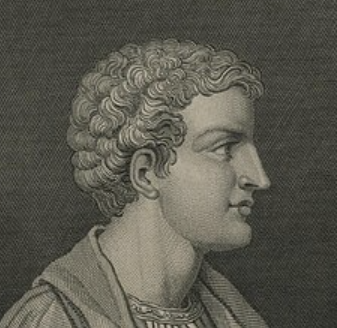
To have a great man for an intimate friend seems pleasant to those who have never tried it; those who have, fear it.
▼
Source
source
Book I, epistle xviii, line 86
4 days ago
It is not Matter itself that is here meant, but the ultimate Cause of things incorporeal, which also existed before Matter. Moreover, it is asserted by Heraclitus: "Death unto souls is but a change to liquid." This Attis, therefore, the intelligible Power, the holder together of things material below the Moon, having intercourse with the pre-ordained Cause of Matter, holds intercourse therewith, not as a male with a female, but as though flowing into it, since he is the same with it.
2 months 3 weeks ago
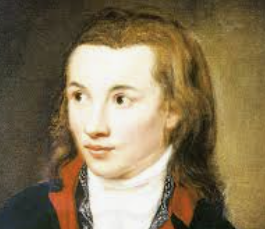
The world must be romanticized. In this way the originary meaning may be found again.
▼
Source
source
As quoted in The Experience of the Foreign : Culture and Translation in Romantic Germany (1992) by Antoine Berman Variant translation: Romanticize the world.
3 months 3 weeks ago
The French bourgeois doesn't dislike shit, provided it is served up to him at the right time.
▼
Source
source
Book 2, "To Succeed in Being All, Strive to be Nothing in Anything"
1 week 4 days ago
Whether nature gives me a right, or whether God, the people's choice, etc., does so, all of that is the same foreign right, a right that I do not give or take to myself. Thus the Communists say, equal labour entitles man to equal enjoyment. [...] No, equal labour does not entitle you to it, but equal enjoyment alone entitles you to equal enjoyment. Enjoy, then you are entitled to enjoyment. But, if you have laboured and let the enjoyment be taken from you, then - 'it serves you right.' If you take the enjoyment, it is your right; if, on the contrary, you only pine for it without laying hands on it, it remains as before, a, 'well-earned right' of those who are privileged for enjoyment. It is their right, as by laying hands on it would become your right.
▼
Source
source
Cambridge 1995, p. 170, 171

3 months 4 weeks ago
It is too difficult to think nobly when one thinks only of earning a living.
▼
Source
source
Variant translation: It is too difficult to think nobly when one only thinks to get a living.

8 months 1 day ago
The wreck of the Titanic functions as a sublime object: a positive, material object elevated to the status of the impossible Thing. And perhaps all the effort to articulate the metaphysical meaning of the Titanic is nothing but an attempt to escape this terrifying impact of the Thing, an attempt to domesticate the Thing by reducing it to its symbolic status, by providing it with a meaning. We usually say that the fascinating presence of a Thing obscures its meaning; here, the opposite is true: the meaning obscures the terrifying impact of its presence.

4 months 3 weeks ago
To become sober is: to come to oneself in self-knowledge and before God as nothing before him, yet infinitely, unconditionally engaged.

2 months 1 week ago
When contemporary feminist movement first began, feminist writings and scholarship by black women was groundbreaking. The writings of black women like Cellestine Ware, Toni Cade Bambara, Michele Wallace, Barbara Smith, and Angela Davis, to name a few, were all works that sought to articulate, define, speak to and against the glaring omissions in feminist work, the erasure of black female presence.
▼
Source
source
Teaching to Transgress: Education as the Practice of Freedom
2 months 1 week ago
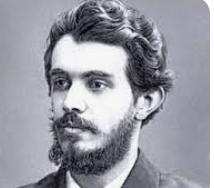
This was once revealed to me in a dream.
3 weeks 1 day ago
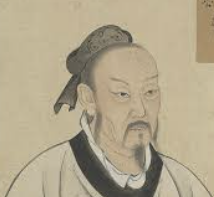
The straightening board was created because of warped wood, and the plumb line came into being because of things that are not straight. Rulers are established and ritual and rightness are illuminated because the nature is evil.
▼
Source
source
Sources of Chinese Tradition (1999), vol. 1, p. 182
3 months ago
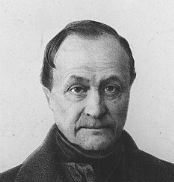
The first condition of unity is a subjective principle; and this principle in the Positive system is the subordination of the intellect to the heart: Without this the unity that we seek can never be placed on a permanent basis, whether individually or collectively. It is essential to have some influence sufficiently powerful to produce convergence amid the heterogeneous and often antagonistic tendencies of so complex an organism as ours.
▼
Source
source
p. 24
4 months 2 weeks ago
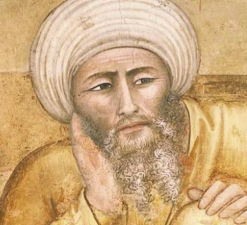
Knowledge is the conformity of the object and the intellect.

3 months 1 week ago
Rejoice not in another man's misfortune!
3 months 2 weeks ago
Coition is a slight attack of apoplexy. For man gushes forth from man, and is separated by being torn apart with a kind of blow.
▼
Source
source
Freeman (1948), p. 150

1 month 3 weeks ago
The happiness of men consists in life. And life is in labor.
▼
Source
source
What Is To Be Done? (1886) Chap. XXXVIII
1 month 3 weeks ago
A Frenchman is self-assured because he regards himself personally, both in mind and body, as irresistibly attractive to men and women. An Englishman is self-assured, as being a citizen of the best-organized state in the world, and therefore as an Englishman always knows what he should do and knows that all he does as an Englishman is undoubtedly correct. An Italian is self-assured because he is excitable and easily forgets himself and other people. A Russian is self-assured just because he knows nothing and does not want to know anything, since he does not believe that anything can be known. The German's self-assurance is worst of all, stronger and more repulsive than any other, because he imagines that he knows the truth - science - which he himself has invented but which is for him the absolute truth.
▼
Source
source
Bk. IX, ch. 10
1 week 4 days ago
What matters the party to me? I shall find enough anyhow who unite with me without swearing allegiance to my flag.
▼
Source
source
Dover 2005, p. 236
2 months 3 weeks ago
As art sinks into paralysis, artists multiply. This anomaly ceases to be one if we realize that art, on its way to exhaustion, has become both impossible and easy.
4 months 2 weeks ago
It is not truth that makes man great, but man that makes truth great.
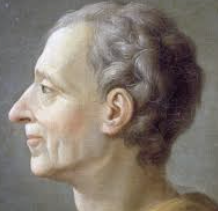
2 months 1 week ago
I have always observed that to succeed in the world one should appear like a fool but be wise.
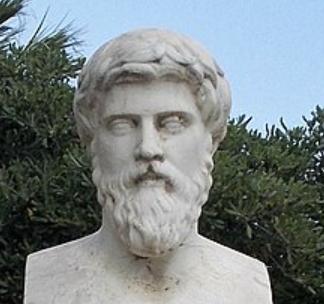
3 months 1 week ago
Cato instigated the magistrates to punish all offenders, saying that they that did not prevent crimes when they might, encouraged them. Of young men, he liked them that blushed better than those who looked pale.
▼
Source
source
Cato the Elder

2 months 1 week ago
A Pharisee is someone who is virtuous out of obedience to the Great Beast.
▼
Source
source
p. 125
2 months 3 weeks ago
We are firmly convinced that the most imperfect republic is a thousand times better than the most enlightened monarchy. In a republic, there are at least brief periods when the people, while continually exploited, is not oppressed; in the monarchies, oppression is constant. The democratic regime also lifts the masses up gradually to participation in public life--something the monarchy never does. Nevertheless, while we prefer the republic, we must recognise and proclaim that whatever the form of government may be, so long as human society continues to be divided into different classes as a result of the hereditary inequality of occupations, of wealth, of education, and of rights, there will always be a class-restricted government and the inevitable exploitation of the majorities by the minorities. The State is nothing but this domination and this exploitation, well regulated and systematised.
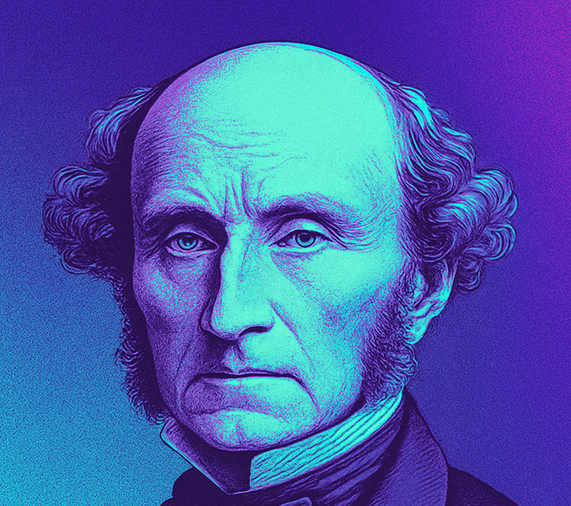
3 months 3 weeks ago
If it be said, that an Omnipotent Creator, though under no necessity of employing contrivances such as man must use, thought fit to use them in order to leave traces that would enable man to recognize his creative hand, the answer is that this equally implies a limit to his omnipotence. For if he wanted men to know that they themselves and the world are his work, he, being omnipotent, had only to will that they should be aware of it.
▼
Source
source
pages 177-178;Early Modern Texts page 16
CivilSimian.com created by AxiomaticPanic, CivilSimian, Kalokagathia