


3 months 3 weeks ago
Every man would like to be God, if it were possible; some few find it difficult to admit the impossibility.
▼
Source
source
Ch. 1: The Impulse to Power

4 months 4 days ago
Hurl your calumnies boldly; something is sure to stick.
▼
Source
source
De Augmentis Scientiarum

2 weeks 5 days ago
The idea of universal human dignity ultimately comes out of Christianity... the view that all human beings are equal in the sight of God because they have the capacity for moral choice. As Western thought developed in the 17th-18th centuries, this took on a secular form under thinkers like Jean-Jacques Rousseau or Immanuel Kant or Georg Hegel, who argued that human equality is... based on human autonomy.
▼
Source
source
11:12

3 months 4 weeks ago
My opinion concerning God differs widely from that which is ordinarily defended by modern Christians. For I hold that God is of all things the cause immanent, as the phrase is, not transient. I say that all things are in God and move in God, thus agreeing with Paul, and, perhaps, with all the ancient philosophers, though the phraseology may be different ; I will even venture to affirm that I agree with all the ancient Hebrews, in so far as one may judge from their traditions, though these are in many ways corrupted. The supposition of some, that I endeavour to prove in the Tractatus Theologico-Politicus the unity of God and Nature (meaning by the latter a certain mass or corporeal matter), is wholly erroneous. As regards miracles, I am of opinion that the revelation of God can only be established by the wisdom of the doctrine, not by miracles, or in other words by ignorance.
▼
Source
source
Letter 21 (73) to Henry Oldenburg , November
3 months 3 weeks ago
Discord which appears at first to be a lamentable breach and dissolution of the unity of a party, is really the crowning proof of its success.
▼
Source
source
§ 575

3 months 3 weeks ago
Far or forgot to me is near; Shadow and sunlight are the same; The vanished gods to me appear; And one to me are shame and fame.
▼
Source
source
Brahma, st. 2

1 month 1 week ago
If the brutes have consciousness and no souls, then it is clear that, in them, consciousness is a direct function of material changes; while, if they possess immaterial subjects of consciousness, or souls, then, as consciousness is brought into existence only as the consequence of molecular motion of the brain, it follows that it is an indirect product of material changes. The soul stands related to the body as the bell of a clock to the works, and consciousness answers to the sound which the bell gives out when it is struck.


3 months 3 weeks ago
Great geniuses have the shortest biographies.
▼
Source
source
Plato; or, The Philosopher
2 months 2 weeks ago
The bourgeoisie ... lets him have the appearance of acting from a free choice, of making a contract with free, unconstrained consent, as a responsible agent who has attained his majority. Fine freedom, where the proletarian has no other choice than that of either accepting the conditions which the bourgeoisie offers him, or of starving, of freezing to death, of sleeping naked among the beasts of the forests!
▼
Source
source
p. 112
3 months 3 weeks ago
It is because the method of physics does not satisfy the comprehension that we have to go on further.

3 months 3 weeks ago
The Vedas contain a sensible account of God." "The veneration in which the Vedas are held is itself a remarkable feat. Their code embraced the whole moral life of the Hindus and in such a case there is no other truth than sincerity. Truth is such by reference to the heart of man within, not to any standard without.
▼
Source
source
A Tribute to Hinduism, 2008

3 months 3 weeks ago
If we could sniff or swallow something that would, for five or six hours each day, abolish our solitude as individuals, atone us with our fellows in a glowing exaltation of affection and make life in all its aspects seem not only worth living, but divinely beautiful and significant, and if this heavenly, world-transfiguring drug were of such a kind that we could wake up next morning with a clear head and an undamaged constitution-then, it seems to me, all our problems (and not merely the one small problem of discovering a novel pleasure) would be wholly solved and earth would become paradise.
▼
Source
source
Wanted, A New Pleasure
2 months 2 weeks ago
But if it bee well considered, The praise of Ancient Authors, proceeds not from the reverence of the Dead, but from the competition and mutual envy of the Living.
▼
Source
source
Review and Conclusion, p. 395

3 months 3 weeks ago
Every story of conversion is the story of a blessed defeat.
▼
Source
source
Foreword to Joy Davidman's Smoke on the Mountain, 1954
2 months 4 weeks ago
The errors of Communism must be rectified; but there is no necessity for giving up the name, which is a simple assertion of the paramount importance of Social Feeling. However, now that we have happily passed from monarchy to republicanism, the name of Communist is no longer indispensable; the word Republican expresses the meaning as well, and without the same danger. Positivism, then, has nothing to fear from Communism; on the contrary, it will probably be accepted by most Communists among the working classes, especially in France where abstractions have but little influence on minds thoroughly emancipated from theology. The people will gradually find that the solution of the great social problem which Positivism offers is better than the Communistic solution.
▼
Source
source
p. 169

3 months 1 day ago
Doth the reality of sensible things consist in being perceived? or, is it something distinct from their being perceived, and that bears no relation to the mind?
▼
Source
source
Philonous to Hylas
3 months 3 weeks ago
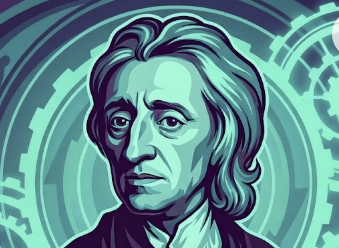
Freedom of Men under Government is, to have a standing Rule to live by, common to every one of that Society, and made by the Legislative Power erected in it; a Liberty to follow my own Will in all things, where the Rule prescribes not; and not to be subject to the inconstant, uncertain, unknown, Arbitrary Will of another Man: as Freedom of Nature is, to be under no other restraint but the Law of Nature.
▼
Source
source
Second Treatise of Civil Government, Ch. IV, sec. 21

3 months 1 week ago
But Eudoxus the Cnidian, who was somewhat junior to Leon, and the companion of Plato, first of all rendered the multitude of those theorems which are called universals more abundant; and to three proportions added three others; and things relative to a section, which received their commencement from Plato, he diffused into a richer multitude, employing also resolutions in the prosecution of these.
▼
Source
source
Ch. IV.
4 months 3 weeks ago
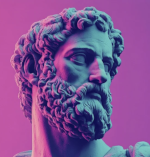
For some identify happiness with virtue, some with practical wisdom, others with a kind of philosophic wisdom, others with these, or one of these, accompanied by pleasure or not without pleasure; while others include also external prosperity. Now ... it is not probable that these should be entirely mistaken, but rather that they should be right in at least some one respect or even in most respects.

3 months ago
But man is a Noble Animal, splendid in ashes, and pompous in the grave, solemnizing Nativities and Deaths with equal lustre, nor omitting Ceremonies of Bravery, in the infamy of his nature. Life is a pure flame, and we live by an invisible Sun within us.
▼
Source
source
Chapter V

2 months 6 days ago
Moral activity? There is scarcely such a thing possible! Everything is sketchy. The world does nothing but sketch.
3 months 3 weeks ago
The Hindoos are most serenely and thoughtfully religious than the Hebrews. They have perhaps a purer, more independent and impersonal knowledge of God. Their religious books describe the first inquisitive and contemplative access to God; the Hebrew bible a conscientious return, a grosser and more personal repentance. Repentance is not a free and fair highway to God. A wise man will dispense with repentance. It is shocking and passionate. God prefers that you approach him thoughtful, not penitent, though you are chief of sinners. It is only by forgetting yourself that you draw near to him. The calmness and gentleness with which the Hindoo philosophers approach and discourse on forbidden themes is admirable. In 1853.
▼
Source
source
A Tribute to Hinduism, 2008

2 months 3 weeks ago
Where popular authority is absolute and unrestrained, the people have an infinitely greater, because a far better founded, confidence in their own power. They are themselves, in a great measure, their own instruments. They are nearer to their objects. Besides, they are less under responsibility to one of the greatest controlling powers on the earth, the sense of fame and estimation. The share of infamy that is likely to fall to the lot of each individual in public acts is small indeed; the operation of opinion being in the inverse ratio to the number of those who abuse power. Their own approbation of their own acts has to them the appearance of a public judgment in their favor. A perfect democracy is, therefore, the most shameless thing in the world. As it is the most shameless, it is also the most fearless. No man apprehends in his person that he can be made subject to punishment.

1 month 1 day ago
Science is not distinguished from myth by science being literally true and myth only a type of poetic analogy. While their aims are different, both are composed of symbols we use to deal with a slippery world.
▼
Source
source
Beyond the Last Thought: Freud's cigars and the long way round to Nirvana (p. 96)

2 months 2 weeks ago
It is the most advanced industrial society which feels most directly threatened by the rebellion, because it is here that the social necessity of repression and alienation, of servitude and heteronomy is most transparently unnecessary, and unproductive in terms of human progress. Therefore the cruelty and violence mobilized in the struggle against the threat, therefore the monotonous regularity with which the people are made familiar with, and accustomed to inhuman attitudes and behavior-to wholesale killing as patriotic act.
1 month 3 weeks ago
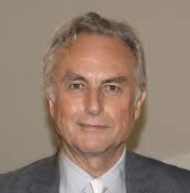
McDonald: Now a lot of people find great comfort from religion. Not everybody is as you are - well-favored, handsome, wealthy, with a good job, happy family life. I mean, your life is good - not everybody's life is good, and religion brings them comfort.Dawkins: There are all sorts of things that would be comforting. I expect an injection of morphine would be comforting - it might be more comforting, for all I know. But to say that something is comforting is not to say that it's true.

3 months 4 weeks ago
If the whole of natural theology, as some people seem to maintain, resolves itself into one simple, though somewhat ambiguous, at least undefined proposition, that the cause or causes of order in the universe probably bear some remote analogy to human intelligence: If this proposition be not capable of extension, variation, or more particular explication: If it affords no inference that affects human life, or can be the source of any action or forbearance: And if the analogy, imperfect as it is, can be carried no farther than to the human intelligence, and cannot be transferred, with any appearance of probability, to the other qualities of the mind; if this really be the case, what can the most inquisitive, contemplative, and religious man do more than give a plain, philosophical assent to the proposition, as often as it occurs, and believe that the arguments on which it is established exceed the objections which lie against it?
▼
Source
source
Philo to Cleanthes, Part XII

2 months 3 weeks ago
The moment we believe we've understood everything grants us the look of a murderer.

1 month 3 weeks ago
Obsolescence is the moment of superabundance.
▼
Source
source
Yeats studies, Issue 2, Irish University Press, 1972, p. 135
1 month 3 weeks ago
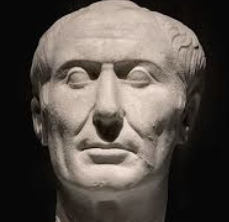
We may with advantage at times forget what we know.
▼
Source
source
Maxim 234

2 months 2 weeks ago
Go into the village over against you, and straightway ye shall find an ass tied, and a colt with her: loose them, and bring them unto me. And if any man say ought unto you, ye shall say, The Lord hath need of them; and straightway he will send them. All this was done, that it might be fulfilled which was spoken by the prophet, saying, Tell ye the daughter of Sion, Behold, thy King cometh unto thee, meek, and sitting upon an ass, and a colt the foal of an ass.
▼
Source
source
21:2-5 (KJV)
1 month 3 weeks ago
Never promise more than you can perform.
▼
Source
source
Maxim 528
2 months 2 weeks ago
He that is to govern a whole Nation, must read in himself, not this, or that particular man; but Mankind; which though it be hard to do, harder than to learn any Language, or Science; yet, when I shall have set down my own reading orderly, and perspicuously, the pains left another, will be only to consider, if he also find not the same in himself. For this kind of Doctrine, admitteth no other Demonstration.
▼
Source
source
The Introduction, p. 2

1 week 2 days ago
So the wise man will develop virtue, if he may, in the midst of wealth, or, if not, in poverty; if possible, in his own country-if not, in exile; if possible, as a commander-if not, as a common soldier; if possible, in sound health-if not, enfeebled. Whatever fortune he finds, he will accomplish therefrom something noteworthy.
4 months 1 week ago
An unjust law is no law at all.
▼
Source
source
On Free Choice Of The Will, Book 1, and 5

1 month 4 days ago
Humans are prone to status quo bias. So let's do a thought-experiment. Imagine we stumble across an advanced civilisation that has abolished predation, disease, famine, and all the horrors of primitive Darwinian life. The descendants of archaic lifeforms flourish unmolested in their wildlife parks - free living, but not "wild". Should we urge scrapping their regime of compassionate stewardship of the living world - and a return to asphyxiation, disembowelling and being eaten alive? Or is a happy biosphere best conserved intact? Reply to "Should humans wipe out all carnivorous animals so the succeeding generations of herbivores can live in peace?"
▼
Source
source
, Quora, 16 Jun. 2018
5 days ago
When one says, for example, that superiority and inferiority is a formation to be found in every human association, though the proposition certainly involves very profound insight into the essence of human nature and human relationship, yet the assertion is so general that it affords little knowledge of particular societary formations. In order to reach such particular knowledge we must study separate types of superiority and inferiority, and we must master the special features of their formation, which in proportion to their definiteness of course lose generality of application.
▼
Source
source
p. 169

3 months 3 weeks ago
It might otherwise appear paradoxical that money can be replaced by worthless paper; but that the slightest alloying of its metallic content depreciates it.
▼
Source
source
Notebook VII, The Chapter on Capital, p. 734.
2 months 3 weeks ago
By capitulating to life, this world has betrayed nothingness. . . . I resign from movement, and from my dreams. Absence! You shall be my sole glory. . . . Let "desire" be forever stricken from the dictionary, and from the soul! I retreat before the dizzying farce of tomorrows. And if I still cling to a few hopes, I have lost forever the faculty of hoping.
1 week 2 days ago
If you are wise, mingle these two elements: do not hope without despair, or despair without hope.
▼
Source
source
Line 12 Alternate translation: Hope not without despair, despair not without hope. (translated by Zachariah Rush).

1 month 3 weeks ago
The whole life of the upper classes is a constant inconsistency. The more delicate a man's conscience is, the more painful this contradiction is to him.
▼
Source
source
Chapter V, Contradiction Between our Life and our Christian Conscience

4 months 2 days ago
My appetite comes to me while eating.
▼
Source
source
Book III, Ch. 9. Of Vanity

2 months 4 weeks ago
History, it is easily perceived, is a picture-gallery containing a host of copies and very few originals.
▼
Source
source
p. 88

3 months 3 weeks ago
It is in this way that all my books have been composed. They were always written at least twice over; a first draft of the entire work was completed to the very end of the subject, then the whole begun again de novo; but incorporating, in the second writing, all sentences and parts of sentences of the old draft, which appeared as suitable to my purpose as anything which I could write in lieu of them. I have found great advantages in this system of double redaction. It combines, better than any other mode of composition, the freshness and vigour of the first conception, with the superior precision and completeness resulting from prolonged thought. In my own case, moreover, I have found that the patience necessary for a careful elaboration of the details of composition and expression, costs much less effort after the entire subject has been once gone through, and the substance of all that I find to say has in some manner, however imperfect, been got upon paper.
▼
Source
source
(p. 222)

3 months 3 weeks ago
Even if a civil society were to be dissolved by the consent of all its members (e.g., if a people inhabiting an island decided to separate and disperse throughout the world), the last murderer remaining in prison would first have to be executed, so that each has done to him what his deeds deserve and blood guilt does not cling to the people for not having insisted upon this punishment; for otherwise the people can be regarded as collaborators in his public violation of justice.
▼
Source
source
Kt6:333
2 months 3 weeks ago
I don't understand why we must do things in this world, why we must have friends and aspirations, hopes and dreams. Wouldn't it be better to retreat to a faraway corner of the world, where all its noise and complications would be heard no more? Then we could renounce culture and ambitions; we would lose everything and gain nothing; for what is there to be gained from this world?
3 months 2 weeks ago
The investigation of the meaning of words is the beginning of education.
▼
Source
source
Arrian, Discourses of Epictetus, i. 17
2 months 4 days ago
There is no more important rule of conduct in the world than this: attach yourself as much as you can to people who are abler than you and yet not so very different that you cannot understand them.
▼
Source
source
F 81
3 months 2 weeks ago
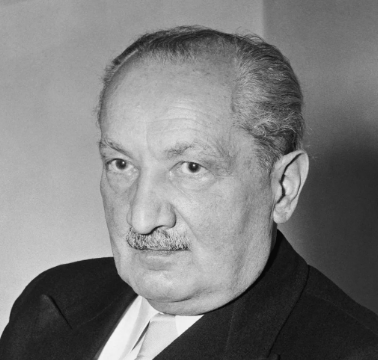
In order to remain silent Da-sein must have something to say.
▼
Source
source
Stambaugh translation
CivilSimian.com created by AxiomaticPanic, CivilSimian, Kalokagathia