

3 months 6 days ago
Social and economic inequalities, for example inequalities of wealth and authority, are just only if they result in compensating benefits for everyone, and in particular for the least advantaged members of society.
▼
Source
source
p. 14.

3 months 1 week ago
Apart from logical cogency, there is to me something a little odd about the ethical valuations of those who think that an omnipotent, omniscient, and benevolent Deity, after preparing the ground by many millions of years of lifeless nebulae, would consider Himself adequately rewarded by the final emergence of Hitler and Stalin and the H-bomb.
▼
Source
source
Preface
2 months ago
When the whole is at stake, there is no crime except that of rejecting the whole, or not defending it. ... Those who identify themselves with the whole, who are installed as the leaders and defenders of the whole can make mistakes, but they cannot do wrong-they are not guilty. They may become guilty again when this identification no longer holds, when they are gone.
▼
Source
source
pp. 82-83
3 weeks 5 days ago
We believe it to be a rule without an exception, that the violence of a revolution corresponds to the degree of misgovemment which has produced that revolution.
▼
Source
source
Mirabeau', The Edinburgh Review (July 1832), quoted in The Miscellaneous Writings of Lord Macaulay, Vol. II (1860), pp. 81-82
3 months 3 weeks ago
Some of their faults people readily admit, but others not so readily.
▼
Source
source
Book II, ch. 21, 1

2 months 1 week ago
Furthermore, when citizens are all almost equal, it becomes difficult for them to defend their independence against the aggressions of power.
▼
Source
source
Chapter III.


2 weeks ago
If our universe is one of many, unlike others in containing observers like ourselves, there is no need to posit a designer. Most universes will be too chaotic to allow the emergence of life or mind. In that case, the fact that humans exist in this universe needs no special explanation.
▼
Source
source
Sweet Morality (p. 222)

1 month 2 weeks ago
The chief impression left by a study of Crowley's life and works is that he wasted an immense amount of time and energy trying to shock everyone he came into contact with, and his dislike of orthodoxy turned him into an unconsciously comic figure, like Don Quixote.
▼
Source
source
pp. 153-154
3 months 1 week ago
The universal and lasting establishment of peace constitutes not merely a part, but the whole final purpose and end of the science of right as viewed within the limits of reason.
1 month 4 weeks ago
In the life of the mass-order, the culture of the generality tends to conform to the demands of the average human being. Spirituality decays through being diffused among the masses when knowledge is impoverished in every possible way by rationalisation until it becomes accessible to the crude understanding of all.

3 months 6 days ago
But, if it will help ease your irritated souls, please know, dearly departed, that you have ruined our lives.
▼
Source
source
Aegistheus, Act 2

4 months 5 days ago
Moreover, there is a victory and defeat, the first and best of victories, the lowest and worst of defeat, which each man gains or sustains at the hands, not of another, but of himself; this shows that there is a war against ourselves going on within every one of us. Book I Sometimes paraphrased as "The first and best victory is to conquer self".

2 months ago
Unto whomsoever much is given, of him shall be much required: and to whom men have committed much, of him they will ask the more.
▼
Source
source
12:48

3 months 1 week ago
Life is a task to be done. It is a fine thing to say defunctus est; it means that the man has done his task.
▼
Source
source
"On the Sufferings of the World"

3 months 2 weeks ago
Merit is a work for the sake of which Christ gives rewards. But no such work is to be found, for Christ gives by promise. Just as if a prince should say to me, "Come to me in my castle, and I will give you a hundred florins." I do a work, certainly, in going to the castle, but the gift is not given me as the reward of my work in going, but because the prince promised it to me.
▼
Source
source
p. 409

4 months 1 week ago
I see again what I thought I saw the first time, when I sent forth the little book that was compared to and in fact could best be compared to a humble little flower under the cover of the great forest.

2 months 3 days ago
When people come to me saying they want to kill themselves, I tell them, "What's your rush? You can kill yourself any time you like. So calm down. Suicide is a positive act." And they do calm down.

3 months 1 week ago
I have seen something of the project of M. de St. Pierre, for maintaining a perpetual peace in Europe. I am reminded of a device in a cemetery, with the words: Pax perpetua; for the dead do not fight any longer: but the living are of another humor; and the most powerful do not respect tribunals at all. Letter 11 to Grimarest: Passages Concerning the Abbe de St. Pierre's 'Project for Perpetual Peace' (June 1712).
▼
Source
source
Taken from Leibniz: Political Writings (2nd Edition, 1988), Edited by Patrick Riley.

1 month 5 days ago
Hypnotized by their rear-view mirrors, philosophers and scientists alike tried to focus the figure of man in the old ground of nineteenth-century industrial mechanism and congestion. They failed to bridge from the old figure to the new. It is man who has become both figure and ground via the electrotechnical extension of his awareness. With the extension of his nervous system as a total information environment, man bridges art and nature.
▼
Source
source
(p. 11)
2 months 4 days ago
Seldom, or perhaps never, does a marriage develop into an individual relationship smoothly and without crises; there is no coming to consciousness without pain.
▼
Source
source
p. 193

1 month 3 weeks ago
To know something is to make this something that I know myself; but to avail myself of it, to dominate it, it has to remain distinct from myself.

3 months 1 week ago
Nor is it the irrationality of the form which is taken as characteristic. On the contrary, one overlooks the irrational.
▼
Source
source
Vol. II, Ch. I, p. 30.
3 weeks 2 days ago
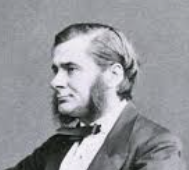
There is no alleviation for the sufferings of mankind except veracity of thought and of action, and the resolute facing of the world as it is, when the garment of make-believe, by which pious hands have hidden its uglier features, is stripped off.
▼
Source
source
Autobiography


2 months 1 week ago
Every cause produces more than one effect.
▼
Source
source
On Progress: Its Law and Cause

3 months 1 week ago
You can't worship a spirit in spirit, unless you do it now. Wallowing in the past may be good literature. As wisdom, it's hopeless. Time Regained is Paradise Lost, and Time Lost is Paradise Regained. Let the dead bury their dead. If you want to live at every moment as it presents itself, you've got to die to every other moment.
▼
Source
source
John Rivers in The Genius and the Goddess, 1955
3 months 3 weeks ago
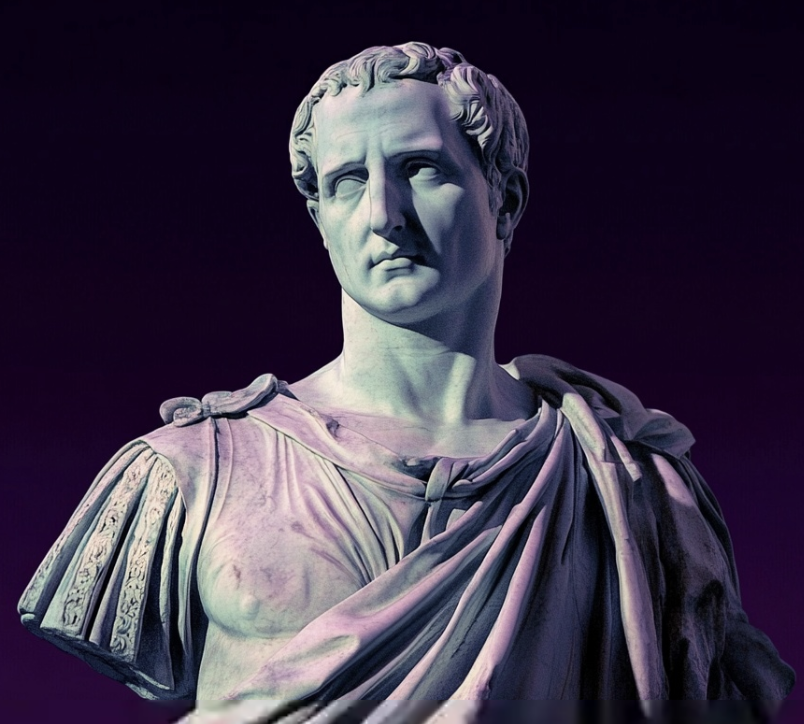
We know, that of all living beings man is the best formed, and, as the gods belong to this number, they must have a human form. ... I do not mean to say that the gods have body and blood in them; but I say that they seem as if they had bodies with blood in them. . . , Epicurus, for whom hidden things were as tangible as if he had touched them with his finger, teaches us that gods are not generally visible, but that they are intelligible; that they are not bodies having a certain solidity . . . but that we can recognize them by their passing images; that as there are atoms enough in the infinite space to produce such images, these are produced before us . . . and make us realize what are these happy, immortal beings.
▼
Source
source
Book I, Section 18

2 months 4 weeks ago
With an ignorant man thou shouldst not become a confederate and associate.
1 month 5 days ago
Visual space is the space of detachment. Audile-tactile space is the space of involvement.
▼
Source
source
(p. 194)
1 month 4 weeks ago
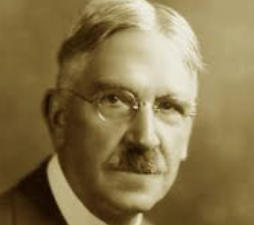
To regiment artists, to make them servants of some particular cause does violence to the very springs of artistic creation. But it does more than that. It betrays the very cause of a better future it would serve, for in its subjugation of the individuality of the artist it annihilates the source of that which is genuinely new. Where the regimentation is successful, it would cause the future to be but a rearrangement of the past.
3 months 1 week ago
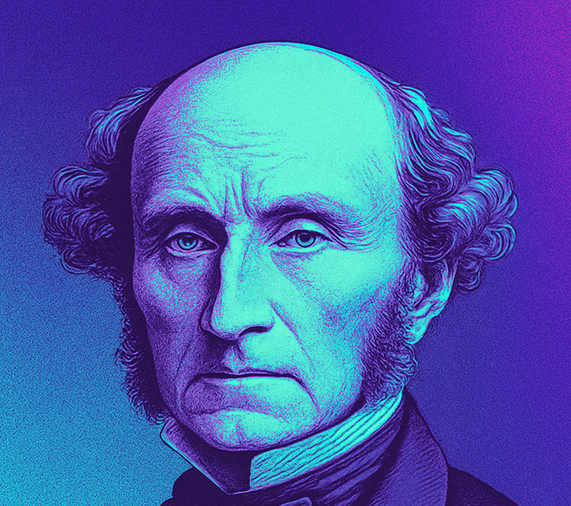
the ultimate end, with reference to and for the sake of which all other things are desirable...is an existence exempt as far as possible from pain, and as rich as possible in enjoyments...This, being, according to the utilitarian opinion, the end of human action, is necessarily also the standard of morality; which may accordingly be defined, the rules and precepts for human conduct, by the observance of which an existence such as has been described might be, to the greatest extent possible, secured to all mankind; and not to them only, but, so far as the nature of things admits, to the whole sentient creation.
▼
Source
source
Ch. 2
4 days ago
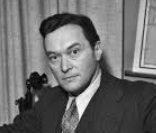
There is only one purpose to which a whole society can be directed by a deliberate plan. That purpose is war, and there is no other.
▼
Source
source
Ch. V: "The Totalitarian Regimes", §7, p. 90

3 months 1 week ago
Being of opinion that the doctrine and history of so extraordinary a sect as the Quakers were very well deserving the curiosity of every thinking man, I resolved to make myself acquainted with them, and for that purpose made a visit to one of the most eminent of that sect in England, who, after having been in trade for thirty years, had the wisdom to prescribe limits to his fortune, and to his desires, and withdrew to a small but pleasant retirement in the country, not many miles from London. Here it was that I made him my visit. His house was small, but neatly built, and with no other ornaments but those of decency and convenience.

3 months 1 week ago
Nothing but the most exemplary morals can give dignity to a man of small fortune.
▼
Source
source
Chapter I, Part III, Article III, p. 874.
3 months 1 week ago
Our psychological experiences are all equally facts. There is nothing to choose between them. No psychological experience is "truer," so far as we are concerned, than any other. For even if one should correspond more closely to things in themselves as perceived by some hypothetical non-human being, it would be impossible for us to discover which it was. Science is no "truer" than common sense, or lunacy, or art, or religion. It permits us to organize our experience profitably; but tells us nothing about the real nature of the world to which our experiences are supposed to refer. From the internal reality, by which I mean the totality of psychological experiences, it actually separates us. Art, for example, deals with many more aspects of this internal reality than does science, which confines itself deliberately and by convention to the study of one very limited class of experiences - the experiences of sense.
▼
Source
source
"One and Many," p. 5-6
2 months ago
Either one defines "personality" and "individuality" in terms of their possibilities within the established form of civilization, in which case their realization is for the vast majority tantamount to successful adjustment. Or one defines them in terms of their transcending content, including their socially denied potentialities beyond (and beneath) their actual existence; in this case, their realization would imply transgression, beyond the established form of civilization, to radically new modes of "personality" and "individuality" incompatible with the prevailing ones. Today, this would mean "curing" the patient to become a rebel or (which is saying the same thing) a martyr.
▼
Source
source
"Critique of Neo-Freudian Revisionism"
1 month 2 weeks ago
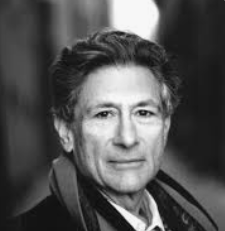
I retain my faith in the humanist tradition, that it's possible to deal with discrepant experiences truthfully without resolving into simple things like only women should write about women, only Chicanos should write about Chicanos, only Latinos should write about Latinos... I think that's the most damaging crime, and misapprehension of what I'm saying. That's why they debate all these things and they trace them back to me and people say 'you did that!' Absolutely not. I'm talking from a universalistic, if you like cosmopolitan point of view to which I adhere and which is the only way the world makes sense to me. I don't believe in the politics of identity, although in many ways paradoxically I seem to be the father of identity politics, but it's a thing I totally disbelieve in because I realise the damage that identities have done.
▼
Source
source
Interview with Michaël Zeeman for Leven en Werken

3 months 3 weeks ago
The living force of his soul gained the day: on he passed far beyond the flaming walls of the world and traversed throughout in mind and spirit the immeasurable universe.
▼
Source
source
Book I, lines 72-74 (tr. H. A. J. Munro); of Epicurus.
1 month 4 days ago
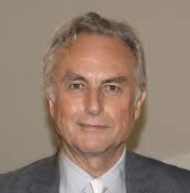
I don't want to sound callous. I mean, even if I have nothing to offer, that doesn't matter, because that still doesn't mean that what anybody else has to offer therefore has to be true.

1 month 2 weeks ago
The spirit of militarism has already permeated all walks of life. Indeed, I am convinced that militarism is a greater danger here than anywhere else, because of the many bribes capitalism holds out to those whom it wishes to destroy.

3 months 1 week ago
There is no method of reasoning more common, and yet none more blameable, than in philosophical debates to endeavour to refute any hypothesis by a pretext of its dangerous consequences to religion and morality. When any opinion leads us into absurdities, 'tis certainly false; but 'tis not certain an opinion is false, because 'tis of dangerous consequence.
▼
Source
source
Part 3, Section 2

1 month 3 weeks ago
Whenever a human being, through the commission of a crime, has become exiled from good, he needs to be reintegrated with it through suffering. The suffering should be inflicted with the aim of bringing the soul to recognize freely some day that its infliction was just. This reintegration with the good is what punishment is. Every man who is innocent, or who has finally expiated guilt, needs to be recognized as honourable to the same extent as anyone else.
2 months 4 weeks ago
Beginning to reason is like stepping onto an escalator that leads upward and out of sight. Once we take the first step, the distance to be traveled is independent of our will and we cannot know in advance where we shall end.
▼
Source
source
Chapter 4, Reason, p. 88
1 month 3 weeks ago
Faith which does not doubt is dead faith.
▼
Source
source
La Agonía del Cristianismo (The Agony of Christianity)
1 month 2 weeks ago
Even truth needs to be clad in new garments if it is to appeal to a new age.
▼
Source
source
C 33

3 months 2 weeks ago
It is the mind that maketh good or ill, That maketh wretch or happy, rich or poor.
2 months 3 days ago
I used to ask myself, over a coffin: "What good did it do the occupant to be born?," I now put the same question about anyone alive.
1 day ago
Astronomers... define duration in the following way: time... so defined that Newton's law and that of vis viva [or of the conservation of energy] may be verified. Newton's law is an experimental truth... only approximate... We still have only a definition by approximation.

3 months 2 days ago
The problem... Democracy is founded by a politeia, a constitution, where the demos, the people, exercise power, and... everyone is equal in front of the law. Such a constitution... is condemned to give equal place to all forms of parrhesia, even the worst. Because parrhesia is given even to the worst citizens, the overwhelming influence of bad, immoral, or ignorant speakers may lead... into tyranny, or... otherwise endanger the city. Hence parrhesia may be dangerous for democracy itself.
CivilSimian.com created by AxiomaticPanic, CivilSimian, Kalokagathia