


4 months 2 weeks ago
Hope is a good breakfast, but it is a bad supper.
▼
Source
source
No. 36
4 months 1 week ago
By the law is the knowledge of sin [Rom 3:20], so the word of grace comes only to those who are distressed by a sense of sin and tempted to despair.
▼
Source
source
p. 168
4 months 1 week ago
The law of simplicity and naïveté applies to all fine art, for it is compatible with what is most sublime. True brevity of expression consists in a man only saying what is worth saying, while avoiding all diffuse explanations of things which every one can think out for himself; that is, it consists in his correctly distinguishing between what is necessary and what is superfluous. On the other hand, one should never sacrifice clearness, to say nothing of grammar, for the sake of being brief. To impoverish the expression of a thought, or to obscure or spoil the meaning of a period for the sake of using fewer words shows a lamentable want of judgment.
2 months 1 week ago
To dissimulate is to pretend not to have what one has. To simulate is to feign to have what one doesn't have. One implies a presence, the other an absence. But it is more complicated than that because simulating is not pretending: "Whoever fakes an illness can simply stay in bed and make everyone believe he is ill. Whoever simulates an illness produces in himself some of the symptoms" (Littré). Therefore, pretending, or dissimulating, leaves the principle of reality intact: the difference is always clear, it is simply masked, whereas simulation threatens the difference between the "true" and the "false," the "real" and the "imaginary."
▼
Source
source
"The Precession of Simulacra," p. 3
1 month 4 weeks ago
I've never been an optimist but that's fine because pessimists have the possibility of being agreeably surprised, and that's a reason for being pessimistic, but I've always defended a certain kind of pessimism because what is known as optimism is really a collection of illusions and I think one must recognise what all religious people know, which is that human beings are imperfect and fallen and there's no way in which they can alone surmount the problems which they themselves create.
▼
Source
source
From an interview with George Eaton "The Roger Scruton interview: the full transcript", New Statesman
1 month ago
Wine is a mixture of moisture and light.
▼
Source
source
As quoted in Lorenzo Magalotti's Scientific and Scholarly Letter
4 months 2 weeks ago
Cosmus, Duke of Florence, was wont to say of perfidious friends, that "We read that we ought to forgive our enemies; but we do not read that we ought to forgive our friends."
▼
Source
source
No. 206

4 months 5 days ago
He begins to think for himself and meets Nineteenth-century Rationalism Which can explain away religion by any number of methods.
▼
Source
source
Pilgrim's Regress 19-20
4 days ago
In ourselves alone the absolute light keeps shining, a sigillum falsi et sui, mortis et vitae aeternae [false signal and signal of eternal life and death itself], and the fantastic move to it begins: to the external interpretation of the daydream, the cosmic manipulation of a concept that is utopian in principle. Finding this concept, finding the right for whose sake it behoves us to live, to be organized, to have time-this is where we are headed, why we are clearing the metaphysically constitutive trails afresh, calling for what is not, building into the blue that lines all edges of the world; this is why we build ourselves into the blue and search for truth and reality where mere factuality vanishes.
▼
Source
source
p. 43
3 months 3 days ago
Perfectibility is one of the most unequivocal characteristics of the human species.
▼
Source
source
Vol. 1, bk. 1 : Of the Powers of Man Considered in his Social Capacity, ch. 2
1 month 2 days ago
Marriage and dependent children are a trap for the people! Morality carefully hides this distressing truth from us because it knows no remedy for the evil. But I , who bring a remedy must not dissimulate the woes from fathers, and I must not dissimulate from society its radical vice of pushing seven-eighths of all families into evil practices through poverty.
1 month 2 weeks ago
It doesn't matter that it can't last, that we don't find it more often. To know that there is such perfection, that there has been such perfection - it is worth living for. It exists. It has been - it is. One can contemplate it and feel complete peace.

4 months 6 days ago
The normal process of life contains moments as bad as any of those which insane melancholy is filled with, moments in which radical evil gets its innings and takes its solid turn. The lunatic's visions of horror are all drawn from the material of daily fact. Our civilization is founded on the shambles, and every individual existence goes out in a lonely spasm of helpless agony. If you protest, my friend, wait till you arrive there yourself! ... Here on our very hearths and in our gardens the infernal cat plays with the panting mouse, or holds the hot bird fluttering in her jaws. Crocodiles and rattlesnakes and pythons are at this moment vessels of life as real as we are; their loathsome existence fills every minute of every day that drags its length along; and whenever they or other wild beasts clutch their living prey, the deadly horror which an agitated melancholiac feels is the literally right reaction on the situation.
▼
Source
source
Lectures VI and VII, "The Sick Soul"

4 months 1 day ago
The real discovery is the one which enables me to stop doing philosophy when I want to. The one that gives philosophy peace, so that it is no longer tormented by questions which bring itself into question.
▼
Source
source
§ 133

2 months 3 weeks ago
The cult of the Virgin, Mariolatry, which by the gradual elevation of the divine element in the Virgin has led almost to her deification, answers merely to the feeling that God should be a perfect man, that God should include in his nature the feminine element. The progressive exaltation of the Virgin Mary, the work of Catholic piety, having its beginning in the expression Mother of God, ...has culminated in attributing to her the status of co-redeemer and in the dogmatic declaration of her conception without the stain of original sin. Hence she now occupies a position between Humanity and Divinity and nearer Divinity than Humanity. And it has been surmised that in course of time she may perhaps even come to be regarded as yet another personal manifestation of the Godhead.

4 months 5 days ago
The end cannot justify the means for the simple and obvious reason that the means employed determine the nature of the ends produced.
▼
Source
source
Ch. 1, p. 10 [2012 reprint]
3 months 3 weeks ago
Common sense doesn't have the last word in ethics or anywhere else, but it has, as J. L. Austin said about language, the first word: it should be examined before it is discarded.
▼
Source
source
p. 166.

6 days ago
With respect to the new Government, nine or ten States will probably have accepted by the end of this month. The others may oppose it. Virginia, I think, will be of this number. Besides other objections of less moment, she will insist on annexing a bill of rights to the new Constitution, i.e. a bill wherein the Government shall declare that, 1. Religion shall be free; 2. Printing presses free; 3. Trials by jury preserved in all cases; 4. No monopolies in commerce; 5. No standing army. Upon receiving this bill of rights, she will probably depart from her other objections; and this bill is so much to the interest of all the States, that I presume they will offer it, and thus our Constitution be amended, and our Union closed by the end of the present year.
▼
Source
source
Letter to Mr. Dumas
2 months 1 day ago
Youth now flees on feathered foot.
▼
Source
source
To Will H. Low, reported in Bartlett's Familiar Quotations, 10th ed. (1919).

3 weeks 6 days ago
Instruction, that mysterious communing of Wisdom with Ignorance, is no longer an indefinable tentative process, requiring a study of individual aptitudes, and a perpetual variation of means and methods, to attain the same end; but a secure, universal, straightforward business, to be conducted in the gross, by proper mechanism.
4 months 1 week ago
As usurpation is the exercise of power which another has a right to, so tyranny is the exercise of power beyond right, which nobody can have a right to...
▼
Source
source
Second Treatise of Government, Ch. XVIII, sec. 199
2 months 3 weeks ago
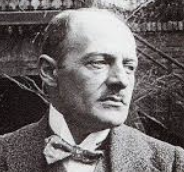
Ressentiment is always to some degree a determinant of the romantic type of mind. At least this is so when the romantic nostalgia for some past era (Hellas, the Middle Ages, etc.) is not primarily based on the values of that period, but on the wish to escape from the present. Then all praise of the "past" has the implied purpose of downgrading present-day reality.
▼
Source
source
L. Coser, trans. (1973), p. 68

3 months 2 days ago
The only interesting philosophers are the ones who have stopped thinking and have begun to search for happiness.
4 months 1 day ago
The world and life are one.
▼
Source
source
(5.621) Original German: Die Welt und das Leben sind Eins.
5 months 6 days ago
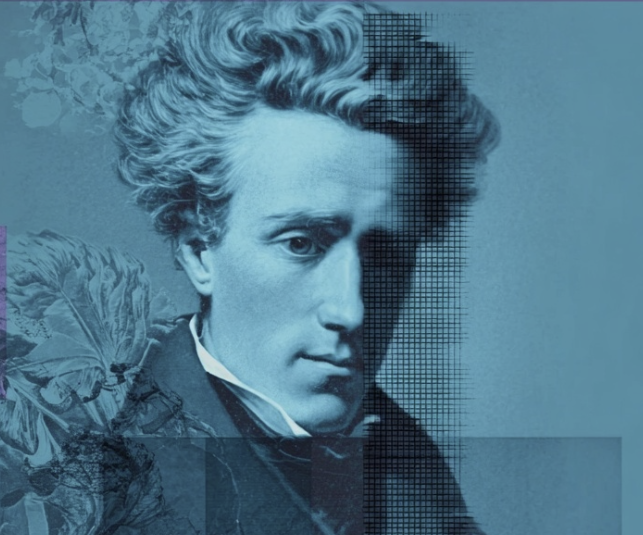
How absurd men are! They never use the liberties they have, they demand those they do not have. They have freedom of thought, they demand freedom of speech. Either/Or Part I, Swenson Translation p. 19 Variations include: People demand freedom of speech to make up for the freedom of thought, which they avoid. People demand freedom of speech as a compensation for the freedom of thought which they seldom use.
4 months 4 days ago
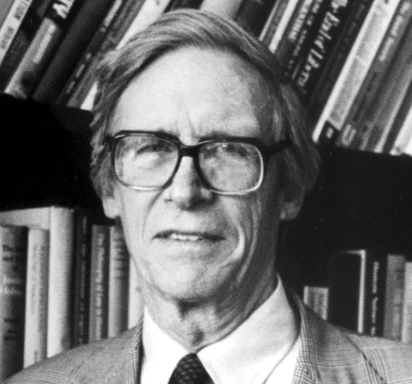
I have tried to set forth a theory that enables us to understand and to assess these feelings about the primacy of justice. Justice as fairness is the outcome: it articulates these opinions and supports their general tendency.
▼
Source
source
Chapter IX, Section 87, p. 586

2 months 2 weeks ago
What is generally regarded as success - acquisition of wealth, the capture of power or social prestige - I consider the most dismal failures. I hold when it is said of a man that he has arrived, it means that he is finished - his development has stopped at that point. I have always striven to remain in a state of flux and continued growth, and not to petrify in a niche of self-satisfaction. If I had my life to live over again, like anyone else, I should wish to alter minor details. But in any of my more important actions and attitudes I would repeat my life as I have lived it. Certainly I should work for Anarchism with the same devotion and confidence in its ultimate triumph.
2 weeks 3 days ago
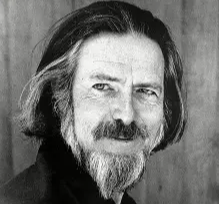
Buddhism ... is not a culture but a critique of culture, an enduring nonviolent revolution or "loyal opposition" to the culture in which it is involved.
▼
Source
source
p. 7

5 months 3 days ago
There can never be a man so lost as one who is lost in the vast and intricate corrdiors of his own lonely mind, where none may reach and none may save. There never was a man so helpless as one who cannot remember.
2 months 4 weeks ago
The Superego, in censoring the unconscious and in implanting conscience, also censors the censor.
▼
Source
source
p. 76
3 weeks 6 days ago
It has ever been held the highest wisdom for a man not merely to submit to Necessity,-Necessity will make him submit,-but to know and believe well that the stern thing which Necessity had ordered was the wisest, the best, the thing wanted there. To cease his frantic pretension of scanning this great God's-World in his small fraction of a brain; to know that it had verily, though deep beyond his soundings, a Just Law, that the soul of it was Good;-that his part in it was to conform to the Law of the Whole, and in devout silence follow that; not questioning it, obeying it as unquestionable.
4 months 2 weeks ago
The propositions which are true and evident must of necessity be employed even by those who contradict them.
▼
Source
source
Book II, ch. 20, 1

2 months 2 weeks ago
The real issue is not whether two and two make four or whether two and two make five, but whether life advances by men who love words or men who love living.
▼
Source
source
Chapter Nine, Breaking the Circuit

4 months 1 week ago
Labour was the first price, the original purchase-money that was paid for all things. It was not by gold or by silver, but by labour, that all the wealth of the world was originally purchased; and its value, to those who possess it, and who want to exchange it for some new productions, is precisely equal to the quantity of labour which it can enable them to purchase or command.
▼
Source
source
Chapter V, p. 38.
3 months 3 weeks ago
You may drive out Nature with a pitchfork, yet she still will hurry back.
▼
Source
source
Book I, epistle x, line 24
2 months 3 weeks ago
What, by a word lacking even in grammar, is called amorality, is a thing that does not exist. If you are unwilling to submit to any norm, you have, nolens volens, to submit to the norm of denying all morality, and this is not amoral, but immoral. It is a negative morality which preserves the empty form of the other.
▼
Source
source
Chapter XV: We Arrive At The Real Question

3 months 6 days ago
Through a wise and salutary neglect [of the colonies], a generous nature has been suffered to take her own way to perfection; when I reflect upon these effects, when I see how profitable they have been to us, I feel all the pride of power sink and all presumption in the wisdom of human contrivances melt and die away within me. My vigour relents. I pardon something to the spirit of liberty.
5 months 6 days ago
Again, it is possible to fail in many ways (for evil belongs to the class of the unlimited ... and good to that of the limited), while to succeed is possible only in one way (for which reason also one is easy and the other difficult—to miss the mark easy, to hit it difficult); for these reasons also, then, excess and defect are characteristic of vice, and the mean of virtue; For men are good in but one way, but bad in many.
2 weeks 3 days ago
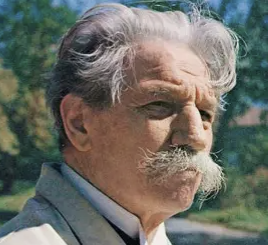
There slowly grew up in me an unshakable conviction that we have no right to inflict suffering and death on another living creature unless there is some unavoidable necessity for it, and that we ought all of us to feel what a horrible thing it is to cause suffering and death out of mere thoughtlessness. And this conviction has influenced me only more and more strongly with time. I have grown more and more certain that at the bottom of our heart we all think this, and that we fail to acknowledge it because we are afraid of being laughed at by other people as sentimentalists, though partly also because we allow our best feelings to get blunted. But I vowed that I would never let my feelings get blunted, and that I would never be afraid of the reproach of sentimentalism.
▼
Source
source
p. 275
1 month 3 weeks ago
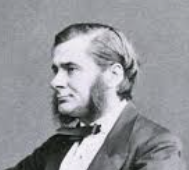
I cannot say that I am in the slightest degree impressed by your bigness, or your material resources, as such. Size is not grandeur, and territory does not make a nation. The great issue, about which hangs true sublimity, and the terror of overhanging fate, is what are you going to do with all these things?
▼
Source
source
"Address on University Education" (1876), delivered at the formal opening of Johns Hopkins University, Baltimore, Maryland, September 12, 1876. Huxley, American Addresses (1877), p. 125.
3 months 6 days ago
Whoever hasn't yet arrived at the clear realization that there might be a greatness existing entirely outside his own sphere and for which he might have absolutely no feeling; whoever hasn't at least felt obscure intimations concerning the approximate location of this greatness in the geography of the human spirit: that person either has no genius in his own sphere, or else he hasn't been educated to the level of the classic.
▼
Source
source
Lucinde and the Fragments, P. Firchow, trans. (1991), "Critical Fragments," § 36
5 months 6 days ago
Irony is a qualification of subjectivity.
4 months 3 weeks ago
We may treat of the Soul as in the body whether it be set above it or actually within it since the association of the two constitutes the one thing called the living organism, the Animate. Now from this relation, from the Soul using the body as an instrument, it does not follow that the Soul must share the body's experiences: a man does not himself feel all the experiences of the tools with which he is working.

3 months 2 weeks ago
But Hermotimus, the Colophonian, rendered more abundant what was formerly published by Eudoxus and Theætetus, and invented a multitude of elements, and wrote concerning some geometrical places. But Philippus the Mendæan, a disciple of Plato, and by him inflamed in the mathematical disciplines, both composed questions, according to the institutions of Plato, and proposed as the object of his enquiry whatever he thought conduced to the Platonic philosophy.
▼
Source
source
Ch. IV.

4 months 6 days ago
We suffer not only from the development of capitalist production, but also from the incompleteness of that development. Alongside the modern evils, we are oppressed by a whole series of inherited evils, arising from the passive survival of archaic and outmoded modes of production, with their accompanying train of anachronistic social and political relations. We suffer not only from the living, but from the dead.
▼
Source
source
Preface to the First Edition, Capital Volume 1, Peinguin Classics edition 1976.

2 months 3 days ago
Every process pushed far enough tends to reverse or flip suddenly. Chiasmus - the reversal to process caused by increasing its speed, scope or size.
▼
Source
source
(p. 6)
5 months 6 days ago
In the Church which was founded at Corinth, St. Paul had special difficulties of the kind I have mentioned. In that flourishing commercial city, which through its shipping and situation, maintained a vital connexion between East and West, numerous crowds of people flocked together from all quarters, different in speech and in culture. As they mingled with the inhabitants, they produced, by contacts and contrasts, new and ever new differences. Even in the Church this differentiation endeavoured to make itself felt in sects and parties; and a kind of pagan wisdom made a special attempt to force itself forward as a teacher of truth. In his first letter to this church, from which the text I read is taken, St. Paul strongly combats this tendency.
3 weeks 6 days ago
Be not the slave of Words.
▼
Source
source
Bk. I, ch. 8.

3 months 1 week ago
The best laws cannot make a constitution work in spite of morals; morals can turn the worst laws to advantage. That is a commonplace truth, but one to which my studies are always bringing me back. It is the central point in my conception. I see it at the end of all my reflections.
▼
Source
source
De la supériorité des mœurs sur les lois (1831) Oeuvres complètes, vol. VIII, p. 286.
3 months 6 days ago
People like us are unhappy in this world and in the next, I guess if we made it to heaven, we'd have to help make it thunder.
▼
Source
source
Scene VI.
CivilSimian.com created by AxiomaticPanic, CivilSimian, Kalokagathia