


2 weeks 2 days ago
All work, even cotton spinning, is noble; work is alone noble ... A life of ease is not for any man, nor for any god.
▼
Source
source
Bk. III, ch. 4.

4 months 2 weeks ago
It is quite clear to you that all the people see that lower kinds of creation could have been made in a different way from that in which they really are, and as they see this lower degree in many things they think that they must have been made by chance.

4 months 3 weeks ago
Necessity makes a joke of civilization.

4 months 3 weeks ago
The vices respectively fall short of or exceed what is right in both passions and actions, while virtue both finds and chooses that which is intermediate.
2 months 3 weeks ago
The political freedom of conscience and of the press, so far from being as it is commonly supposed an extension, is a new case of the limitation of rights and discretion. Conscience and the press ought to be unrestrained, not because men have a right to deviate from the exact line that duty prescribes, but because society, the aggregate of individuals, has no right to assume the prerogative of an infallible judge, and to undertake authoritatively to prescribe to its members in matters of pure speculation.
▼
Source
source
Vol. 1, bk 2 : Principles of Society , Ch. 5 : Of Rights

1 month 3 weeks ago
4 ways: Agnosticism, Relativism, Amorality, Morality.
1) I don't know. 2) Everybody is different. 3) Do whatever you can. 4) Do what you should.

4 months 1 week ago
There is no order between created being and non-being, but there is between created and uncreated being.
▼
Source
source
q. 7, art. 9, ad 8
3 months 2 weeks ago
The harmony between word and deed in Socrates' life is Dorian... manifested in the courage he showed at Delium. This harmonic accord... distinguishes Socrates from a sophist... [who] can give... fine and beautiful discourses on courage, but is not courageous... [U]nlike the sophist, he can use parrhesia and speak freely because what he says accords... with what he thinks... [which] accords... with what he does.
3 months 2 weeks ago
It is a sign of wisdom to be able to use parrhesia without falling into the garrulousness of athuroglossos... One of the problems... how to distinguish that which must be said from that which should be kept silent.
2 months 2 weeks ago
Freed from the sublimated form which was the very token of its irreconcilable dreams-a form which is the style, the language in which the story is told-sexuality turns into a vehicle for the bestsellers of oppression. ... This society turns everything it touches into a potential source of progress and of exploitation, of drudgery and satisfaction, of freedom and of oppression. Sexuality is no exception.
▼
Source
source
pp. 77-78
1 month 2 weeks ago
Can we find nothing good to say about TV? Well, yes, it brings scattered solitaries into a sort of communion. TV allows your isolated American to think that he participates in the life of the entire country. It does not actually place him in a community, but his heart is warmed with the suggestion (on the whole false) that there is a community somewhere in the vicinity and that his atomized consciousness will be drawn back toward the whole.
▼
Source
source
The Distracted Public (1990), p. 159

1 month 1 week ago
If the hypothesis of evolution is true, living matter must have arisen from non-living matter; for by the hypothesis the condition of the globe was at one time such, that living matter could not have existed in it, life being entirely incompatible with the gaseous state.
▼
Source
source
In the Encyclopaedia Britannica, Ninth edition, (1876) Vol. III, "Biology", p. 689. Also quoted in Joseph Cook (1878), Biology, with Preludes on Current Events, Houghton, Osgood, p. 39

2 months 2 weeks ago
The kingdom of heaven is like to a grain of mustard seed, which a man took, and sowed in his field: Which indeed is the least of all seeds: but when it is grown, it is the greatest among herbs, and becometh a tree, so that the birds of the air come and lodge in the branches thereof.
▼
Source
source
13:31-32 (KJV)
1 month 2 weeks ago
In all the areas of life where people have sought and found consolation through forbidding their desires-sex in particular, and taste in general-the habit of judgment is now to be stamped out.
▼
Source
source
"Rays of Hope" (p. 106)

3 months 3 weeks ago
Quietism is the attitude of people who say, "let others do what I cannot do." The doctrine I am presenting before you is precisely the opposite of this, since it declares that there is no reality except in action. It goes further, indeed, and adds, "Man is nothing else but what he purposes, he exists only in so far as he realizes himself, he is therefore nothing else but the sum of his actions, nothing else but what his life is." Hence we can well understand why some people are horrified by our teaching.
▼
Source
source
p. 41
2 months 3 weeks ago
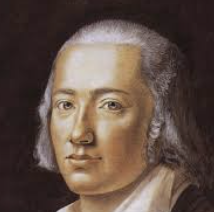
What is all that men have done and thought over thousands of years, compared with one moment of love. But in all Nature, too, it is what is nearest to perfection, what is most divinely beautiful! There all stairs lead from the threshold of life. From there we come, to there we go.

1 month 2 days ago
Before Christianity suicide was not in any way troubling. Our lives were our own, and when we tired of them we were at liberty to end them. One might think that as Christianity has declined, this freedom would be reclaimed. Instead secular creeds have sprung up, in which each person's life belongs to everyone else. To hand back the gift of life because it does not please is still condemned as a kind of blasphemy, though the offended deity is now humanity instead of God.
▼
Source
source
Sweet Morality (p. 231-2)

3 months 3 weeks ago
Sophistry is only fit to make men more conceited in their ignorance.
2 weeks 5 days ago
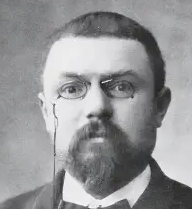
The ones who are preoccupied by logic are above all; to read their works, one is tempted to believe they have advanced only step by step, after the manner of a Vauban who pushes on his trenches against the place besieged, leaving nothing to chance. The others are guided by intuition and, at the first stroke, make quick but sometimes precarious conquests, like bold cavalrymen of the advance guard.
▼
Source
source
quoted in Jacques Hadamard, An essay on the psychology of invention in the mathematical field (1954), pp. 106.

3 months 3 weeks ago
The rich man... is always sold to the institution which makes him rich.

2 months 1 week ago
The point I wish to make is that I became aware that we discipline our minds to see only certain aspects of the world; life is complicated, and we need all our wits about us to deal with its complexities. There would be no great point in having second sight or thaumaturgic powers for most of us. But it is worth observing that they can generally be developed where needed.
▼
Source
source
p. 240

3 months 3 weeks ago
Old-fashioned determinism was what we may call hard determinism. It did not shrink from such words as fatality, bondage of the will, necessitation, and the like. Nowadays, we have a soft determinism which abhors harsh words, and, repudiating fatality, necessity, and even predetermination, says that its real name is freedom; for freedom is only necessity understood, and bondage to the highest is identical with true freedom.
▼
Source
source
The Dilemma of Determinism (1884) republished in The Will to Believe, Dover, 1956, p. 149

3 months 4 weeks ago
But such is the nature of the human mind, that it always lays hold on every mind that approaches it; and as it is wonderfully fortified by an unanimity of sentiments, so is it shocked and disturbed by any contrariety. Hence the eagerness, which most people discover in a dispute; and hence their impatience of opposition, even in the most speculative and indifferent opinions.
▼
Source
source
Part I, Essay 8: Of Parties in General

4 months 3 days ago
The oldest and best known evil was ever more supportable than one that was new and untried.
▼
Source
source
Book III, Ch. 9. Of Vanity

2 months 1 week ago
The great reformers of the world turn into the great misanthropists, if circumstances or organisation do not permit them to act. Christ, if He had been a woman, might have been nothing but a great complainer. Peace be with the misanthropists! They have made a step in progress; the next will make them great philanthropists; they are divided but by a line. The next Christ will perhaps be a female Christ. But do we see one woman who looks like a female Christ? or even like "the messenger before" her "face", to go before her and prepare the hearts and minds for her? To this will be answered that half the inmates of Bedlam begin in this way, by fancying that they are "the Christ." People talk about imitating Christ, and imitate Him in the little trifling formal things, such as washing the feet, saying His prayer, and so on; but if anyone attempts the real imitation of Him, there are no bounds to the outcry with which the presumption of that person is condemned.

3 months ago
When one compares the talents one has with those of a Leibniz, one is tempted to throw away one's books and go die quietly in the dark of some forgotten corner.
▼
Source
source
Oeuvres complètes, vol. 7, p. 678
3 months 3 weeks ago
Every one is familiar with the phenomenon of feeling more or less alive on different days. Every one knows on any given day that there are energies slumbering in him which the incitements of that day do not call forth, but which he might display if these were greater. Most of us feel as if we lived habitually with a sort of cloud weighing on us, below our highest notch of clearness in discernment, sureness in reasoning, or firmness in deciding. Compared with what we ought to be, we are only half-awake. Our fires are damped, our drafts are checked. We are making use of only a small part of our possible mental and physical resources.
▼
Source
source
The Energies of Men
3 months 3 weeks ago
Christianity taught only what the whole of Asia knew already long before and even better.
▼
Source
source
quoted in Londhe, S. (2008). A tribute to Hinduism: Thoughts and wisdom spanning continents and time about India and her culture. New Delhi: Pragun Publication.

1 month 3 weeks ago
We have become like the most primitive Palaeolithic man, once more global wanderers, but information gatherers rather than food gatherers. From now on the source of food, wealth and life itself will be information.
2 months 1 week ago
It seems that thought itself has a power for which it has never been given credit.
▼
Source
source
p. 16

2 months 3 weeks ago
Some decent regulated pre-eminence, some preference (not exclusive appropriation) given to birth, is neither unnatural, nor unjust, nor impolitic.
2 months 4 days ago
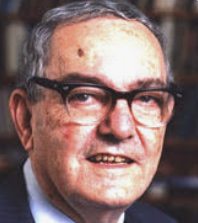
Computers were within my sphere of attention, but only computers used as number crunchers. In spite of the "giant brain" metaphor, there is little suggestion in this 1950 talk that the most important application of computers might lie in imitating intelligence symbolically, not numerically.
▼
Source
source
p. 199.

2 months 3 weeks ago
I dream of a language whose words, like fists, would fracture jaws.

2 months 3 weeks ago
In deduction the mind is under the dominion of a habit or association by virtue of which a general idea suggests in each case a corresponding reaction. This is the way the hind legs of a frog separated from the rest of the body, reason, when you pinch them. It is the lowest form of psychical manifestation.
2 months 3 weeks ago
So it is that after each night, facing a new day, the impossible necessity of dealing with it fills us with dread; exiled in light as if the world had just started, inventing the sun, we flee from tears-just one of which would be enough to wash us out of time.
4 months 3 weeks ago
As for the life of money-making, it is one of constraint, and wealth is manifestly not the good of which we are in search, for it is only useful as a means to something else, and for this reason there is less to be said for it than for the ends mentioned before, which are, at any rate, desired for their own sakes.
4 months 3 weeks ago
The most exciting phrase to hear in science, the one that heralds new discoveries, is not 'Eureka!', but 'That's funny ...'

4 months 1 week ago
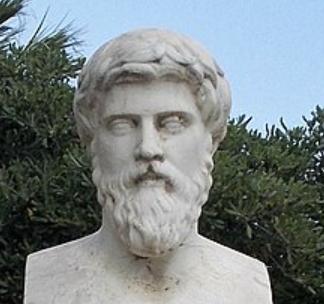
I have read in Plato and Cicero sayings that are very wise and very beautiful; but I never read in either of them, "Come unto me, all ye that labor and are heavy laden."
▼
Source
source
p. 62
3 months 1 week ago
When Eudæmonidas heard a philosopher arguing that only a wise man can be a good general, "This is a wonderful speech," said he; "but he that saith it never heard the sound of trumpets."
▼
Source
source
62 Eudæmonidas

3 months 4 weeks ago
Thoughts without content are empty, intuitions without concepts are blind. The understanding can intuit nothing, the senses can think nothing. Only through their unison can knowledge arise.
▼
Source
source
A 51, B 75
3 months 2 weeks ago
The political, ethical, social, philosophical problem of our day is not to try to liberate the individual from the state and from the state's institutions but to liberate us both from the state and from the type of individualization which is linked to the state. We have to promote new forms of subjectivity through the refusal of this kind of individuality which has been imposed on us for several centuries.
▼
Source
source
p. 785
3 months 2 weeks ago
In its most general form, confinement was explained, or at least justified, by a will to avoid scandal. It thereby signalled an important change in the consciousness of evil. The Renaissance had let unreason in all its forms come out into the light of day, as public exposure gave evil the chance to redeem itself and to serve as an exemplum.
▼
Source
source
Part One: 5. The Insane

1 month 3 weeks ago
I thought: "I am perishing of cold and hunger, and here is a man thinking only of how to clothe himself and his wife, and how to get bread for themselves. He cannot help me. When the man saw me he frowned and became still more terrible, and passed me by on the other side. I despaired, but suddenly I heard him coming back. I looked up, and did not recognize the same man: before, I had seen death in his face; but now he was alive, and I recognized in him the presence of God.
3 months 3 weeks ago
It is not the same thing. You are perhaps not lying, but you are not telling the truth.
▼
Source
source
Act 1

2 months 1 week ago
The haste of day rules over the night as empty form.

2 weeks 6 days ago
On the more conservative side... Liberalism has been associated with... the right to own private property... one of the most fundamental individual rights that is protected in true liberal societies, and that right is... what made possible the modern economic world. As any economist would tell you, without secure property rights and contract enforcement, you don't get investment and therefore economic growth.
▼
Source
source
13:44

3 months 4 weeks ago
The commodities of Europe were almost all new to America, and many of those of America were new to Europe. A new set of exchanges, therefore, began..and which should naturally have proved as advantageous to the new, as it certainly did to the old continent. The savage injustice of the Europeans rendered an event, which ought to have been beneficial to all, ruinous and destructive to several of those unfortunate countries.
▼
Source
source
Chapter I, p. 481.
CivilSimian.com created by AxiomaticPanic, CivilSimian, Kalokagathia