Being>identity. Existence>essence.


Organizations are systems of coordinated action among individuals and groups whose preferences, information, interests, or knowledge differ. Organization theories describe the delicate conversion of conflict into cooperation, the mobilization of resources, and the coordination of effort that facilitate the joint survival of an organization and its members.

Follow the seasons of Ha,Ride in the state carriage of Yau,Wear the ceremonial cap of Chan,Let the music be the Shiu with its pantomimes.
On bourgeois ground ... change is impossible anyway even if it were desired. In fact, bourgeois interest would like to draw every other interest opposed to it into its own failure; so, in order to drain the new life, it makes its own agony apparently fundamental, apparently ontological. The futility of bourgeois existence is extended to be that of the human situation in general, of existence per se.

The First [Friend] is the alter ego, the man who first reveals to you that you are not alone in the world by turning out (beyond hope) to share all your most secret delights. There is nothing to be overcome in making him your friend; he and you join like raindrops on a window. But the Second Friend is the man who disagrees with you about everything... Of course he shares your interests; otherwise he would not become your friend at all. But he has approached them all at a different angle. he has read all the right books but has got the wrong thing out of every one... How can he be so nearly right, and yet, invariably, just not right? He is as fascinating (and infuriating) as a woman.
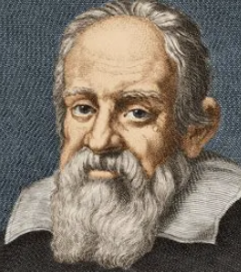
I am quite convinced; and, believe me, if I were again beginning my studies, I should follow the advice of Plato and start with mathematics, a science which proceeds very cautiously and admits nothing as established until it has been rigidly demonstrated.
It's unfortunate that this has happened. No. It's fortunate that this has happened and I've remained unharmed by it-not shattered by the present or frightened of the future. It could have happened to anyone. But not everyone could have remained unharmed by it.

Our institutions and conditions rest upon deep-seated ideas. To change those conditions and at the same time leave the underlying ideas and values intact means only a superficial transformation, one that cannot be permanent or bring real betterment. It is a change of form only, not of substance, as so tragically proven by Russia.
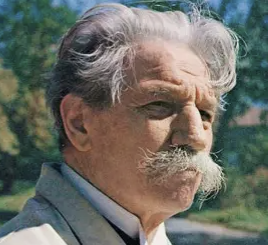
The great secret of success is to go through life as a man who never gets used up. That is possible for him who never argues and strives with men and facts, but in all experience retires upon himself, and looks for the ultimate cause of things in himself.
The centuries are thick, dark waves that rise and fall, steeped in blood. Every moment is a gaping abyss. Gaze on the dark sea without staggering, confront the abyss every moment without illusion or impudence or fear. ... But this is not enough; take a further step: battle to give meaning to the confused struggles of man.

It was the addition of status that brought the little things: a more comfortable seat here, a better cut of meat there, a shorter wait in line at the other place. To the philosophical mind, these items might seem scarcely worth any great trouble to acquire.Yet no one, however philosophical, could give up those privileges, once acquired, without a pang. That was the point.
Man can hardly even recognize the devils of his own creation.
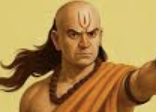
It is better to live under a tree in a jungle inhabited by tigers and elephants, to maintain oneself in such a place with ripe fruits and spring water, to lie down on grass and to wear the ragged barks of trees than to live amongst one's relations when reduced to poverty.

That liberal world that emerged after 1945 led to one of the most spectacularly successful periods in human history. There was material progress. There was stability. There was human freedom. There was the flourishing of many human activities that can only take place in a liberal, and therefore free society...
Anarchism, more than any other social theory, values human life above things.
We came to a tree which was still bare, and on which the birds were singing out gaily in the morning, without any fear of us. Then stooping over like an Indian on the hunt, my companion placed a pebble in the leather of his sling and stretched it. Obeying his peremptory glance I did the same, with frightful twinges of conscience, vowing firmly that I would shoot when he did. At that very moment the church bells began to sound, mingling with the song of the birds in the sunshine. It was the warning bell that came a half-hour before the main bell. For me it was a voice from heaven. I threw the sling down, scaring the birds away, so that they were safe from my companion's sling, and fled home. And ever afterwards when the bells of Holy Week ring out amidst the leafless trees in the sunshine I remember with moving gratitude how they rang into my heart at that time the commandment: Thou shalt not kill.
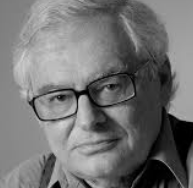
If there is a community of computers living in my head, there had also better be somebody who is in charge; and, by God, it had better be me.

The modern world inherits the Christian view in which salvation is played out in history. In Christian myth human events follow a design known only to God; the history of humankind is an ongoing story of redemption. This is an idea that informs virtually all of western thought - not least when it is intensely hostile to religion. From Christianity onwards, human salvation would be understood (at least in the west) as involving movement through time. All modern philosophies in which history is seen as a process of human emancipation - whether through revolutionary change or incremental improvement - are garbled versions of this Christian narrative, itself a garbled version of the original message of Jesus.
When He died in the Wounded World He died not for men, but for each man. If each man had been the only man made, He would have done no less. Each thing, from the single grain of Dust to the strongest eldil, is the end and the final cause of all creation and the mirror in which the beam of His brightness comes to rest and so returns to Him. Blessed be He!

The most any one can do is to confess as candidly as he can the grounds for the faith that is in him, and leave his example to work on others as it may.
When we can't dream any longer we die.

It is impossible for any man, when the most favourable circumstances concur, to acquire sufficient knowledge and strength of mind to discharge the duties of a king, entrusted with uncontrolled power; how then must they be violated when his very elevation is an insuperable bar to the attainment of either wisdom or virtue; when all the feelings of a man are stifled by flattery, and reflection shut out by pleasure! Surely it is madness to make the fate of thousands depend on the caprice of a weak fellow creature, whose very station sinks him NECESSARILY below the meanest of his subjects! But one power should not be thrown down to exalt another--for all power intoxicates weak man; and its abuse proves, that the more equality there is established among men, the more virtue and happiness will reign in society.

In every man sleeps a prophet, and when he wakes there is a little more evil in the world

Now what has been said about the Jews is also to be understood about Cahorsins, and anyone else depending upon the depravity of usury.

Culture is an instrument wielded by professors to manufacture professors, who, when their turn comes, will manufacture professors.
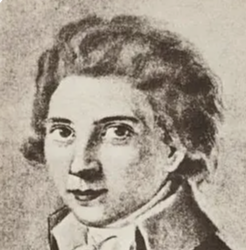
Romantic poetry ... recognizes as its first commandment that the will of the poet can tolerate no law above itself.

In the United States of North America, every independent movement of the workers was paralysed so long as slavery disfigured a part of the Republic. Labour cannot emancipate itself in the white skin where in the black it is branded.
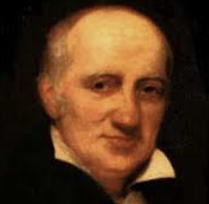
Till mankind be satisfied with the naked statement of what they really perceive, till they confess virtue to be then most illustrious, when she more disdains the aid of ornament, they will never arrive at that manly justice of sentiment at which they seem destined one day to arrive. By his scheme of naked virtue will be every day a gainer; every succeeding observer willl more fully do her justice, while vice, deprived of that varnish with which she delighted to glow her actions of that gaudy exhibition which may be made alike by every pretender will speedily sink into unheeded contempt.
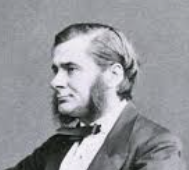
Every living creature commences its existence under a form different from, and simpler than, that which it eventually attains.
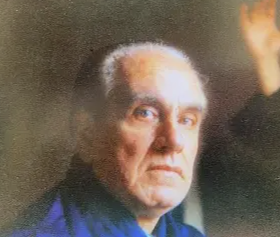
In our opinion, the task of a far-sighted policy of the Third Reich ought to have been that of seeking every possible means to obtain at least the neutrality of the western nations so as to have free hands for a devestating attack exclusively against the Soviet Union-but that would have required the shrewdness and genius of a Metternich.
Anyone who studies present and ancient affairs will easily see how in all cities and all peoples there still exist, and have always existed, the same desires and passions. Thus, it is an easy matter for him who carefully examines past events to foresee future events in a republic and to apply the remedies employed by the ancients, or, if old remedies cannot be found, to devise new ones based upon the similarity of the events. But since these matters are neglected or not understood by those who read, or, if understood, remain unknown to those who govern, the result is that the same problems always exist in every era.

Men of learning are those who have read the contents of books. Thinkers, geniuses, and those who have enlightened the world and furthered the race of men, are those who have made direct use of the book of the world.

The best authorities are unanimous in saying that a war with H-bombs might possibly put an end to the human race. It is feared that if many H-bombs are used there will be universal death, sudden only for a minority, but for the majority a slow torture of disease and disintegration. Many warnings have been uttered by eminent men of science and by authorities in military strategy. None of them will say that the worst results are certain. What they do say is that these results are possible, and no one can be sure that they will not be realized. We have not yet found that the views of experts on this question depend in any degree upon their politics or prejudices. They depend only, so far as our researches have revealed, upon the extent of the particular expert's knowledge. We have found that the men who know most are the most gloomy.

Some economists also use the terms Fordism and pos-Fordism to mark the shift from an economy characterized by the stable-long-term employment typical of factory workers to one marked by flexible, mobile, and precarious labor relations: flexible because workers have to adapt to different tasks, mobile because workers have to move frequently between jobs, and precarious because no contracts guarantee stable, long-term employment. Whereas economic modernization, which developed Fordist labor relations, centered on the conomies of scale and larga systems of production and exchange, economic postmodernization, with its post-Fordist labor relations, develops smaller-scale, flexible systems.

Faith is a living, bold trust in God's grace, so certain of God's favor that it would risk death a thousand times trusting in it. Such confidence and knowledge of God's grace makes you happy, joyful and bold in your relationship to God and all creatures. The Holy Spirit makes this happen through faith. Because of it, you freely, willingly and joyfully do good to everyone, serve everyone, suffer all kinds of things, love and praise the God who has shown you such grace.

There were never in the world two opinions alike, any more than two hairs or two grains. Their most universal quality is diversity.
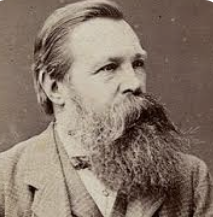
The irony of world history turns everything upside down. We, the "revolutionaries," the "rebels"-we are thriving far better on legal methods than on illegal methods and revolt. The parties of order, as they call themselves, are perishing under the legal conditions created by themselves. They cry despairingly with Odilon Barrot: la légalité notes tue, legality is the death of us; whereas we, under this legality, get firm muscles and rosy cheeks and look like eternal life.

Neither art nor wisdom may be attained without learning.
I think that if God forgives us we must forgive ourselves. Otherwise it is almost like setting up ourselves as a higher tribunal than Him.

If the many, the specialists, gain the day, it will be the end of science as we know it - of great science. It will be a spiritual catastrophe comparable in its consequences to nuclear armament.
The place of the father in the modern suburban family is a very small one - particularly if he plays golf, which he usually does.

What is beginning to emerge, then, is a theory about psychic sensitivity. It runs as follows. When I relax deeply, it is as if someone opened up the partition between the two compartments of my brain, turning them into a single large room. I experience a sense of mental freedom as if I can suddenly breathe more deeply, and a feeling of contact with things. Everyone has had the experience of being in a state of hurry or excitement, and failing to notice that they have bruised or scratched themselves -- until the excitement evaporates and the pain makes itself known. Hurry and tension raise our sensitivity threshold, and at the same time, erect a glass wall between us and reality. In the "unicameral" state, this wall vanishes, and everything seems more real.
There was once a millionaire who bought an infinite number of pairs of shoes and, whenever he bought a pair of shoes, he also bought a pair of socks. We can make a selection choosing one out of each pair of shoes, because we can choose always the right shoe or always the left shoe. Thus, so far as the shoes are concerned, selections exist. But, as regards the socks, where there is no distinction of right and left, we cannot use this rule of selection.
If any philosopher had been asked for a definition of infinity, he might have produced some unintelligible rigmarole, but he would certainly not have been able to give a definition that had any meaning at all.

Society undergoes continual changes; it is barbarous, it is civilized, it is Christianized, it is rich, it is scientific; but this change is not amelioration. For everything that is given something is taken. Society acquires new arts, and loses old instincts. The civilized man has built a coach, but has lost the use of his feet; he has a fine Geneva watch, but cannot tell the hour by the sun.
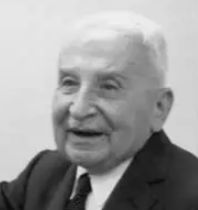
The proof of a theory is in its reasoning, not in its sponsorship.
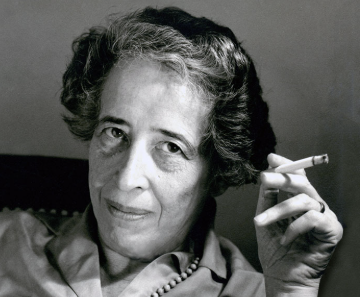
Real power begins where secrecy begins.
In the practical use of our intellect, forgetting is as important a function as recollecting.

Pierre, who from the moment Prince Andrew entered the room had watched him with glad, affectionate eyes, now came up and took his arm. Before he looked round Prince Andrew frowned again, expressing his annoyance with whoever was touching his arm, but when he saw Pierre's beaming face he gave him an unexpectedly kind and pleasant smile. "There now!... So you, too, are in the great world?" said he to Pierre. "I knew you would be here," replied Pierre. "I will come to supper with you. May I?" he added in a low voice so as not to disturb the vicomte who was continuing his story. "No, impossible!" said Prince Andrew, laughing and pressing Pierre's hand to show that there was no need to ask the question. He wished to say something more, but at that moment Prince Vasíli and his daughter got up to go and the two young men rose to let them pass.
CivilSimian.com created by AxiomaticPanic, CivilSimian, Kalokagathia